Flag of France

What the flag means
- Blue and red — the colors of Paris
- White — the royal (Bourbon) color
- The tricolor — liberty, equality, fraternity of the Revolution
Design set by: Constitution du 4 octobre 1958, art. 2 · Adopted 1794
Highlights
- 🗼 Eiffel Tower, romantic Paris
- 🥐 Baguettes, cheese and fine wine
- 🎨 The Louvre and the heart of art
- 👗 Paris, a global fashion capital
- 🏰 Versailles and grand heritage
Quick facts
- Region
- Europe · Western Europe
- Population
- 68,720,337 people (2025)
- Area
- 551,695 km²
- Capital
- Paris
- Languages
- French, Arabic
- Currency
- Euro (EUR)
- Organizations
- United Nations, European Union, NATO, OECD
Similar flags
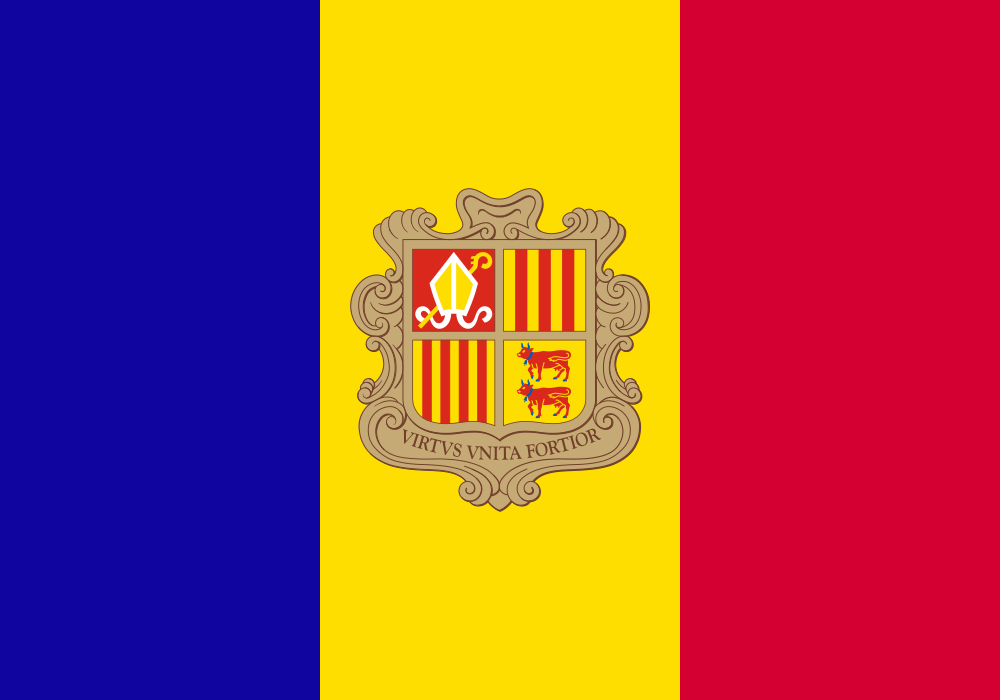
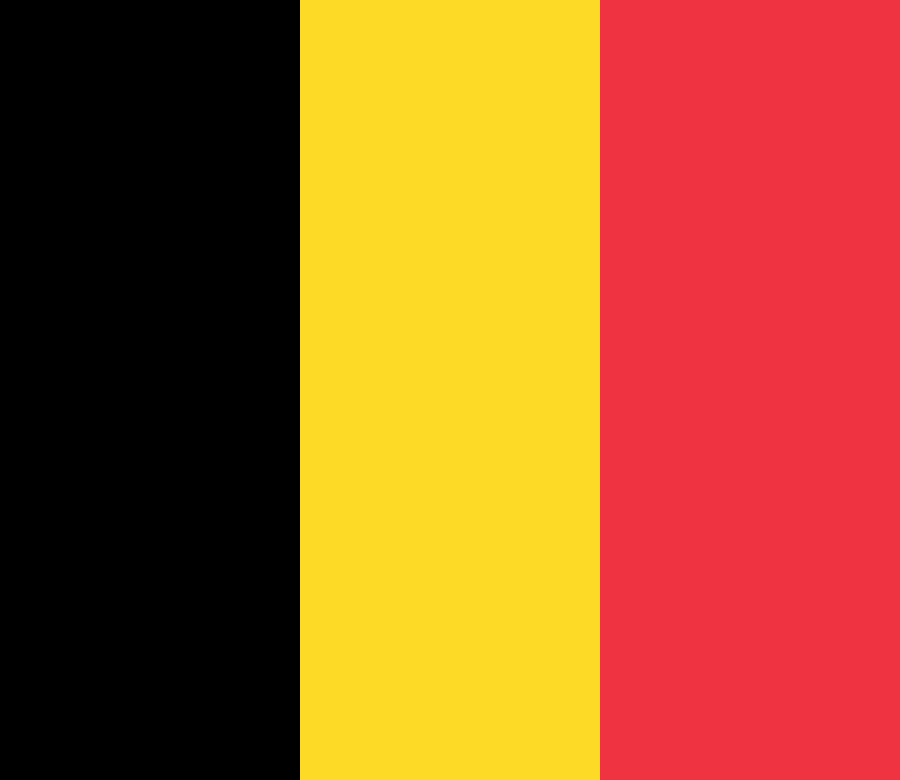
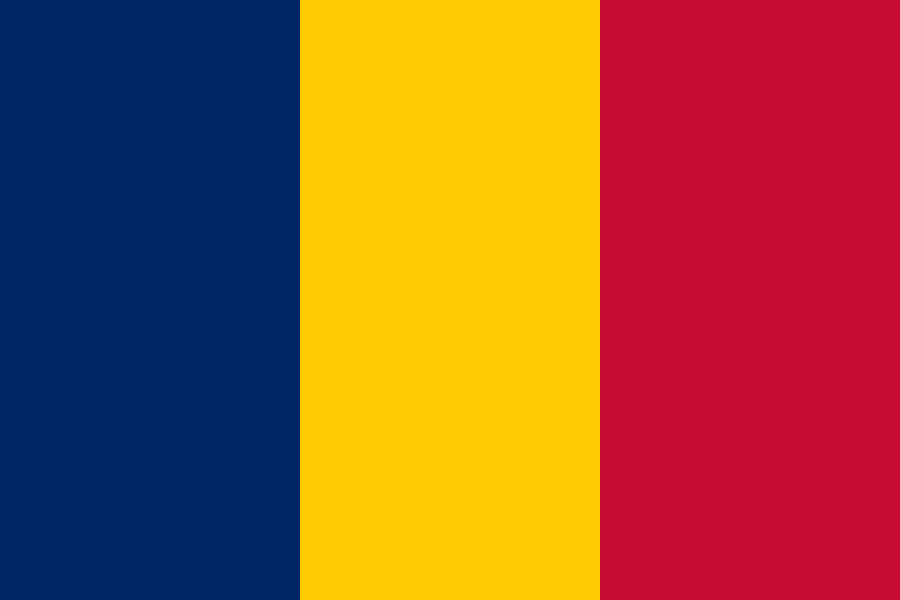
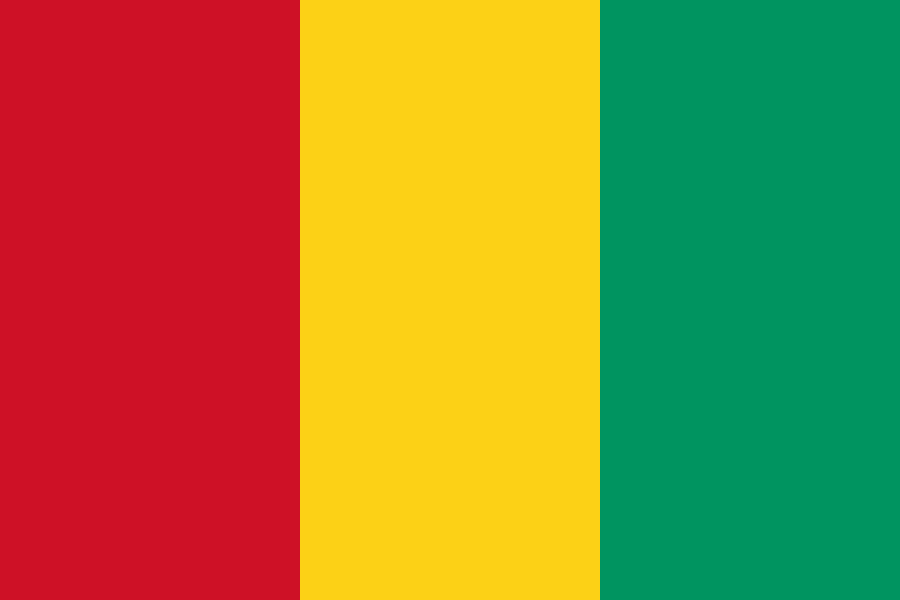
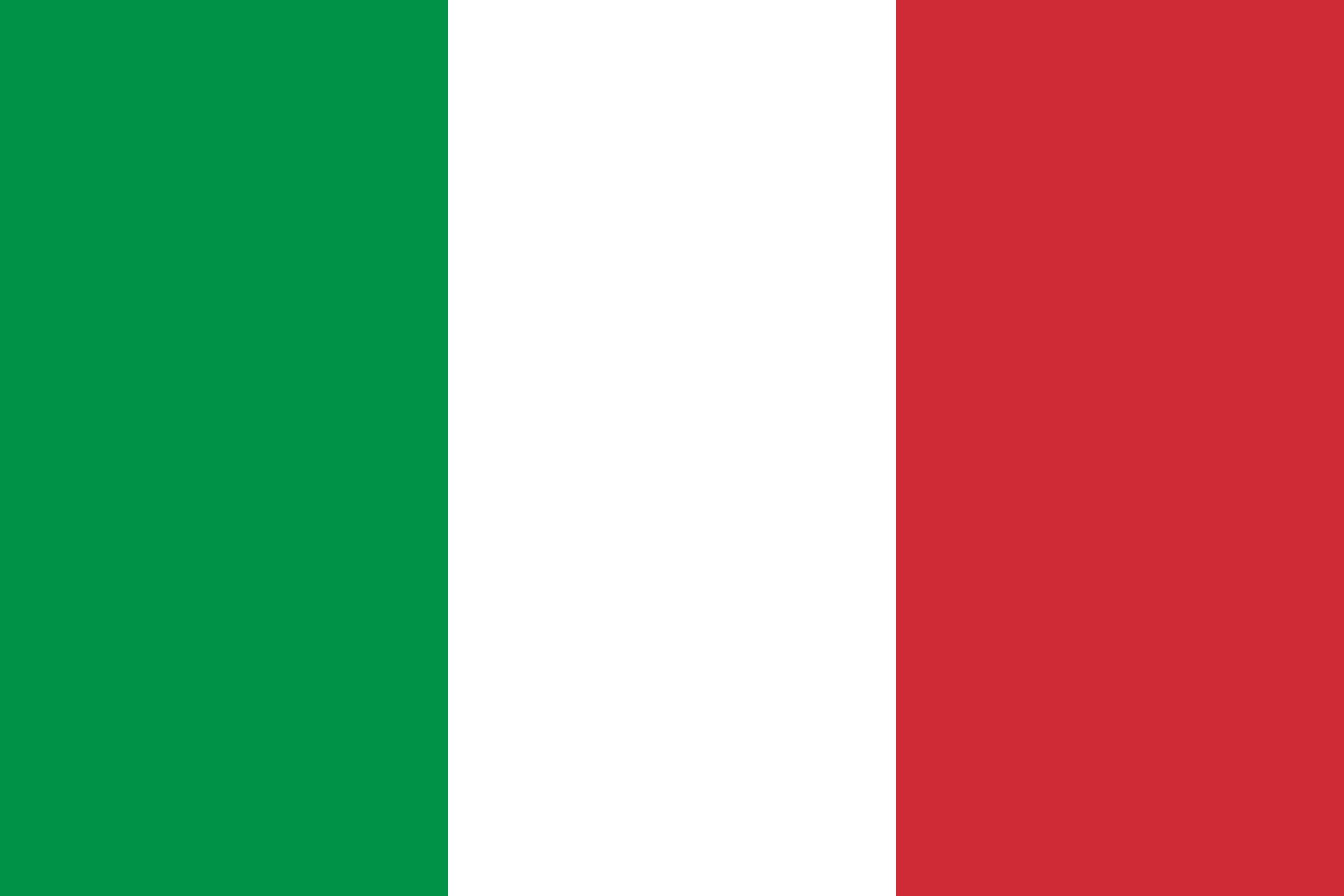
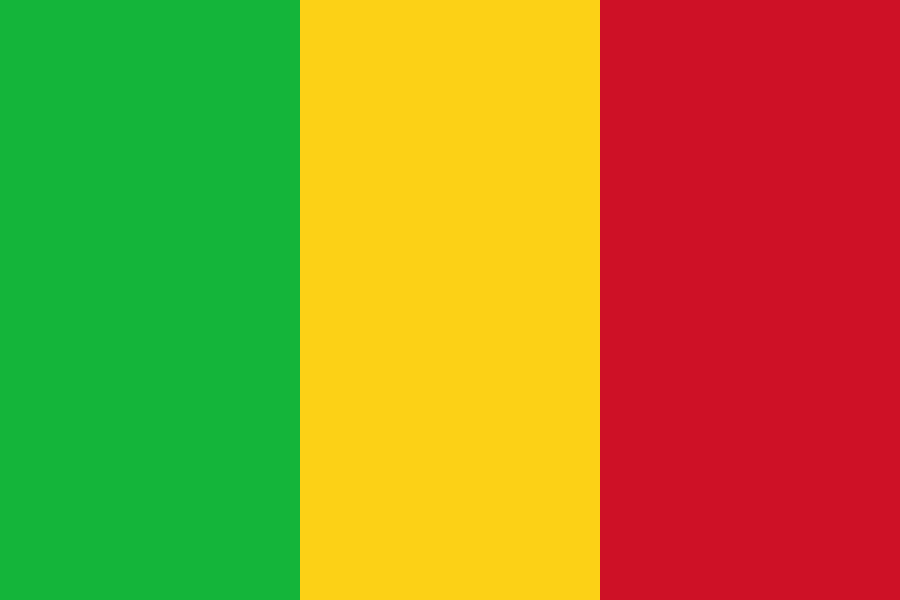
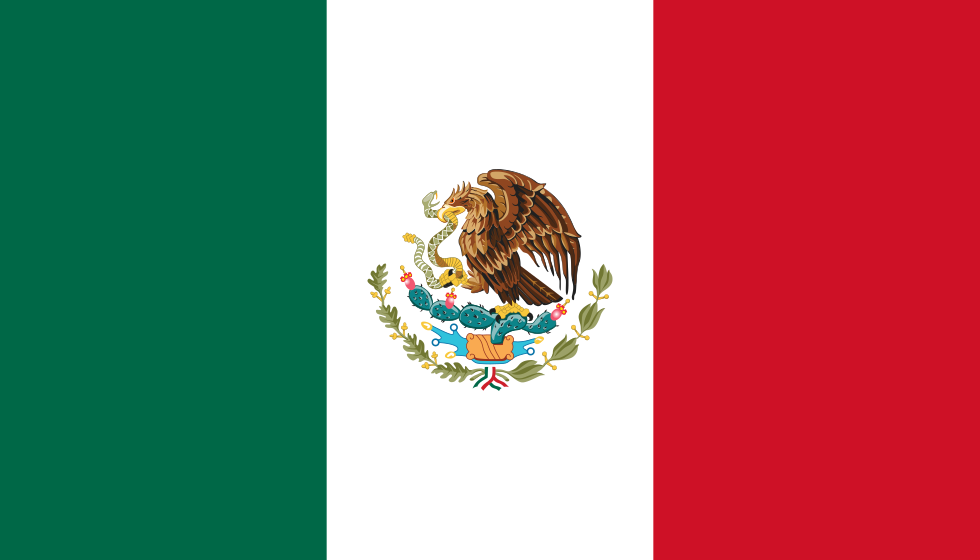
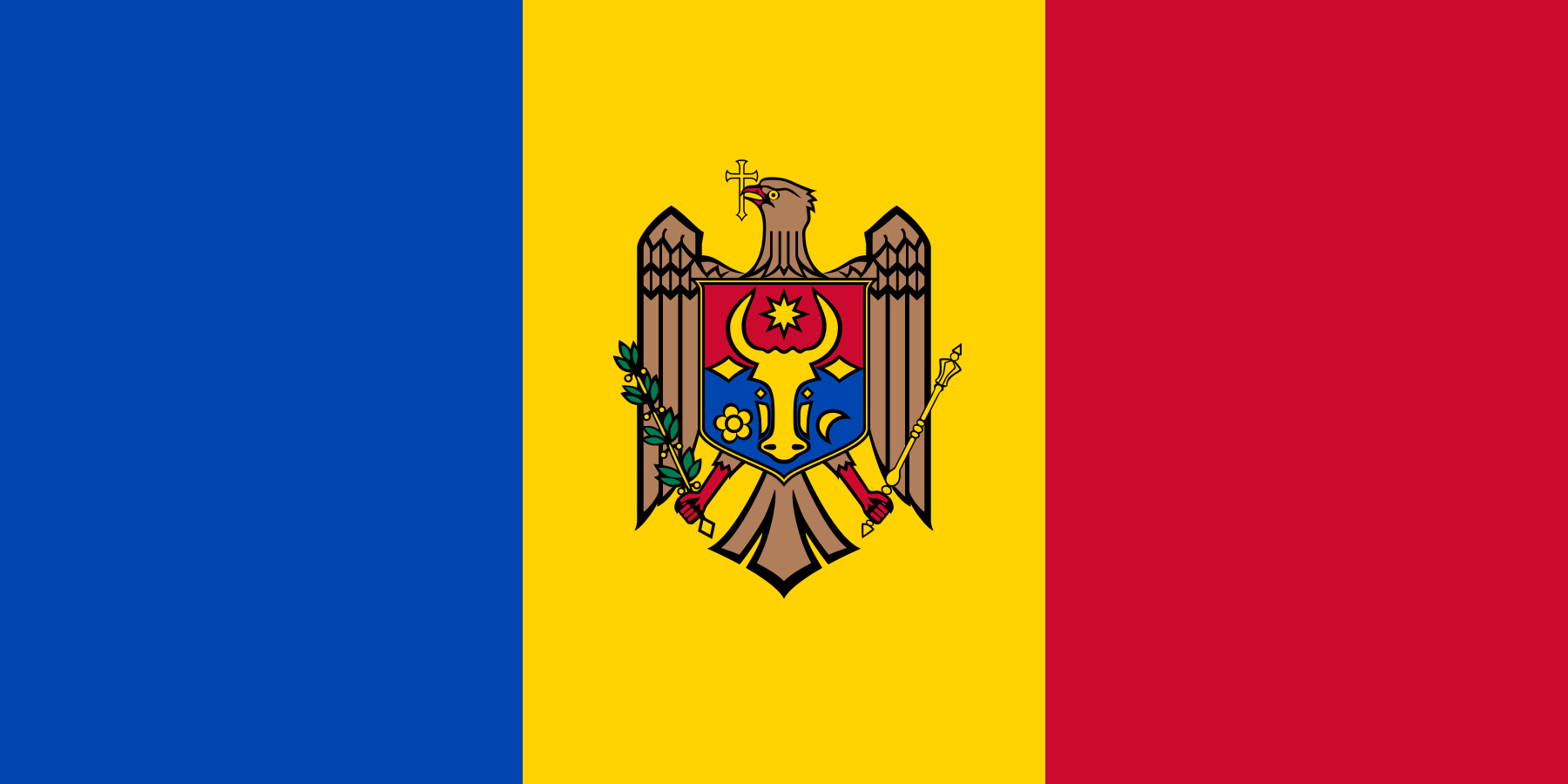
Vertical tricolors


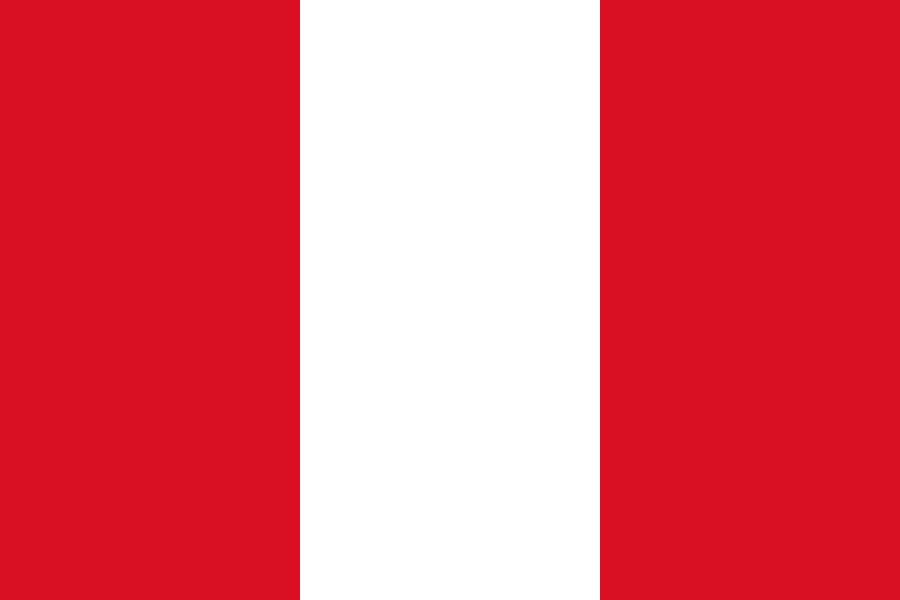
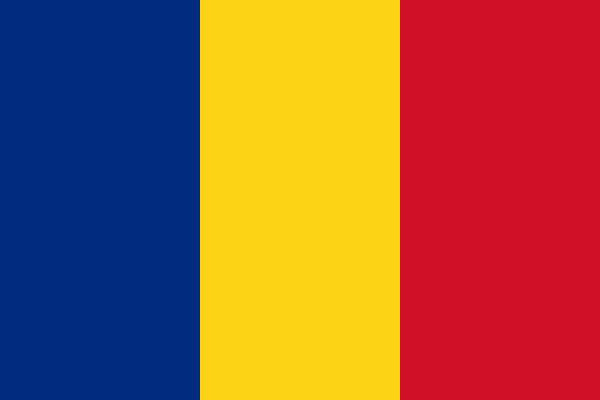
Neighboring countries
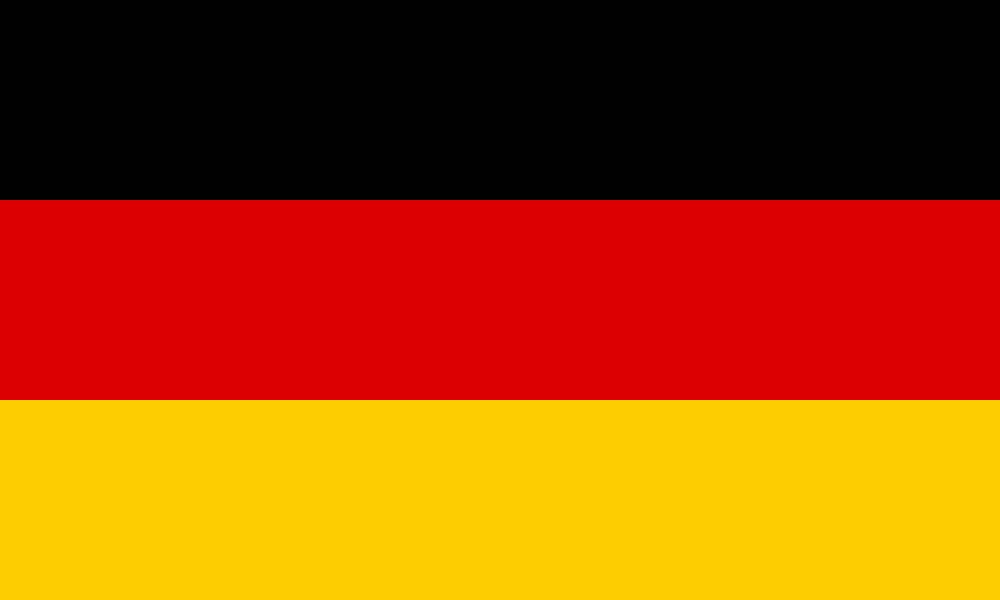
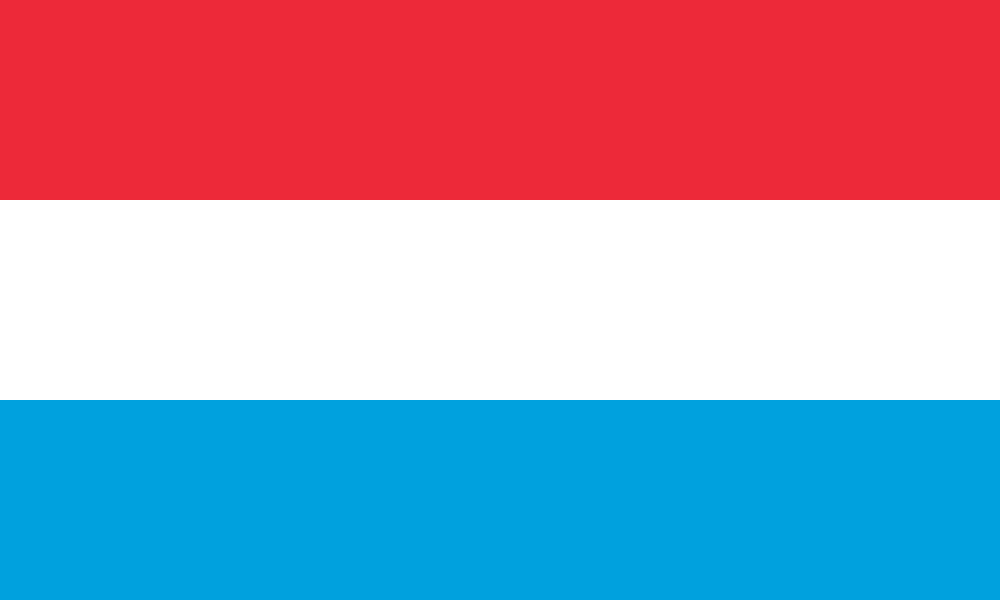


Land neighbors, approximated from simplified map outlines.
Symbols in History (12)
Coats of arms and emblems whose historic seat lies within this country’s present-day territory.
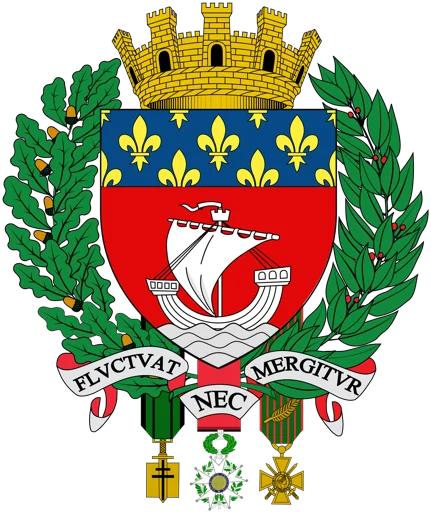
Arms of the City of Paris
OriginA shield carrying a ship of the Seine and an upper section of French lilies is the core of the Paris city arms tradition.
DescriptionOn the blue upper part of the shield, gold lily flowers are scattered thickly, and on the red lower part a white sailing ship passes over silver waves. Above the shield sits a gold crown shaped like city walls and watchtowers, an oak branch with acorns and a laurel branch with red berries wrap around either side, and on the ribbon below are the words FLVCTVAT NEC MERGITVR, with three orders hanging from it.
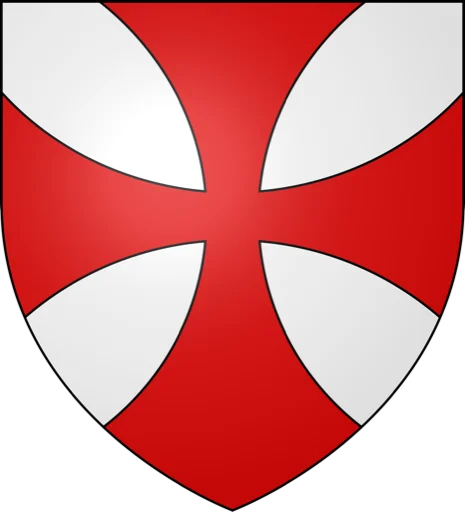
Arms of the Counts of Comminges, the Four Otelles
OriginThese are arms with four silver otelles arranged in an X shape on a red field.
DescriptionFour silver otelles are placed at the four corners of the red field, bringing their pointed ends together at the centre. Each charge is the almond (spearhead) shape formed where two curves meet, and both curves bow outwards towards the red field. As a result the red left between the charges shows as a cross that is pinched at the centre and widens towards the edges.
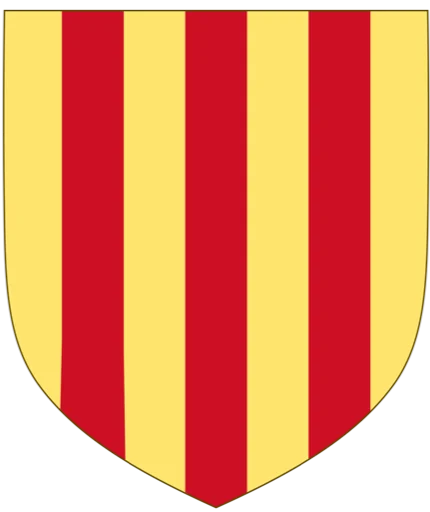
Arms of the Counts of Foix
OriginThe shield with three red vertical stripes on a gold field is the coat of the Counts of Foix. The relationship with Aragon and the date when this design came into use have not yet been confirmed from armorial records.
DescriptionA shield with three broad red vertical stripes on a golden field, so that yellow and red bands alternate.
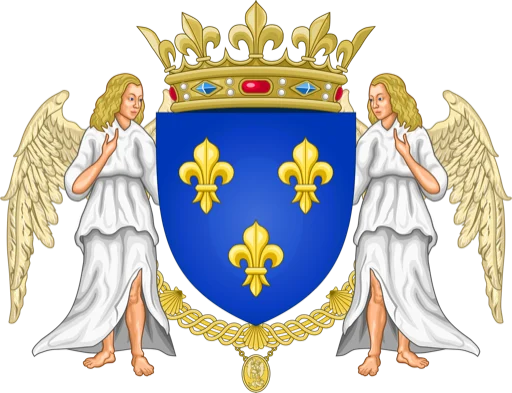
Arms of the House of Valois
OriginValois kings used the French royal arms while reigning.
DescriptionOn a blue shield are three gold lilies (fleurs-de-lys), two above and one below, and above them sits a gold crown rising in lily shapes. On either side, two winged angels in white robes support the shield, and a gold twisted chain with an oval medal hangs below it.
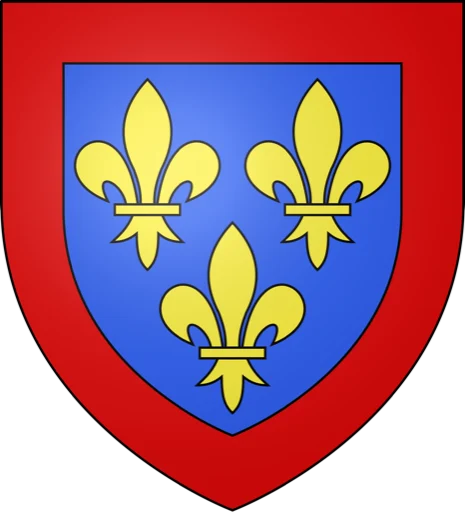
Arms of the House of Valois-Anjou
OriginA red border added to the gold fleurs-de-lis on blue is the difference mark of the ducal house of Anjou. It distinguishes a cadet line by adding a border to the arms of the French crown; which duke used it, and when, is reported differently by different seals and armorials.
DescriptionOn a blue field are three gold lilies (fleurs-de-lis), two above and one below, and a thick red border runs around the edge of the shield.
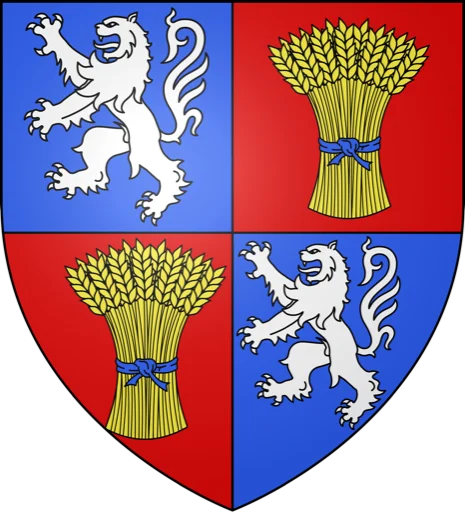
Attributed Arms of Gascony
Sources do not confirm exactly who bore this design or in which version, so no description is given.
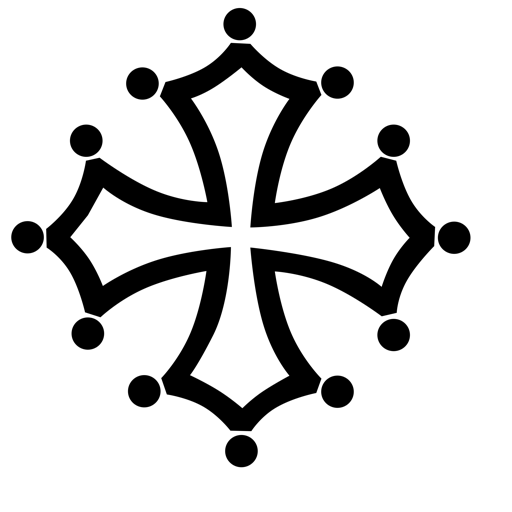
Cross of Toulouse
OriginA design with a gold cross clechee and pommetee and twelve roundels on a red field is linked with the County of Toulouse and with today's Occitania.
DescriptionA cross whose arms widen outward and whose sides are hollowed inward is drawn as a thick outline with an empty interior. Each of the four arms ends in three points, one in the middle and one at each corner, and a small round dot sits slightly apart from each point, twelve in all. There is no red field or shield; it is shown only as line work in a single black colour.
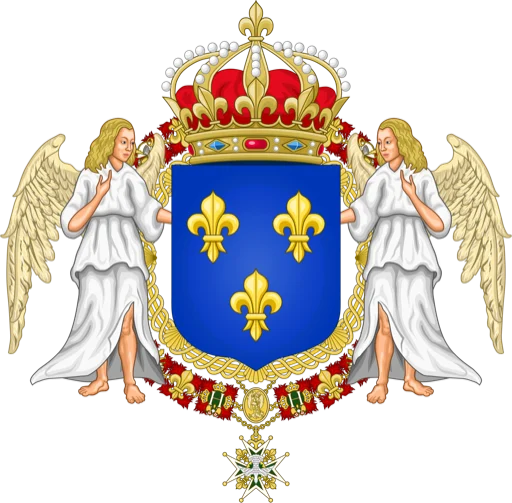
Royal Arms of France, France moderne
OriginThe "France moderne" coat, three gold lilies on a blue field, was used by the French crown from the late 14th century onward.
DescriptionOn a blue shield three golden lilies (fleurs-de-lis) are placed, two above and one below. Above the shield rests a crown set with lily ornaments and pearls and lined in red; two angels in white robes with golden wings hold the shield on either side, and beneath the golden collar of an order encircling the shield hangs a white eight-pointed cross badge.
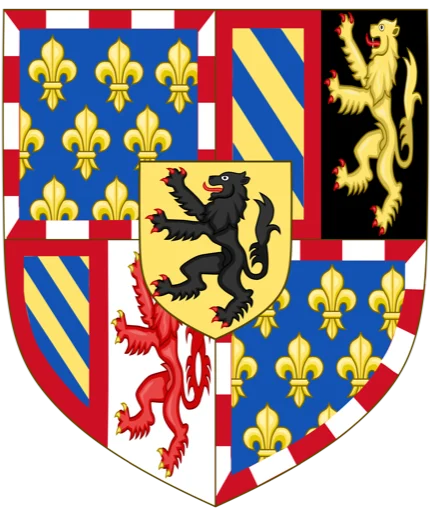
The Composite Arms of Philip the Good
OriginThe app's composite shield is not the simple arms of the Duchy of Burgundy alone but a version combining the several territories and dynastic marks that Philip the Good held or claimed.
DescriptionThe shield is divided into four sections: the upper left and the lower right show a blue field strewn with gold lilies, surrounded by a red-and-white chequered border. The upper right and lower left sections are each split vertically in half, with gold and blue diagonal stripes (within a red border) beside a gold lion on a black field in the upper right and a red lion on a silver field in the lower left. All the lions rear on their hind legs facing the same way, and at the very centre of the shield a small separate shield bearing a black lion on gold is laid over it.
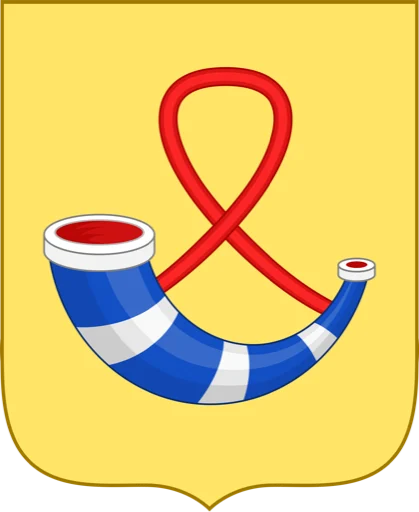
The hunting horn arms of the Principality of Orange
OriginA blue hunting horn on a gold field is the heraldic image linked with the Principality of Orange.
DescriptionA blue hunting horn is drawn in the middle of a gold field, with silver rims at its wide mouth and its narrow end and red inside. A silver band circles the body of the horn, and above it a red cord loops and crosses, tied to both ends of the horn.
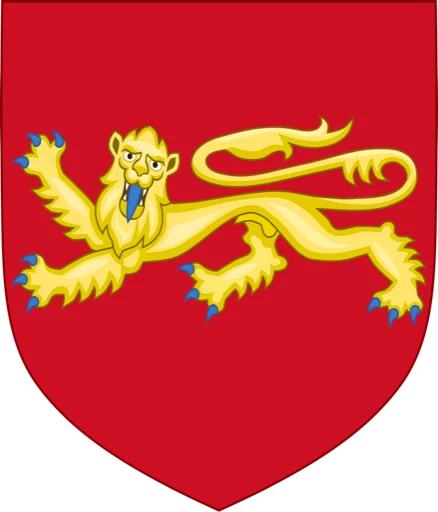
The Lion Arms Attributed to Aquitaine and Guyenne
OriginThe design of a single gold lion walking and looking outward on a red field is handed down as the arms attributed to Aquitaine and Guyenne. Whether Eleanor used it as her own personal arms in her own time, and whether the design was absorbed into the royal arms of England, has not yet been confirmed.
DescriptionOn a red field a single gold lion is drawn in a walking posture, its head turned to face the viewer and its tail curling up over its back. Its claws and tongue are coloured blue.
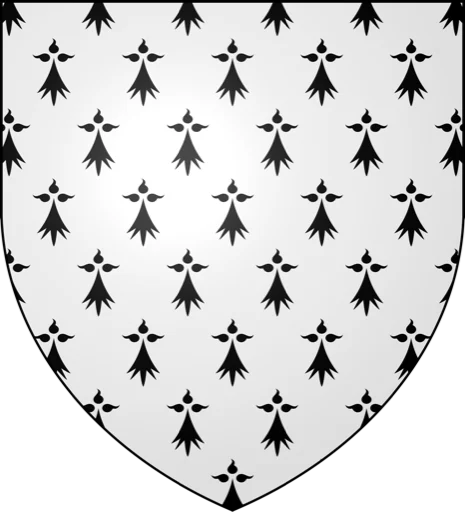
The Plain Ermine Arms of the Duchy of Brittany
OriginThe design repeating black ermine marks over the whole silver field was used as the arms of the medieval Duchy of Brittany.
DescriptionBlack ermine marks repeat densely in even rows across the entire silver field, with no other charge such as a lion or a cross. Each mark is drawn with three small dots at the top and a tail below that spreads out like an arrowhead.


State & regional flags (13)
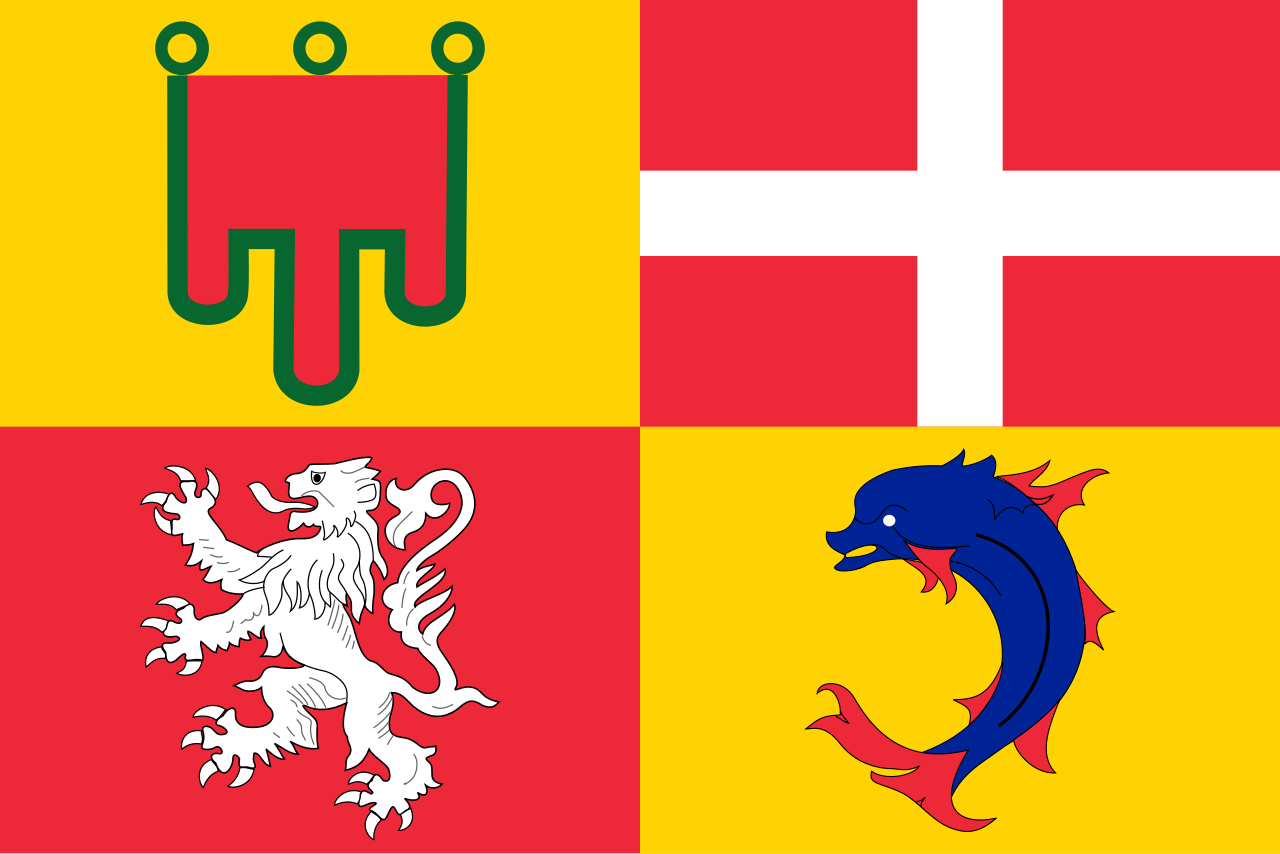
Auvergne-Rhône-Alpes
Auvergne's red gonfanon with its green fringe on gold shares the flag with Savoy's white cross on red, the silver lion of the Lyonnais on red and the blue dolphin of the Dauphiné on gold.
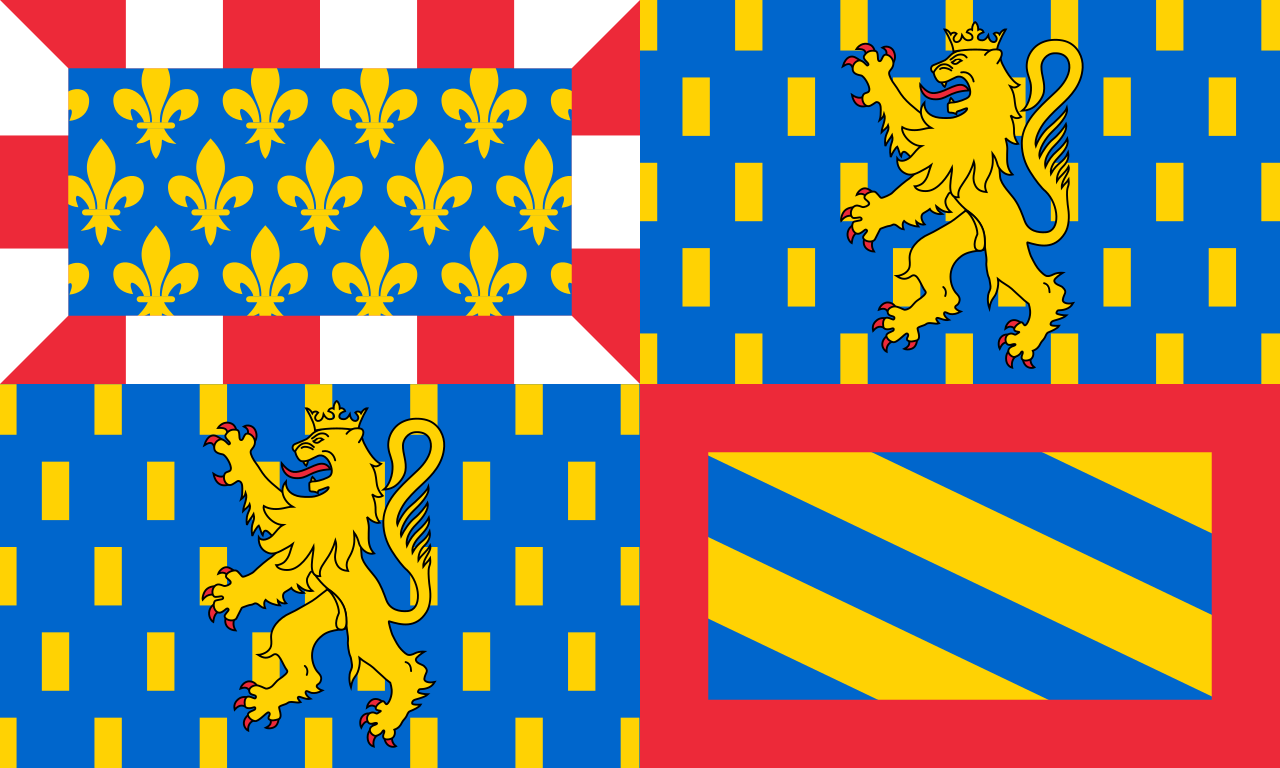
Bourgogne-Franche-Comté
Quartered: the dukes' fleur-de-lis field inside a chequered border, the crowned gold lion of Franche-Comté twice over, and old Burgundy's gold-and-blue diagonals.
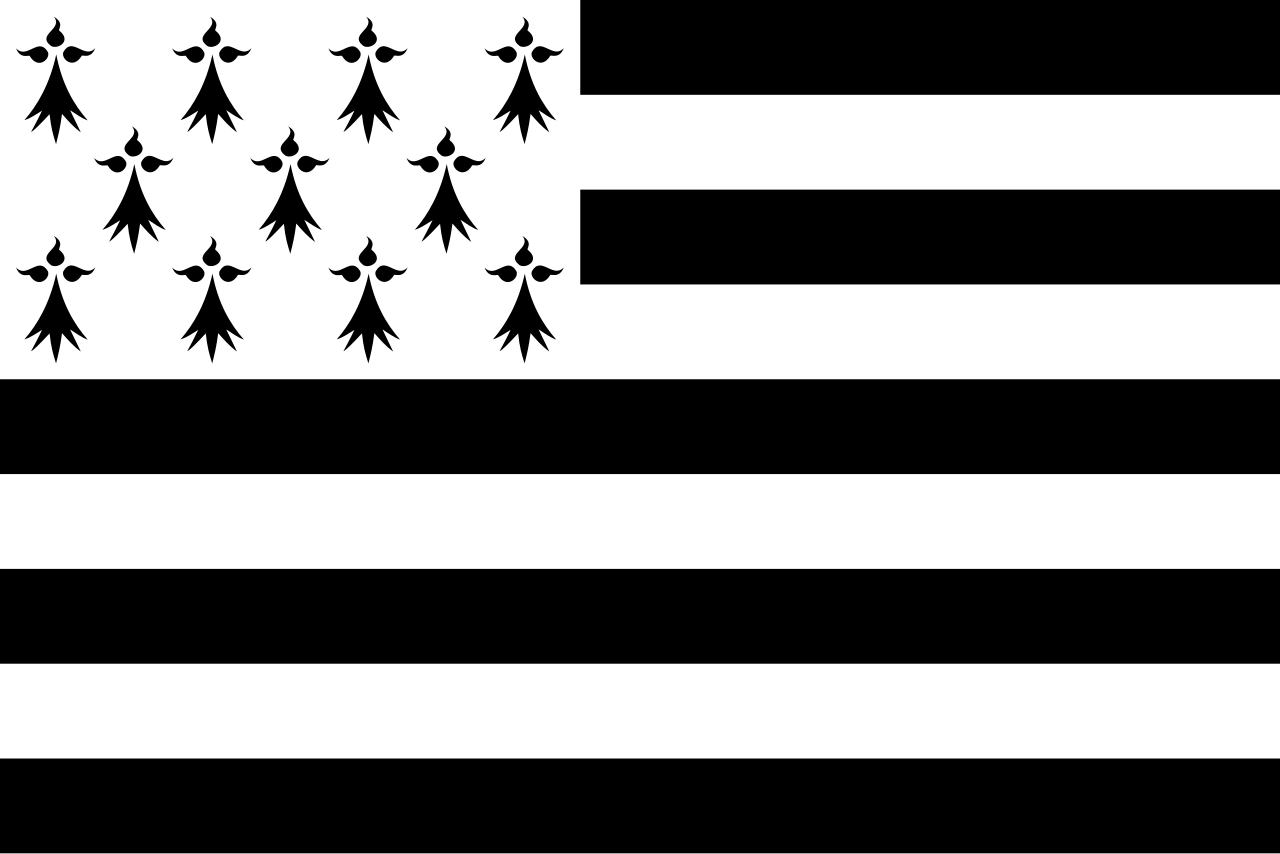
Brittany
Nine black and white stripes run across, with eleven black ermine spots in the white upper hoist — the ermine comes from the old dukes of Brittany.
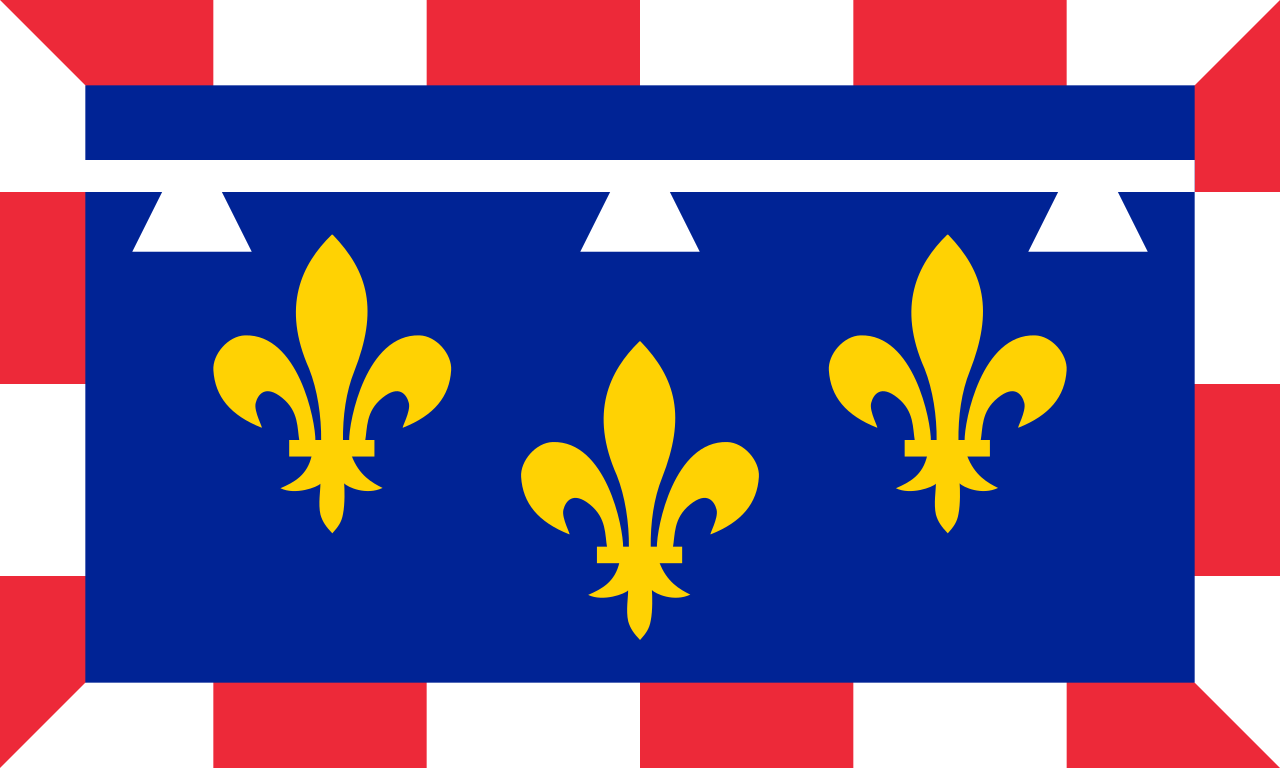
Centre-Val de Loire
Three gold fleurs-de-lis sit on blue beneath a white label with three tabs — the arms of Orléans — inside a red-and-white chequered border.
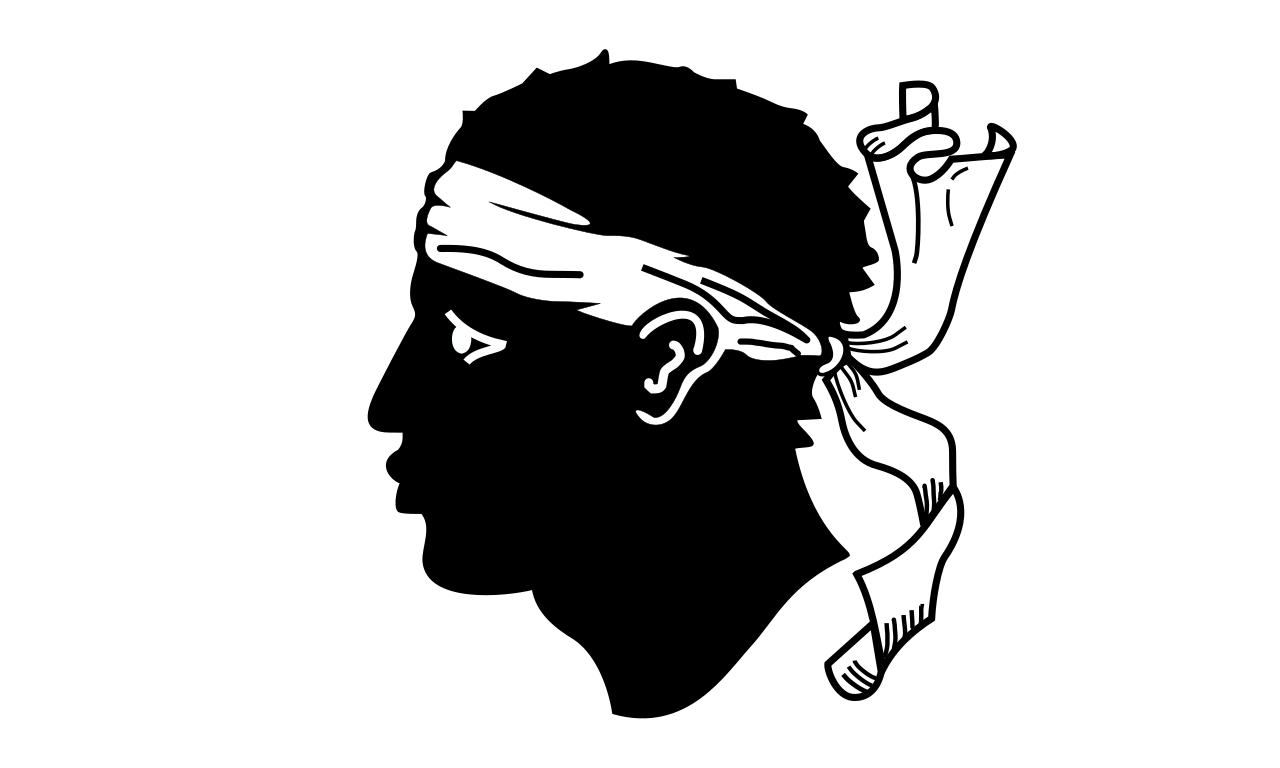
Corsica
A black head in profile faces the hoist on plain white, a white bandana tied above the eyes — Corsica's Testa Mora, the Moor's head.

Grand Est
On a deep navy field the words 'La Région Grand Est' stand alone in white, over a single yellow lens-shaped curve. It carries no heraldry: a plain wordmark for a region newly formed from three older ones.
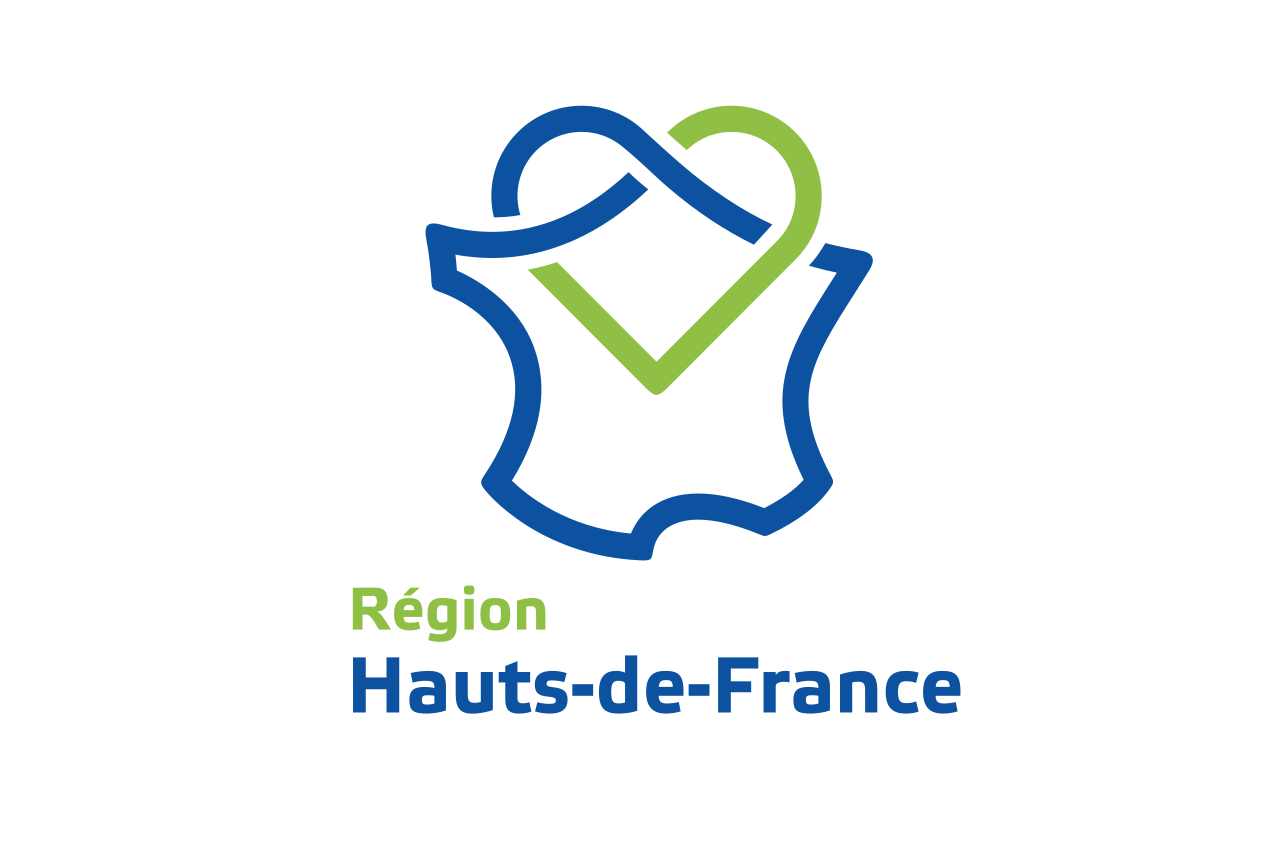
Hauts-de-France
A logo, not a coat of arms: the outline of France drawn in blue line, a green loop curving over its northern edge, above the words Région Hauts-de-France.
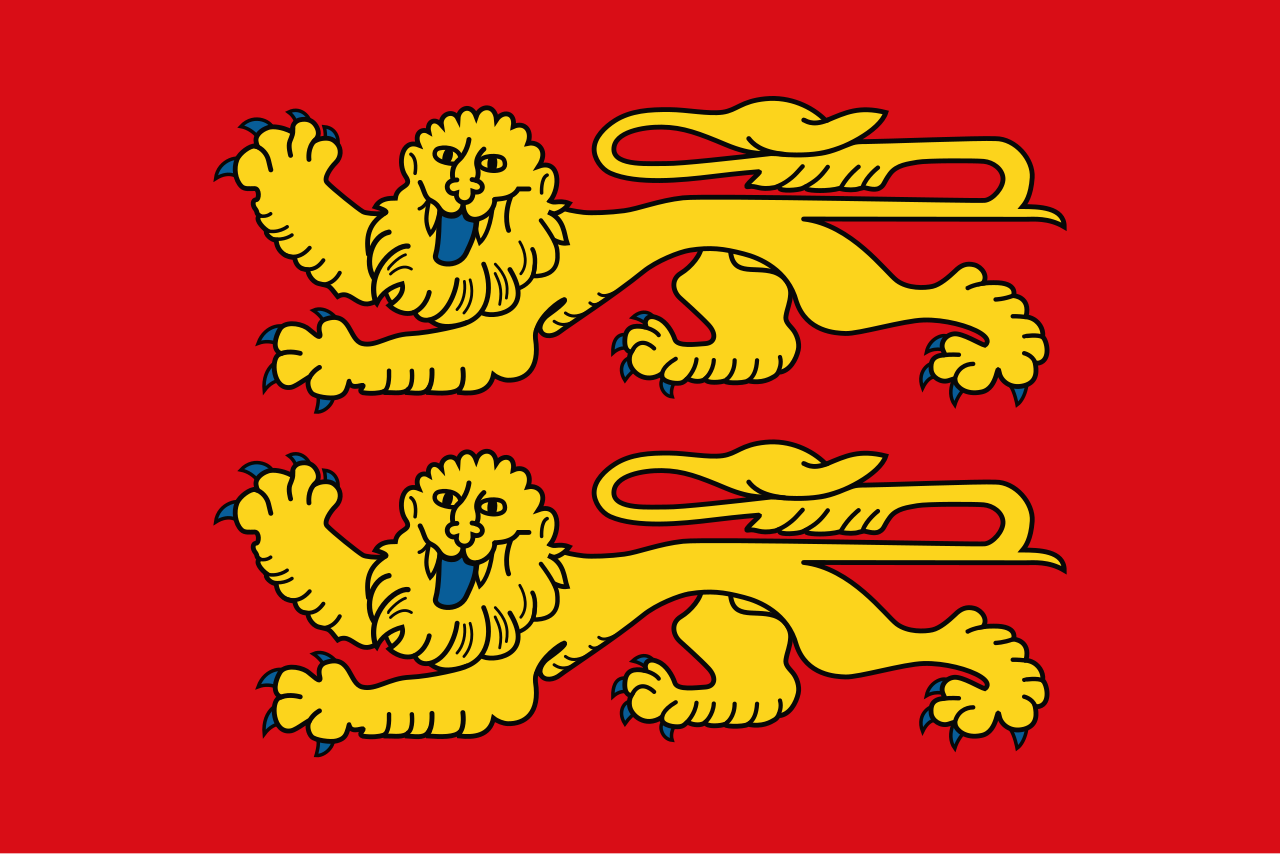
Normandy
Two gold lions with blue claws and tongue pace one above the other across a red field — the two leopards of Normandy.
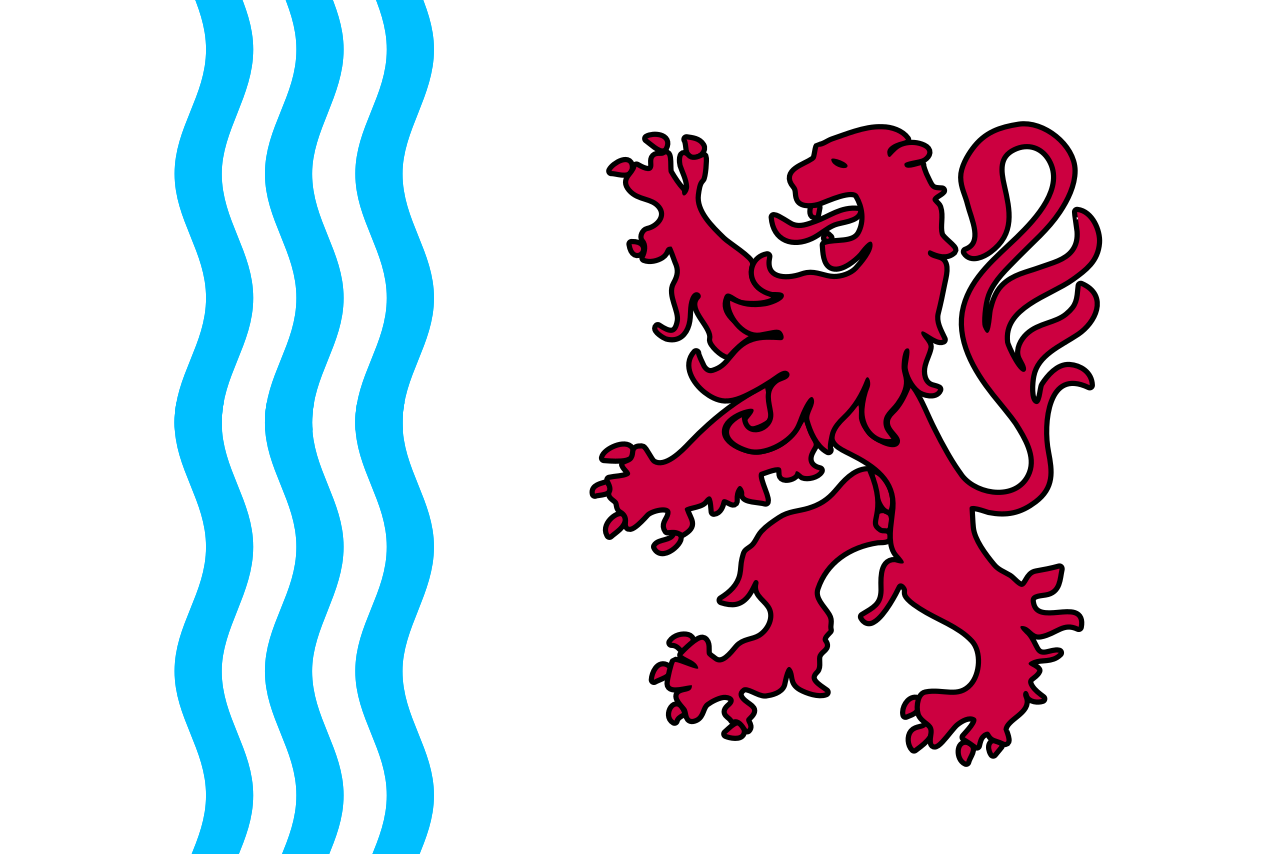
Nouvelle-Aquitaine
The hoist carries three wavy cyan bands, and a crimson lion rears up on its hind legs across the white fly.
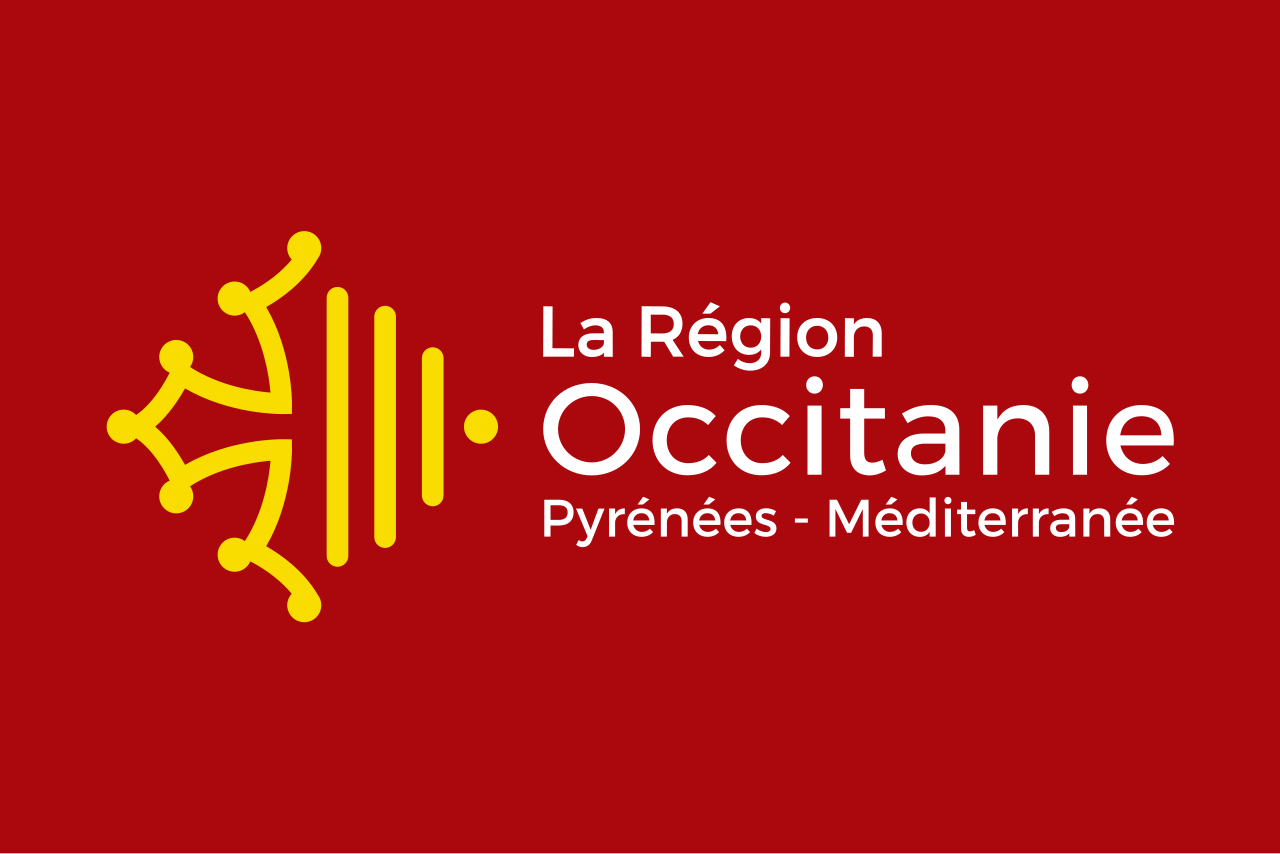
Occitania
Deep red carries a yellow Occitan cross whose right half is redrawn as plain vertical bars, beside white lettering reading La Région Occitanie – Pyrénées-Méditerranée.
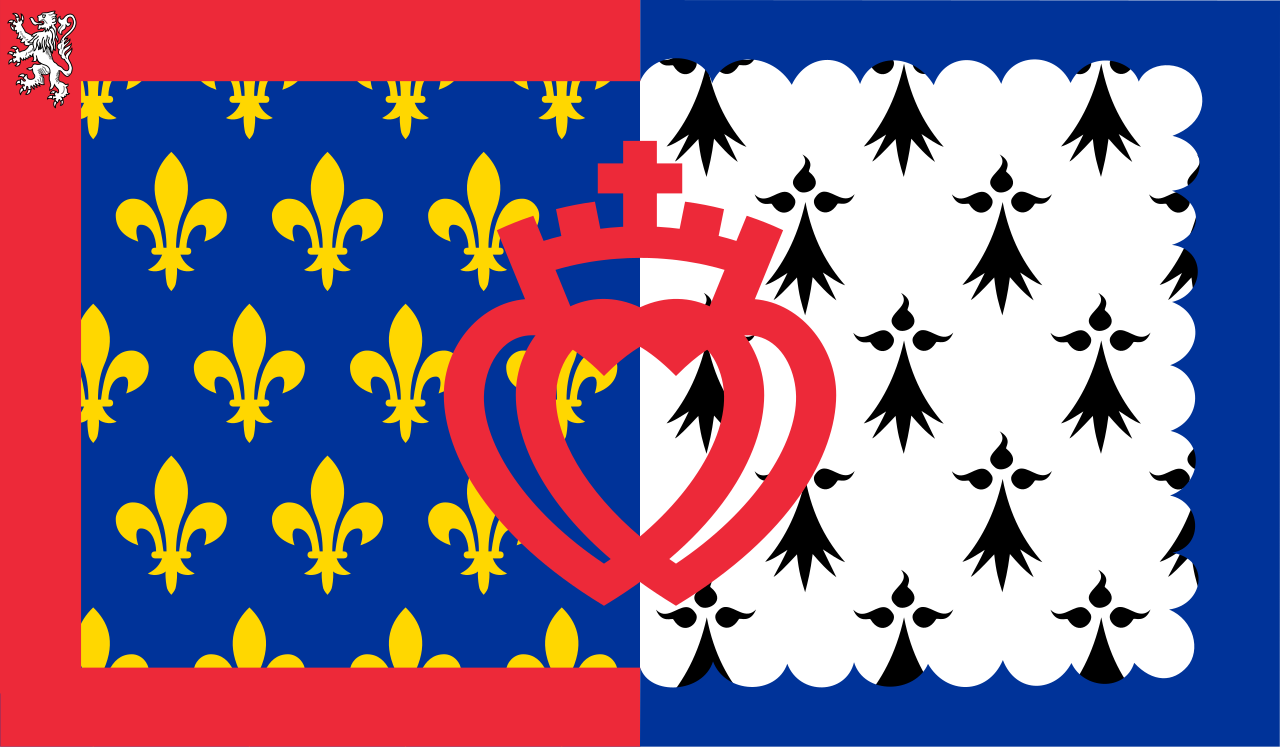
Pays de la Loire
A red crowned heart topped by a cross straddles the middle: gold fleurs-de-lis on blue inside a red border at the hoist, black ermine spots on white inside a blue border in the fly, and a small white lion rears up in the top hoist corner of the red border.
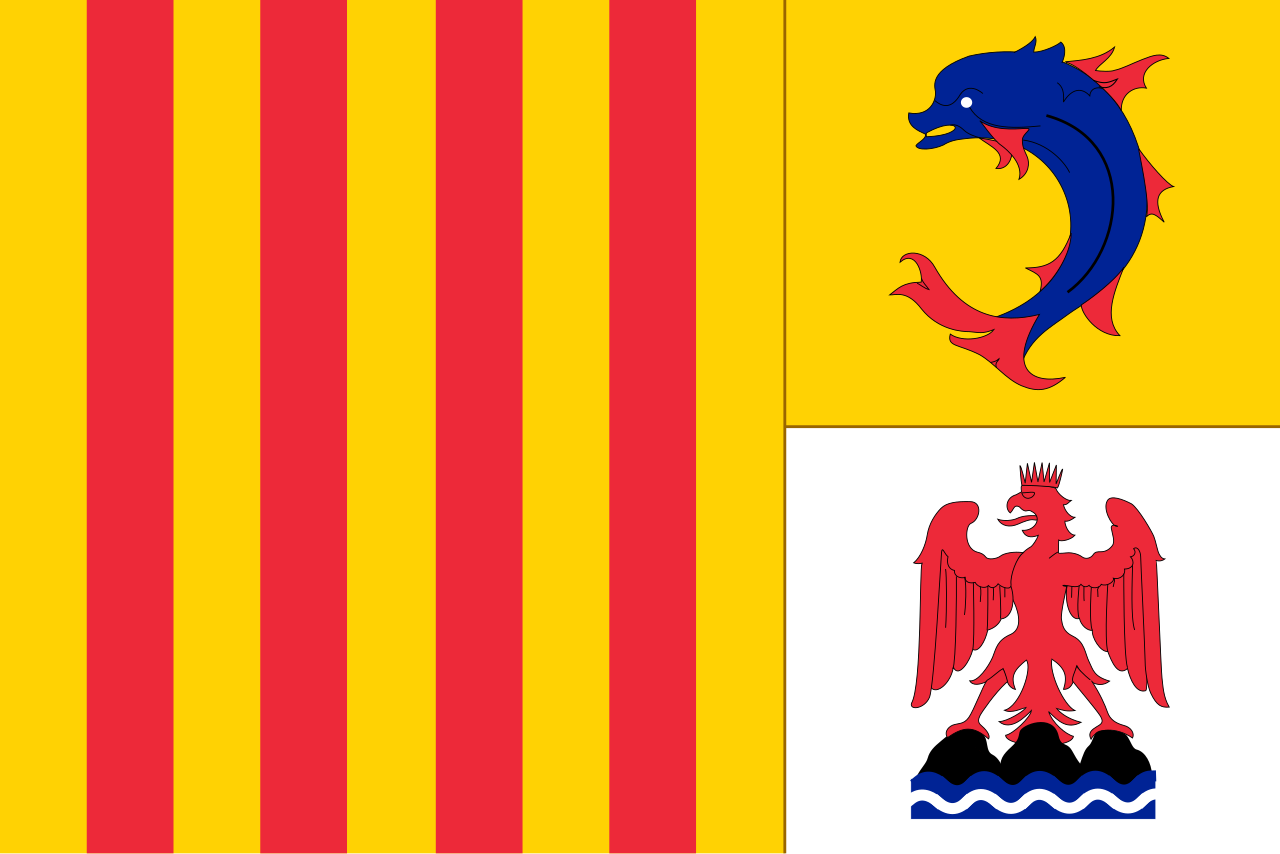
Provence-Alpes-Côte d'Azur
Red stripes on gold fill the hoist, while the fly stacks a blue dolphin on gold above a crowned red eagle standing on black rocks over blue waves.

Île-de-France
A logotype rather than a banner: a red eight-pointed star sits beside the words 'Région Île-de-France', set in navy and red.
Data Sources
- What the flag means: Constitution du 4 octobre 1958, art. 2
- Population: Population, total (SP.POP.TOTL), latest available value
- Area: World countries in JSON, CSV, XML and YAML
- Organizations: Membership of Principal UN Organs
- Organizations: Member States of the European Union
- Organizations: What is NATO? Member countries
- Organizations: Members and partners