Flag of Spain
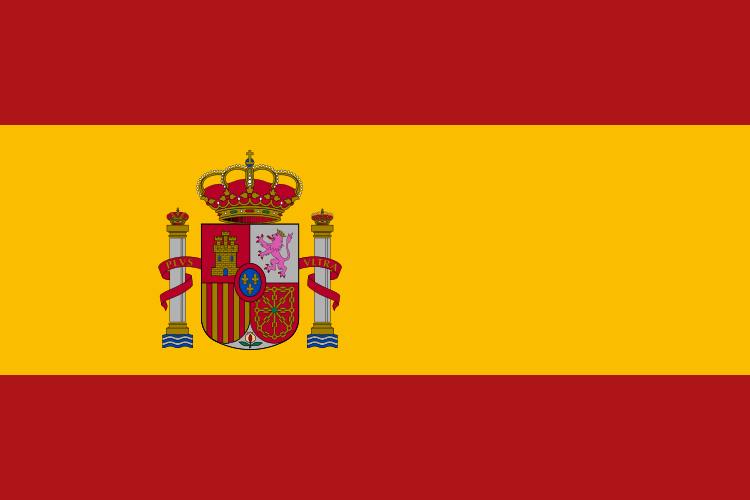
What the flag means
- Red and yellow — the historic colors of Spain
- Coat of arms — the old kingdoms (Castile, León, Aragón, Navarre, Granada) and the Pillars of Hercules
Design set by: Constitución Española (1978), art. 4.1; Ley 39/1981, de 28 de octubre, por la que se regula el uso de la bandera de España y el de otras banderas y enseñas, art. 3 · Adopted 1981
Highlights
- 💃 The passion of flamenco
- 🥘 Paella and tapas heaven
- ⛪ Gaudí's Sagrada Família
- ☀️ Mediterranean sun and beaches
- ⚽ La Liga soccer powerhouse
Quick facts
- Region
- Europe · Southern Europe
- Population
- 49,355,143 people (2025)
- Area
- 505,992 km²
- Capital
- Madrid
- Languages
- Spanish, Catalan
- Currency
- Euro (EUR)
- Organizations
- United Nations, European Union, NATO, OECD
Neighboring countries
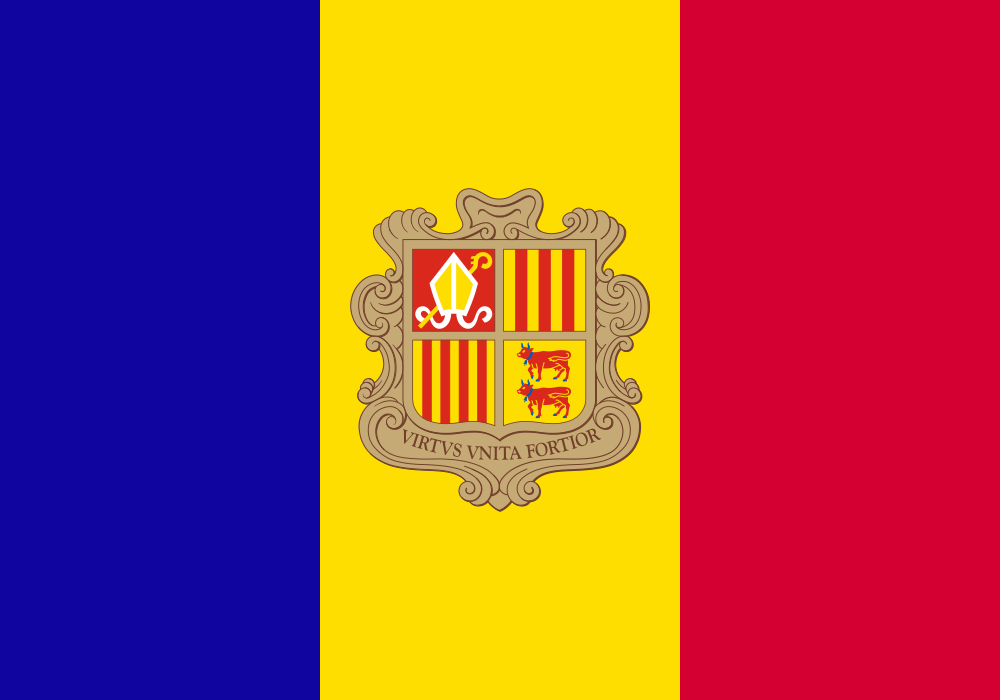
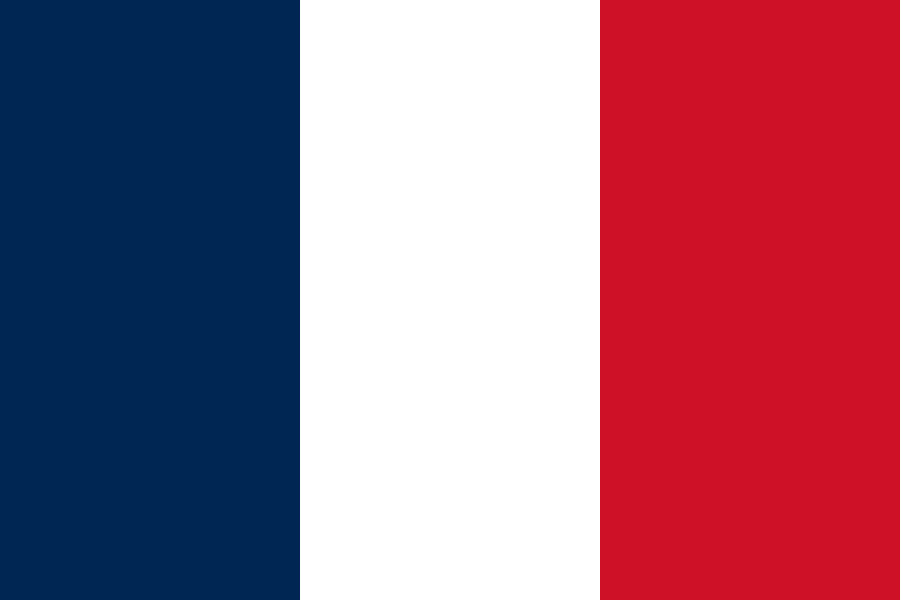
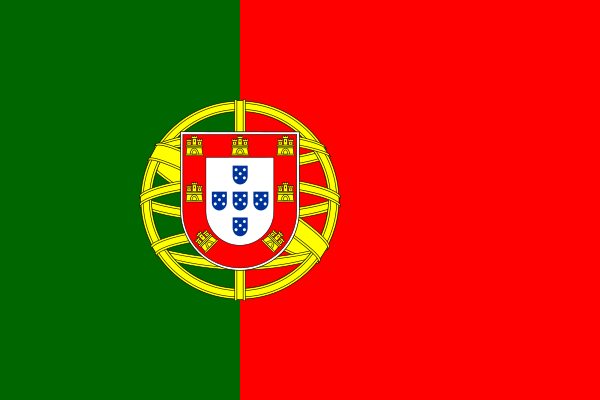
Land neighbors, approximated from simplified map outlines.
Symbols in History (6)
Coats of arms and emblems whose historic seat lies within this country’s present-day territory.
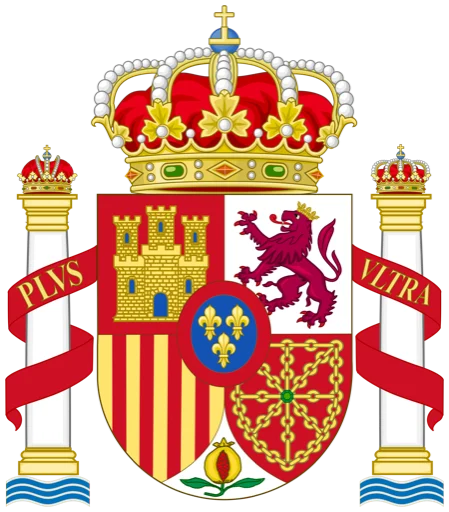
Arms of the Spanish state, the 1981 statutory version
OriginThe current Spanish arms combine Castile, Leon, Aragon, Navarre and Granada with the Bourbon-Anjou shield and the Pillars of Hercules, and were laid down by law in 1981.
DescriptionThe shield is divided into four quarters holding a gold castle on red, a crowned red lion on white, yellow and red vertical stripes, and a gold chain on red; at the lower point is a pomegranate, and in the centre sits a blue shield with three gold lilies. Above is a crown trimmed with pearls and a red cap, and on either side stands a crowned silver pillar, with red ribbons wound about them lettered 'PLVS' and 'VLTRA'.
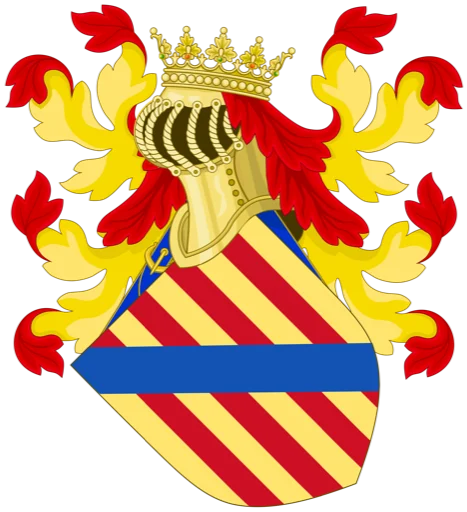
Attributed Arms of the Kingdom of Majorca
Sources do not confirm exactly who bore this design or in which version, so no description is given.
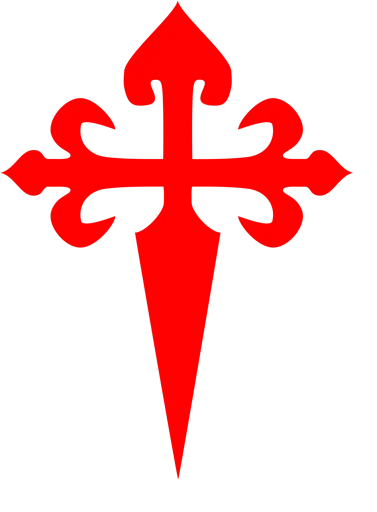
Cross of the Order of Santiago
OriginThe red sword-shaped Cross of Santiago is the chief emblem of the Order of Santiago.
DescriptionA cross drawn in a single red colour: the lower arm stretches out like a long, pointed blade, while the upper and side arms split and finish as fleurs-de-lys. The cross is drawn on its own, with no shield or background.
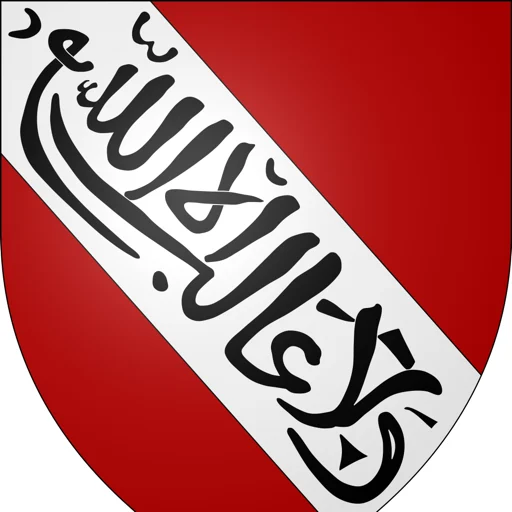
Nasrid Arms of Granada
OriginFounded by Muhammad I in 1232, the Nasrid dynasty ruled Granada until 1492 and was the last Muslim state in the Iberian Peninsula. Its motto, "there is no victor but God," became the signature of the ruling house and was carved countless times across the walls, arches and fountains of the Alhambra, whose decoration also includes the shield crossed by a band bearing those same words. The drawing shown here is a modern heraldic rendering of that device.
DescriptionA deep red shield is crossed by a broad white band running from the upper left down to the lower right. Along the band flows the motto in black Arabic cursive, read from the bottom right upward and ending at the top left in the word Allah: "wa-la ghaliba illa Allah." Victory comes not from the ruler but from God — a formula of humility that doubled as the dynasty's calling card. There is no beast and no crown: the writing alone is the charge, exactly as Islamic art made calligraphy its highest ornament.
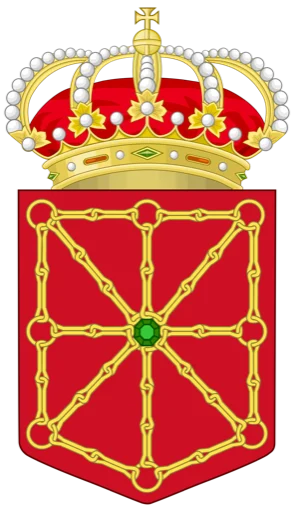
The chain arms of the Kingdom of Navarre
OriginA red shield with a gold chain network and a jewel at the centre is Navarre's signature arms.
DescriptionOn a red shield, gold chains run horizontally, vertically and diagonally to meet at the centre, and a chain also runs once around the edge of the shield. A green jewel is set where the chains meet in the middle, and a gold crown lined with red sits above the shield.
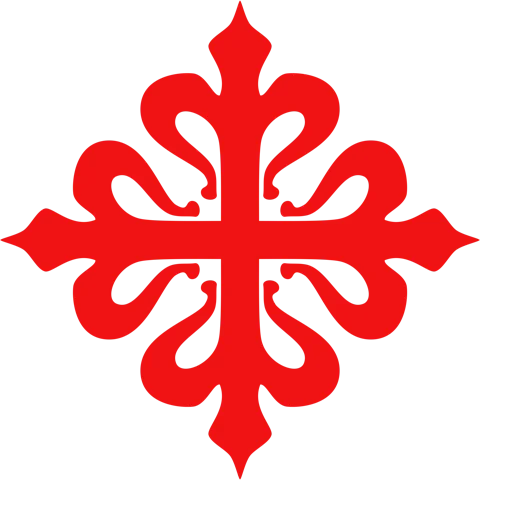
The Cross of the Order of Calatrava
OriginThe red fleur-de-lis cross on a white field is the emblem that identifies the Order of Calatrava.
DescriptionA red cross with four arms of equal length is drawn on a white field, and each arm ends by opening out like a lily flower, with inward-curling tendril-shaped curves attached. The cross stands alone, with no shield border and no other charge.


State & regional flags (19)
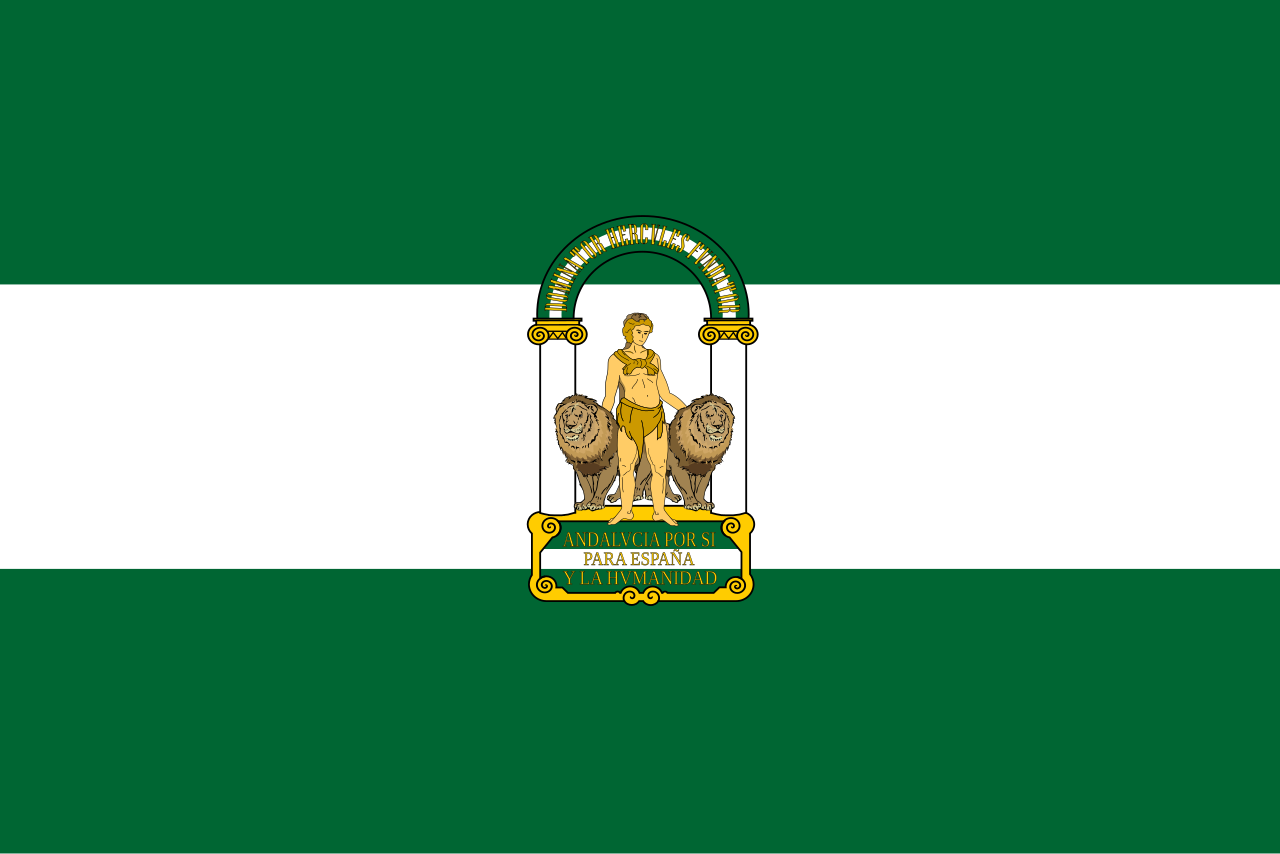
Andalusia
Green represents hope and peace, white represents purity and dialogue, and the central emblem depicts Hercules with two lions between the Pillars of Hercules.
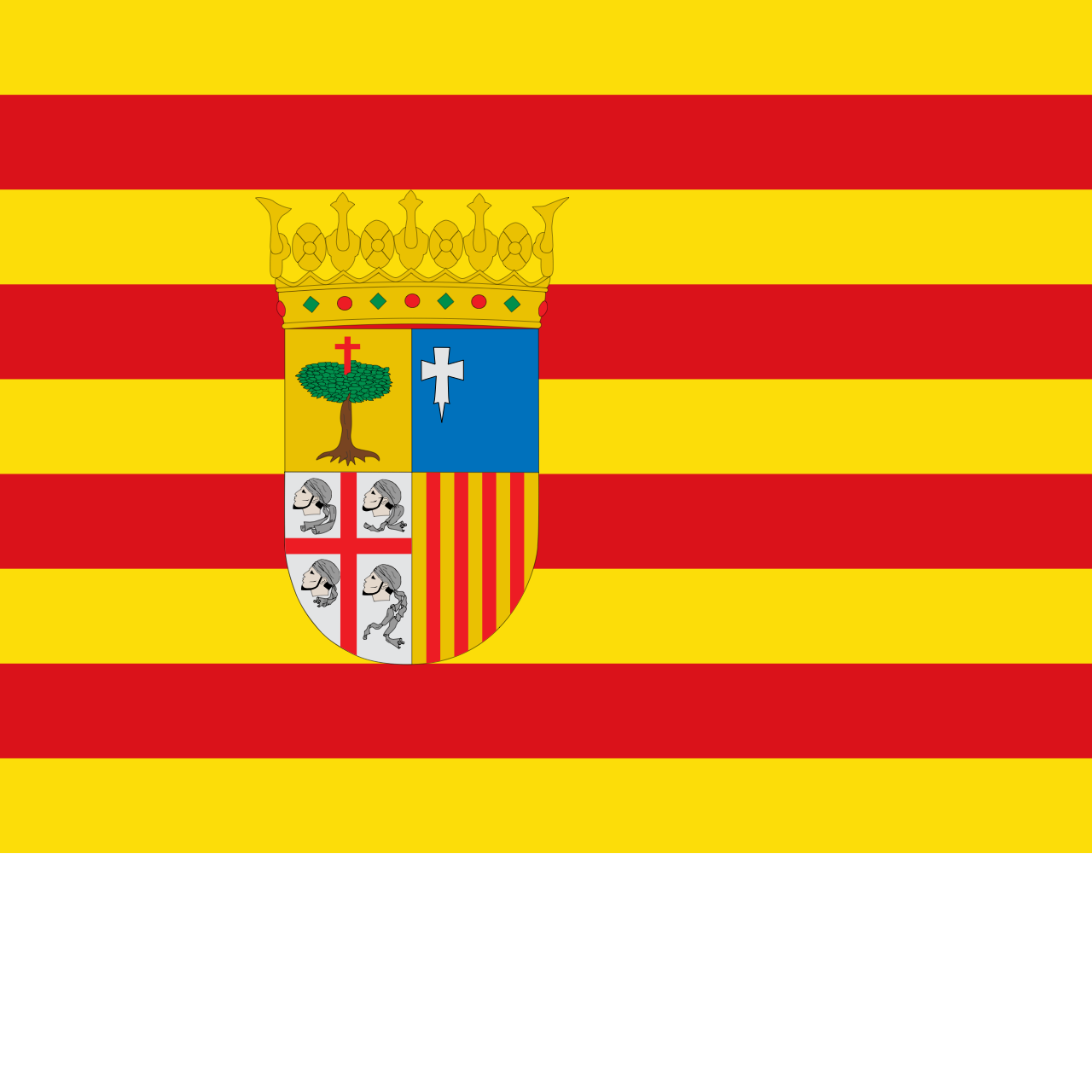
Aragon
Four broad red bars run across a yellow field, with the arms of Aragón set at the hoist, centred vertically. The four bars descend from the royal house of Aragón, shared with Catalonia and Valencia.
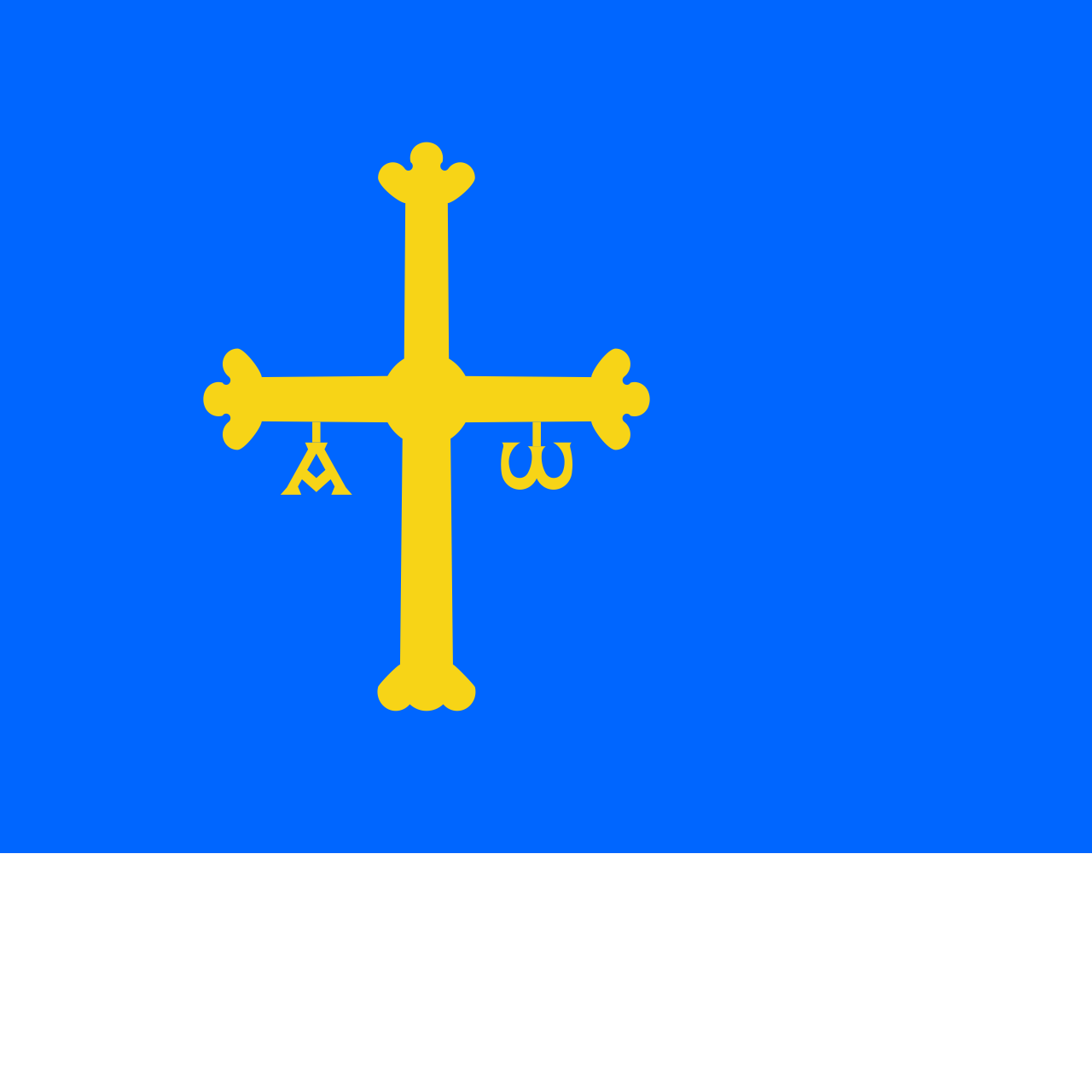
Asturias
A blue field featuring the Victory Cross (Cruz de la Victoria), with the Greek letters Alpha and Omega suspended from its arms, symbolizing the beginning and the end.
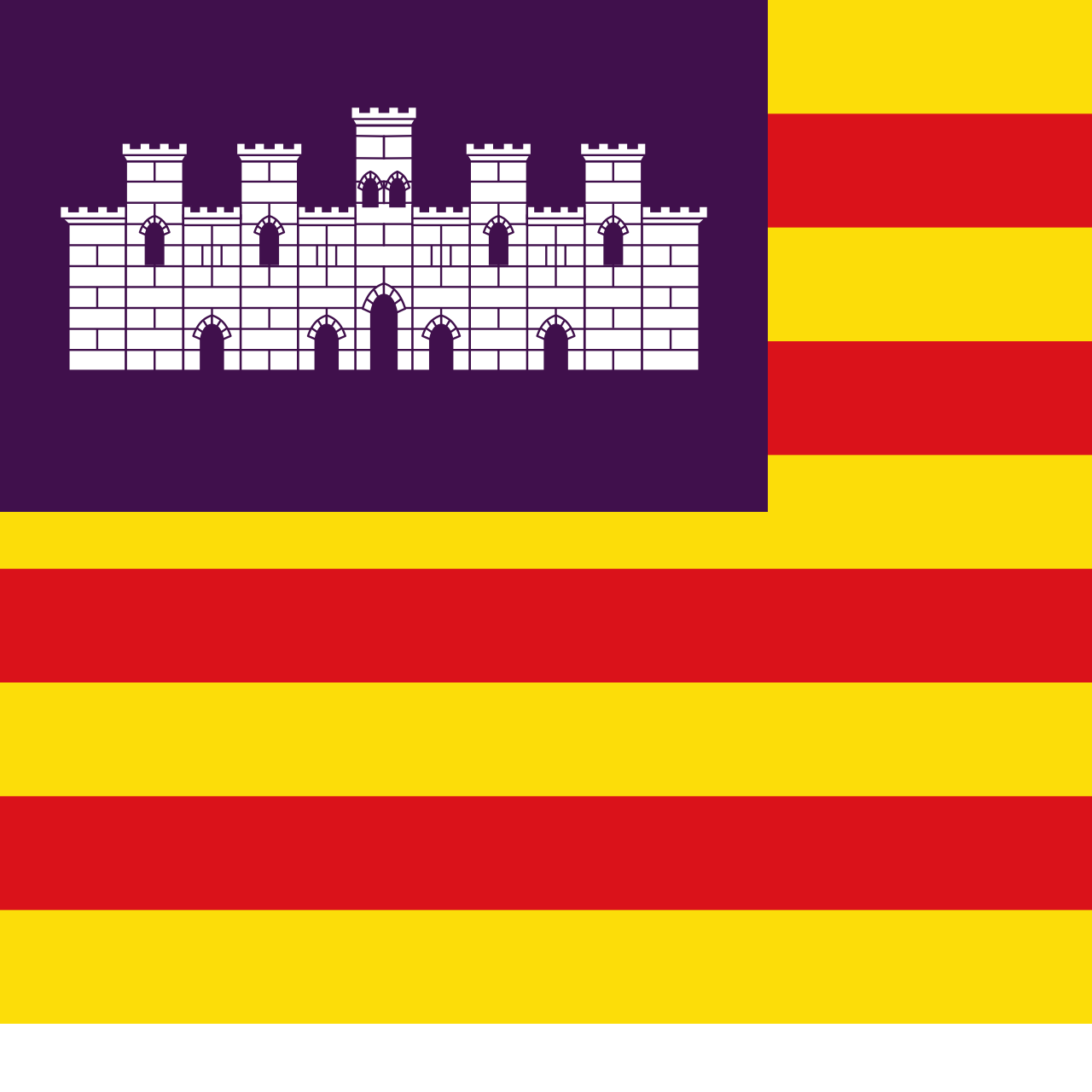
Balearic Islands
Four red bars run across a yellow field, and the upper hoist canton is deep purple bearing a white castle. The castle stands for the fortified towns of the islands, the bars for Aragonese descent.
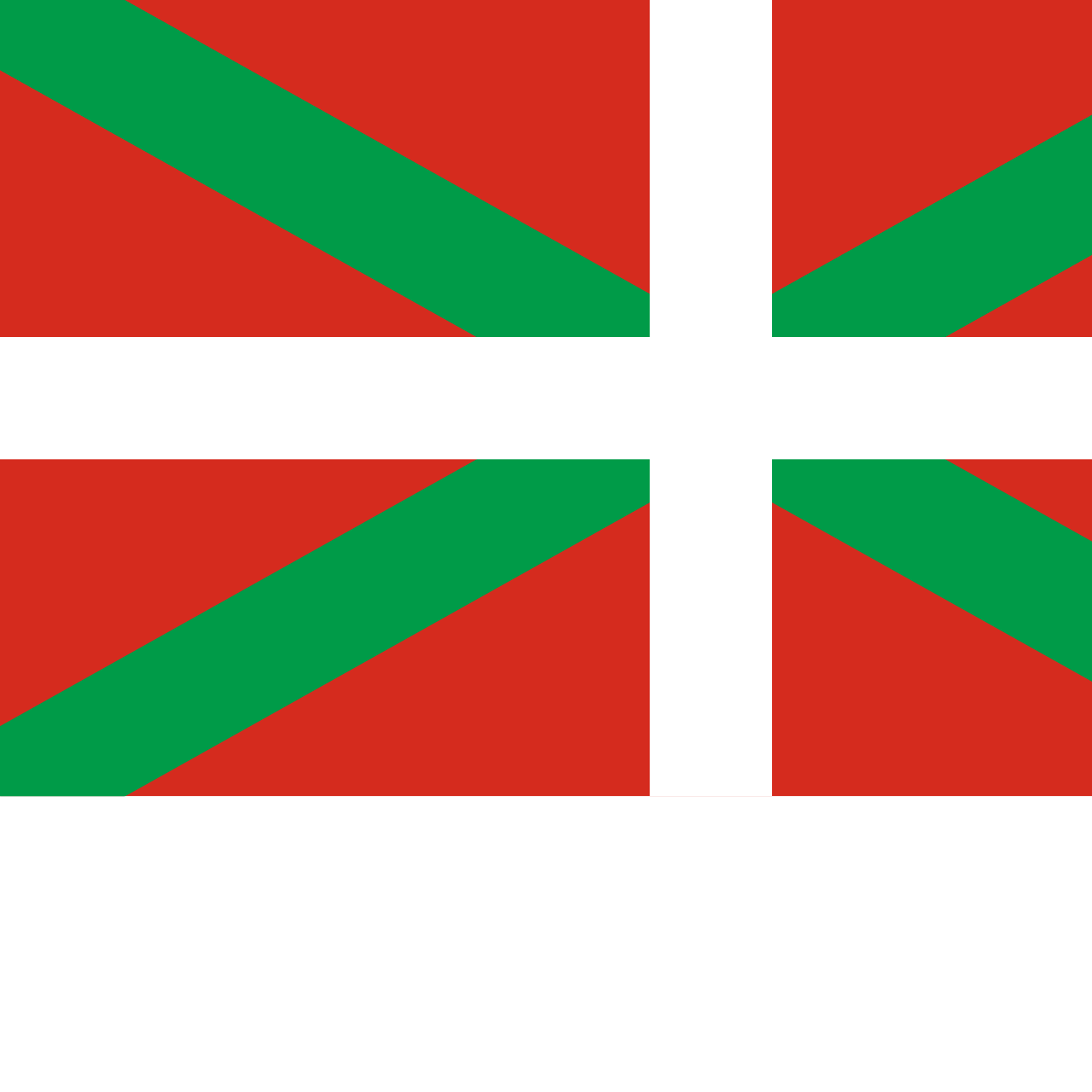
Basque Country
Known as the Ikurriña, the red background represents the Basque people, the green saltire represents the Oak of Guernica and freedom, and the white cross represents Christian faith.
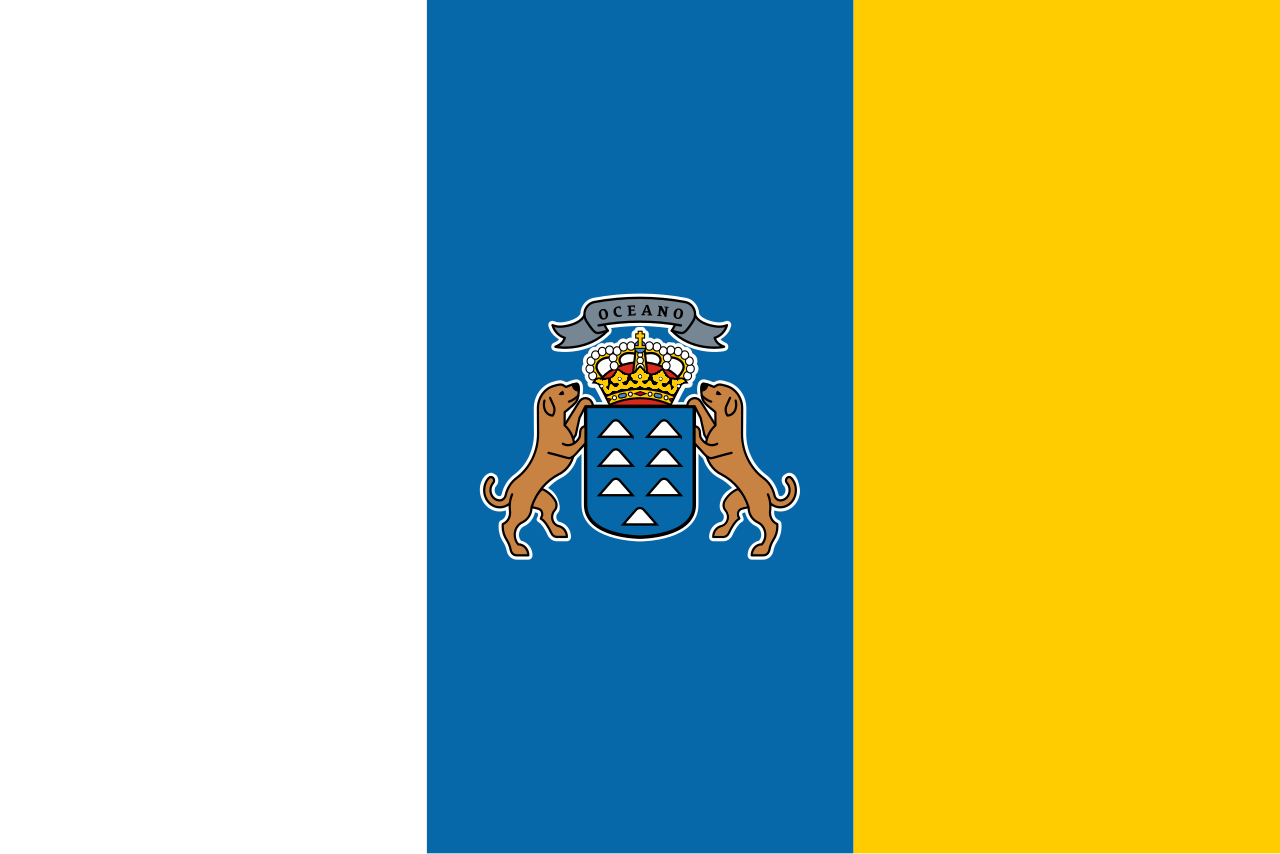
Canary Islands
Composed of white (clouds and Teide snow), blue (Atlantic Ocean), and yellow (bright sunshine) vertical stripes, with the central coat of arms featuring seven islands.
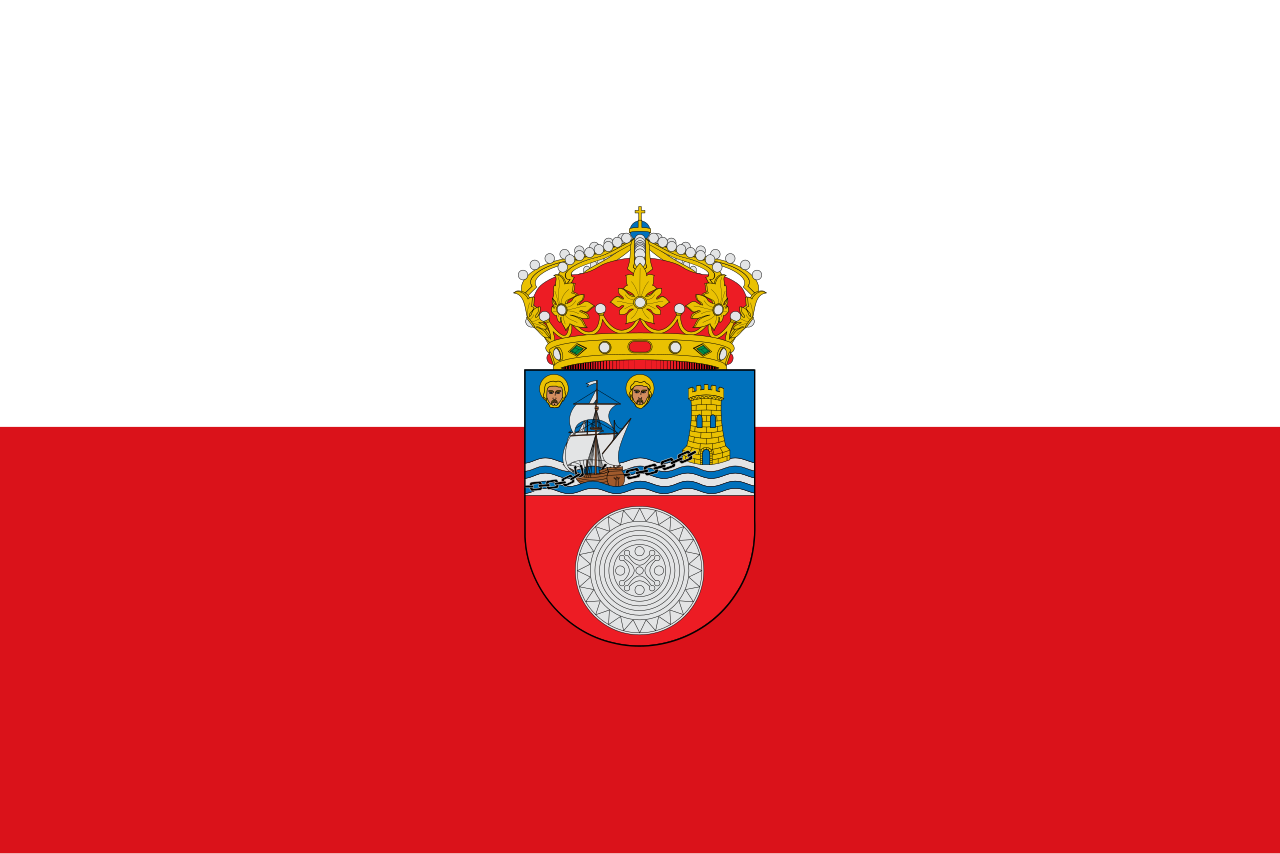
Cantabria
Consisting of white and red horizontal bands with the coat of arms of Cantabria in the center, reflecting maritime heritage and ancient Cantabrian stelae.
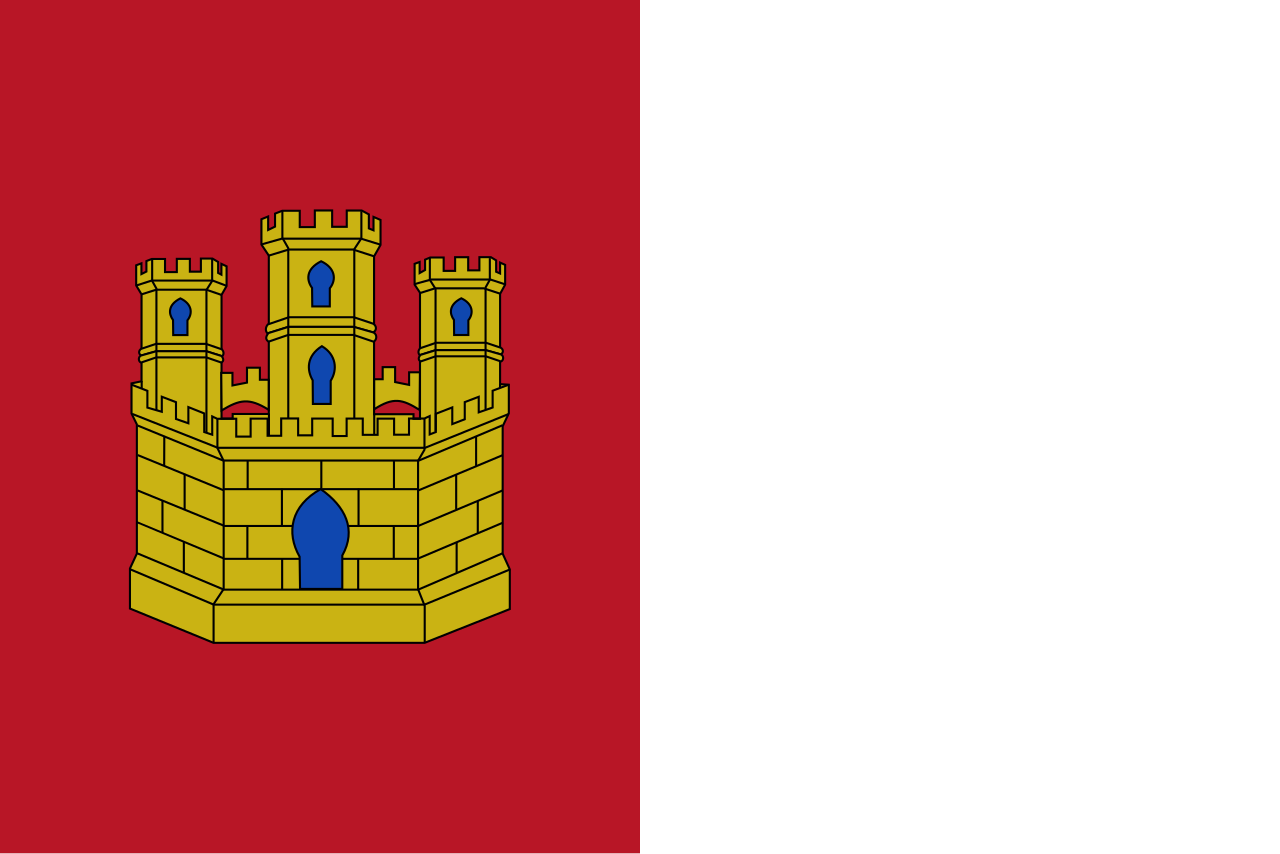
Castile-La Mancha
Divided vertically with a red field on the hoist featuring a golden three-towered castle of Castile, and a plain white field on the fly representing the historic region of La Mancha.
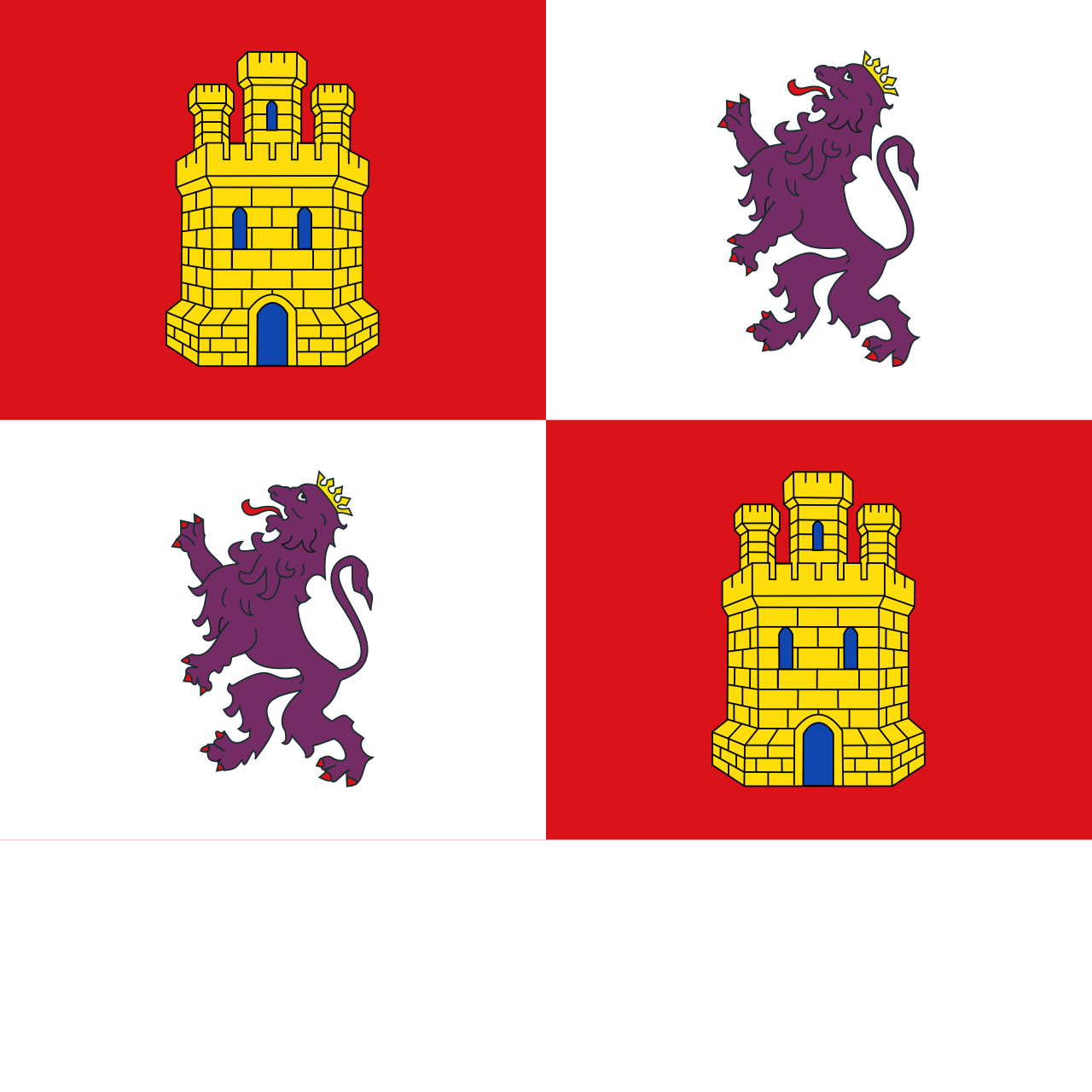
Castile and León
Quartered: golden castles on the red quarters, purple lions on the white ones. The castle is Castile and the lion León — two old kingdoms bound into one.
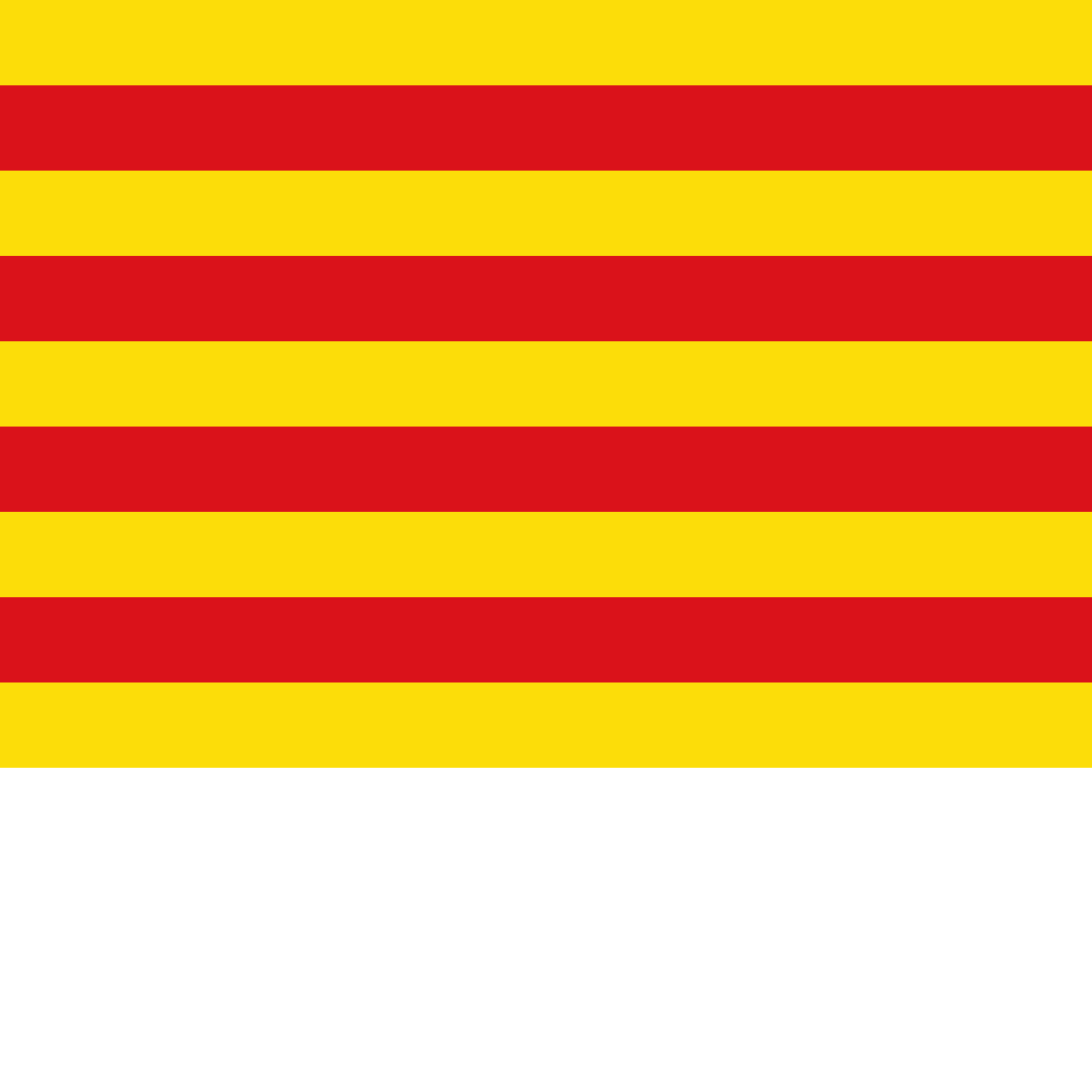
Catalonia
Known as the Senyera, featuring four red horizontal bars on a golden yellow background, derived from the historical coat of arms of the Counts of Barcelona and Crown of Aragon.
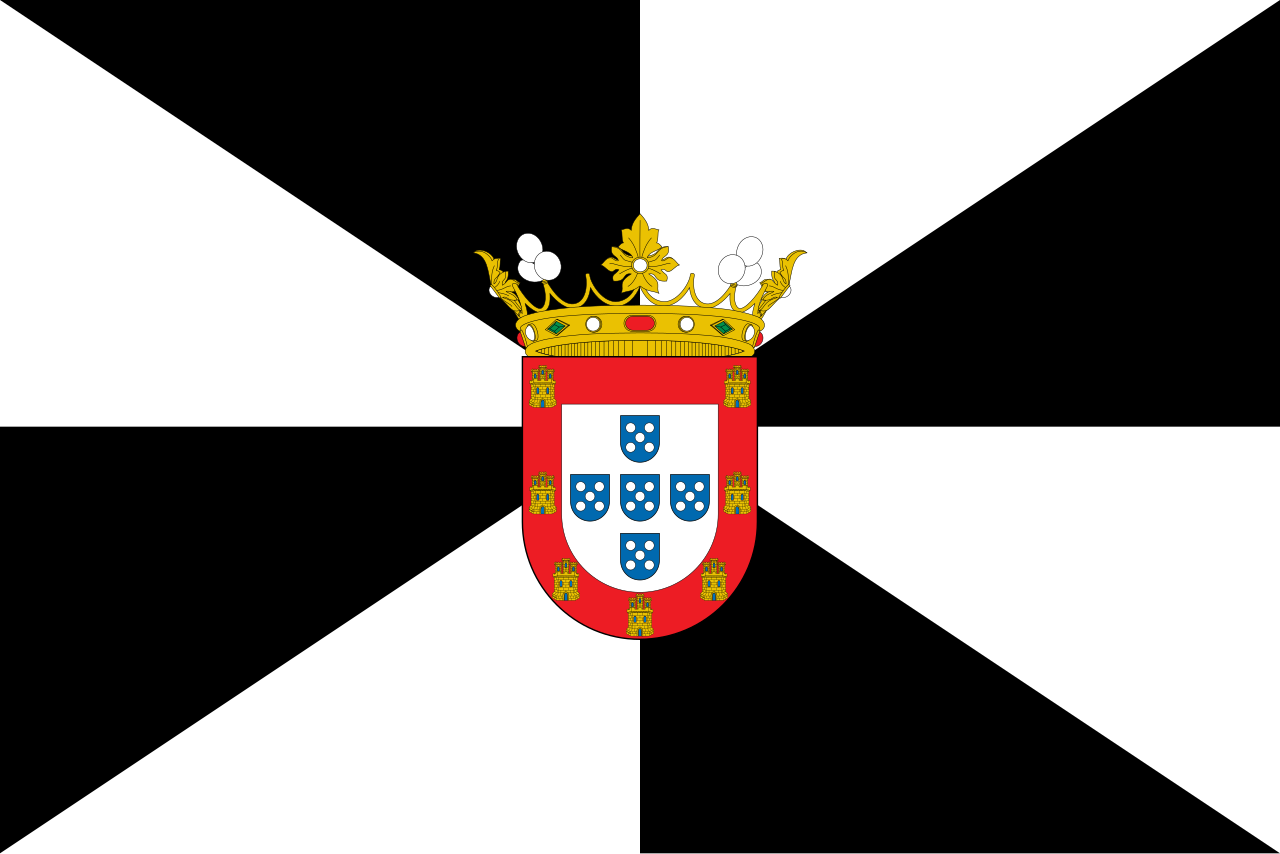
Ceuta
Gyronny of eight black and white triangles (derived from the flag of Lisbon), centered with the official coat of arms of Ceuta featuring the Portuguese shield.
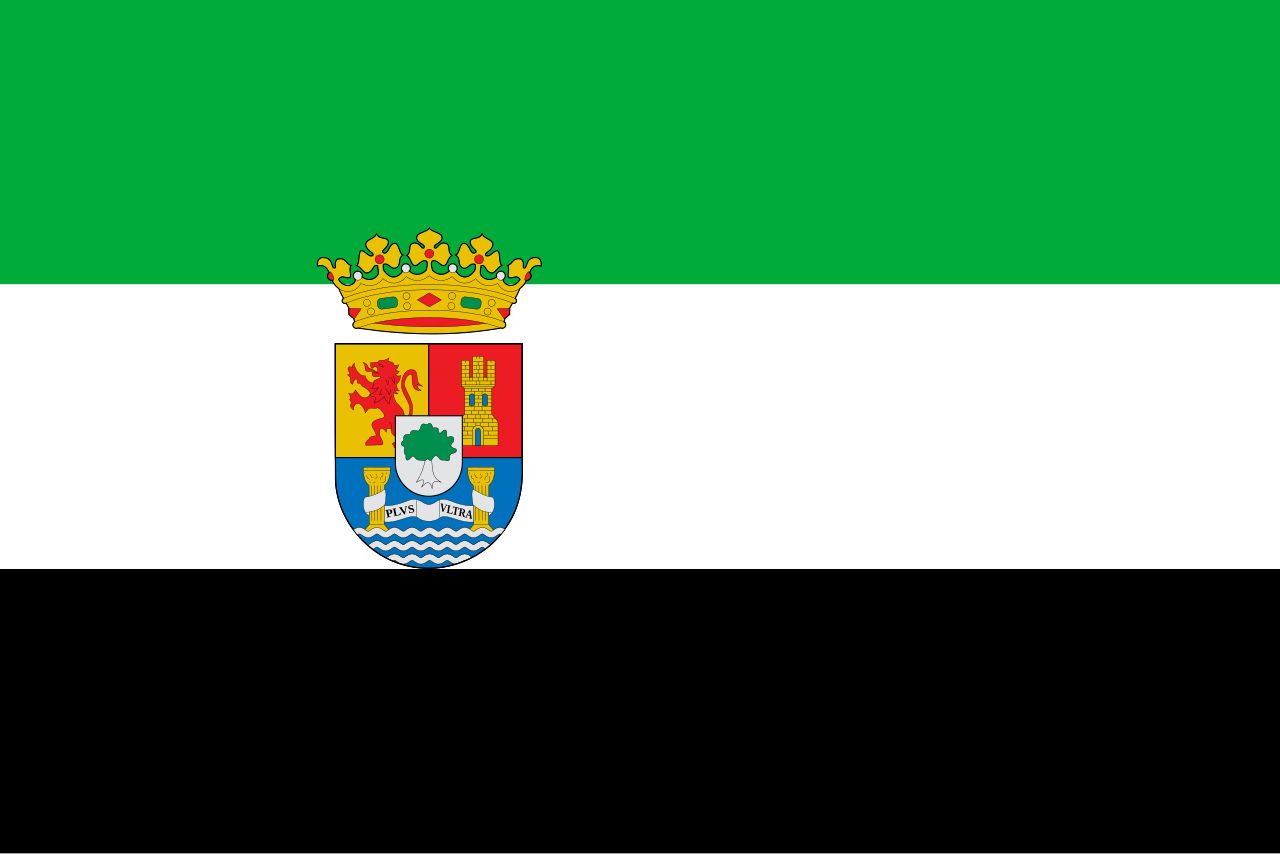
Extremadura
Three horizontal bands of green (Order of Alcántara and hope), white (peace), and black (Royal House of Badajoz), featuring the regional coat of arms of Extremadura.
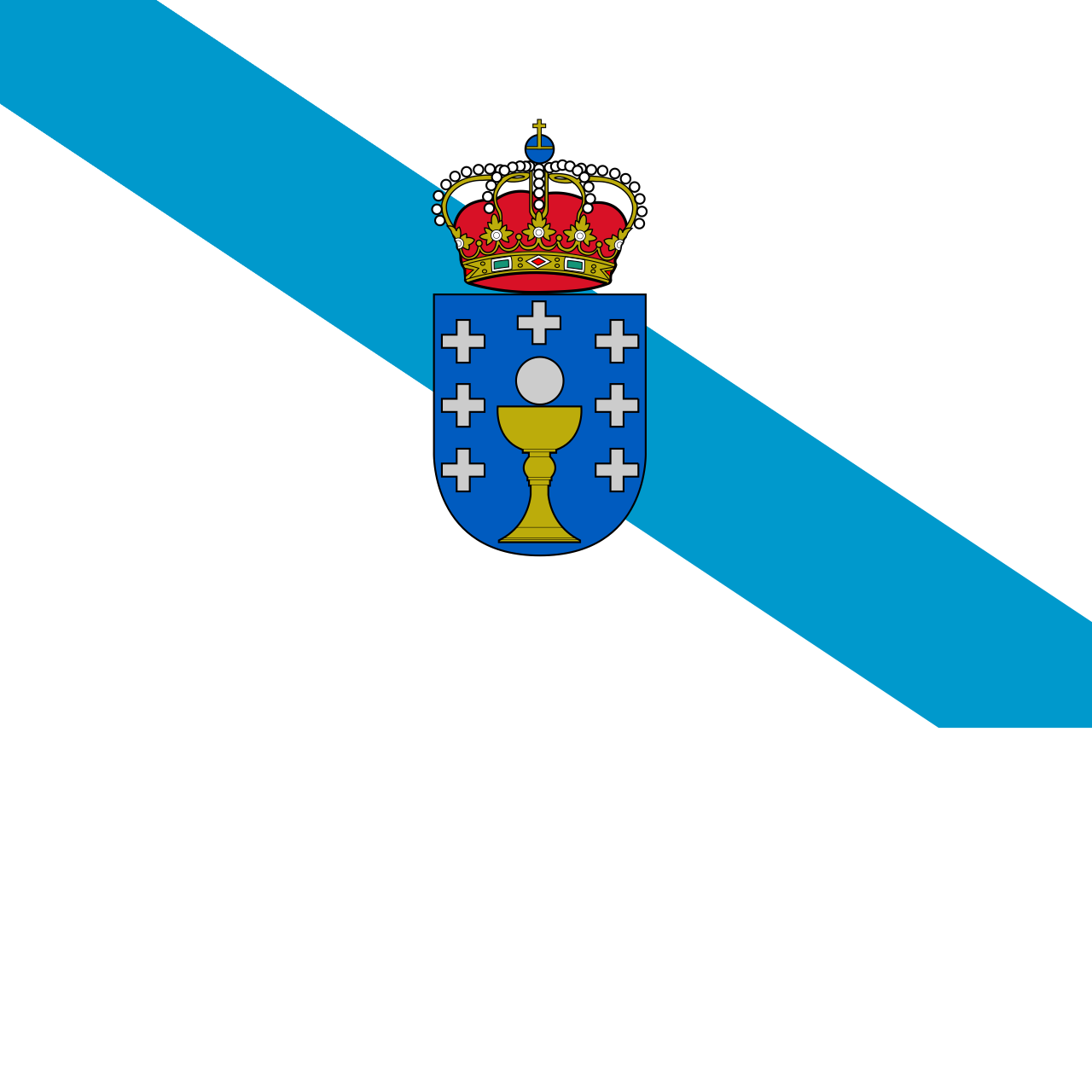
Galicia
A white field with a diagonal light blue stripe from top hoist to bottom fly, derived from the maritime flag of A Coruña, centered with the coat of arms featuring the Holy Grail.
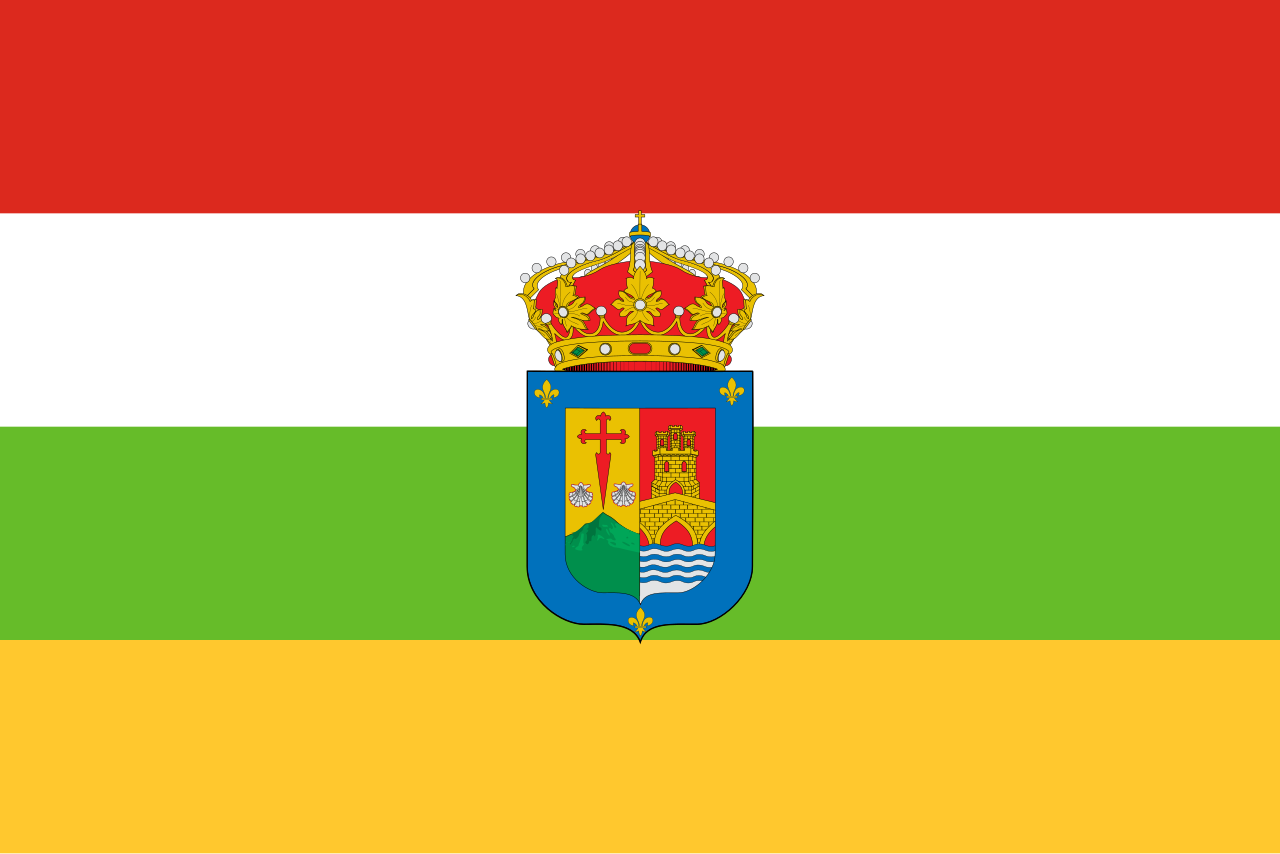
La Rioja
Four horizontal bands — red, white, green, yellow — with a large crowned coat of arms at the centre. Its shield holds scallop shells and a red cross, green mountains, and a bridge over water: the land of the pilgrim road and the Ebro.
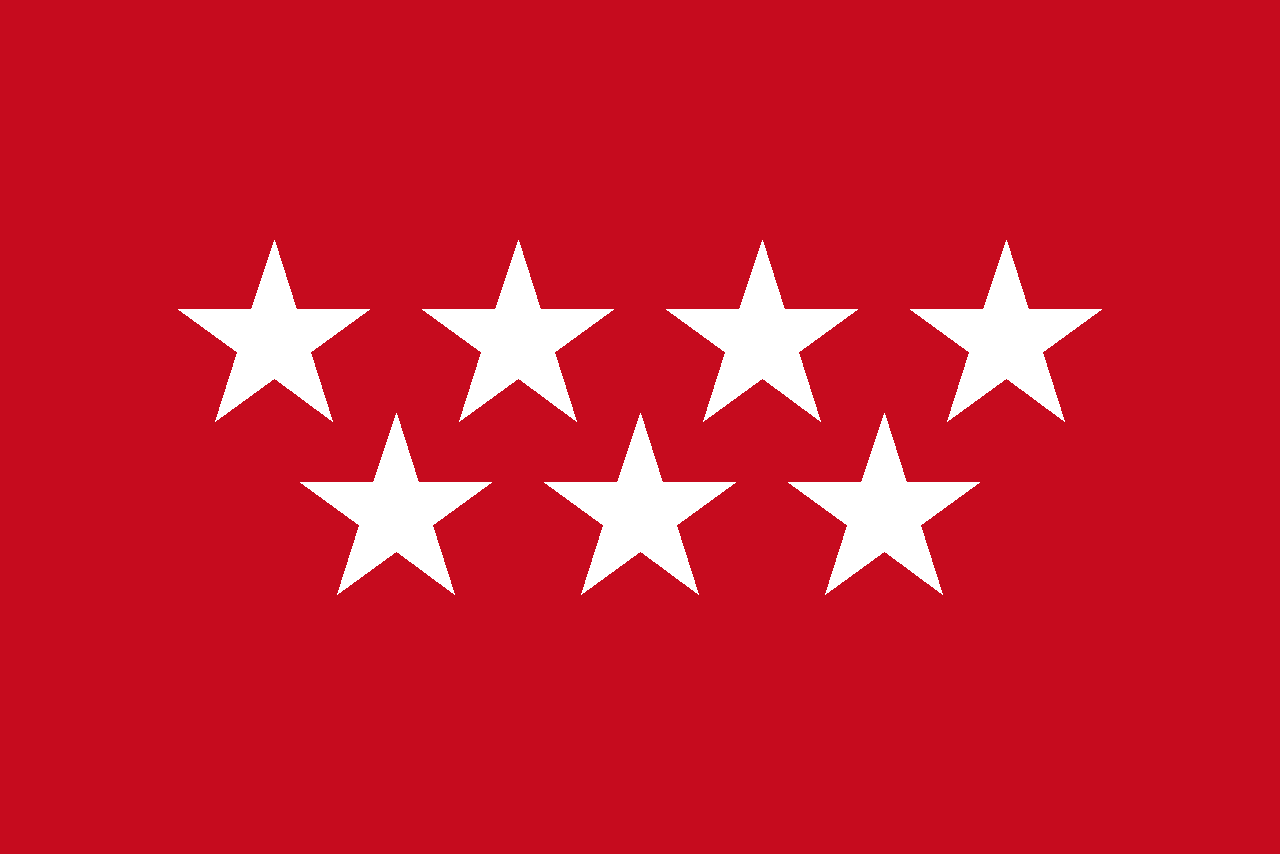
Madrid
A crimson field with seven white five-pointed stars arranged in two rows (four above three), representing the stars of Ursa Major over the Sierra de Guadarrama.
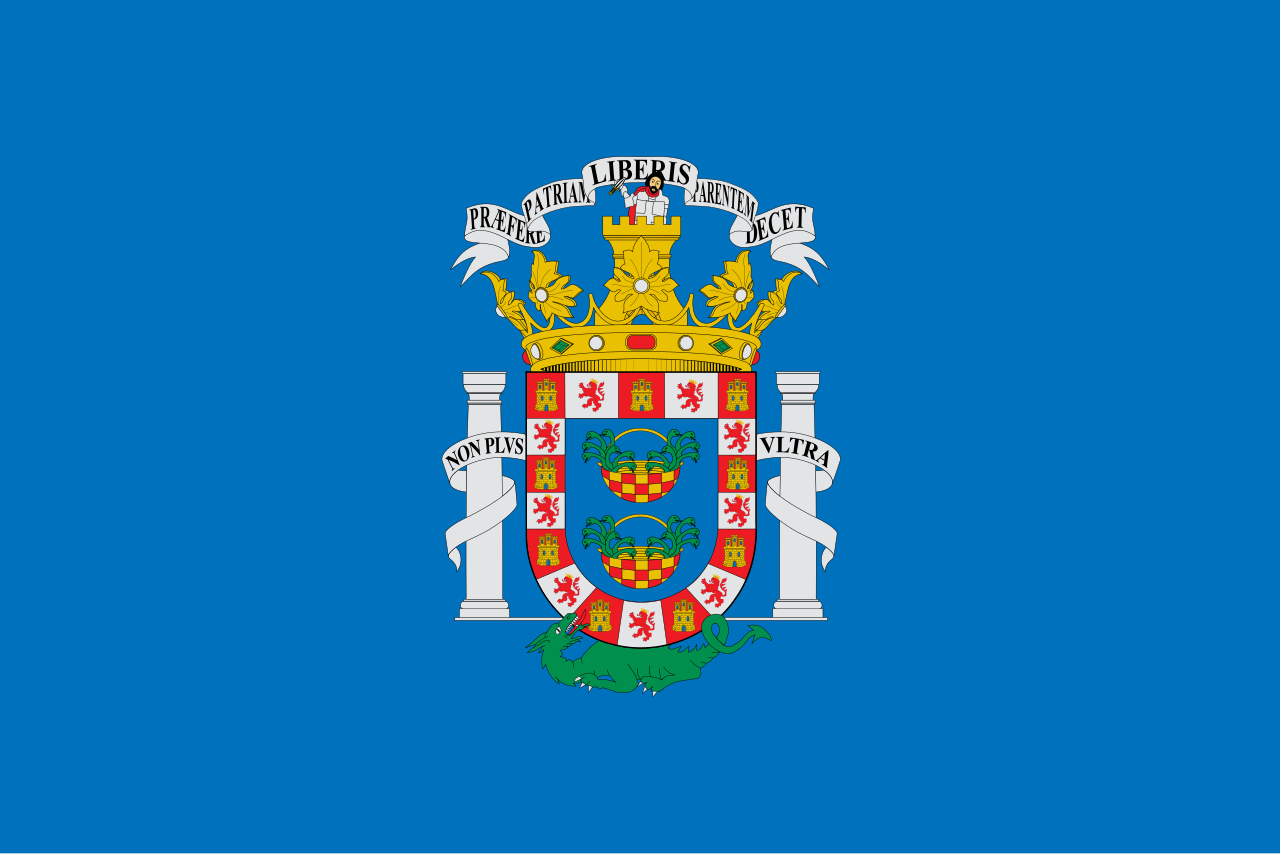
Melilla
A pale blue field bearing the official coat of arms of the House of Medina Sidonia, flanked by the Pillars of Hercules with the motto 'Non Plus Ultra'.
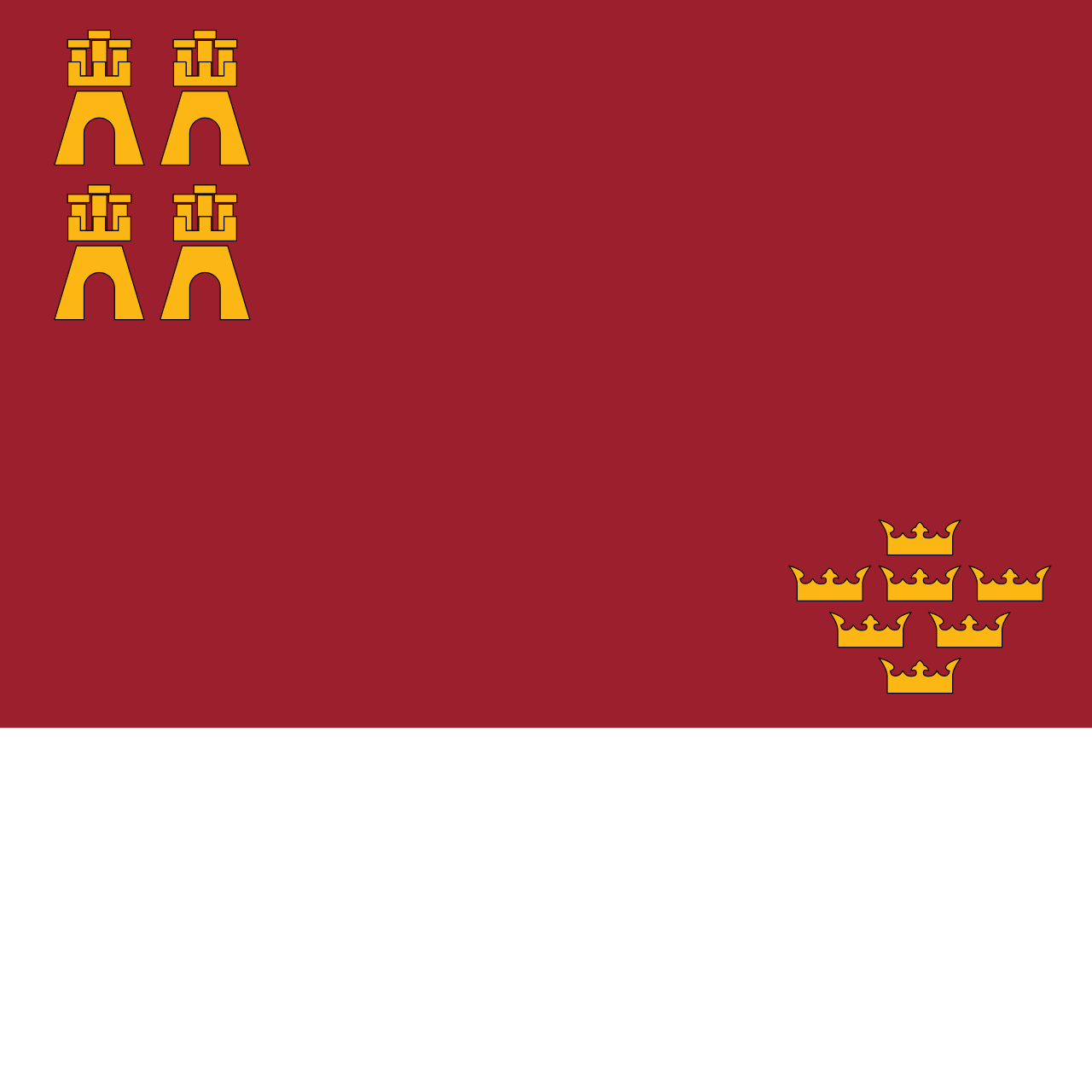
Murcia
A crimson field featuring four golden castles in the upper hoist (representing historic border fortresses) and seven golden crowns in the lower fly, granted by the kings.
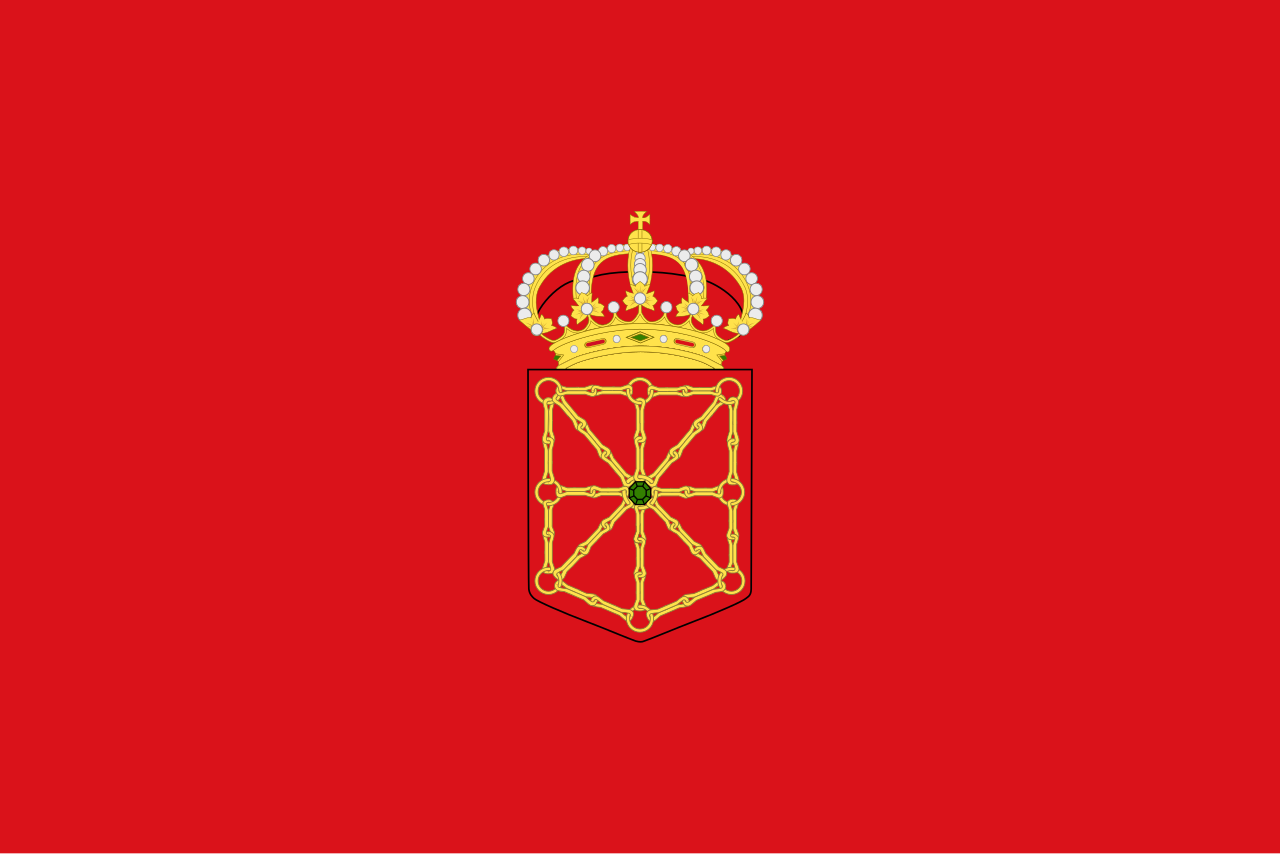
Navarre
A red field featuring the historic coat of arms of Navarre: linked golden chains forming a cross pattern with an emerald set at the center.
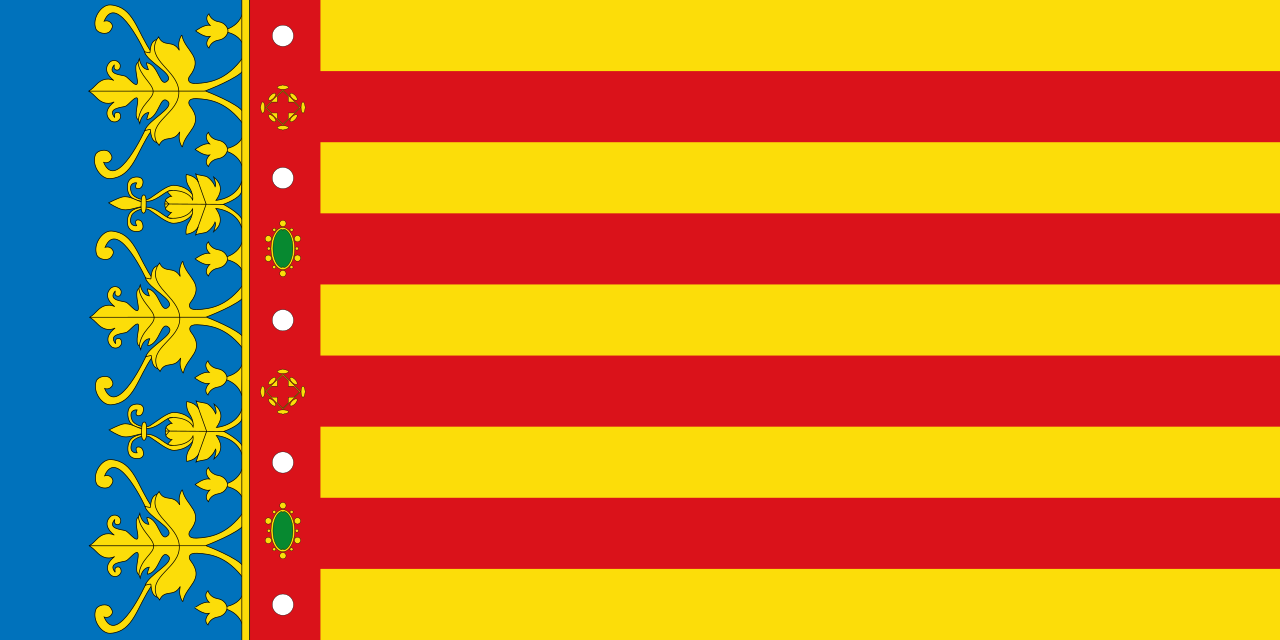
Valencia
Known as the Reial Senyera, featuring four red stripes on a golden background, complemented by a vertical blue band along the hoist decorated with a golden royal crown.
Data Sources
- What the flag means: Constitución Española (1978), art. 4.1; Ley 39/1981, de 28 de octubre, por la que se regula el uso de la bandera de España y el de otras banderas y enseñas, art. 3
- Population: Population, total (SP.POP.TOTL), latest available value
- Area: World countries in JSON, CSV, XML and YAML
- Organizations: Membership of Principal UN Organs
- Organizations: Member States of the European Union
- Organizations: What is NATO? Member countries
- Organizations: Members and partners