Flag of Italy
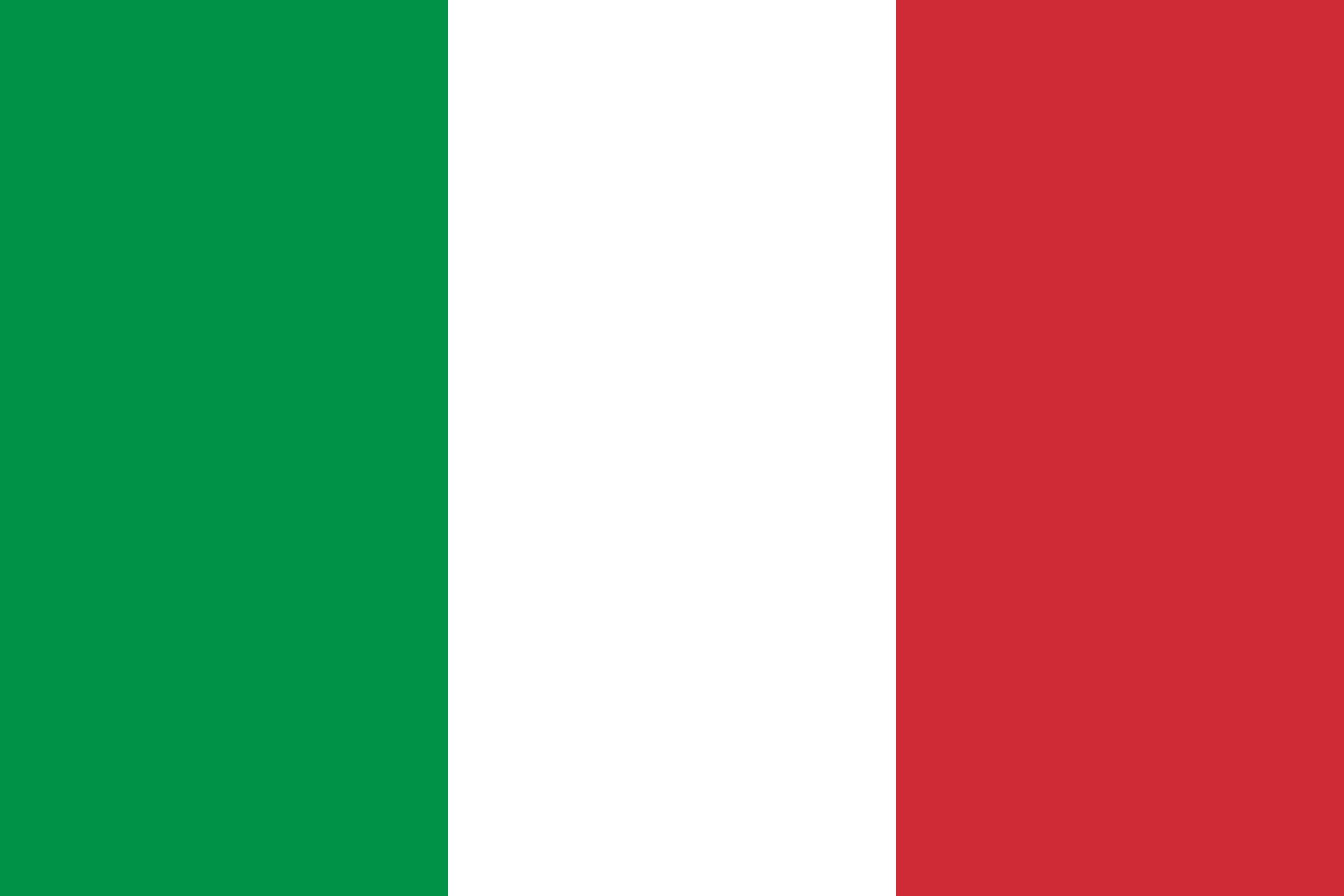
What the flag means
- Green — hope and the land (plains)
- White — faith and the snow of the Alps
- Red — the blood and love of patriots
Design set by: Costituzione della Repubblica Italiana, art. 12; Legge 5 febbraio 1998, n. 22; D.P.R. 7 aprile 2000, n. 121 · Adopted 1948
Highlights
- 🍕 The home of pizza and pasta
- 🏛️ The Colosseum and Roman ruins
- 🎨 Birthplace of the Renaissance
- 🏎️ Ferrari, luxury and design
- 🍷 Tuscan wine and rolling hills
Quick facts
- Region
- Europe · Southern Europe
- Population
- 58,915,656 people (2025)
- Area
- 301,336 km²
- Capital
- Rome
- Languages
- Italian, English
- Currency
- Euro (EUR)
- Organizations
- United Nations, European Union, NATO, OECD
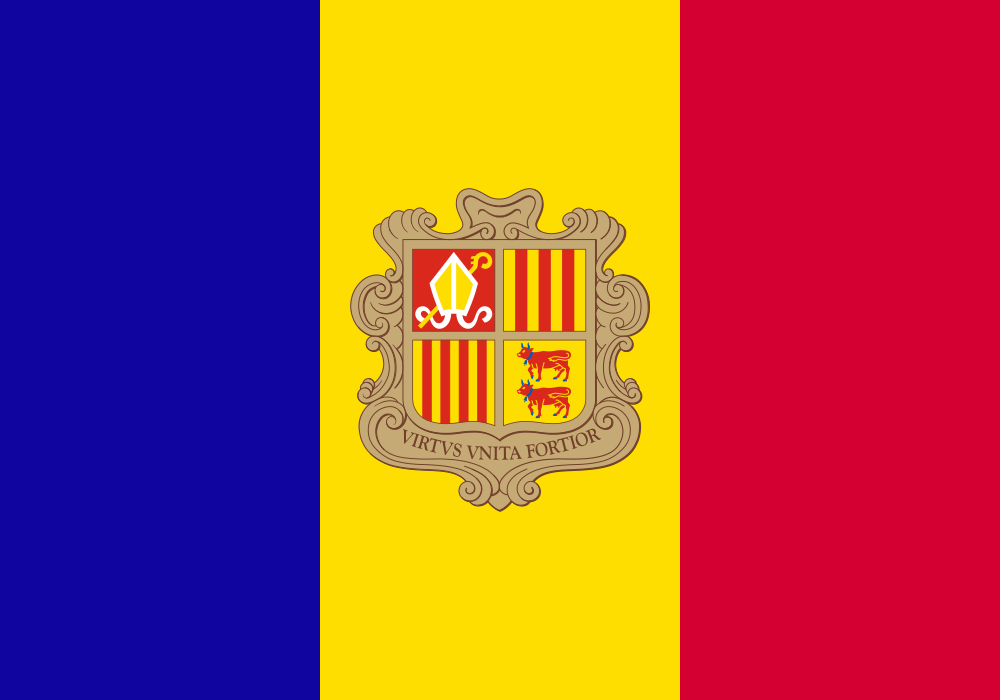
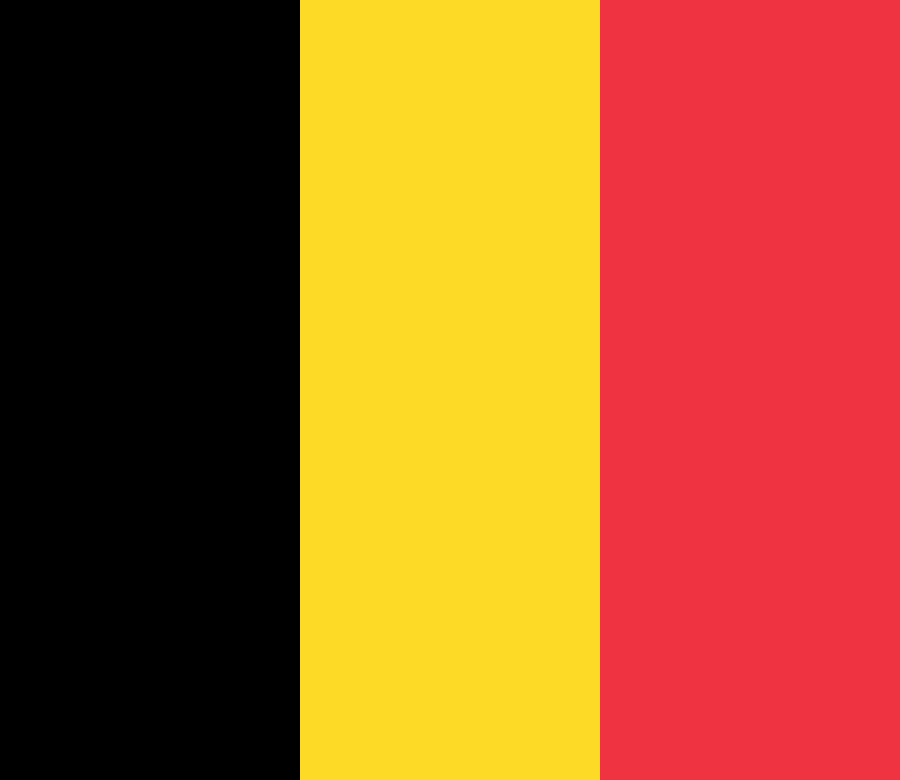
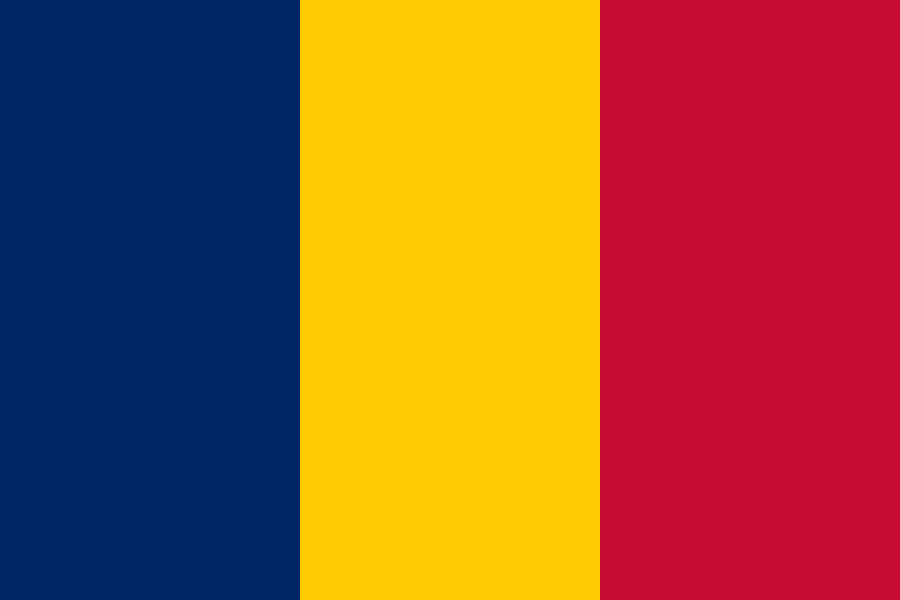
Similar flags
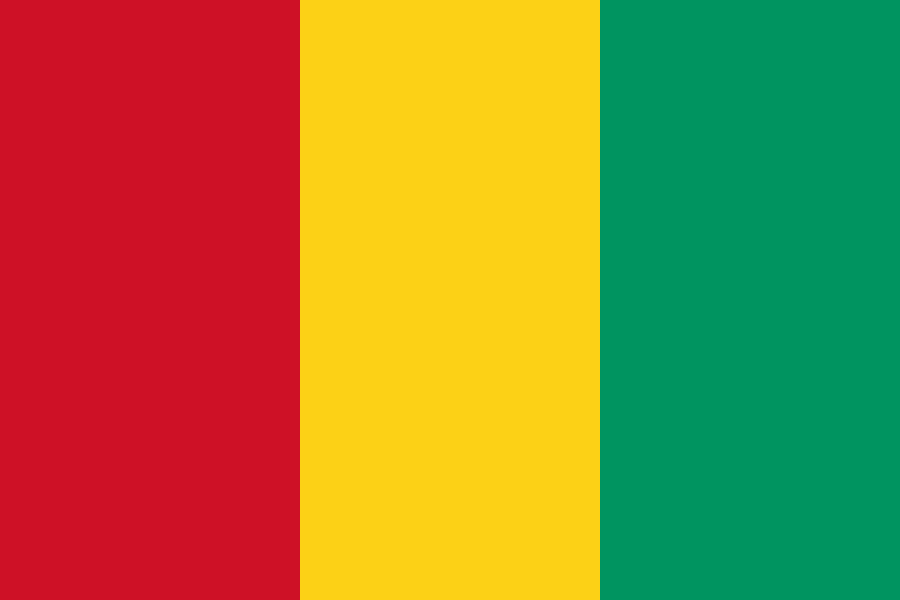
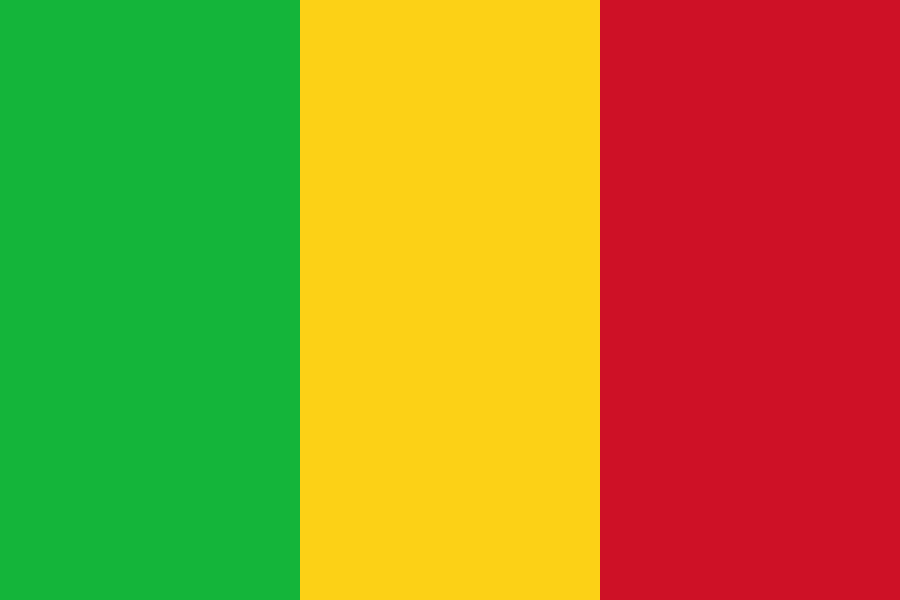
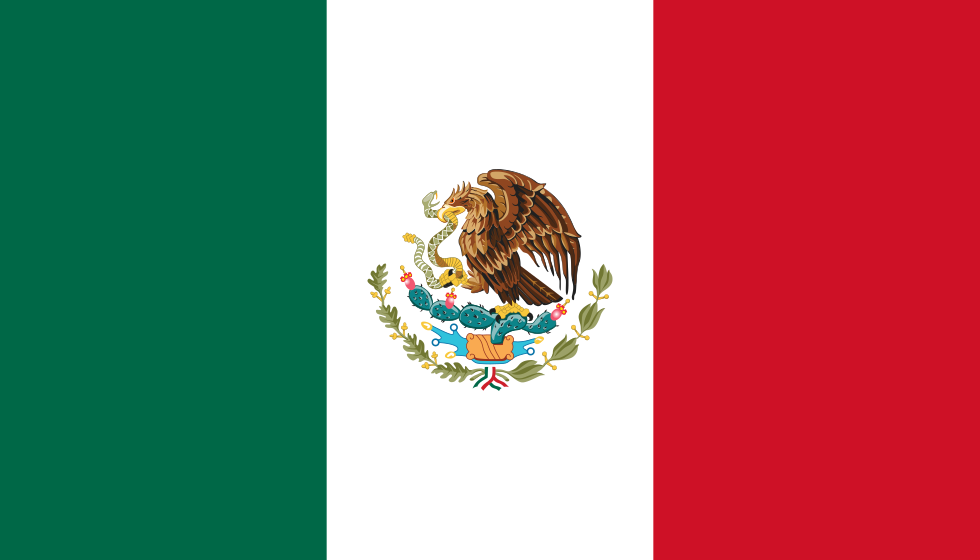
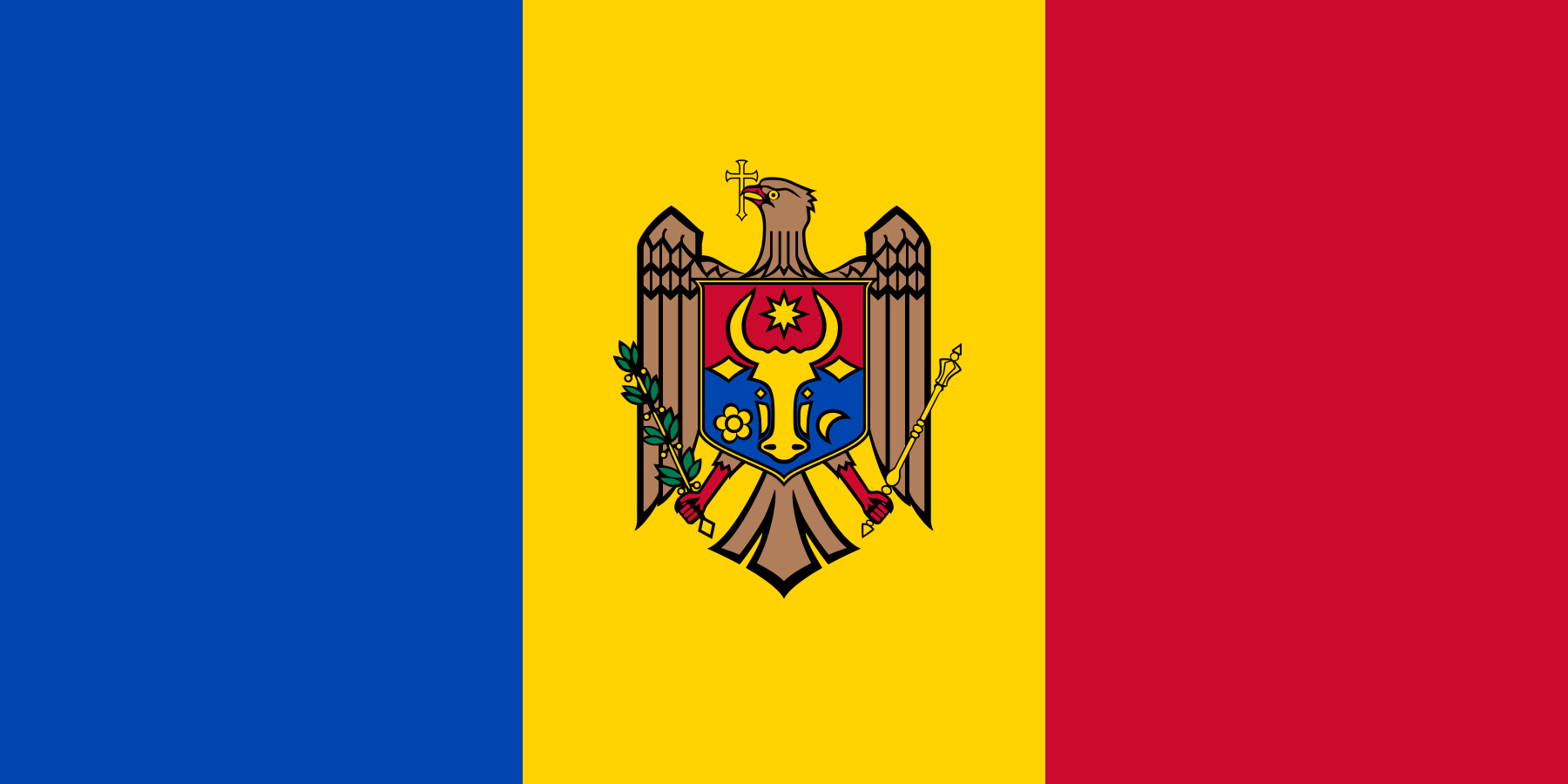
Vertical tricolors



Neighboring countries
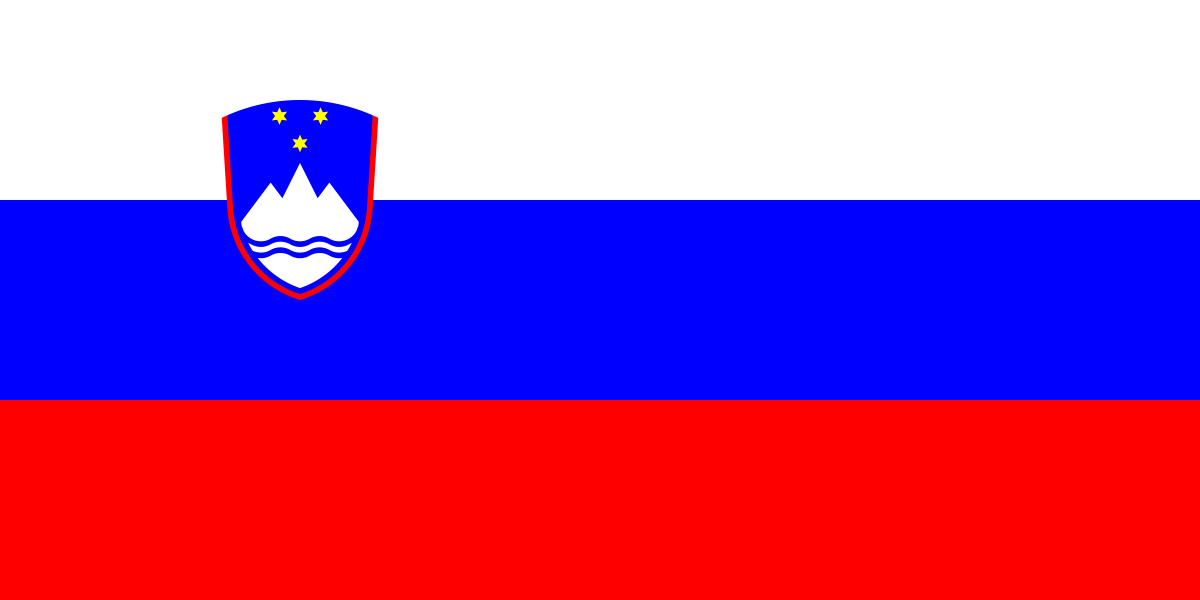

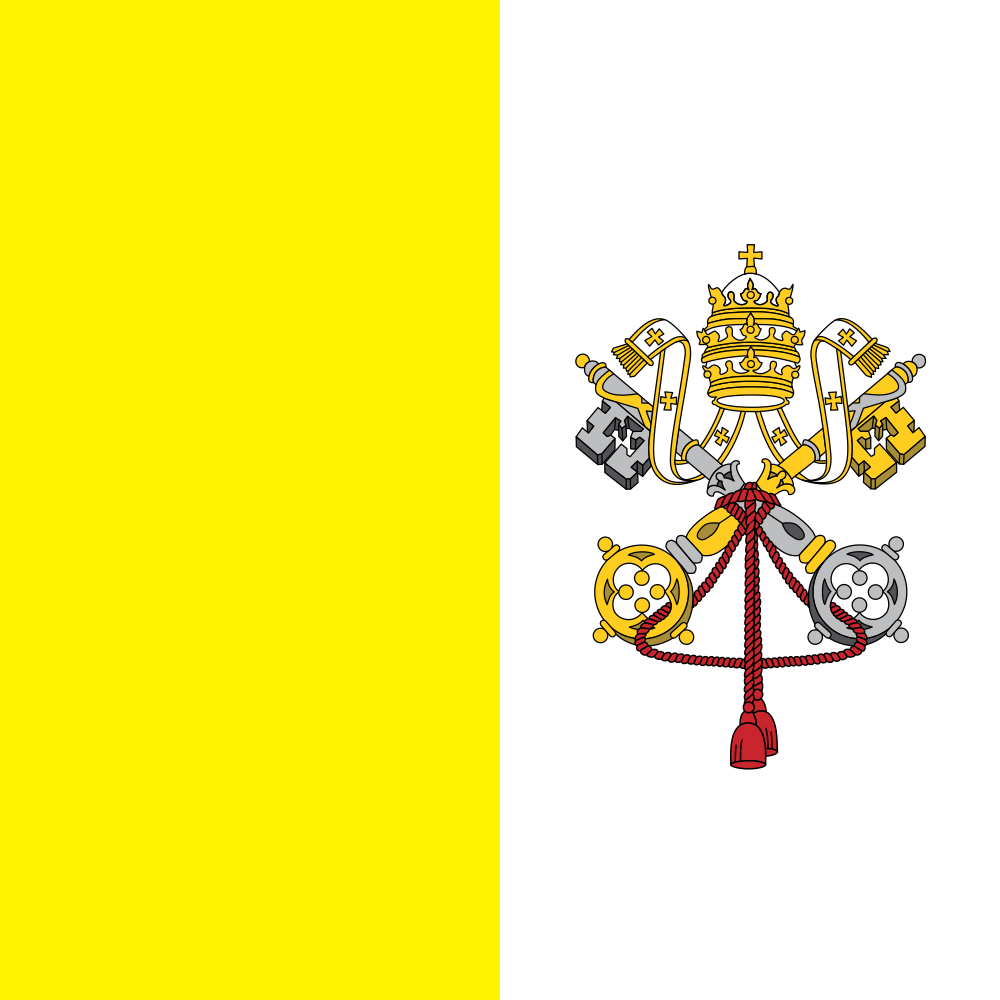
Land neighbors, approximated from simplified map outlines.
Symbols in History (10)
Coats of arms and emblems whose historic seat lies within this country’s present-day territory.

A Modern History-Themed Graphic for Julius Caesar
OriginThe app image combining SPQR with a laurel wreath is a modern graphic that evokes ancient Rome.
DescriptionA wreath of green laurel leaves braided in two strands is drawn as a circle open only at the top, with the silver-grey capitals "SPQR" placed inside it. It is a design of leaves and letters alone, with no shield and no background colour.
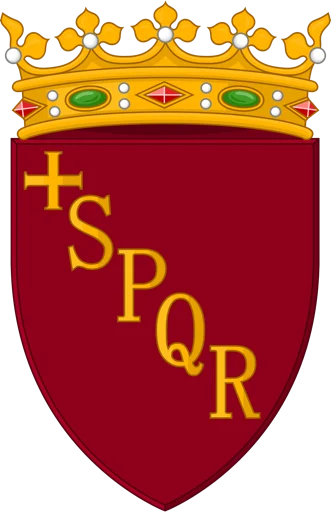
Arms of the City of Rome
OriginA red shield bearing the gold letters SPQR and a cross is the coat of arms of the City of Rome.
DescriptionOn a deep red shield, a gold cross and the four letters 'SPQR' run diagonally from upper left to lower right. The letters are the initials of the Latin Senatus Populusque Romanus (the Senate and People of Rome), and above the shield sits a gold crown decorated with red and green gems and pearls.
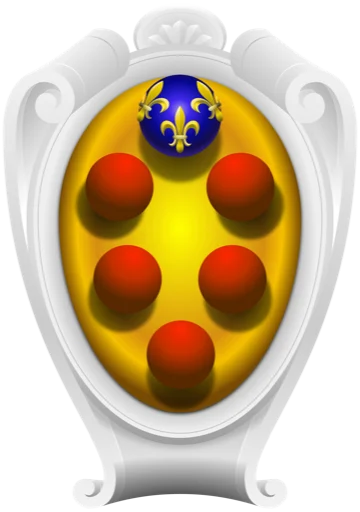
Arms of the House of Medici
OriginThe Medici arms are best known in the version with several red balls on a gold shield and the French lily added to the ball at the top.
DescriptionOn a gold shield, red balls are set two by two in two rows with one more below them, five in all, and at the very top is a single blue ball holding three gold lilies. A silvery-white scrollwork border wraps around the edge of the shield.
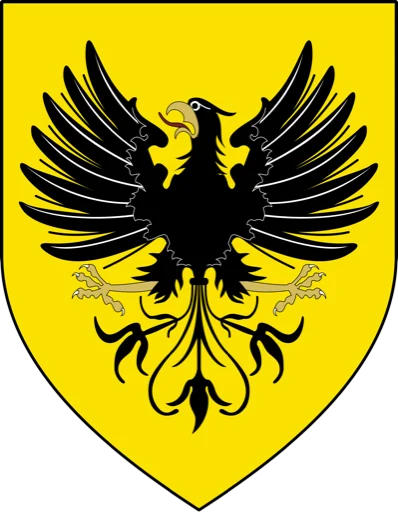
Arms with a Black Eagle on a Gold Field
OriginThis is a design placing a black eagle with its wings spread wide on a gold field. It is a different design from the silver cross on a red field that is widely known as the arms of the House of Savoy, and Guichenon, who wrote a genealogical history of the royal house of Savoy in 1660, recorded that the counts of Savoy used now the eagle and now the cross on their seals until the cross became fixed in the time of Amadeus the Great. The evidence he gave, however, was the seals surviving in his own day, and as to why the cross was the one that remained, the author himself said that this was his conjecture.
DescriptionIn the middle of a gold shield, a single black eagle stands with its wings spread wide, its head turned to one side, its beak, legs and talons painted gold. Every feather is outlined, and the tail feathers hang in several splayed strands.
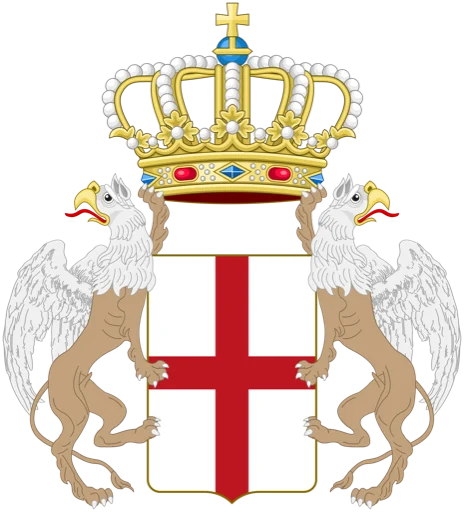
Greater Arms of the City of Genoa, or Republican Arms
OriginThe red cross of Saint George is the core shield of Genoa.
DescriptionOn a silver field a red cross runs straight out to the edges of the shield, and on either side two griffins with white eagle heads and wings and tawny lion bodies rear on their hind legs to support it. Above the shield rests a golden crown set with pearls and red and blue gems, and a deep red mantling hangs down beneath it.
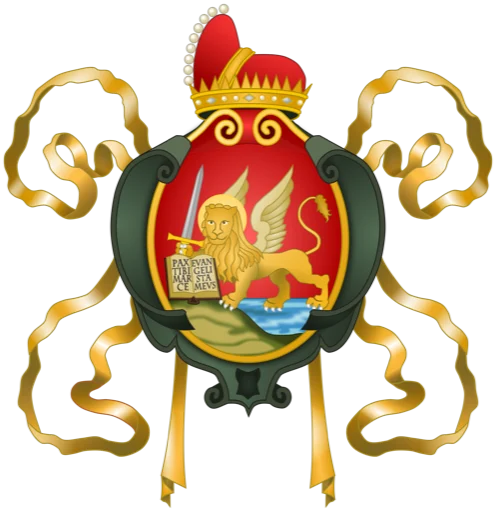
Lion of St Mark of the Republic of Venice
OriginThe winged lion of St Mark is the chief emblem of the Republic of Venice.
DescriptionOn a red oval field, a haloed gold winged lion holds a sword upright in one forepaw and rests the other on an open book lettered 'PAX TIBI MARCE EVANGELISTA MEVS'. Its hind paws stand in blue water; above the shield sits a red doge's cap trimmed with pearls, and gold ribbons trail far behind.
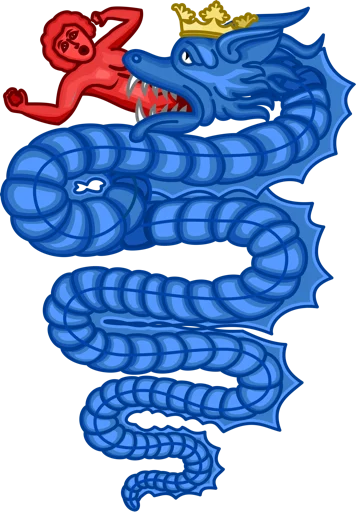
The biscione of the Visconti family
OriginThe biscione, a blue serpent swallowing or disgorging a human figure, is the signature heraldic image of the Visconti family and of Milan.
DescriptionA large blue serpent wearing a gold crown coils its body into a big S shape, with a saw-like crest running along its back and its tail curling at the bottom. A red human figure with both arms raised is held in its wide-open mouth, and this device is drawn on its own, without a shield.
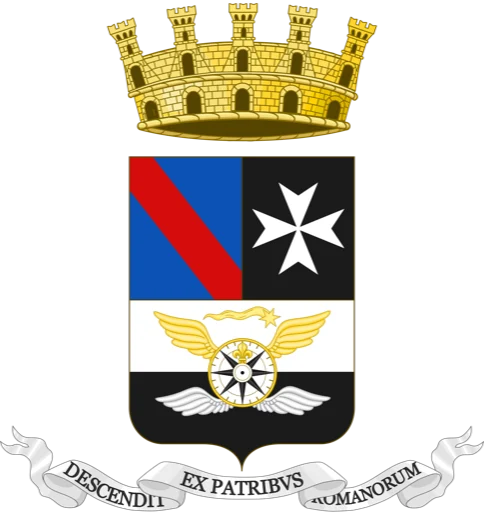
The Heraldic Tradition of Amalfi
Sources do not confirm exactly who bore this design or in which version, so no description is given.
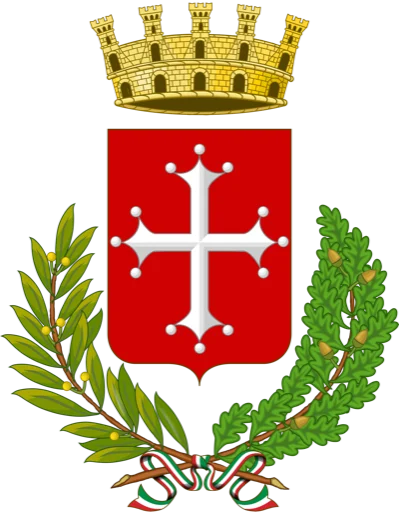
The Pisan cross emblem
Sources do not confirm exactly who bore this design or in which version, so no description is given.
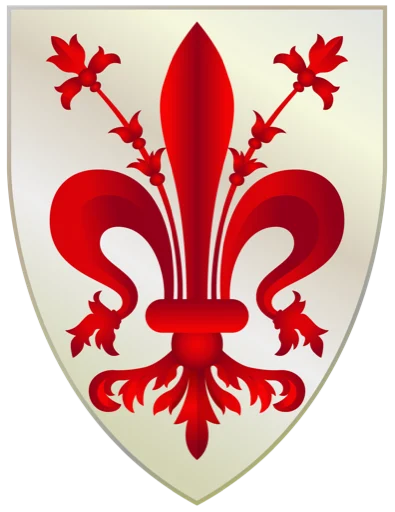
The Red Giglio of Florence
OriginThe red Florentine lily on a silver field, the giglio, is the emblematic device of Florence. The story that the colours of the lily and the field were swapped after the Guelph victory is a tradition handed down in Florence. Likening the flower to the city's artistic and economic flowering is a play on the name "Florence", not a record explaining where the arms came from.
DescriptionOn a bright silver field a single red lily (giglio) is drawn so as to fill the shield. On either side of the central petal, slender stamen-like stems and small buds extend outward as well.


State & regional flags (20)
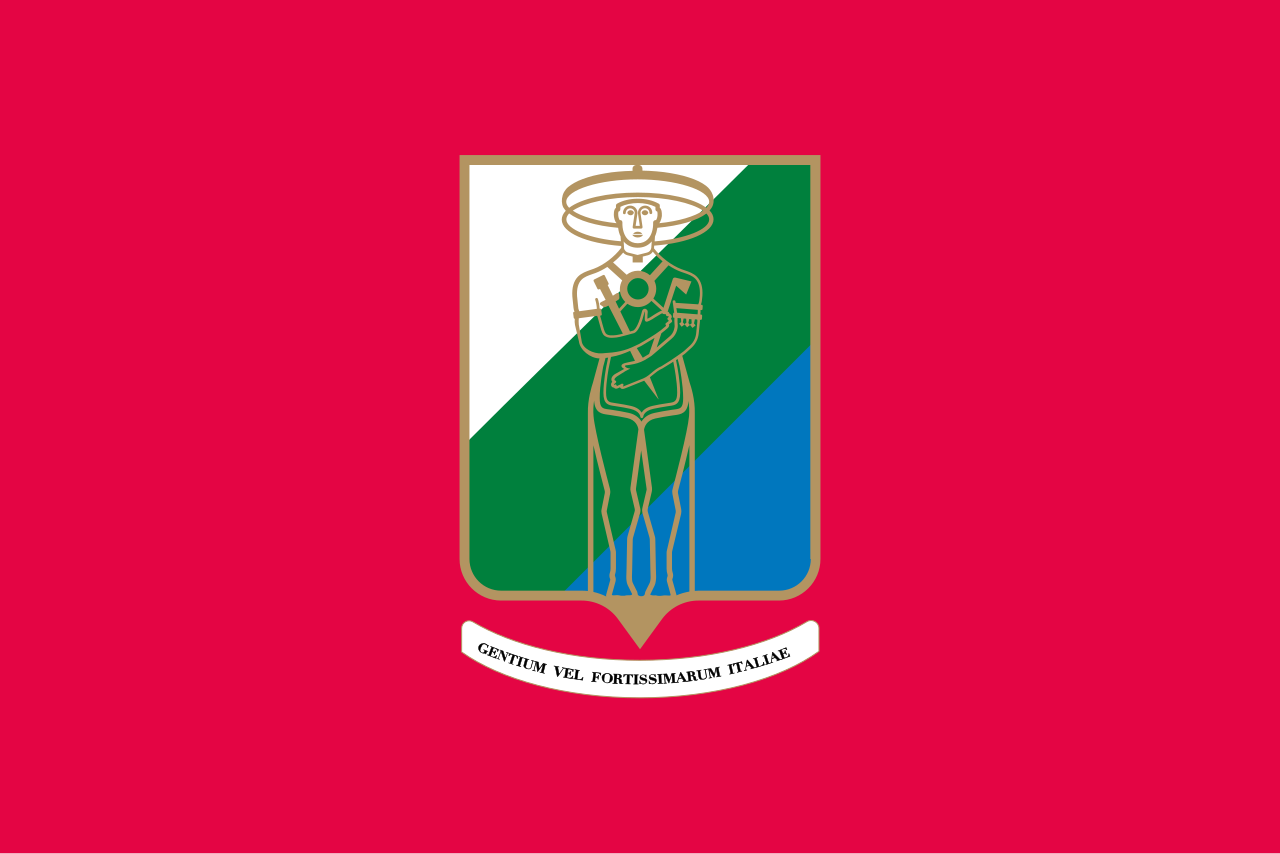
Abruzzo
Crimson field, and on it a shield of white, green and blue diagonal bands with the gold Warrior of Capestrano in his wide disc helmet, above a Latin scroll.
Aosta Valley
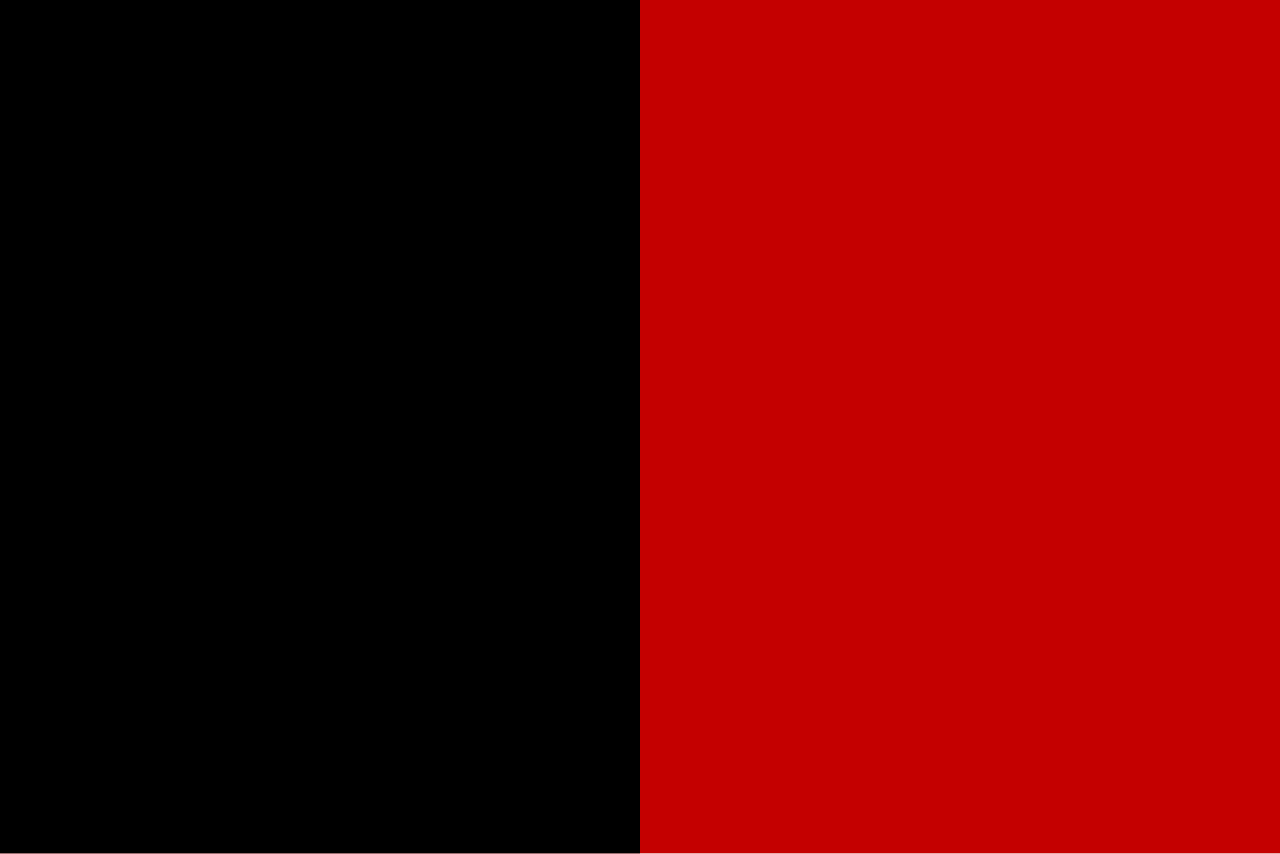
Two upright halves, black at the hoist and deep red at the fly — no emblem, no lettering, just the two colours.
Apulia
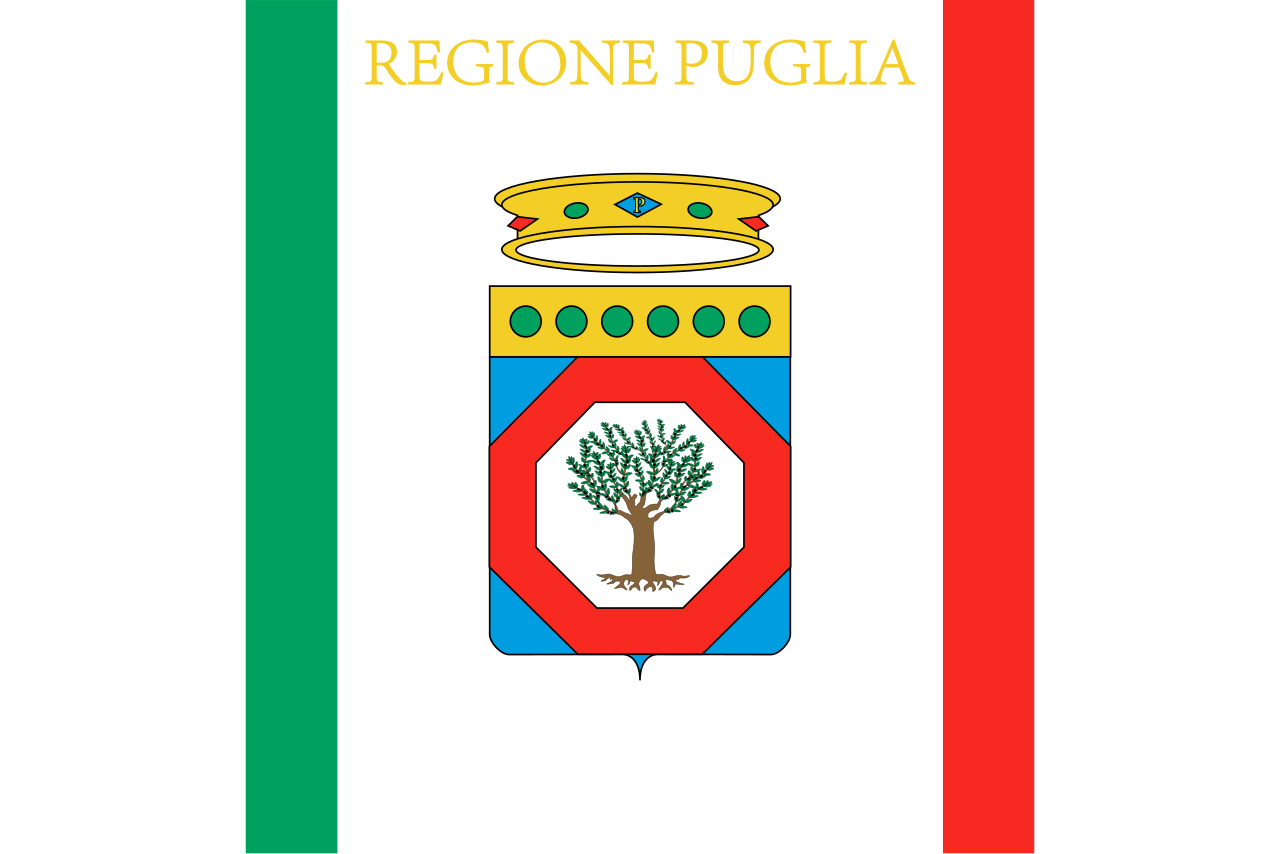
White field with a green vertical stripe set in near the hoist and a red one near the fly, and REGIONE PUGLIA in gold across the top. The blue shield below has a gold band of six green discs along its top, a thick red octagon ring enclosing a white octagon with a green olive tree, and a gold crown floating above it.

Basilicata
On a deep blue field, a plain silver-grey shield is crossed at mid-height by four narrow wavy blue bands.
Calabria
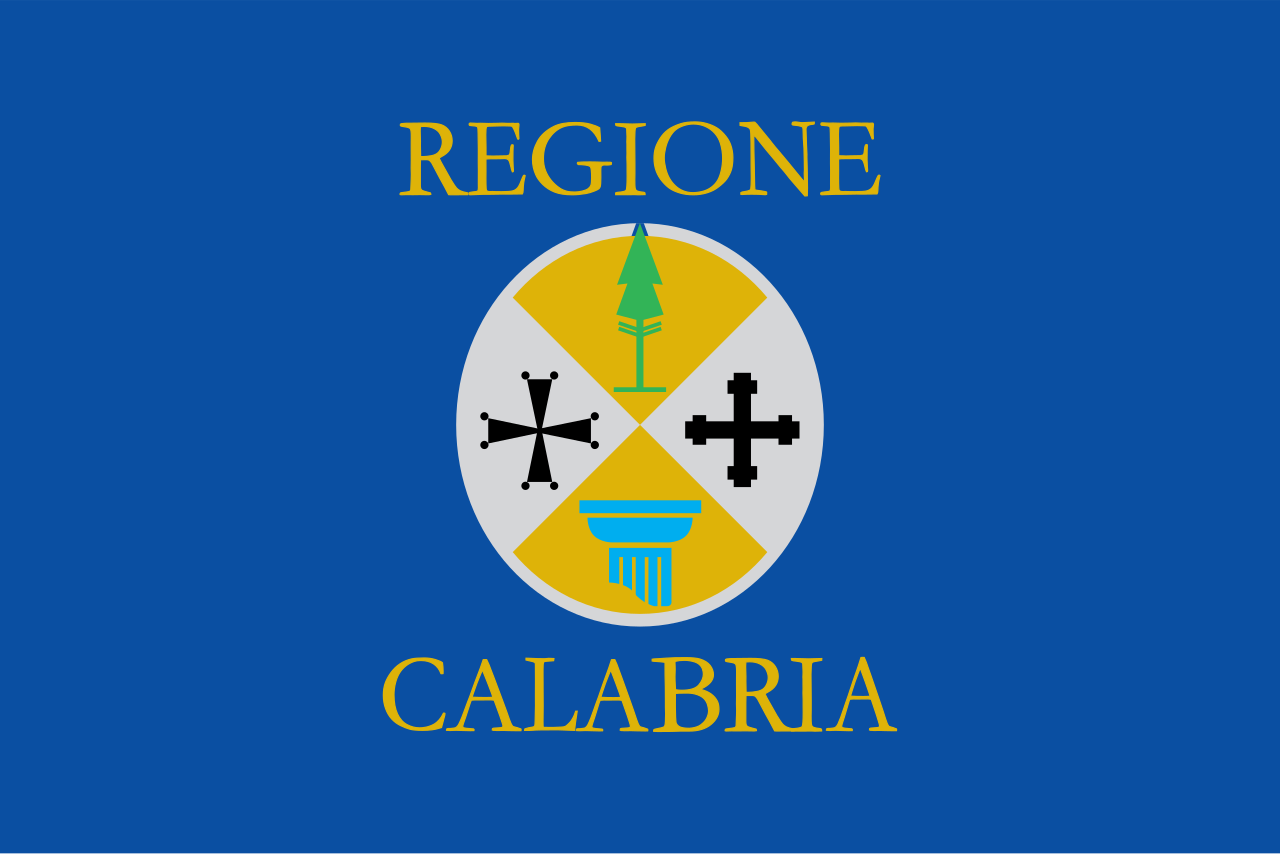
Blue with REGIONE CALABRIA in gold. An oval quartered white and gold carries a green pine, two black crosses and a pale blue column.
Campania
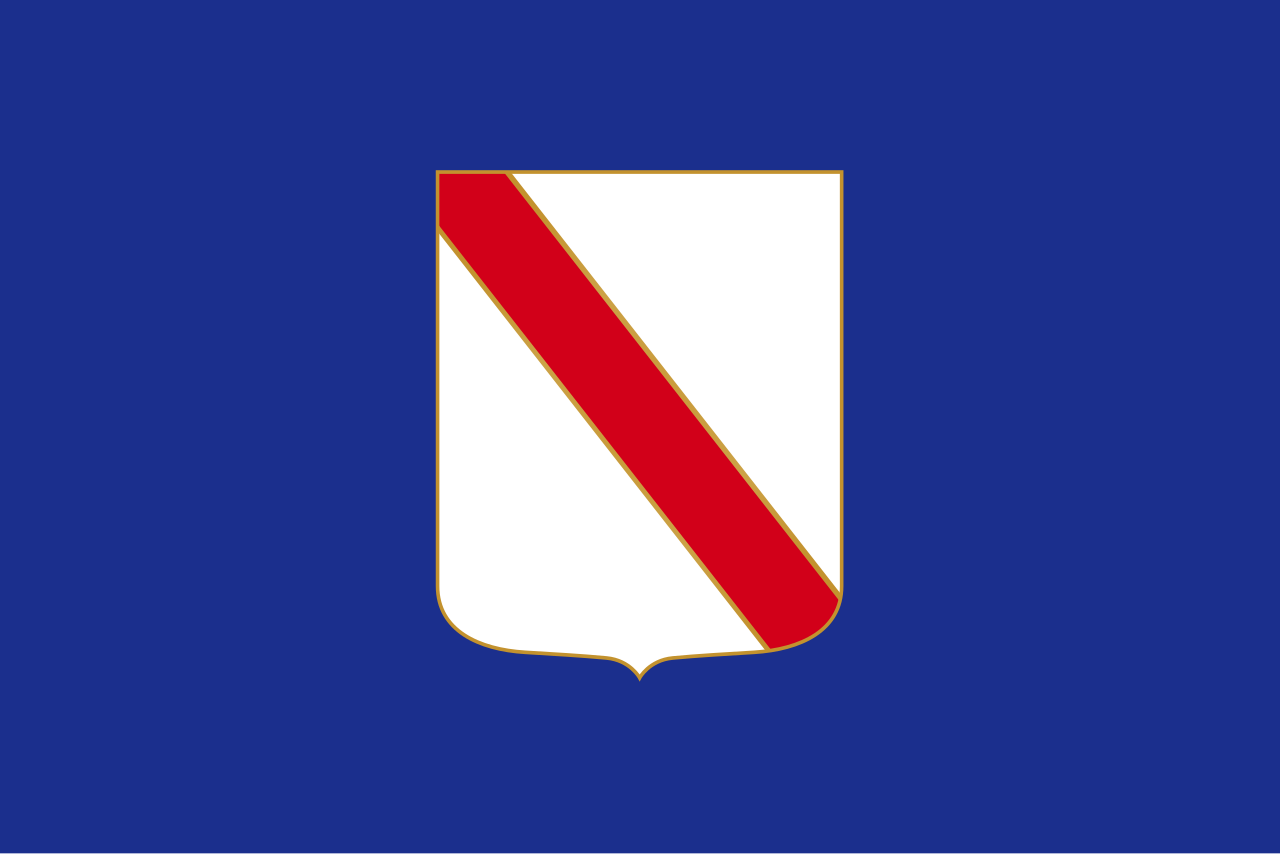
Against navy blue, a white shield outlined in gold is cut corner to corner by one broad red band, with nothing else on it.
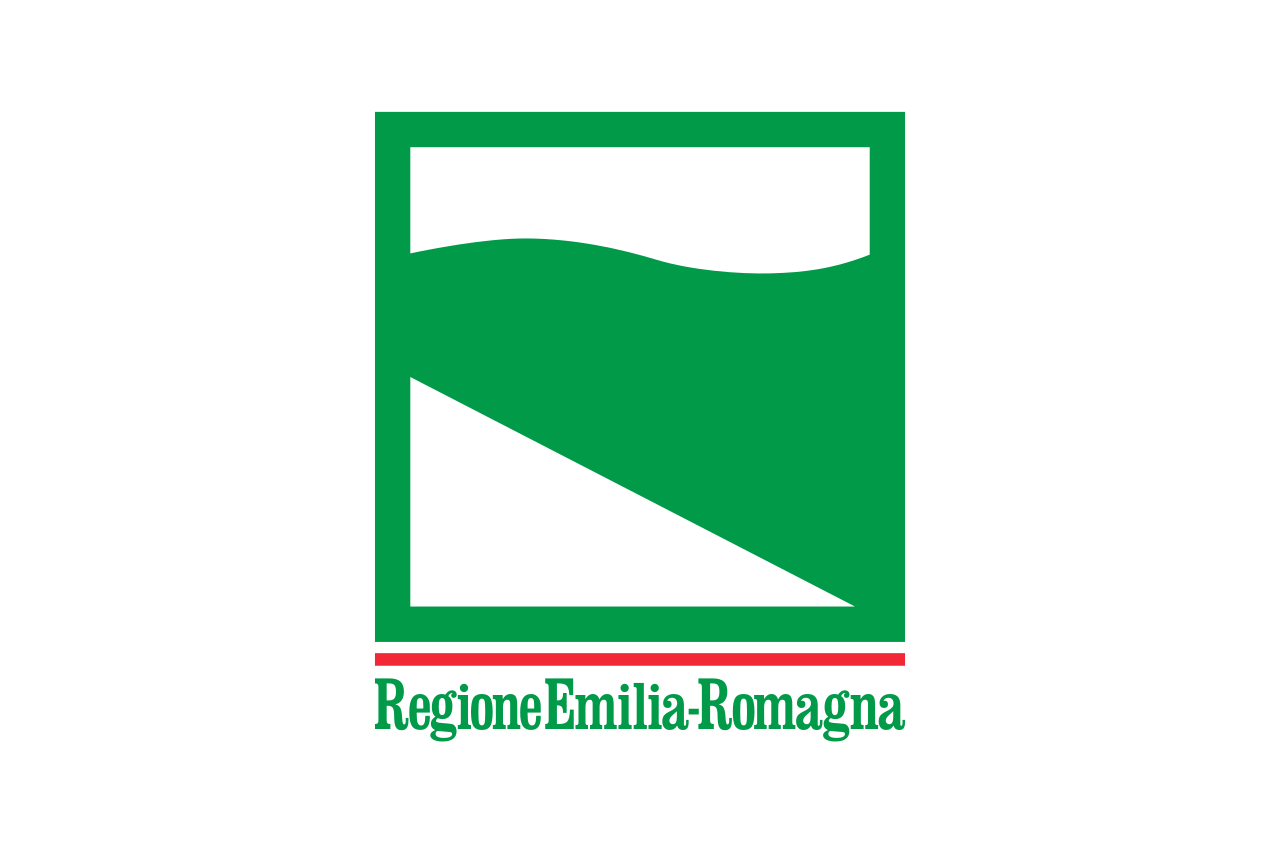
Emilia-Romagna
A logo rather than a coat of arms: a green square framing a white wave above and a white triangle below, over a red bar and the region's name in green.
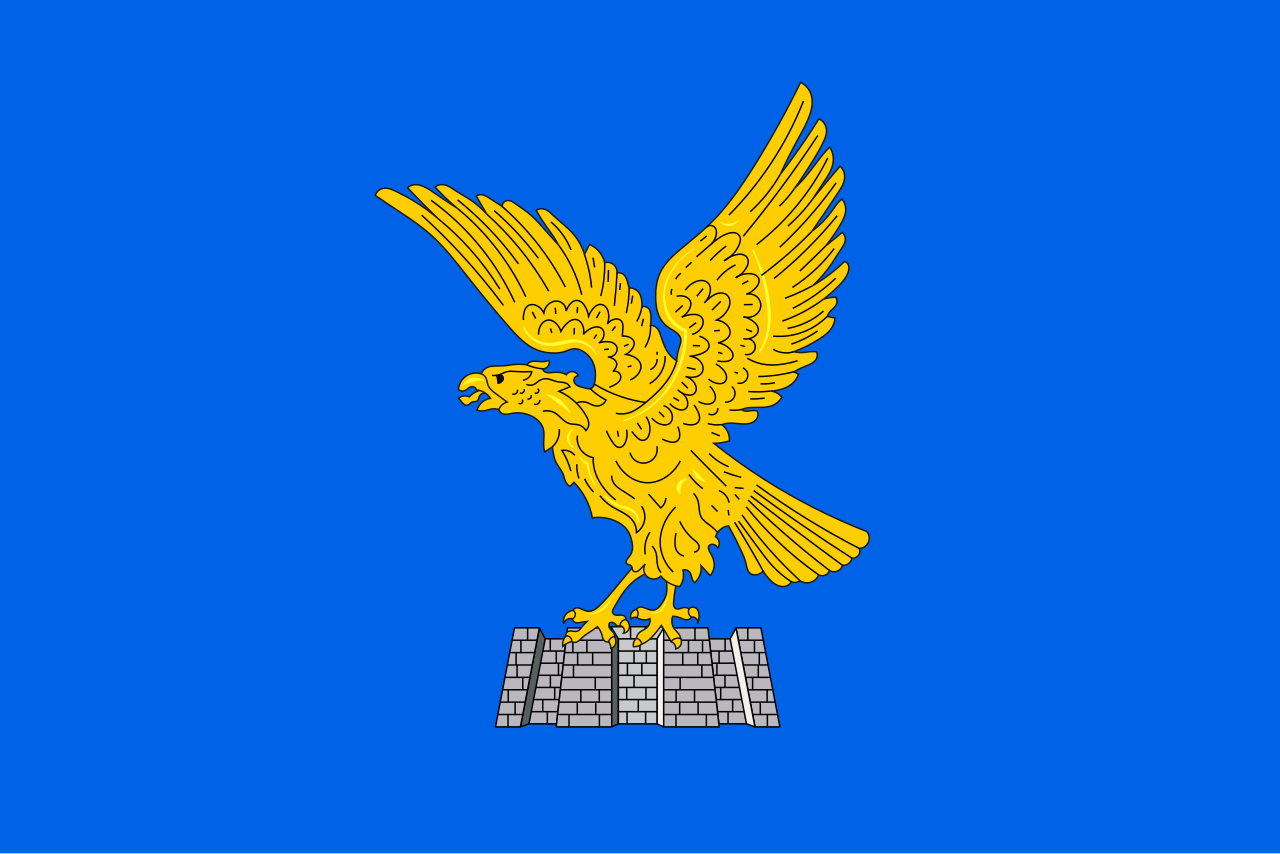
Friuli Venezia Giulia
A gold eagle with wings raised grips a grey stone battlement on a bright blue field; there is no shield and no lettering.
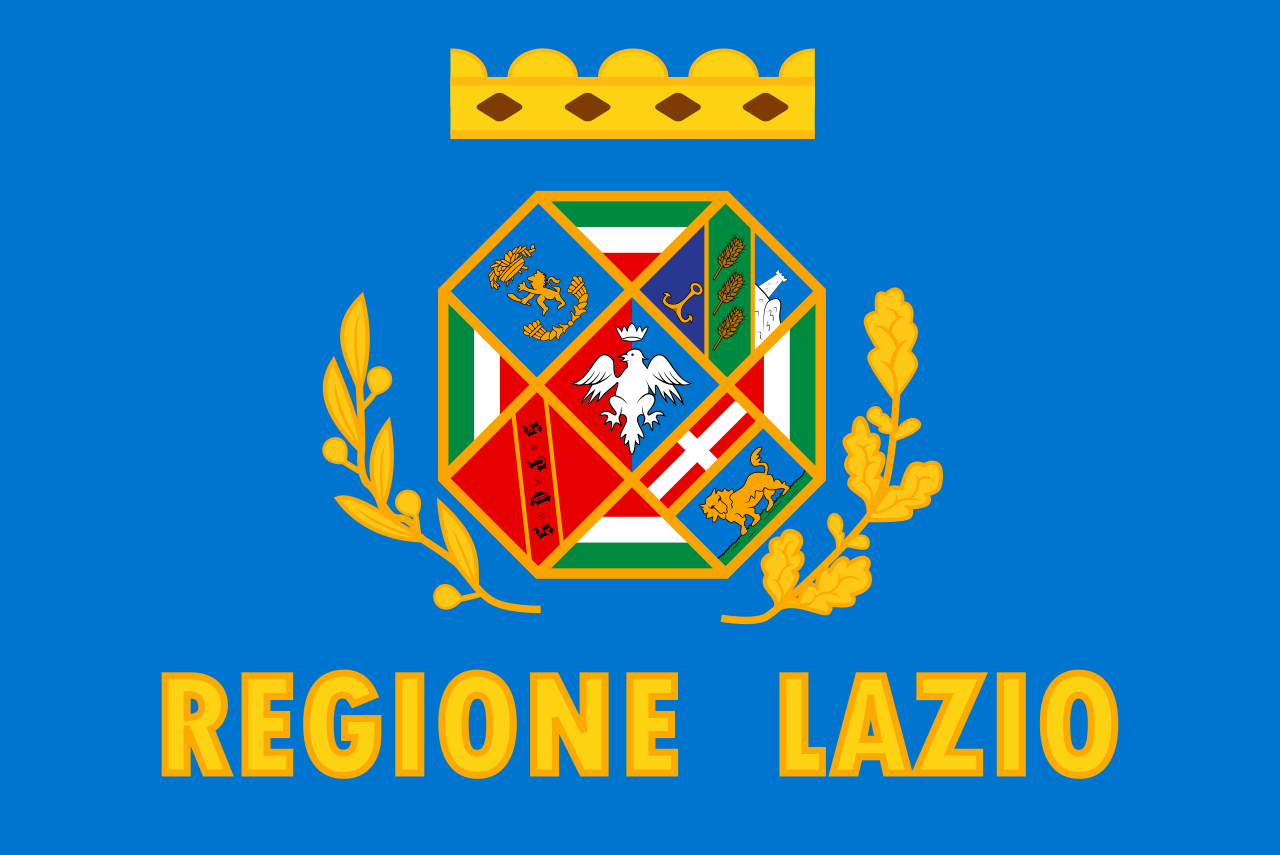
Lazio
Gold letters read REGIONE LAZIO beneath an octagon of small panels with a crowned white eagle at its centre, framed by olive and oak sprigs under a crown.
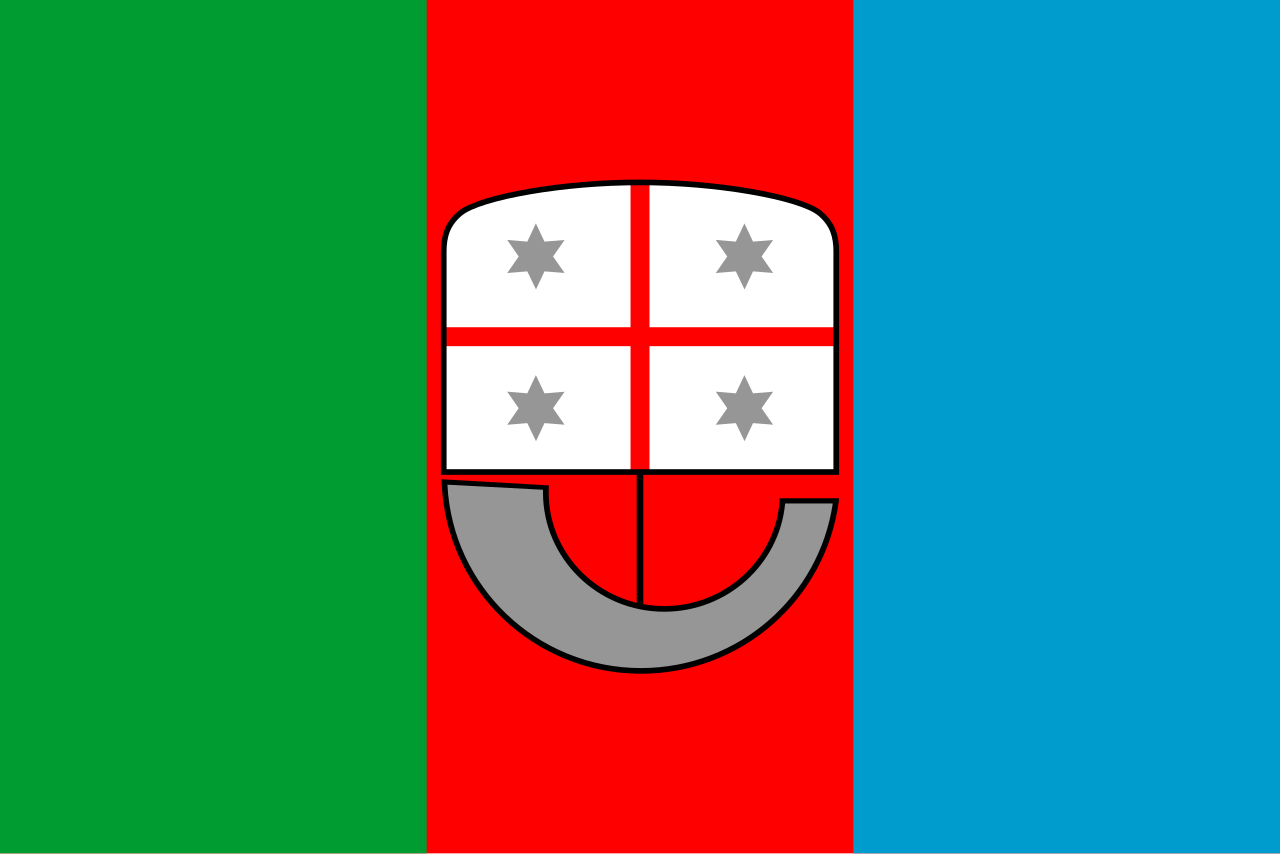
Liguria
Green, red and light blue run vertically; on the red centre a white shield bears a red cross with four grey stars, sitting on a grey arc.
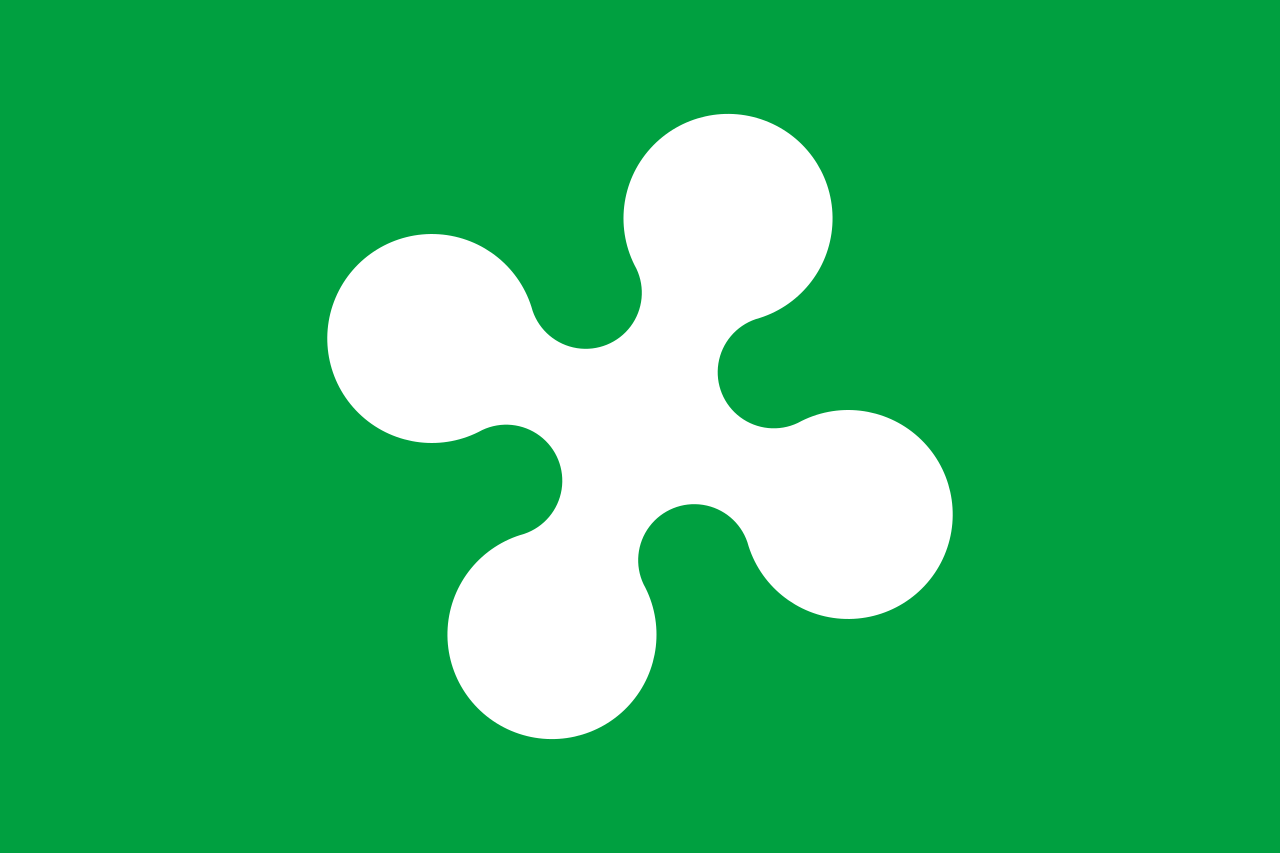
Lombardy
Plain green, with a single white Camunian rose at the centre — a four-lobed swirl taken from the prehistoric rock carvings of Val Camonica.
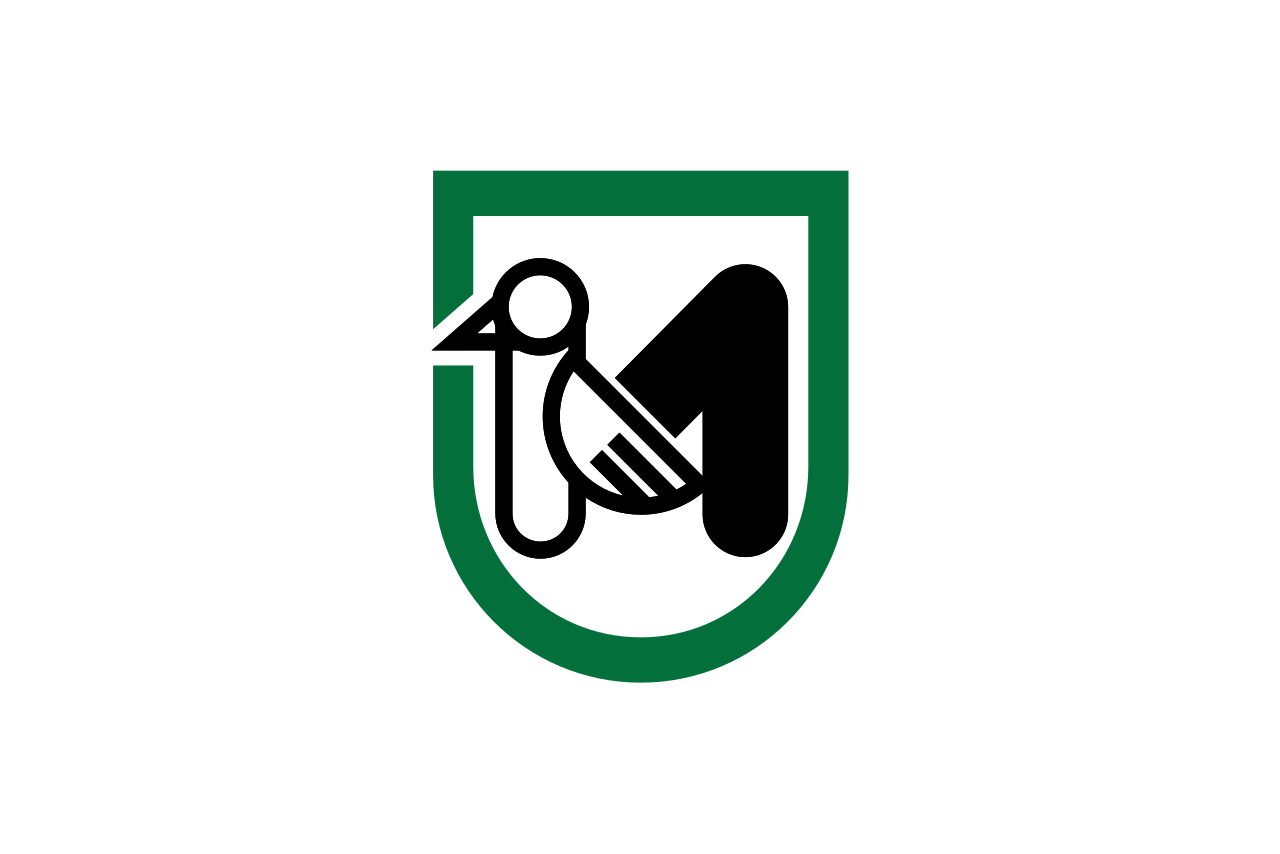
Marche
On a white field sits a shield outlined in thick green. Inside it a woodpecker drawn in heavy black line — white body, striped wing — stands beside a solid black stroke, and bird and stroke together form the shape of the letter M.
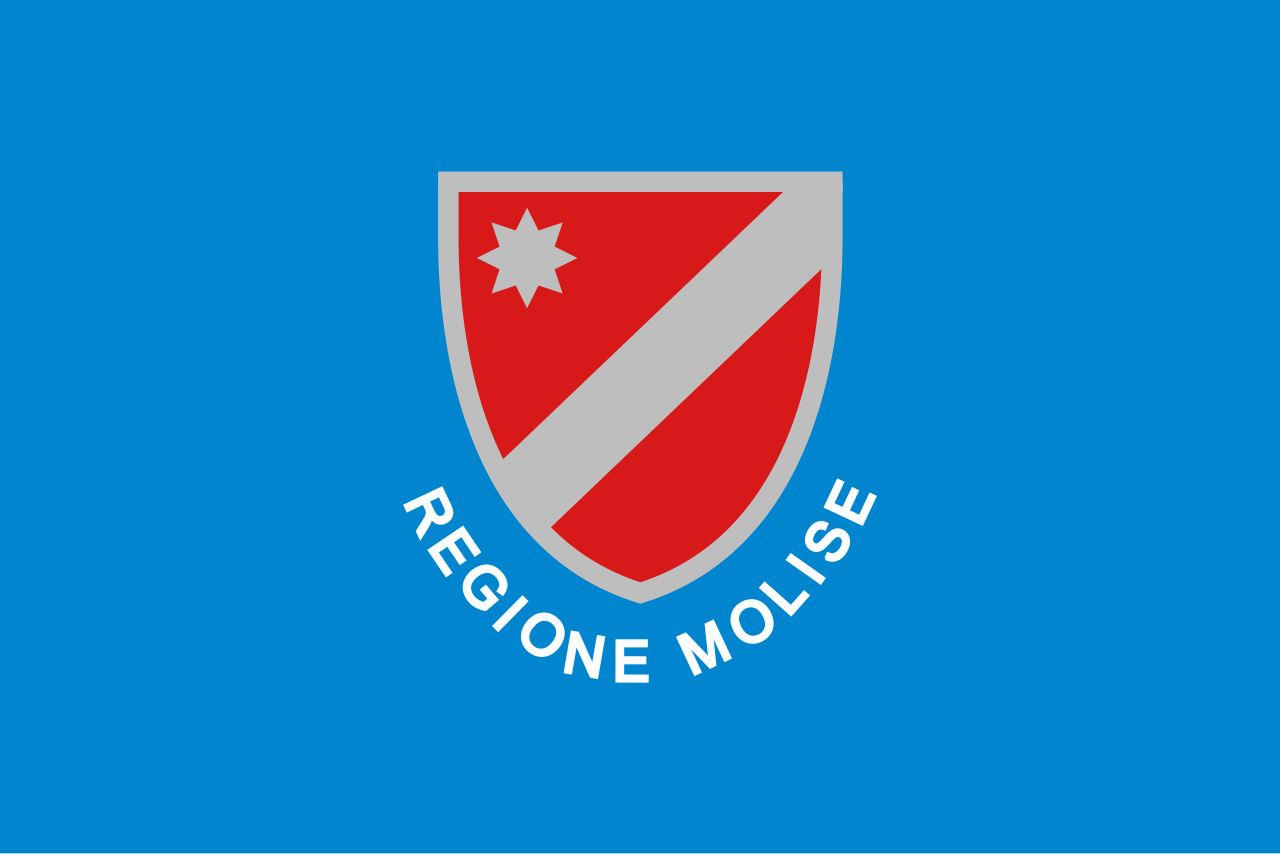
Molise
Sky blue field; on it a silver-rimmed red shield carries a silver diagonal band and an eight-pointed silver star, with REGIONE MOLISE curving underneath.
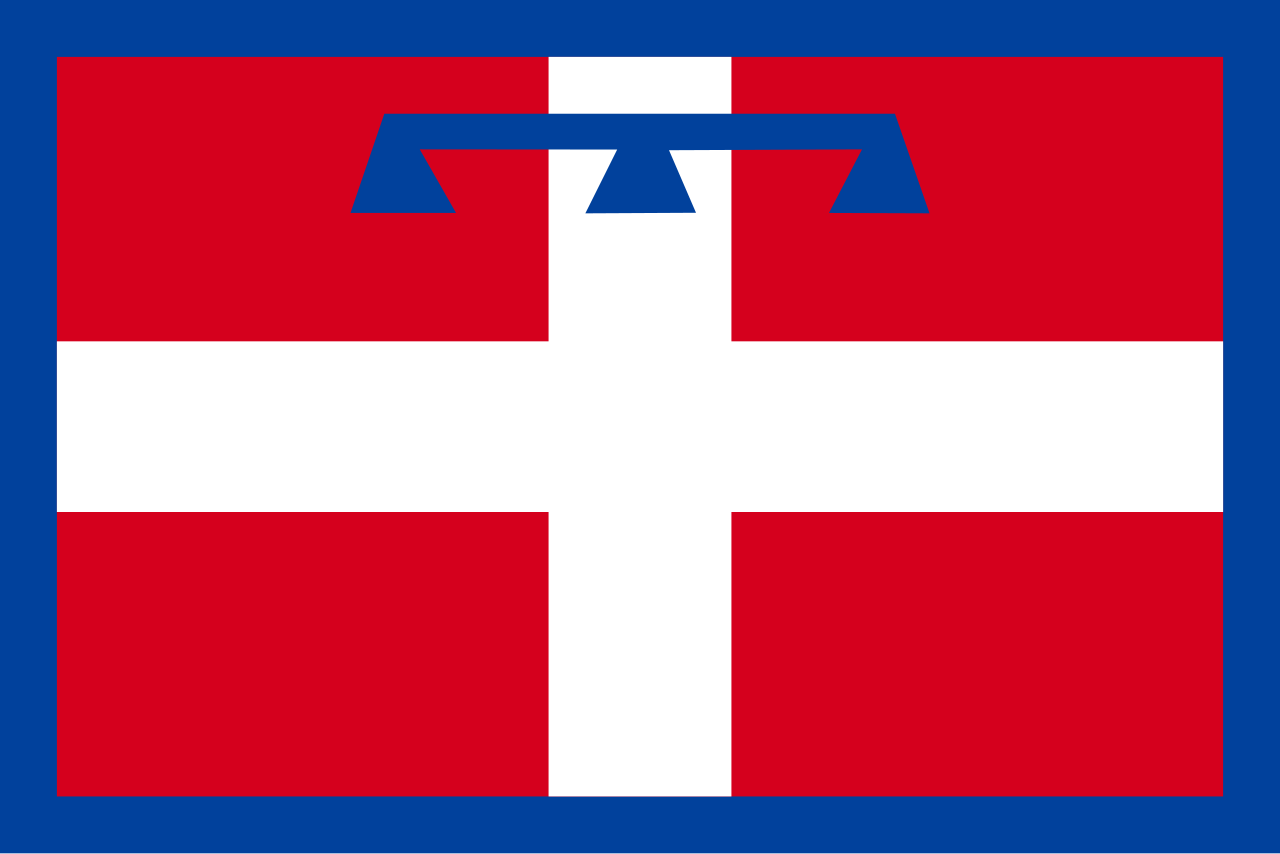
Piedmont
Red with a bold white cross — the cross of the House of Savoy — inside a blue border, and a blue label with three hanging points laid across the top.
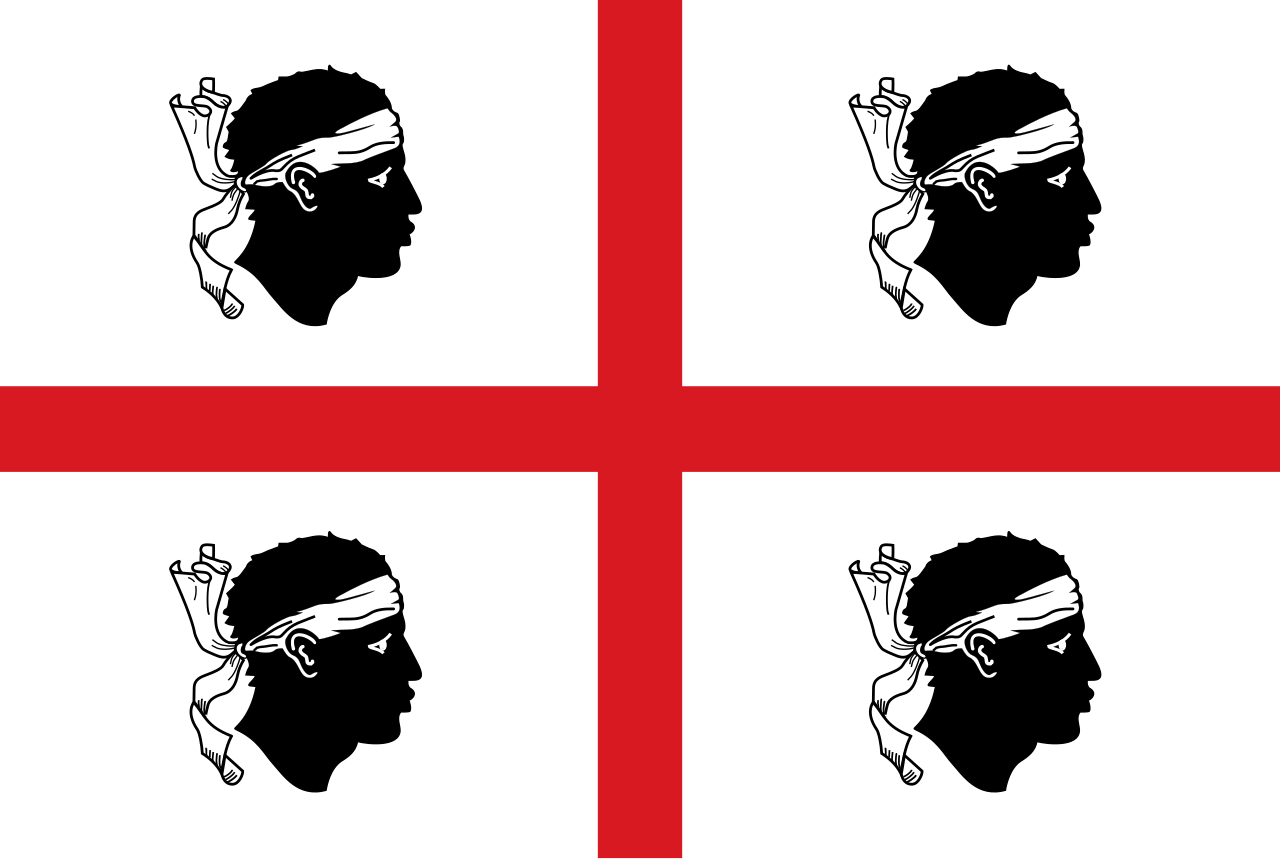
Sardinia
Four black Moors' heads in profile, each tied with a white headband, sit in the quarters made by a red cross on a white field.
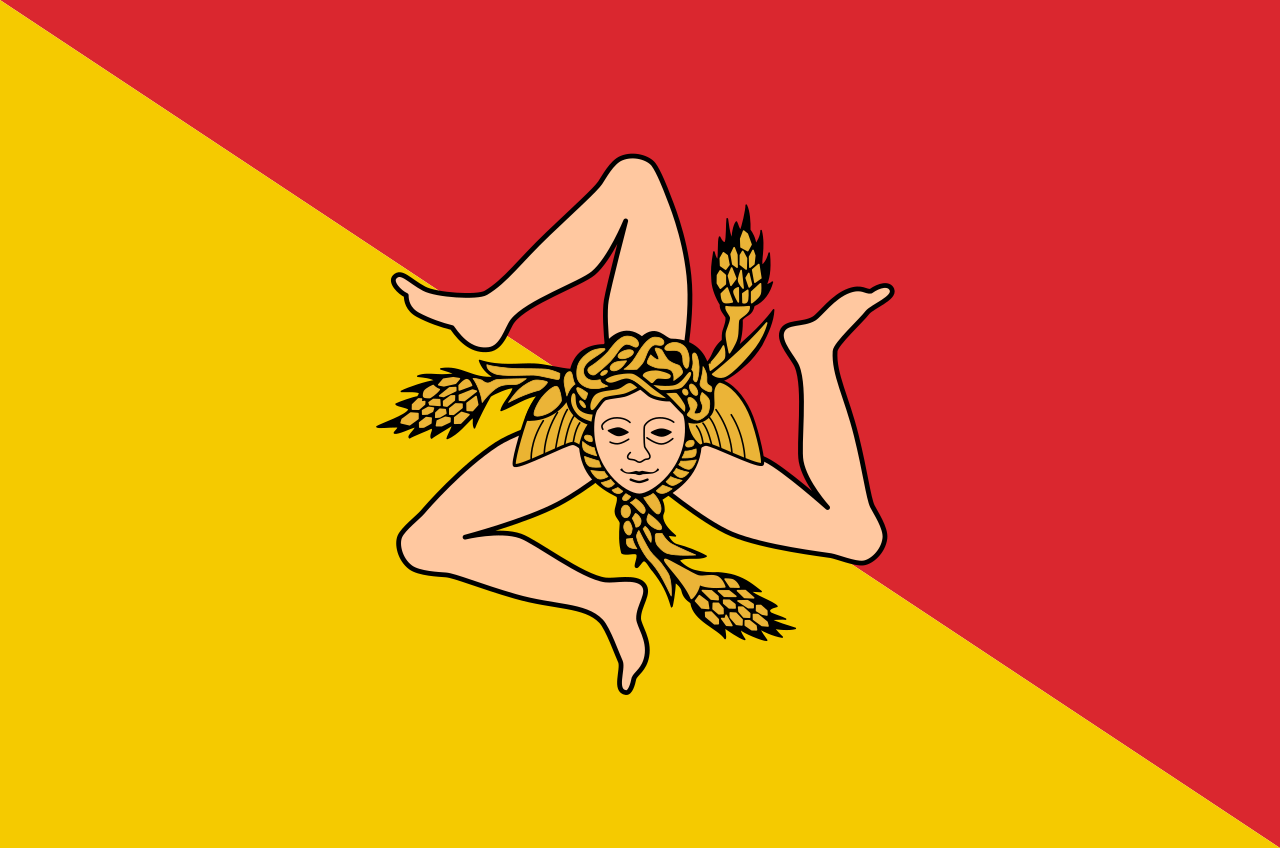
Sicily
Split diagonally into yellow and red, with the Trinacria at the centre: a winged head with snakes coiled in its hair, three bent running legs and ears of wheat.
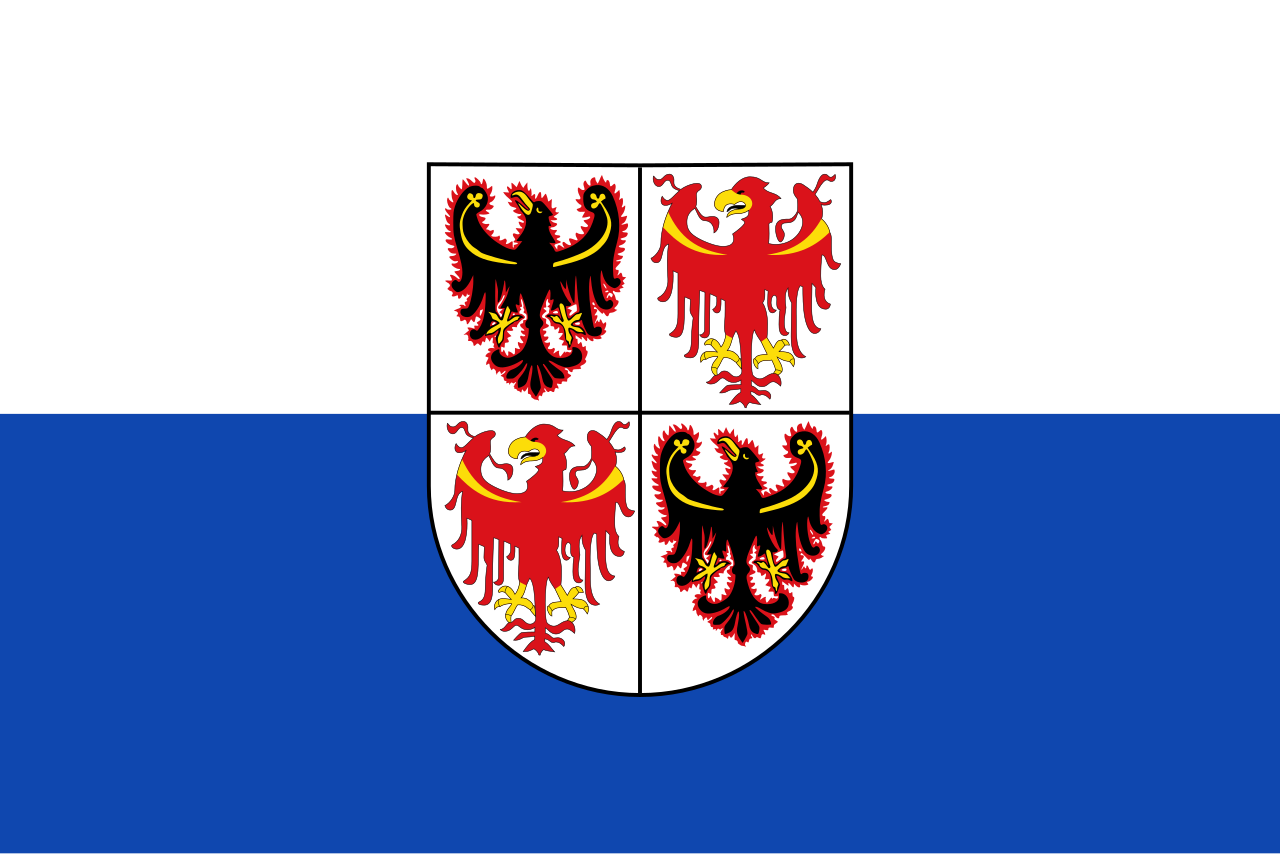
Trentino-South Tyrol
White over blue, and at the centre a shield quartered between two black eagles (Trentino) and two red ones (Tyrol), each with gold bands on its wings.
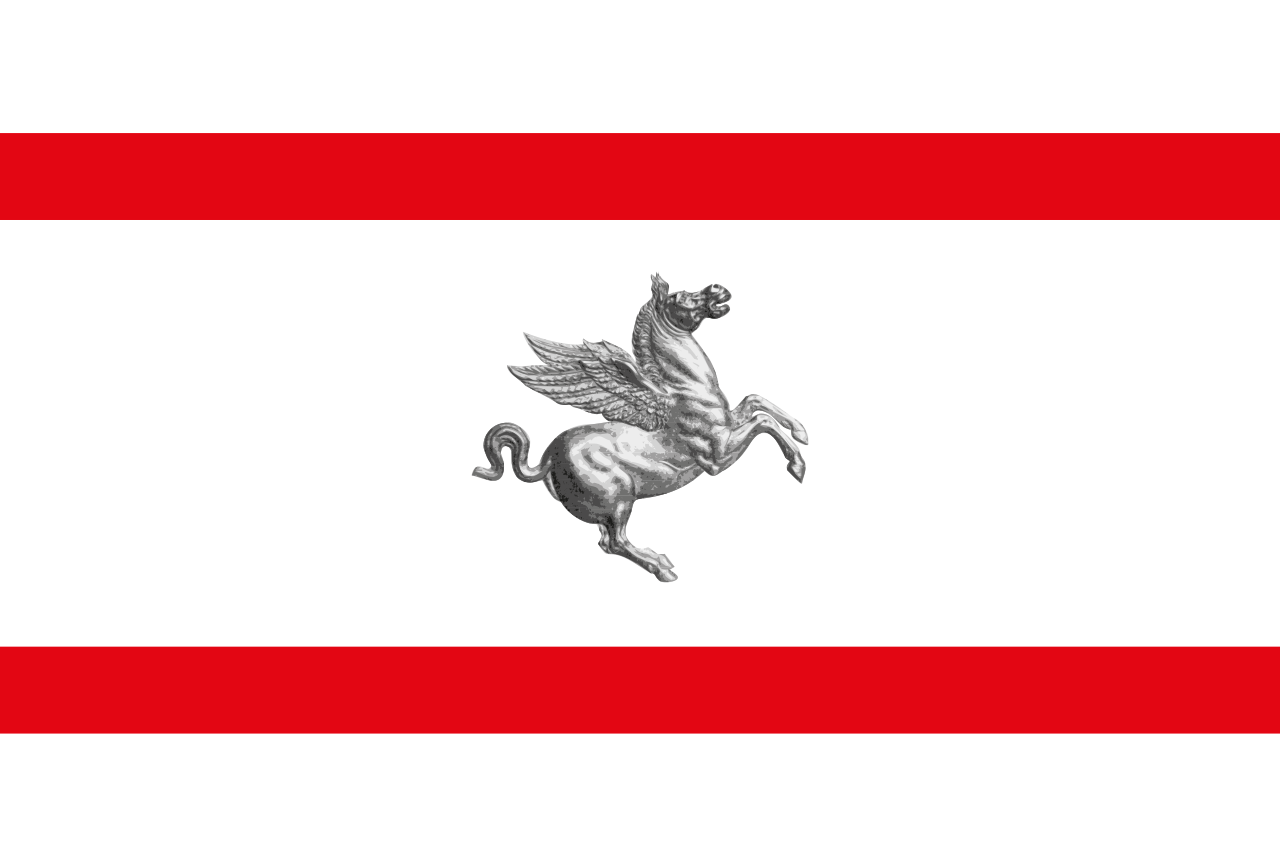
Tuscany
Two red bands run across a white field, and between them a silver-grey winged horse rears with its wings spread — Pegasus.
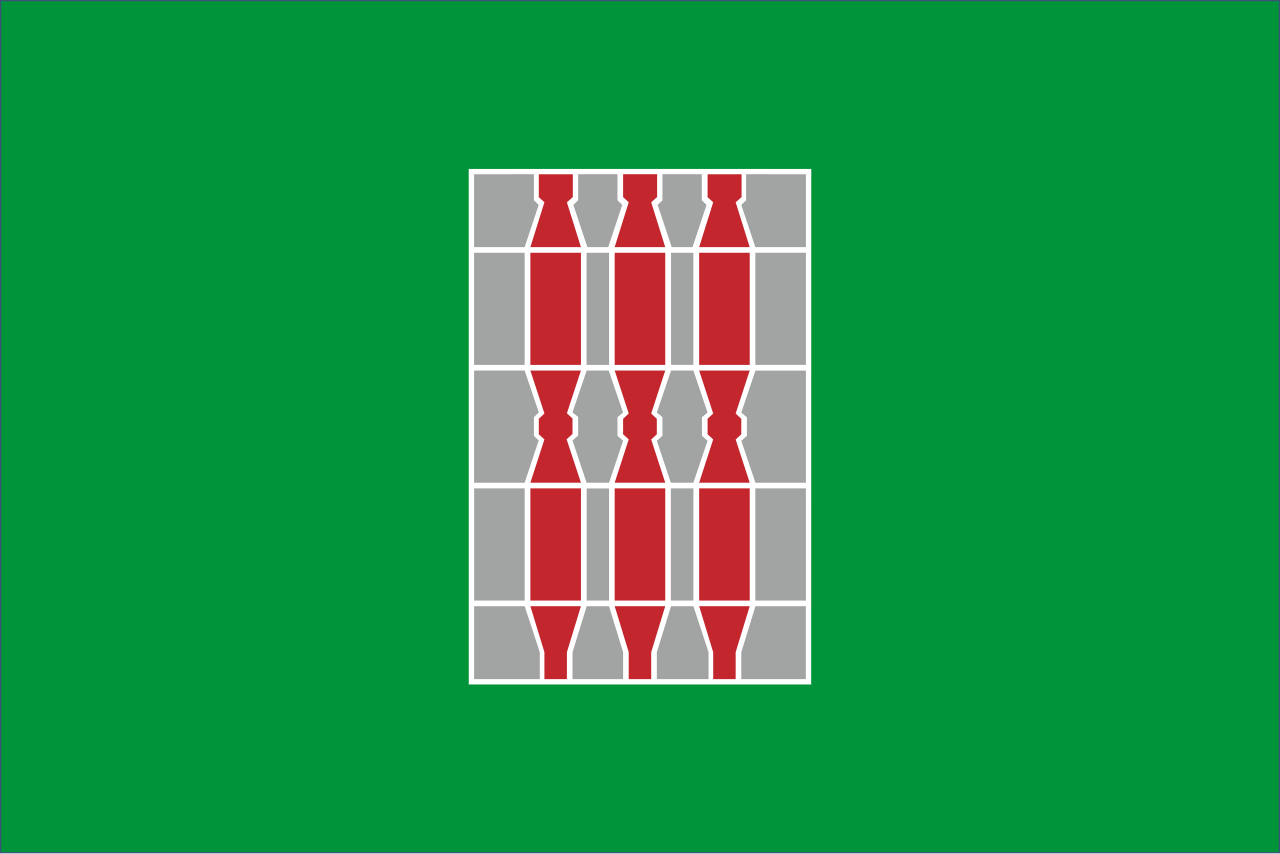
Umbria
At the centre of a green field sits a small upright panel: three tall red pillars, pinched in at the waist, standing among grey blocks in a white grid.
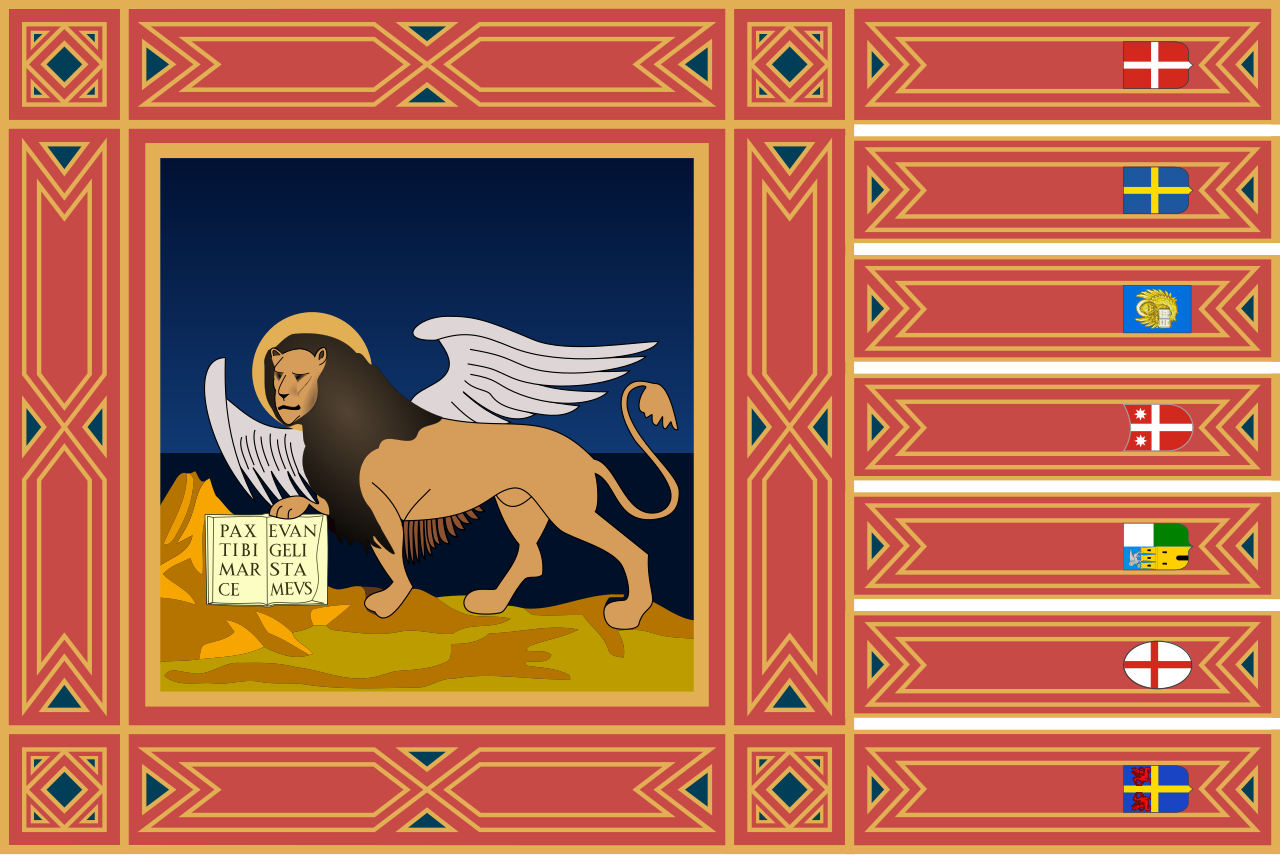
Veneto
The winged Lion of St Mark rests a paw on an open book reading PAX TIBI MARCE; seven red-and-gold tails trail out, each tipped with a small provincial shield.
Data Sources
- What the flag means: Costituzione della Repubblica Italiana, art. 12; Legge 5 febbraio 1998, n. 22; D.P.R. 7 aprile 2000, n. 121
- Population: Population, total (SP.POP.TOTL), latest available value
- Area: World countries in JSON, CSV, XML and YAML
- Organizations: Membership of Principal UN Organs
- Organizations: Member States of the European Union
- Organizations: What is NATO? Member countries
- Organizations: Members and partners