Flag of China

What the flag means
- Red field — the communist revolution
- Large star — leadership of the Communist Party
- Four small stars — the people united around the Party
Design set by: 中华人民共和国国旗法 第二条 及 附件《国旗制法说明》 · Adopted 1949
Highlights
- 🏯 Great Wall, 5,000-year history
- 🐼 Home of pandas and vast nature
- 🍜 Deep food culture in every region
- 🏙️ A fast-grown economic giant
- 🍵 Roots of East Asian culture
Quick facts
- Region
- Asia · Eastern Asia
- Population
- 1,406,585,000 people (2025)
- Area
- 9,706,961 km²
- Capital
- Beijing
- Languages
- Chinese, Wu Chinese
- Currency
- Chinese yuan (CNY)
- Organizations
- United Nations
Neighboring countries
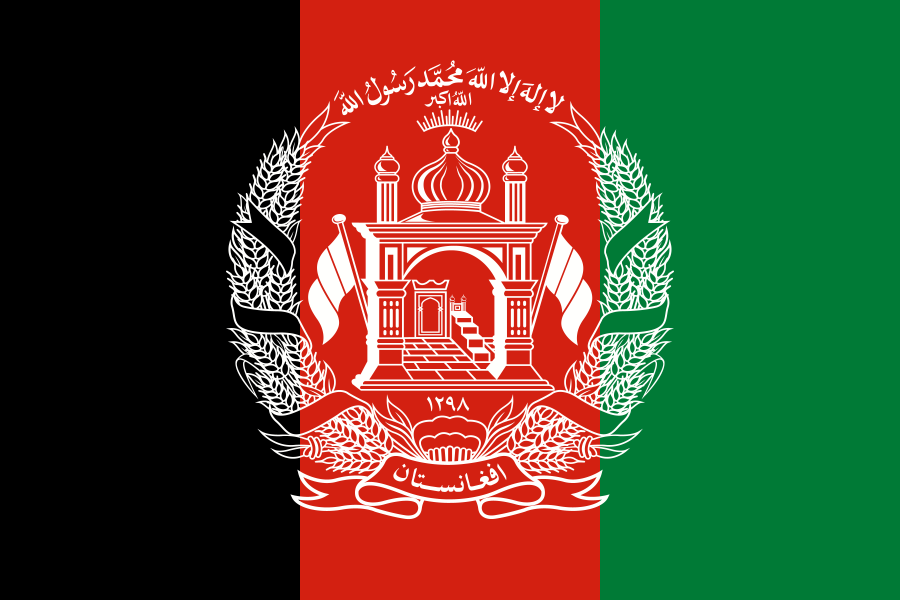 Afghanistan
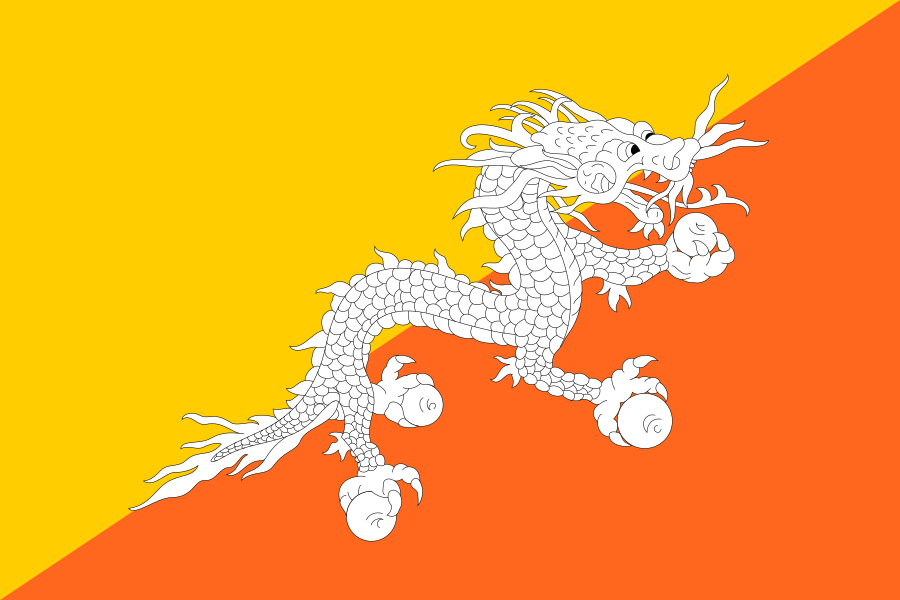 Bhutan
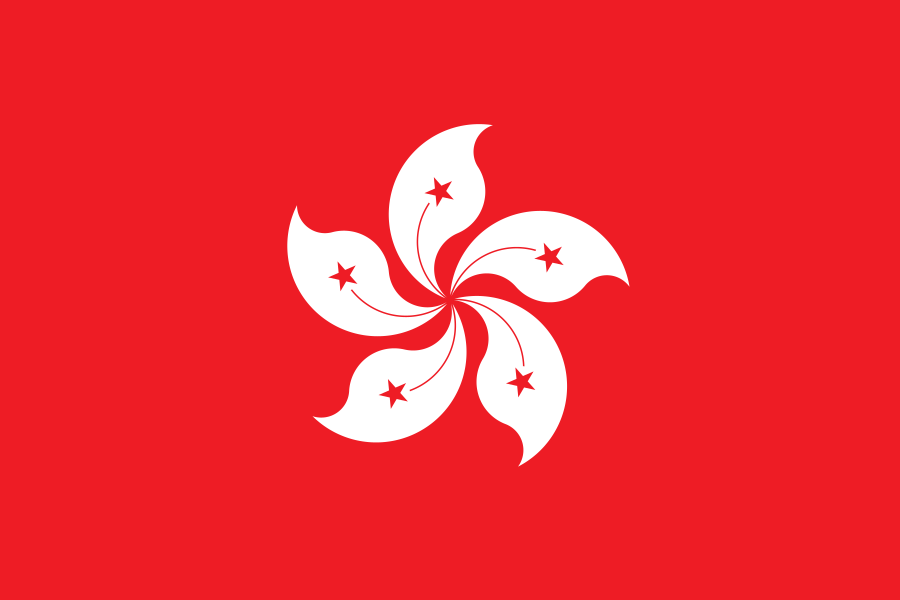 Hong Kong
 India
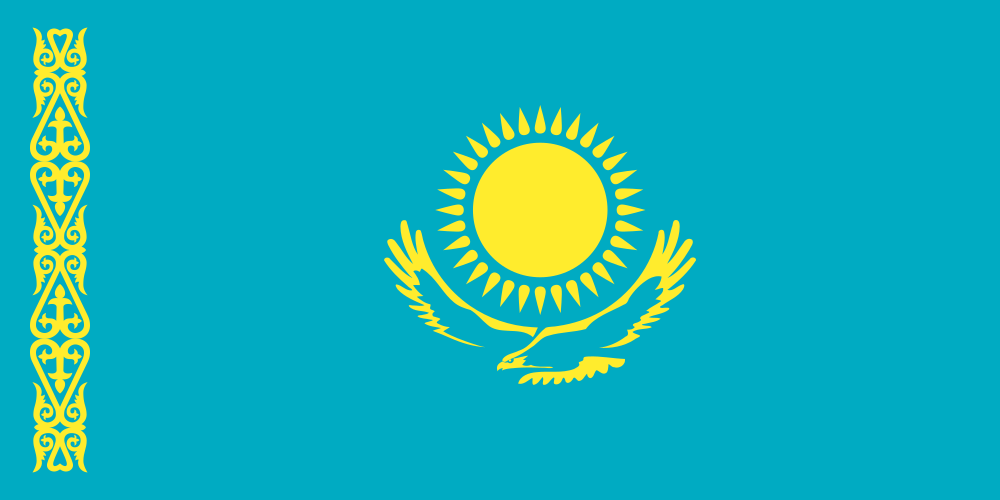 Kazakhstan
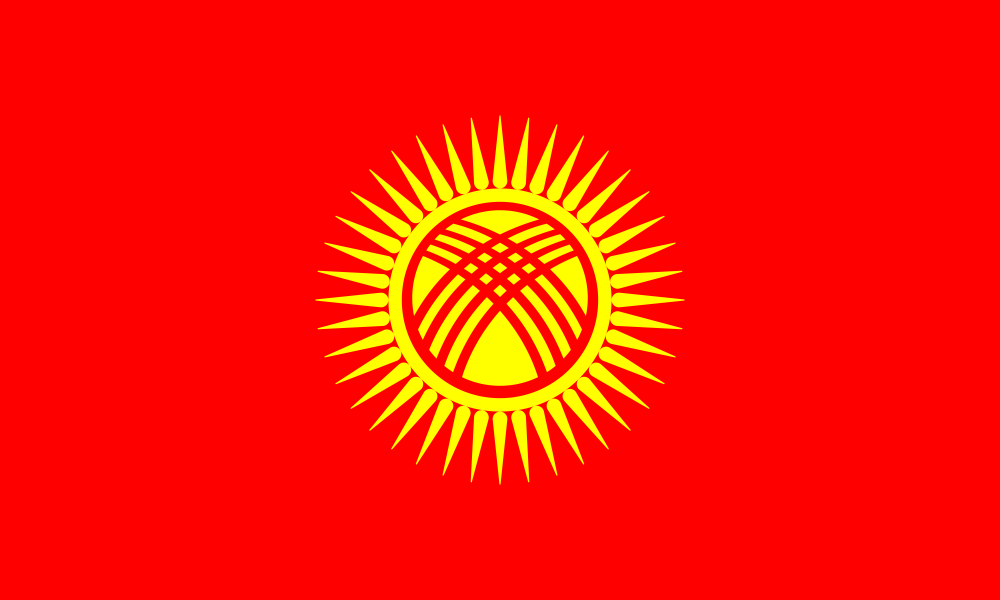 Kyrgyzstan
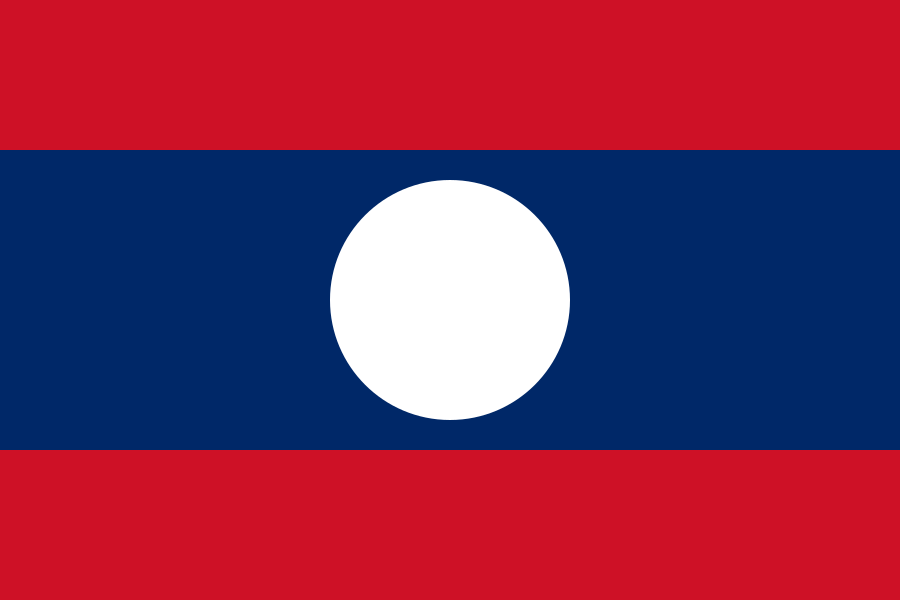 Laos
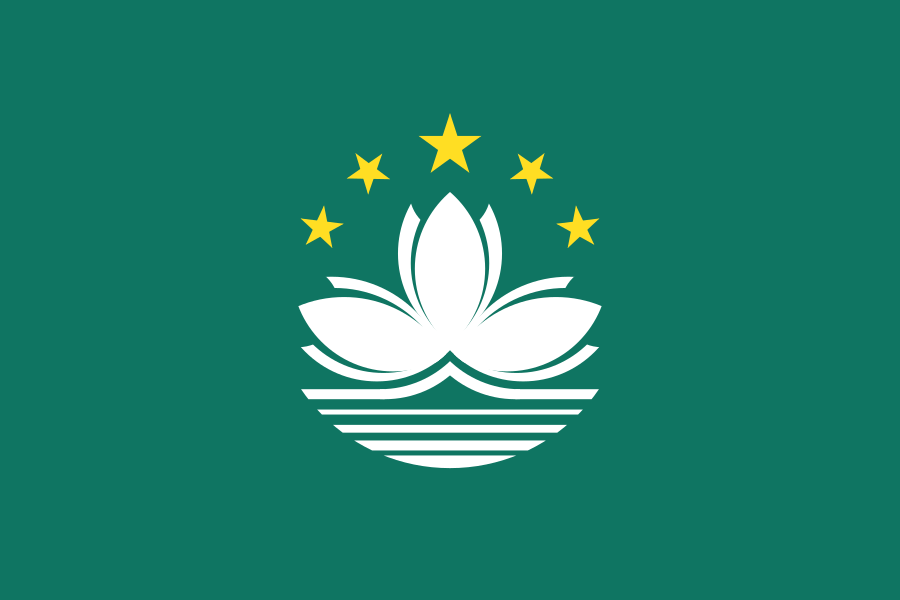 Macau
 Mongolia
 Myanmar
 Nepal
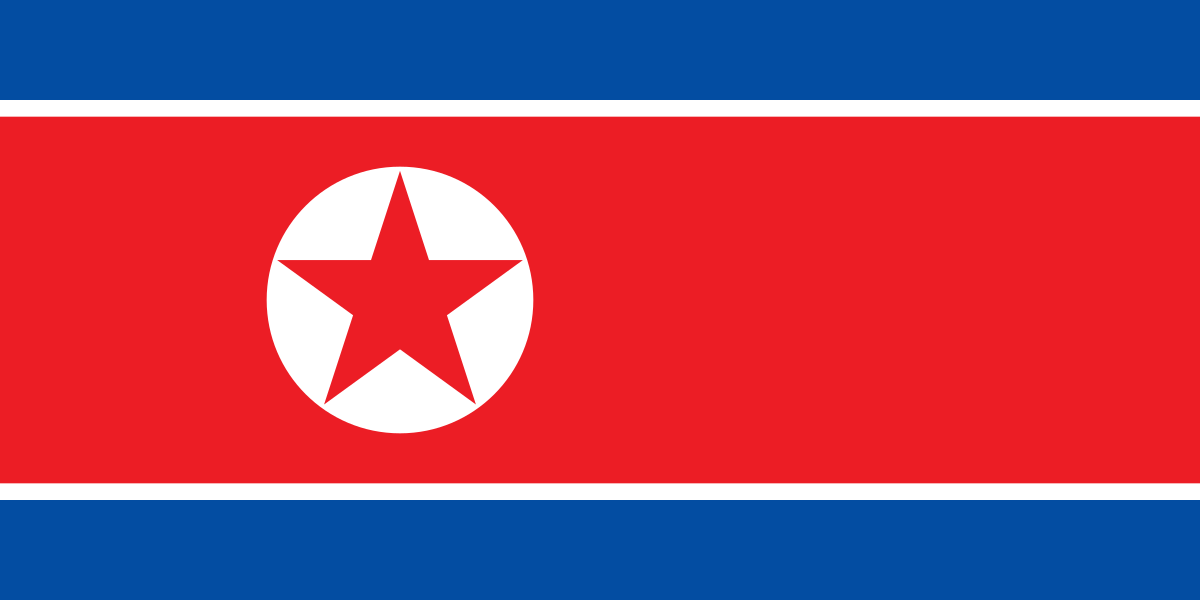 North Korea
 Pakistan
 Russia
 Tajikistan
 Vietnam
Land neighbors, approximated from simplified map outlines.
Symbols in History (2)
Coats of arms and emblems whose historic seat lies within this country’s present-day territory.
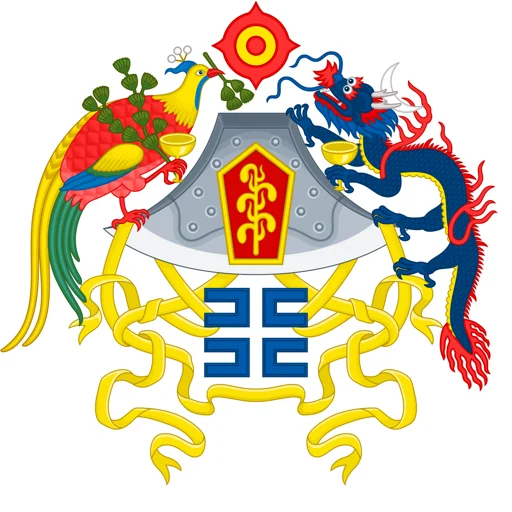
Twelve Symbols National Emblem
OriginThe writer Lu Xun designed it in 1912 together with Qian Daosun and Xu Shoushang, and the following year the Republic of China adopted it as the emblem of the state. The designers took the Twelve Ornaments — the motifs embroidered since antiquity on the ceremonial robes of Chinese sovereigns — and arranged them symmetrically in the manner of a European coat of arms. It stayed in use until the Beiyang government fell in 1928, and served unchanged during Yuan Shikai's short-lived empire of 1915-1916.
DescriptionAt the centre stands a silver axe head, and on it a red panel filled with curling golden flames: the axe speaks of decisiveness, the fire of brightness. Across the blade behind the panel runs the outline of a mountain, with white grains of rice scattered around it — the mountain for steadfastness, the grains for nourishment. A brilliantly coloured pheasant on the left and a blue dragon on the right grip the axe from either side, each holding a golden sacrificial goblet: the pheasant for refinement, the dragon for the power of change, the goblets for devotion to the ancestors, and the green waterweed rising behind the pheasant for purity. The lights of heaven are the red sun above, the white crescent moon at the dragon's horns and the three white stars joined by lines over the pheasant's crest. At the foot, the blue 己 shapes set back to back, repeated in two rows, mark the telling of right from wrong, and yellow silk ribbons tie the whole set together.
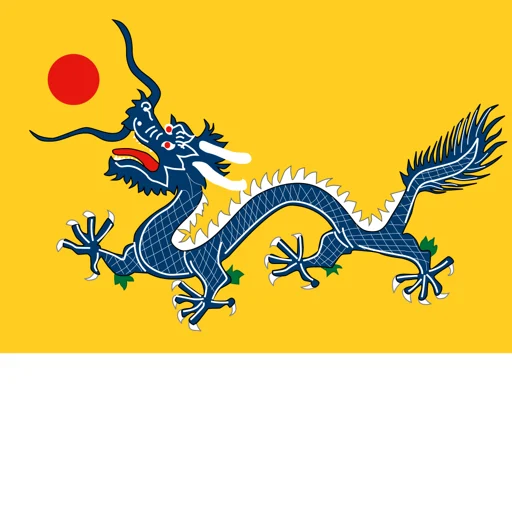
Yellow Dragon Flag of the Qing
OriginFor most of its history the Qing court used no national flag in the Western sense; one was made when Chinese ships had to identify themselves to foreign navies. From 1862 they flew a yellow banner bearing a blue dragon, triangular at first, and in 1889 the rectangular version was fixed and stood for the whole empire until the dynasty ended in 1912. The drawing shown here follows the details recorded in an American compendium of maritime flags published in 1899.
DescriptionThe field is the imperial yellow reserved for the ruling house, and across it a blue dragon strides toward the hoist, its body covered in a fine white crosshatch standing for scales and its back edged with a saw-toothed white mane. It lifts its head, red tongue out, toward the red disc floating on its own in the upper corner by the staff — the pearl a dragon is always shown chasing — and watches it with red eyes, one long whisker streaming that way while the branching horn and two thick white barbels sweep back over the neck. Each foot spreads five white claws: five was the emperor's number, while lesser ranks had to make do with four. Small green flames flicker at the shoulders and haunches, and the tail opens into a spray of blue plumes at the free end of the flag.


Data Sources
- What the flag means: 中华人民共和国国旗法 第二条 及 附件《国旗制法说明》
- Population: Population, total (SP.POP.TOTL), latest available value
- Area: World countries in JSON, CSV, XML and YAML
- Organizations: Membership of Principal UN Organs