Flag of Brazil
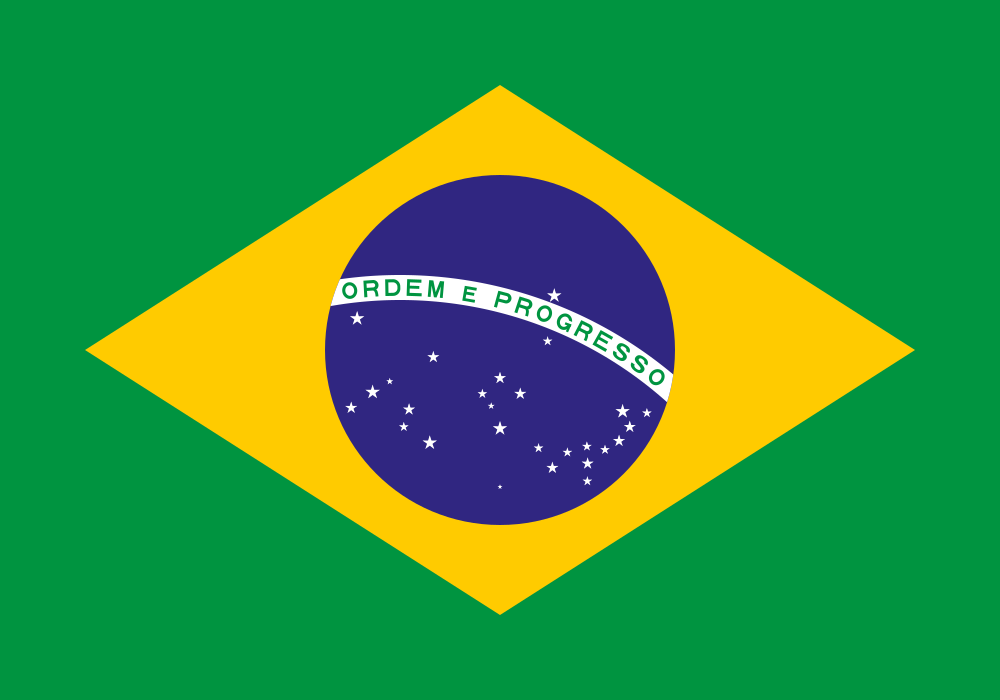
What the flag means
- Green — the lush forests
- Yellow — gold and natural wealth
- Blue celestial globe with stars — the sky over Rio on the day the republic was proclaimed (1889); motto 'Ordem e Progresso'
Design set by: Lei nº 5.700, de 1º de setembro de 1971, Art. 3º · Adopted 1971
Highlights
- ⚽ Soccer nation, most World Cups
- 🎭 Rio's world-famous Carnival
- 🌴 Treasure of the Amazon rainforest
- 🏖️ Copacabana and stunning beaches
- 💃 Rhythms of samba and bossa nova
Quick facts
- Region
- Americas · South America
- Population
- 212,812,405 people (2025)
- Area
- 8,515,767 km²
- Capital
- Brasilia
- Languages
- Portuguese, German
- Currency
- Brazilian real (BRL)
- Organizations
- United Nations
Neighboring countries
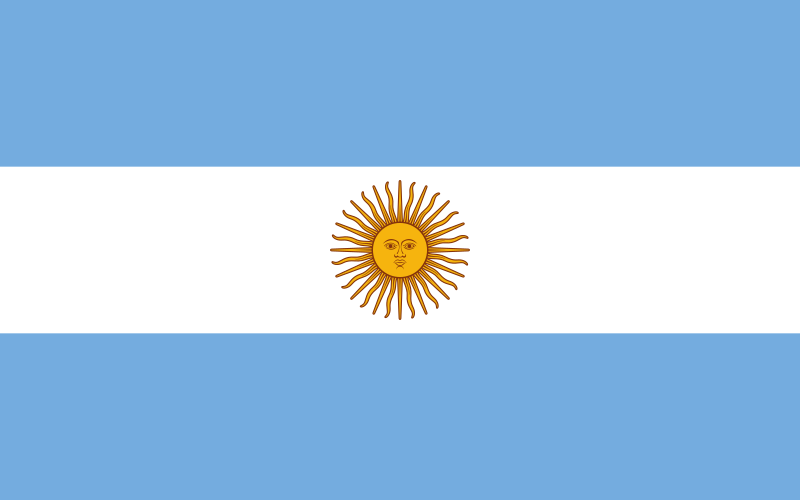
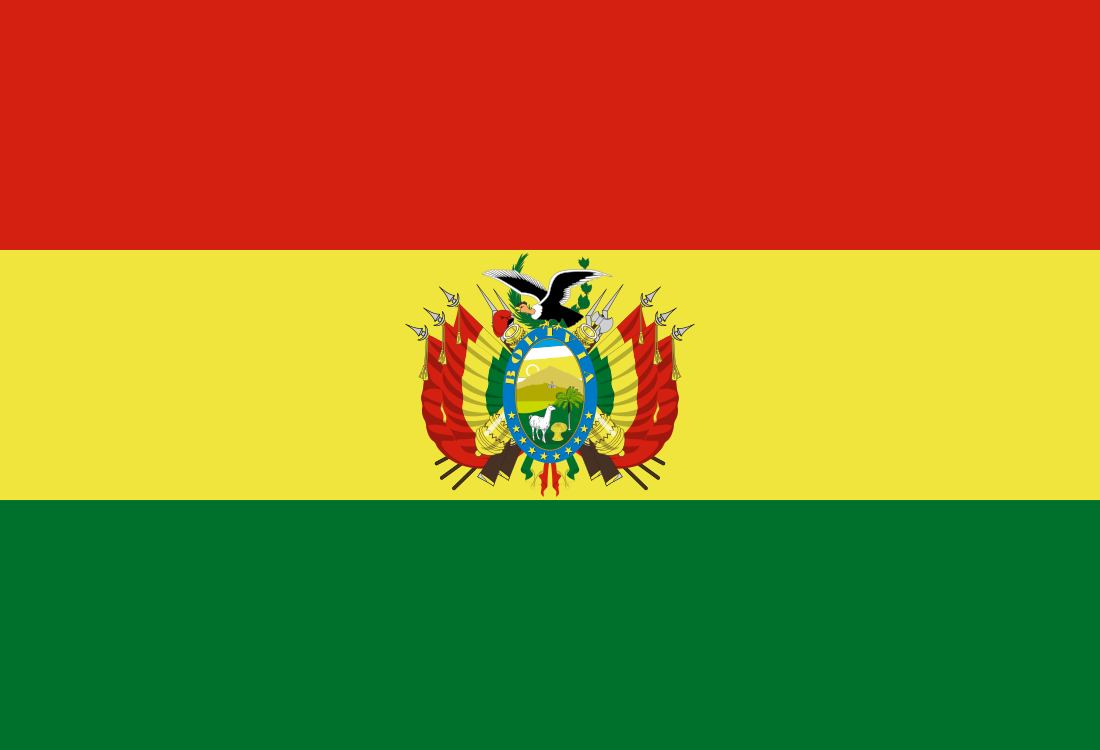
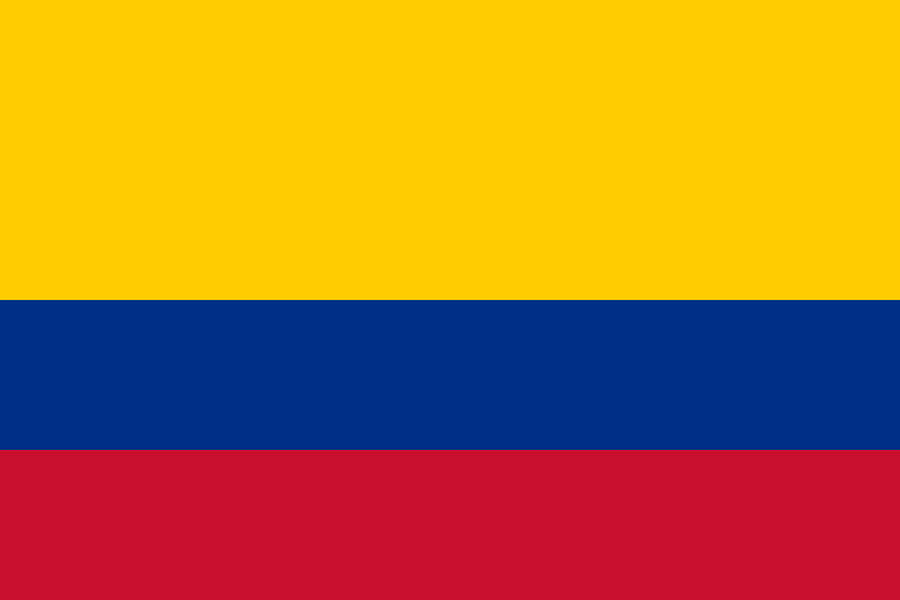
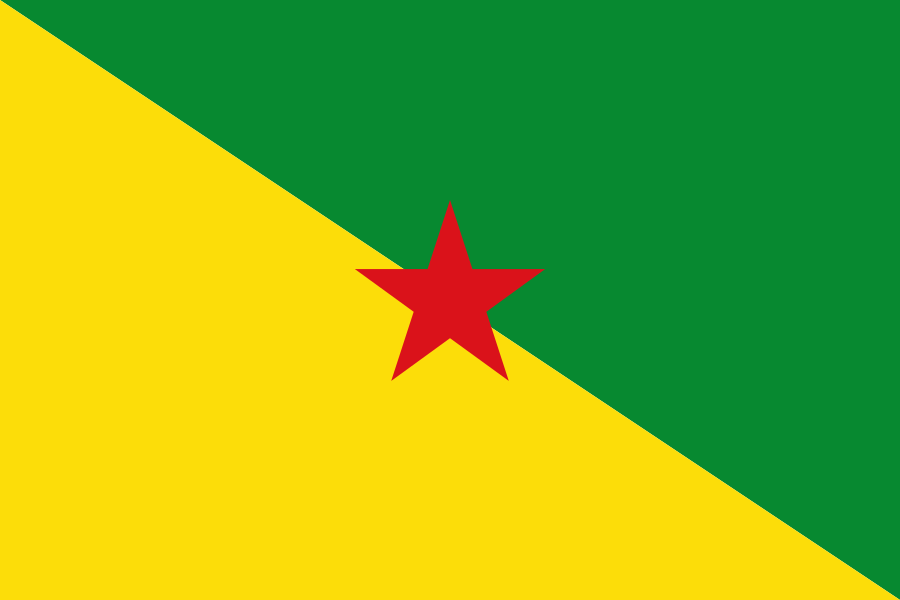
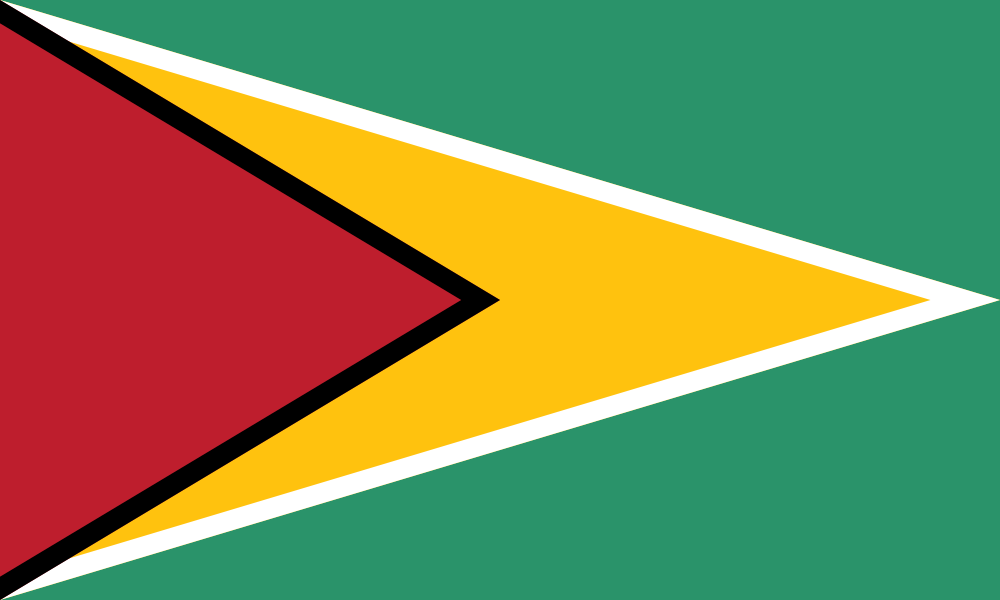
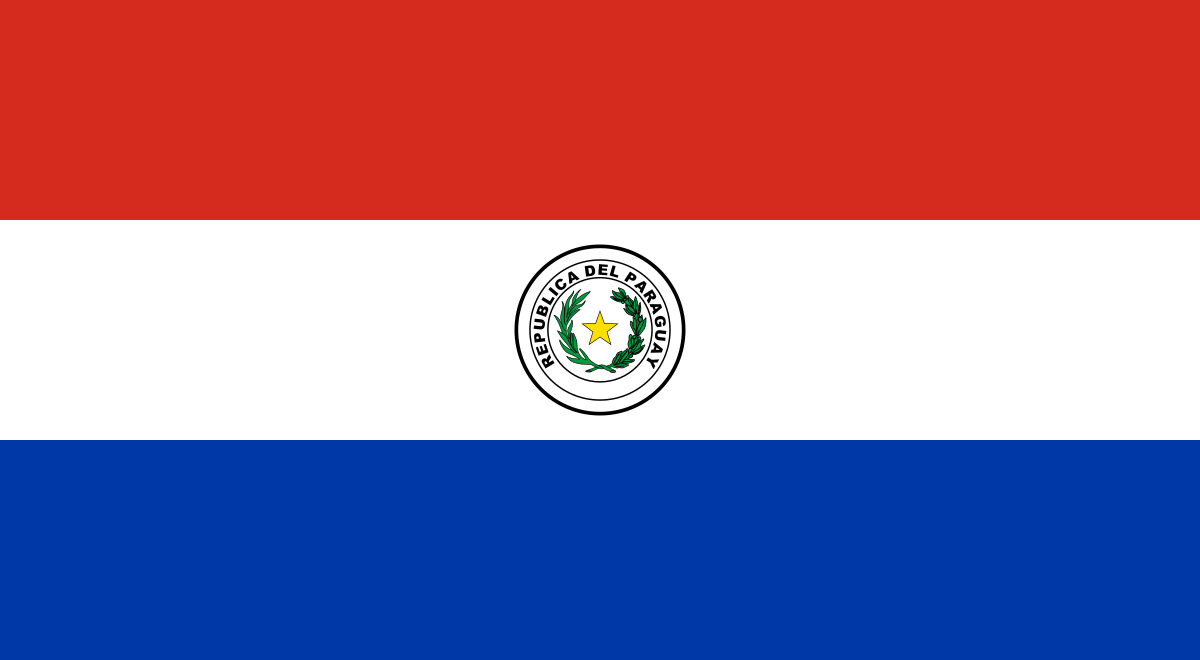
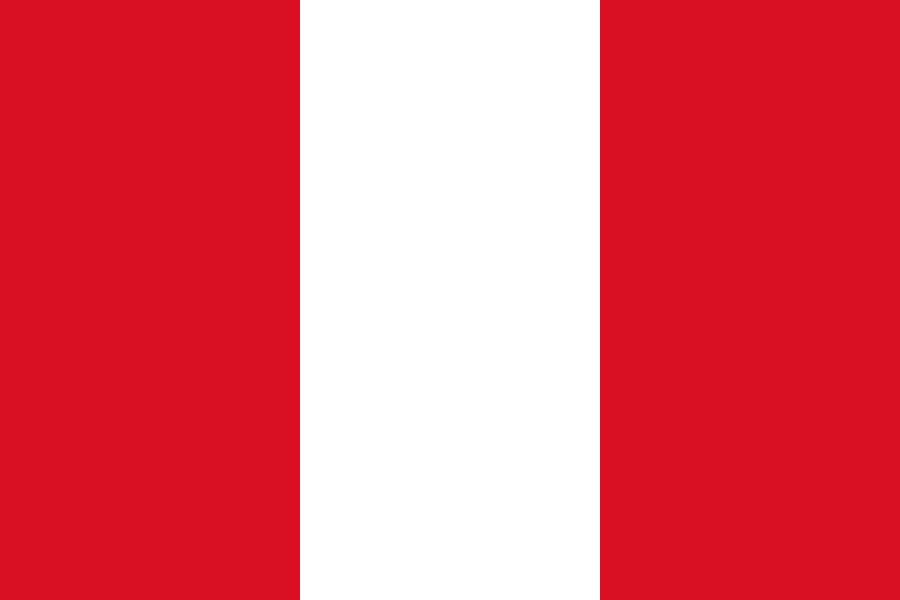
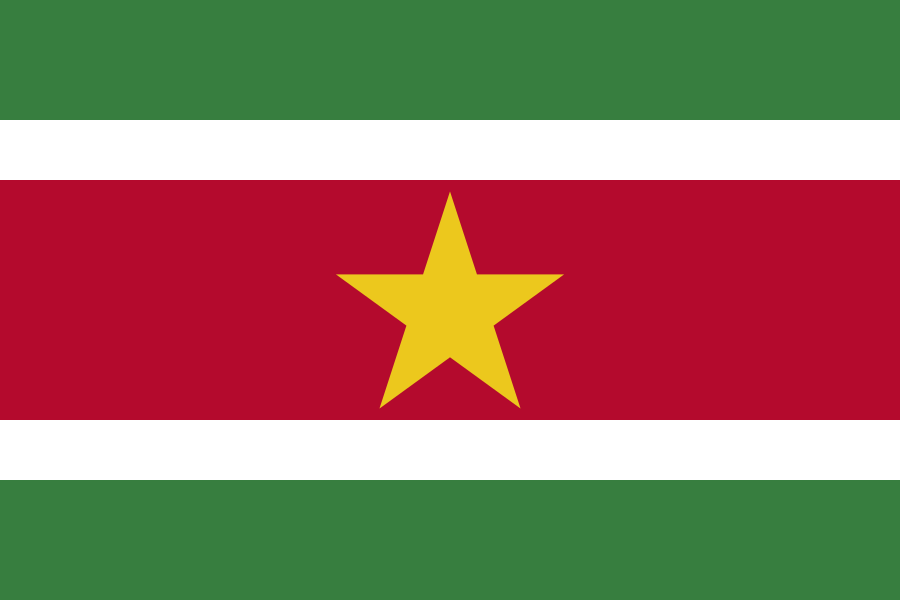
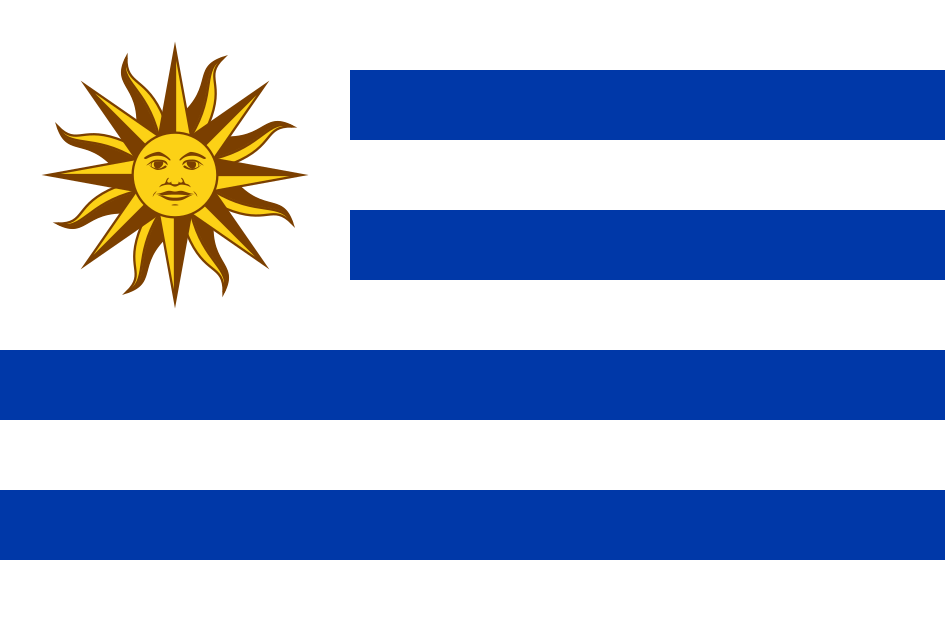
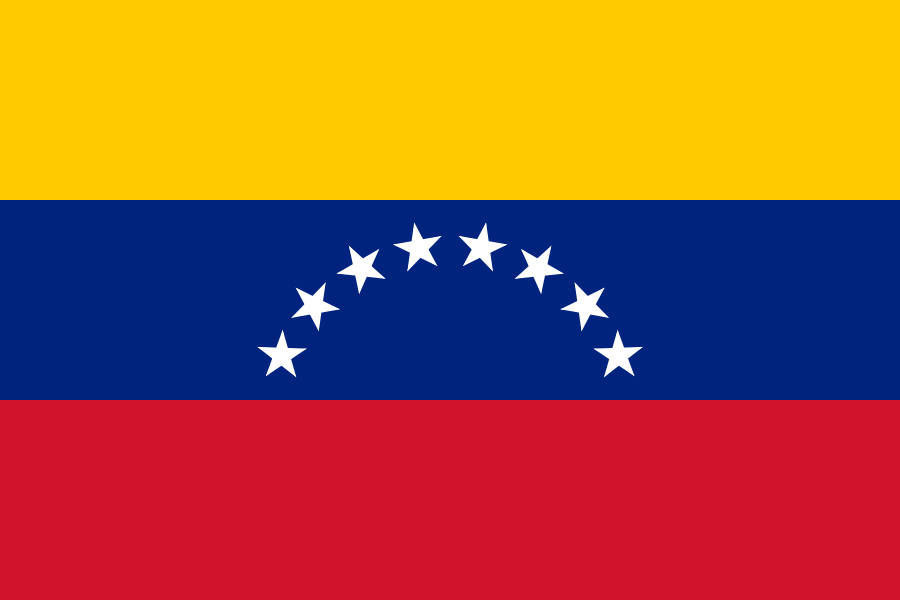
Land neighbors, approximated from simplified map outlines.
Symbols in History (1)
Coats of arms and emblems whose historic seat lies within this country’s present-day territory.
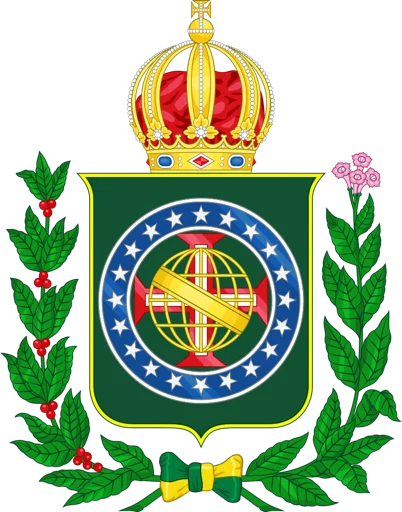
Coat of Arms of the Empire of Brazil
OriginWhen Pedro I proclaimed independence from Portugal in 1822, the new empire fixed these arms by decree that same year. The armillary sphere and the red Cross of the Order of Christ were carried over unchanged from Portuguese royal heraldry. The number of stars followed the number of provinces and reached twenty in 1853; the picture here is a modern redrawing of that final imperial design.
DescriptionOn a dark green shield edged in gold runs a blue ring set with twenty white five-pointed stars, one for each province of the empire. At its centre stands a golden armillary sphere, its rings of meridians and parallels crossed on the diagonal by one broad band. Behind the sphere shows the Cross of the Order of Christ, red with flared arms and a narrower white cross laid inside it. Above the shield rests the golden imperial crown, red-capped, its pearled arches meeting at the top under a golden orb that carries a small cross with the same flared arms. A coffee branch bearing red berries on the left and a tobacco branch in pink flower on the right, tied below by a green and yellow bow, stand for the two crops that carried the empire's wealth.

State & regional flags (27)
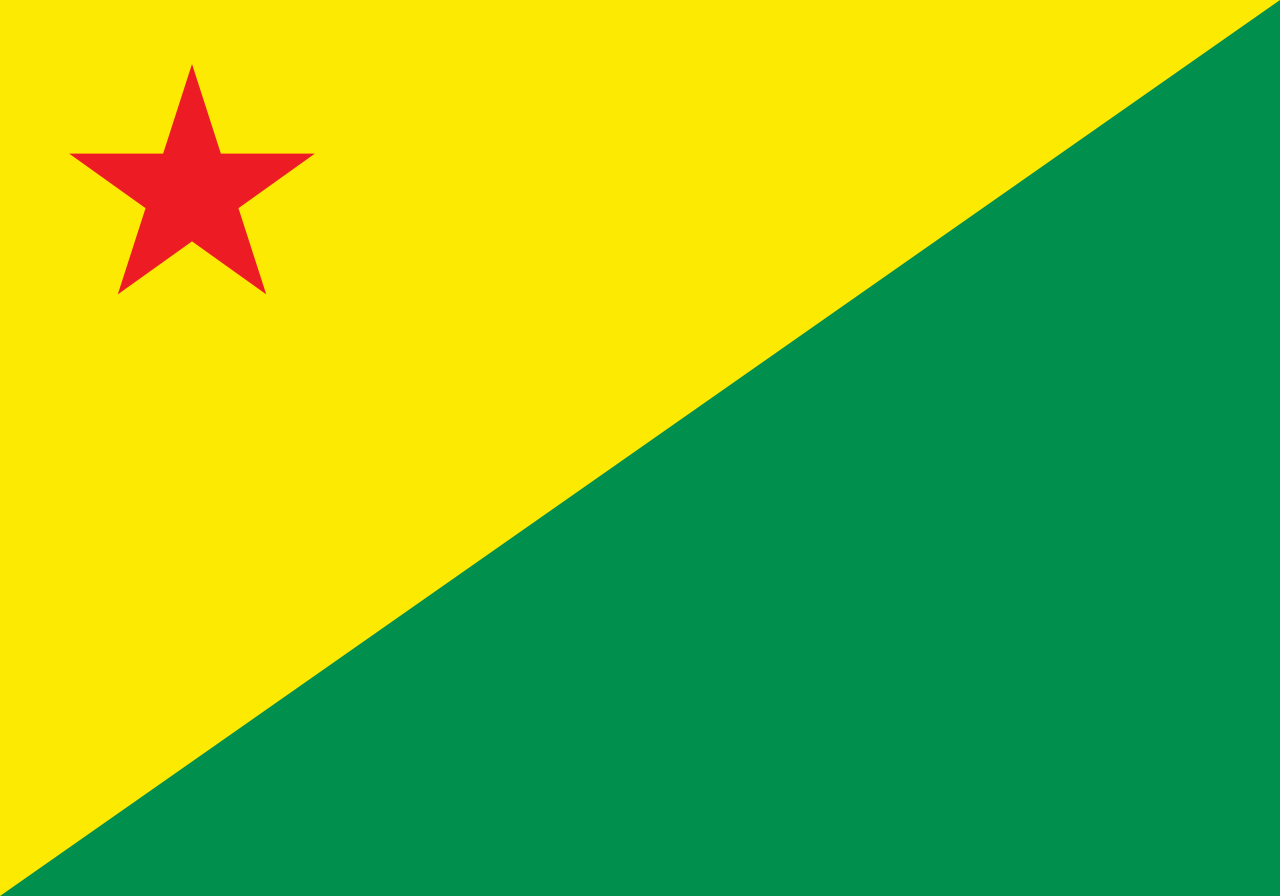
Acre
Yellow with a green triangle sweeping from the lower hoist to the upper fly, and a single red star in the corner nearest the staff.
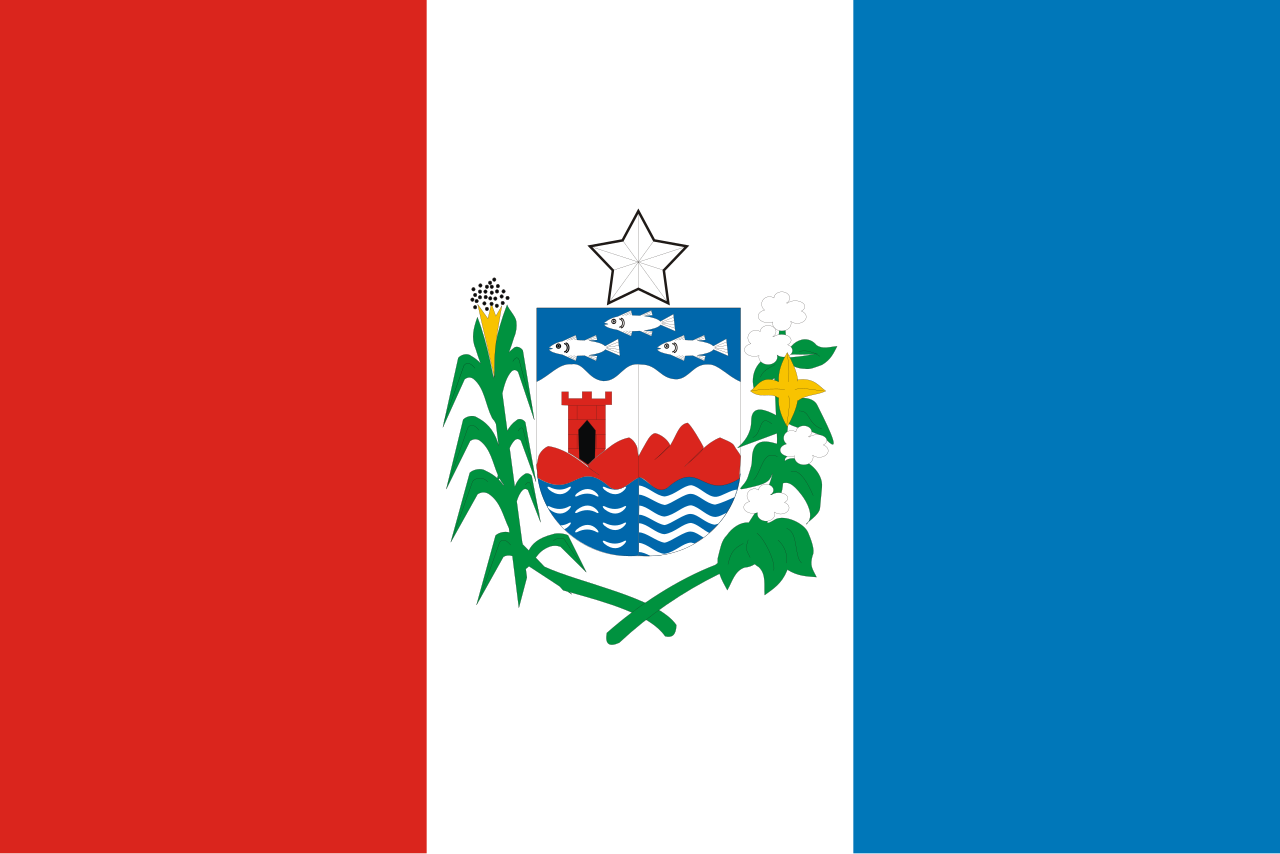
Alagoas
Vertical red, white and blue bands; the shield at the centre shows three fish swimming over waves, a red tower on red rocks and three red hills beside it, with a star above the shield. Flanking it are a flowering sugarcane stalk and a cotton branch with bolls and yellow flowers.
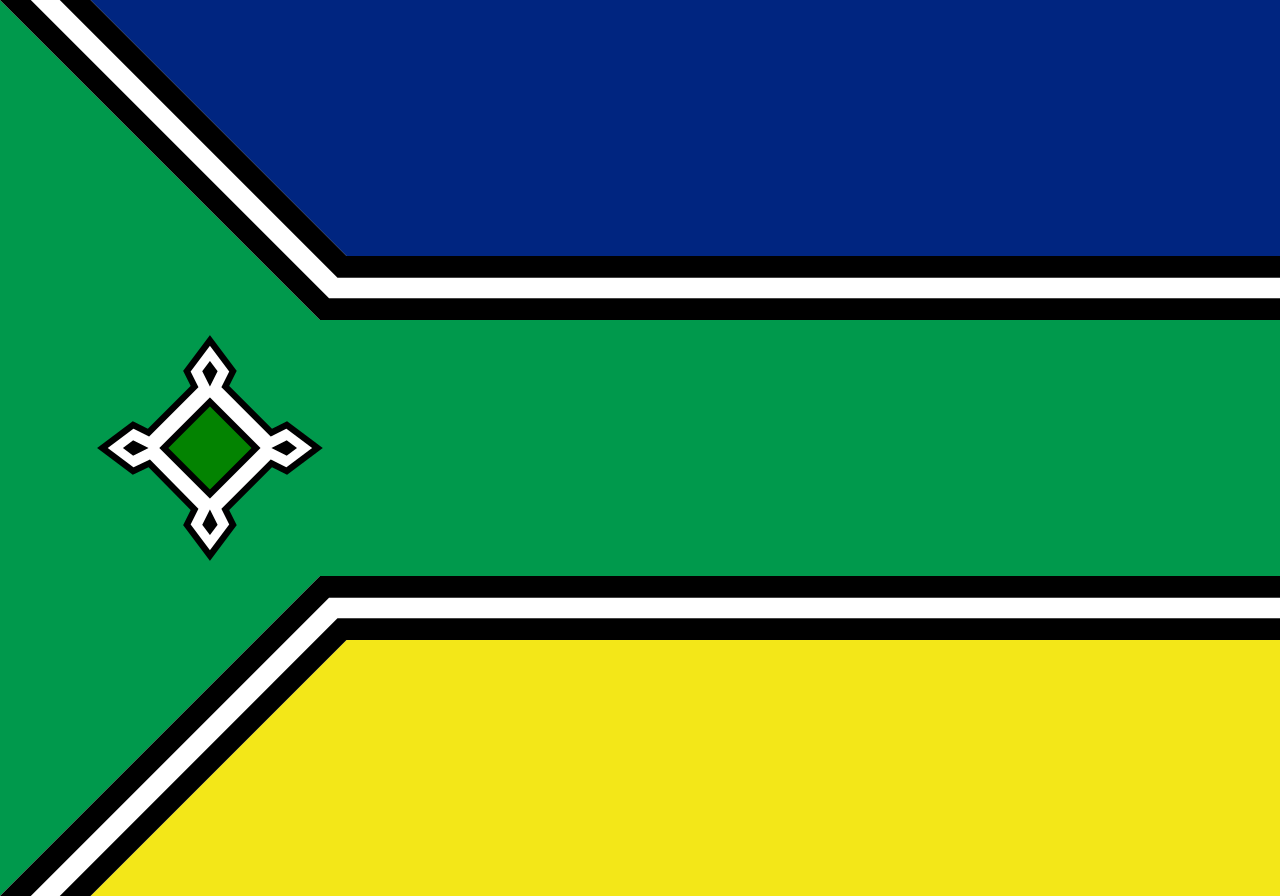
Amapá
Green with a navy corner above and a yellow one below, edged in black and white, and a white star-fort outline near the hoist for the fortress at Macapá.
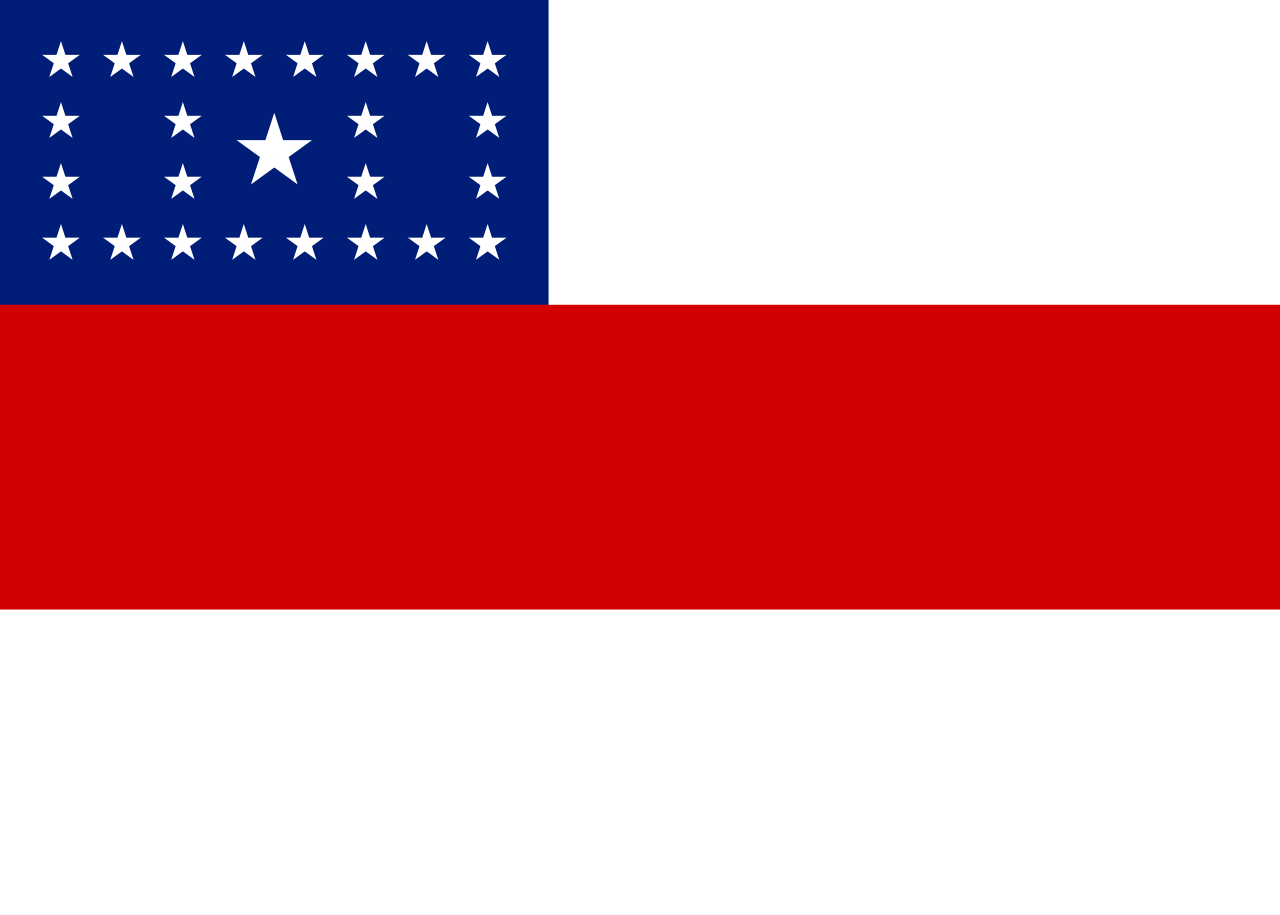
Amazonas
Twenty-four small white stars ring one larger star on the blue canton, while a wide red band crosses the white field. The big star stands for the capital, Manaus.
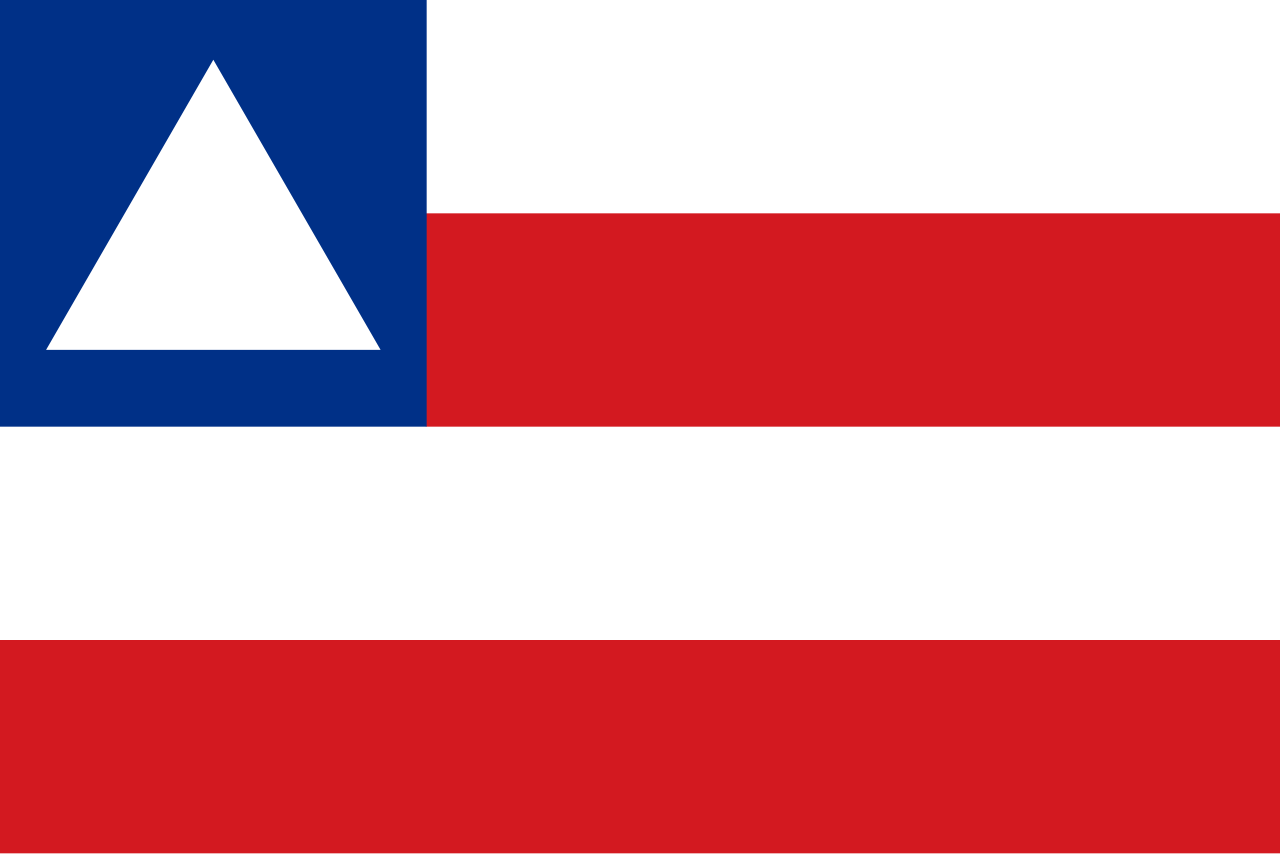
Bahia
A blue square at the hoist carries a plain white triangle pointing upward; the rest of the flag is four equal stripes alternating white and red, white on top.
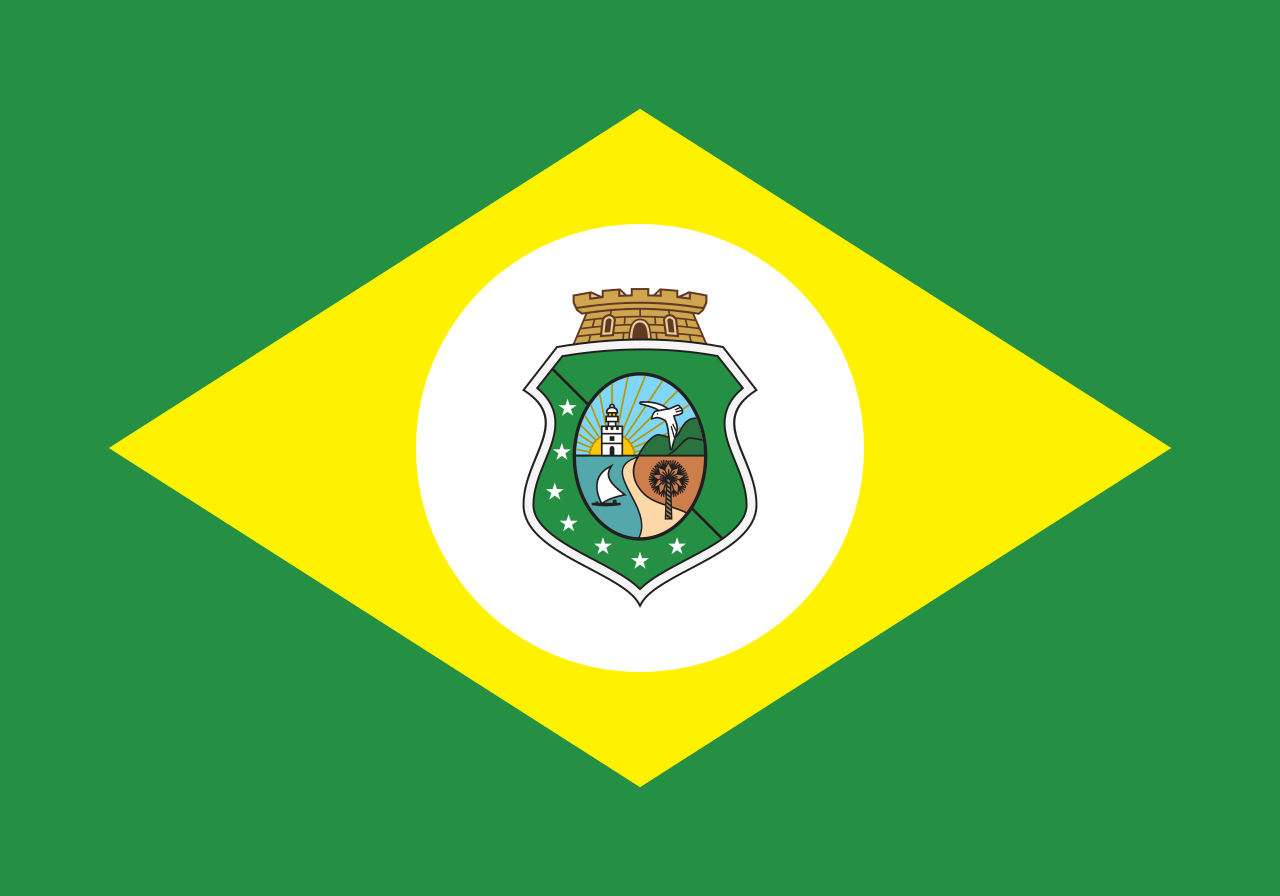
Ceará
Inside a white disc on a yellow diamond, the arms show a lighthouse, a rising sun, a sailing raft and a carnauba palm, all under a castle-shaped crown.
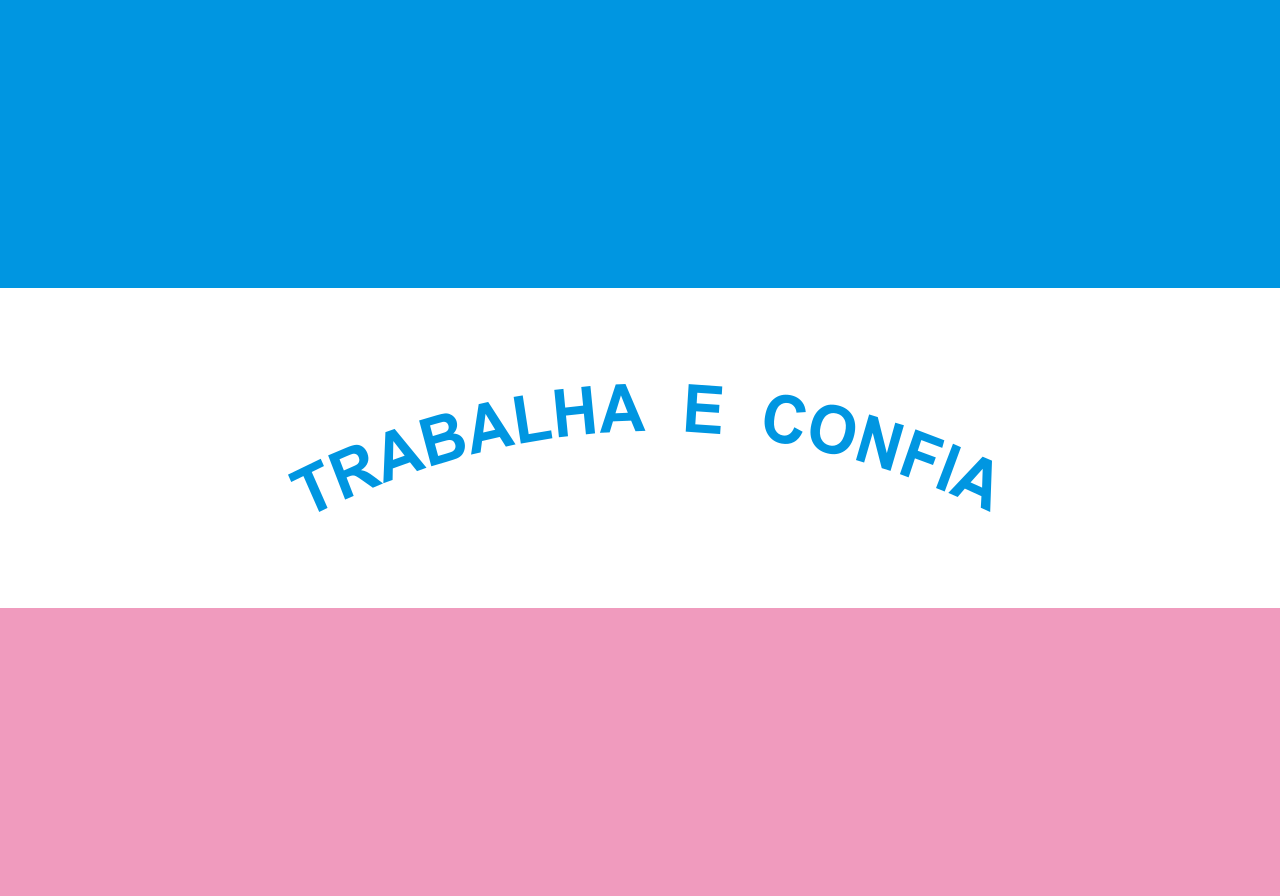
Espírito Santo
Blue, white and rose bands, with the motto TRABALHA E CONFIA - work and trust - arched in blue letters across the white middle.

Federal District
Four yellow arrows point out to the four directions from a small green lozenge, set on a green rectangle in the middle of a white field.
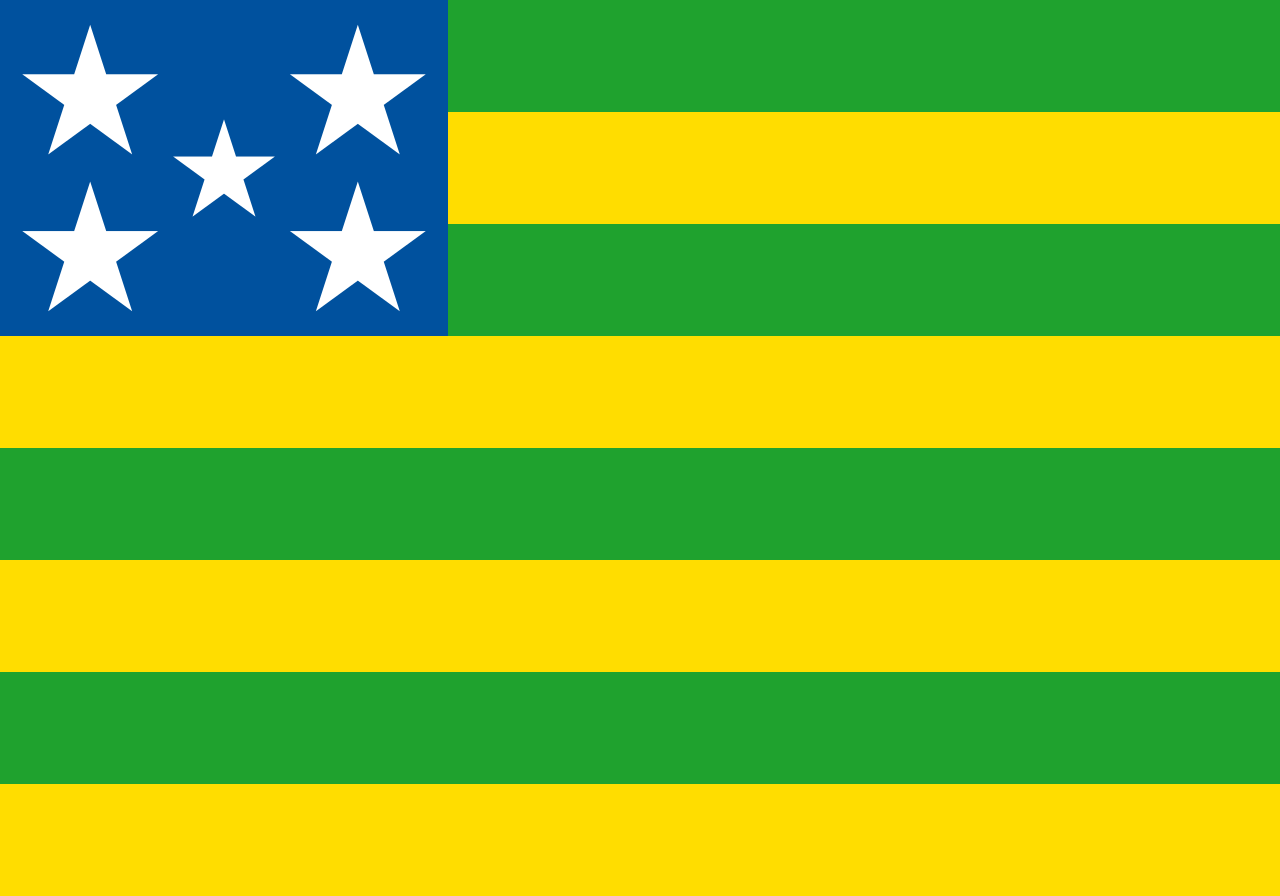
Goiás
Eight green and yellow stripes run across the flag, and five white stars sit in the blue canton in the pattern of the Southern Cross.
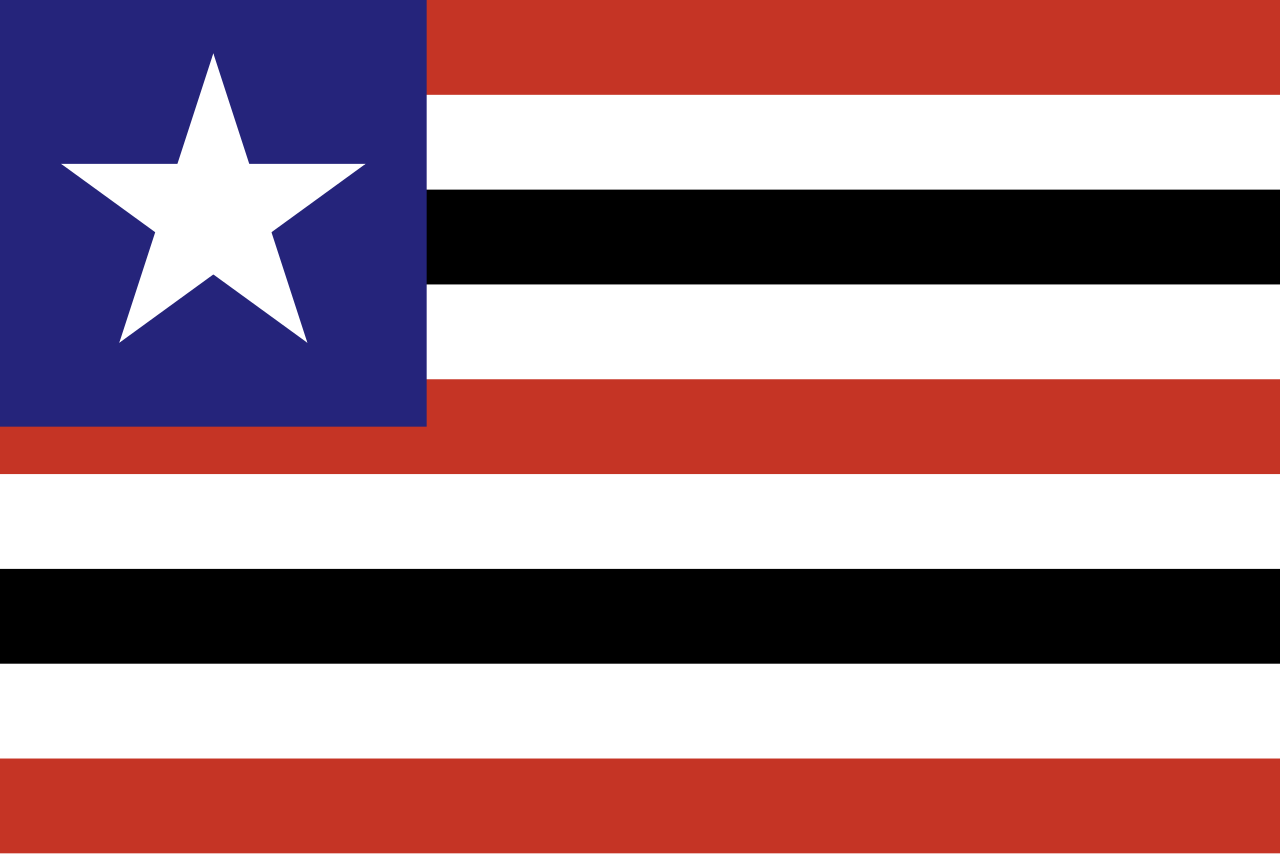
Maranhão
Red, white and black stripes stack nine deep, with one large white star alone on the dark blue square at the hoist.
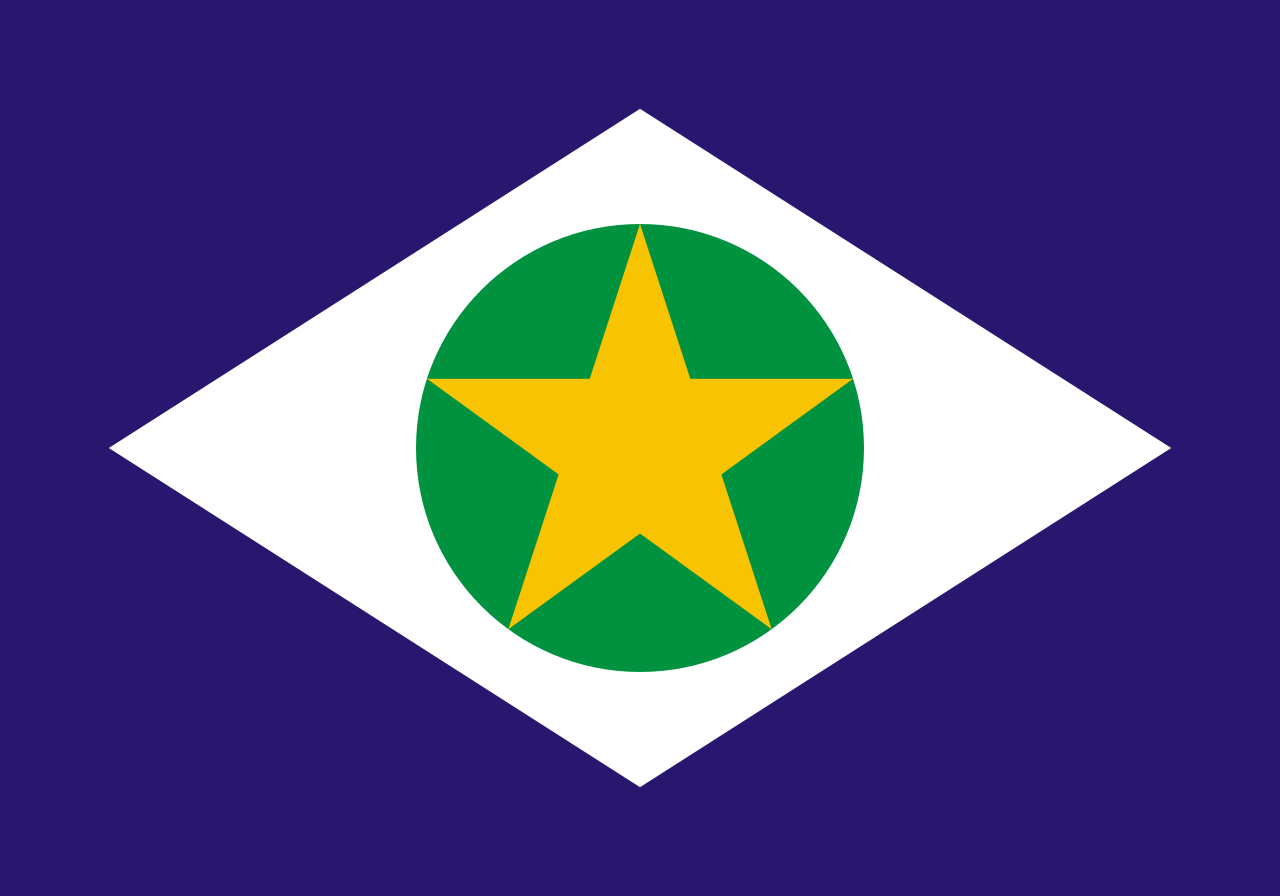
Mato Grosso
Deep blue-violet surrounds a big white diamond, and at its heart a green disc carries one large golden five-pointed star.
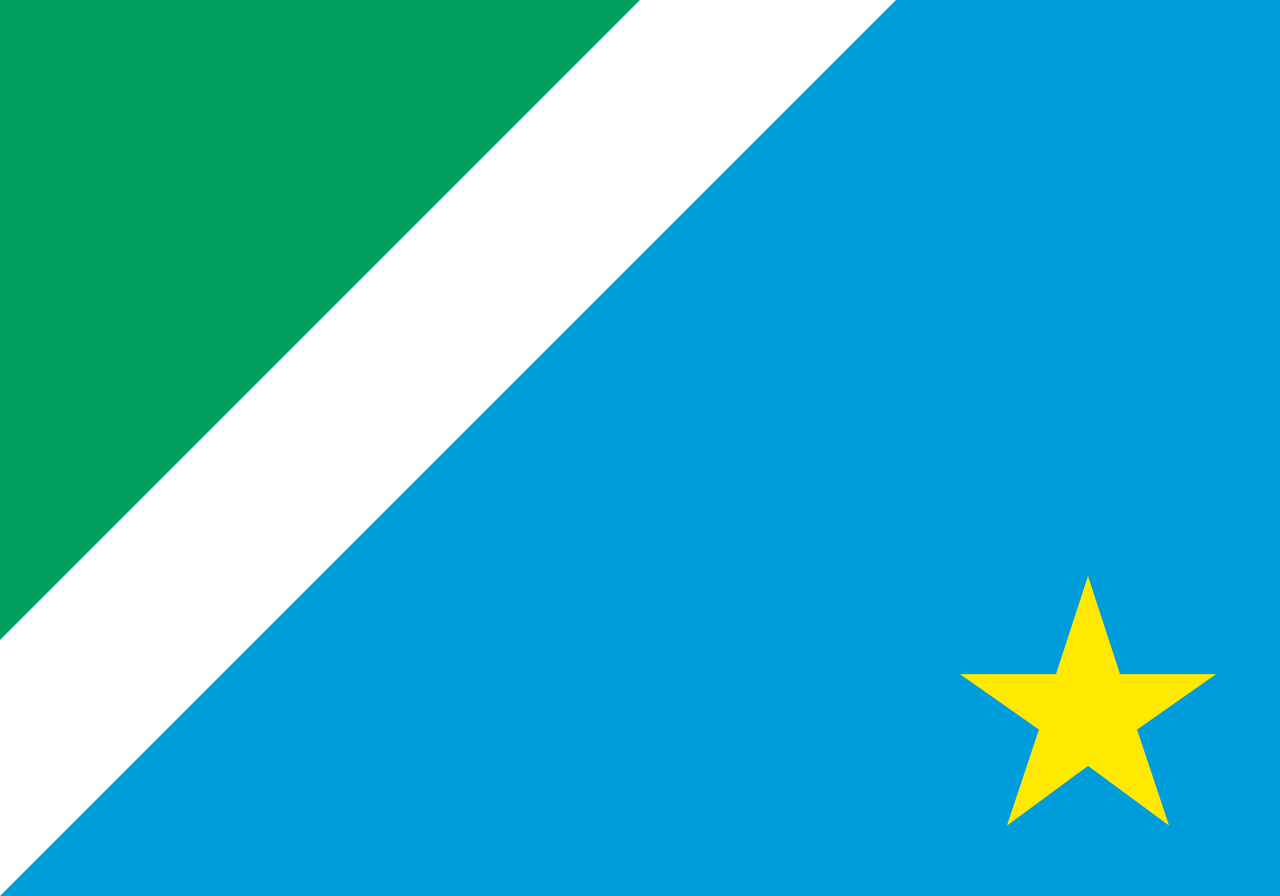
Mato Grosso do Sul
A white stripe cuts diagonally across the flag, green above it and blue below, with a large yellow star near the lower fly.
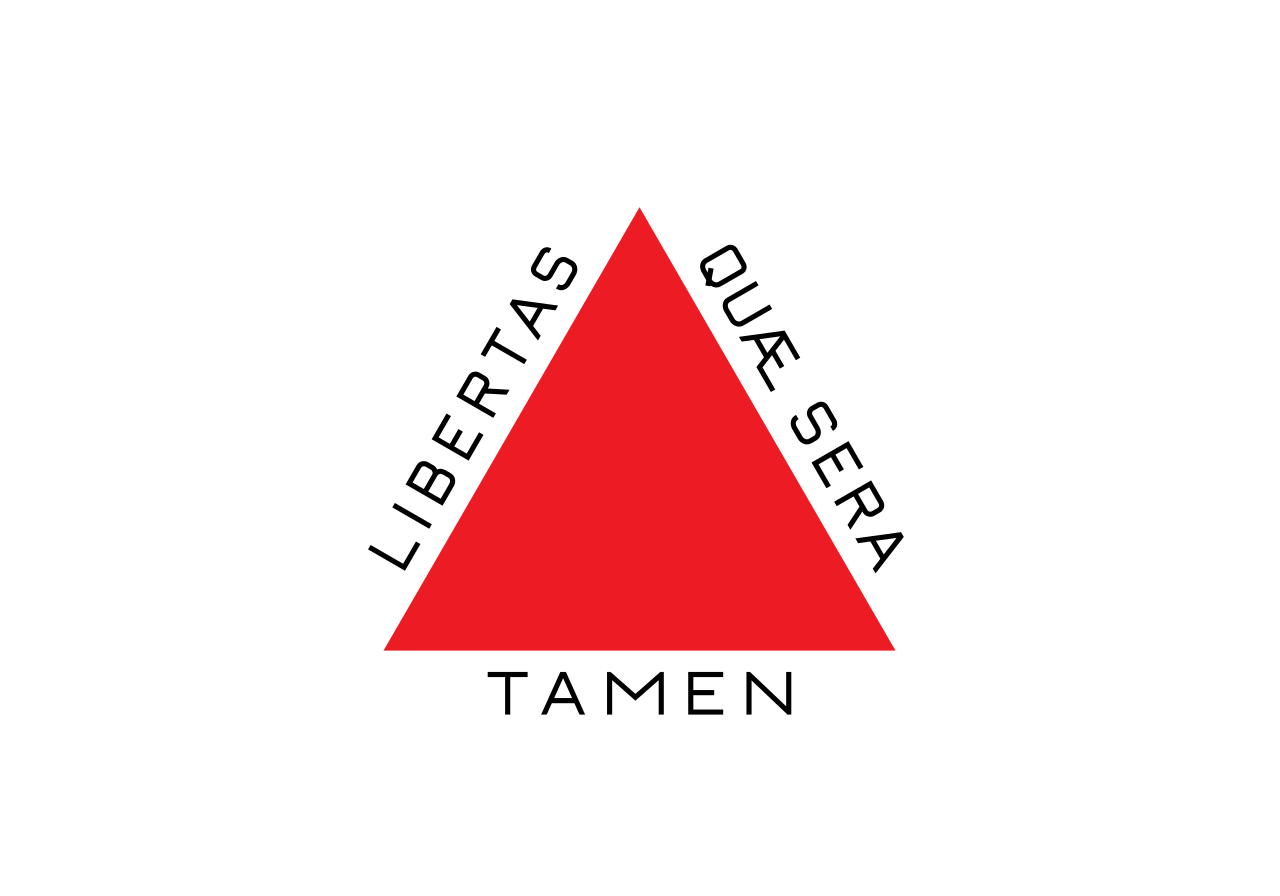
Minas Gerais
A red equilateral triangle stands alone on white, ringed by the black Latin words LIBERTAS QUÆ SERA TAMEN — 'freedom, however belated'.
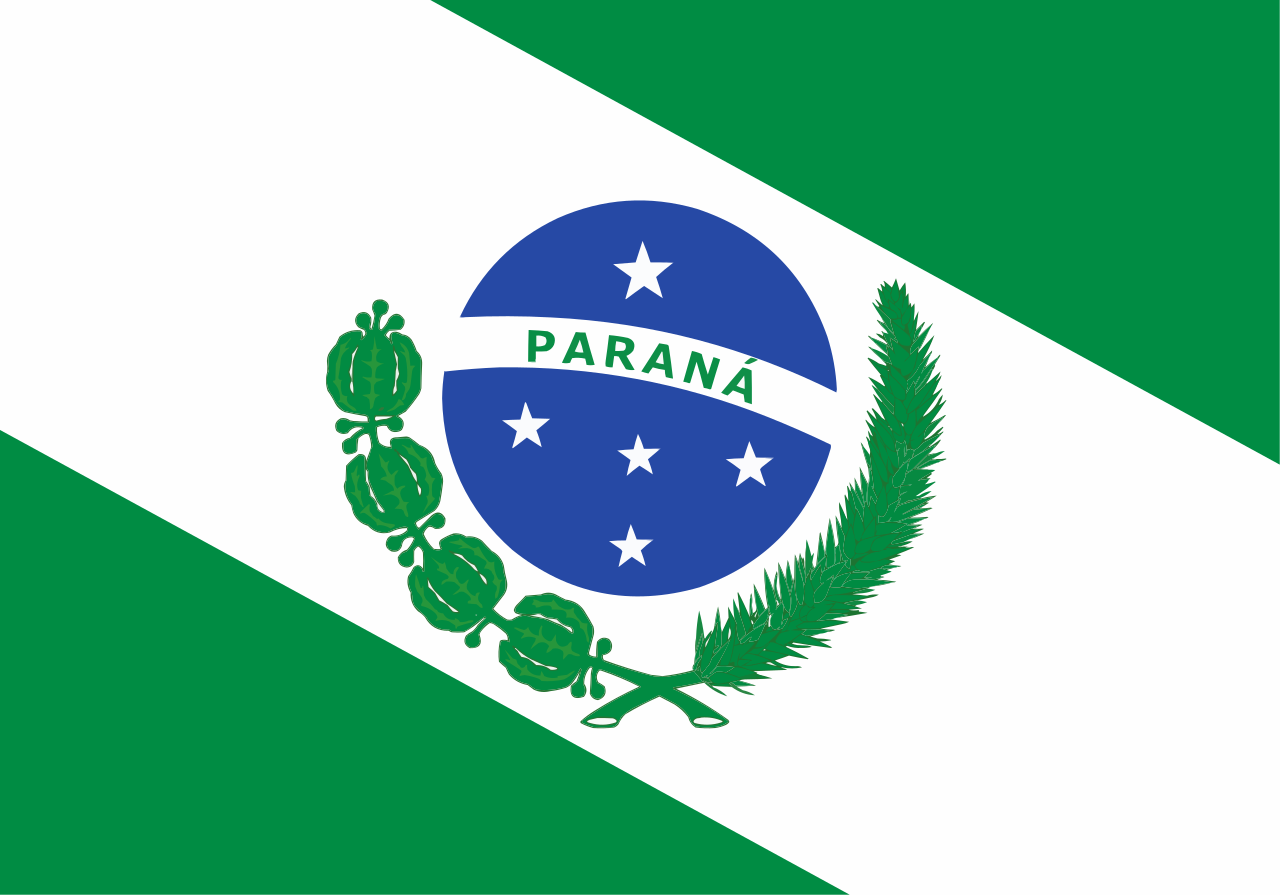
Paraná
Green corners flank a broad white diagonal; in the middle a blue globe lettered PARANÁ carries five stars, framed by a pine bough and a mate branch.
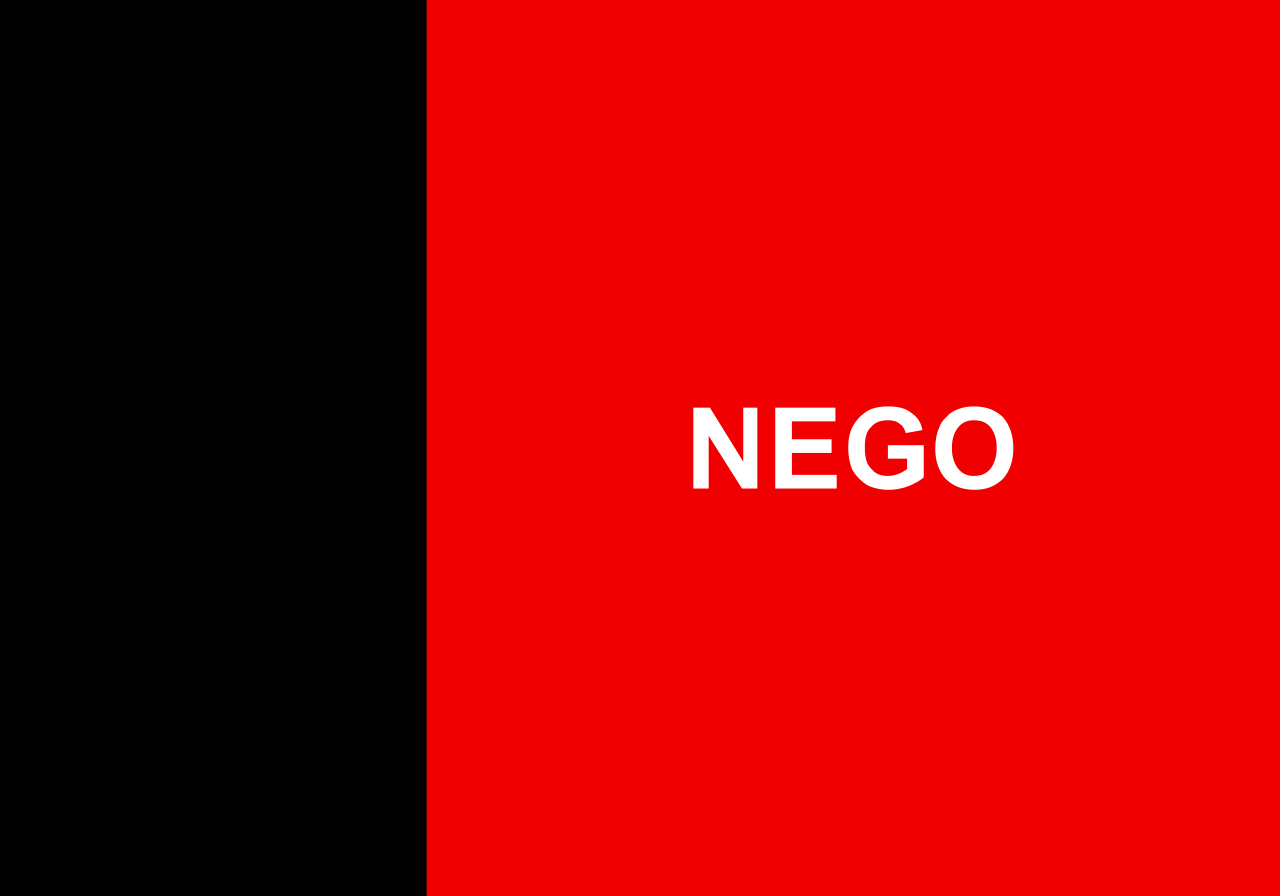
Paraíba
Black at the hoist, red across the rest, and NEGO — Portuguese for 'I refuse' — spelled out in bold white capitals.
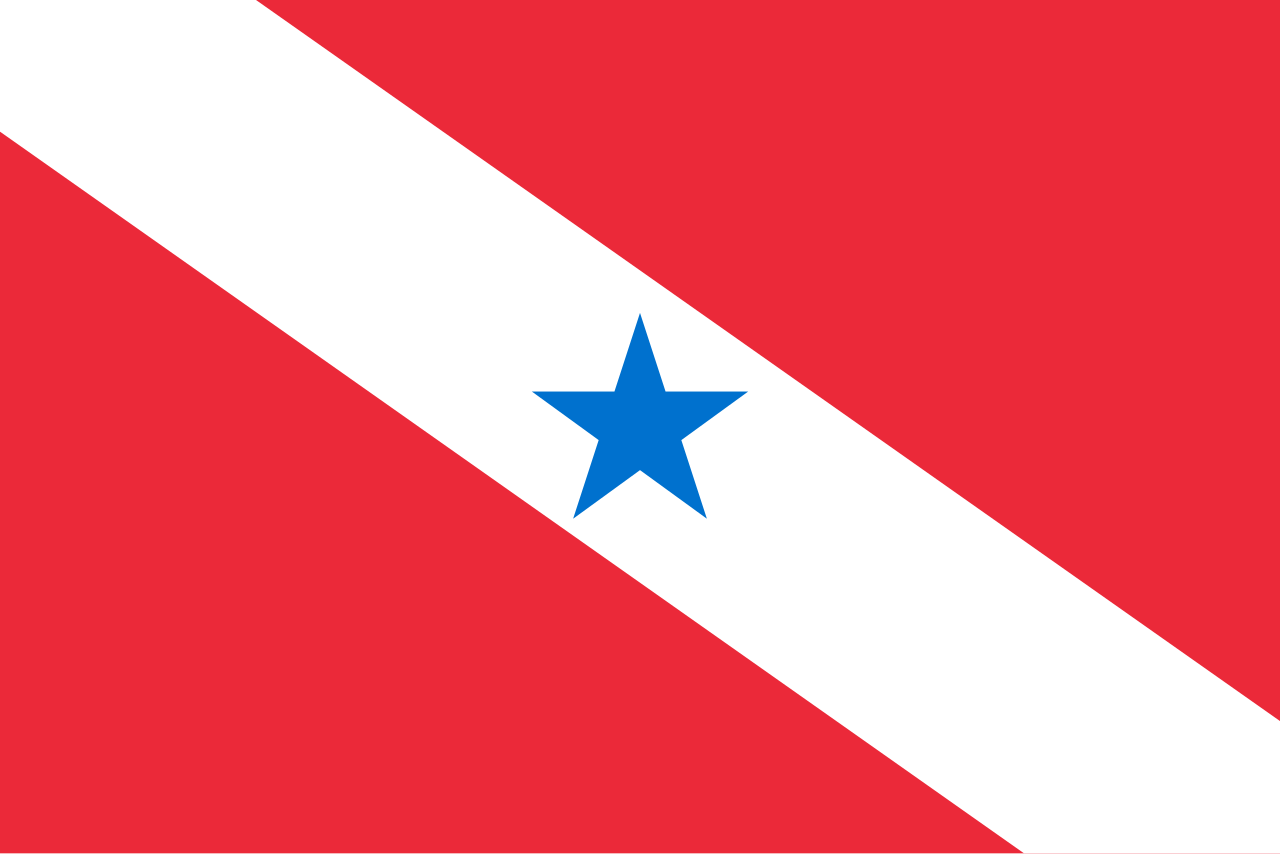
Pará
Corner to corner, a white band crosses the red field, with one blue five-pointed star set in the middle of it.
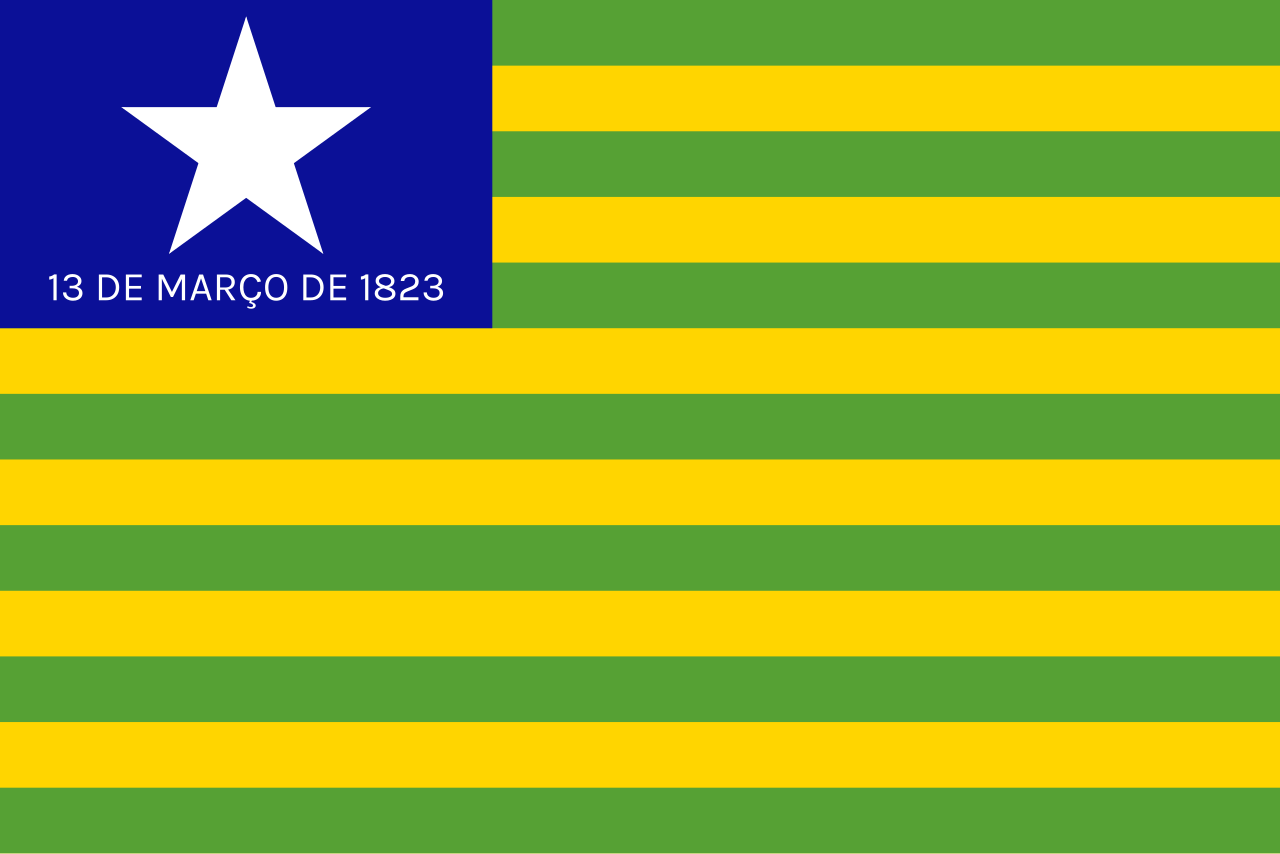
Piauí
Thirteen green and yellow stripes run behind a blue canton, where one big white star sits above the date 13 DE MARÇO DE 1823.
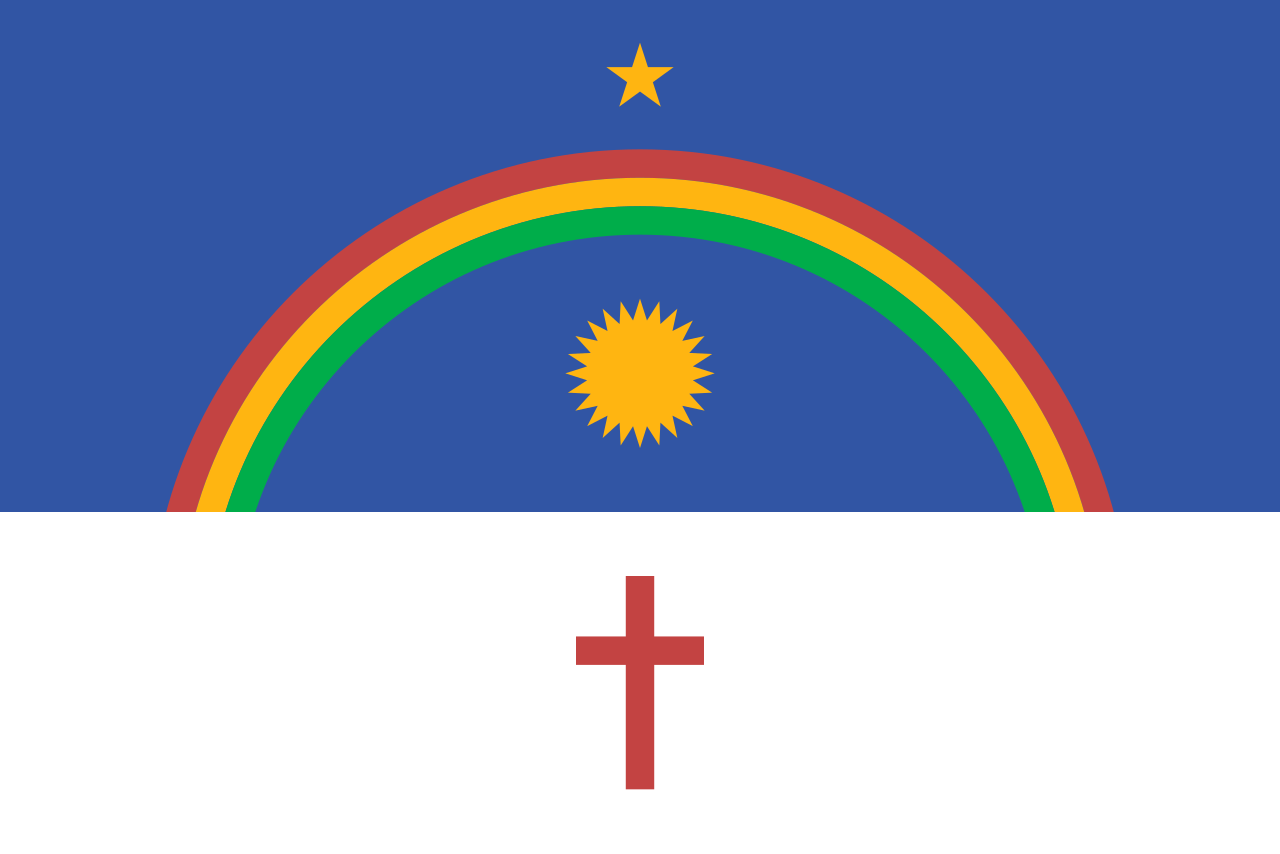
Pernambuco
Blue above, white below: a rainbow of red, yellow and green arches over a golden sun, a small golden star floats in the blue above the arch, and a red cross stands on the white band.
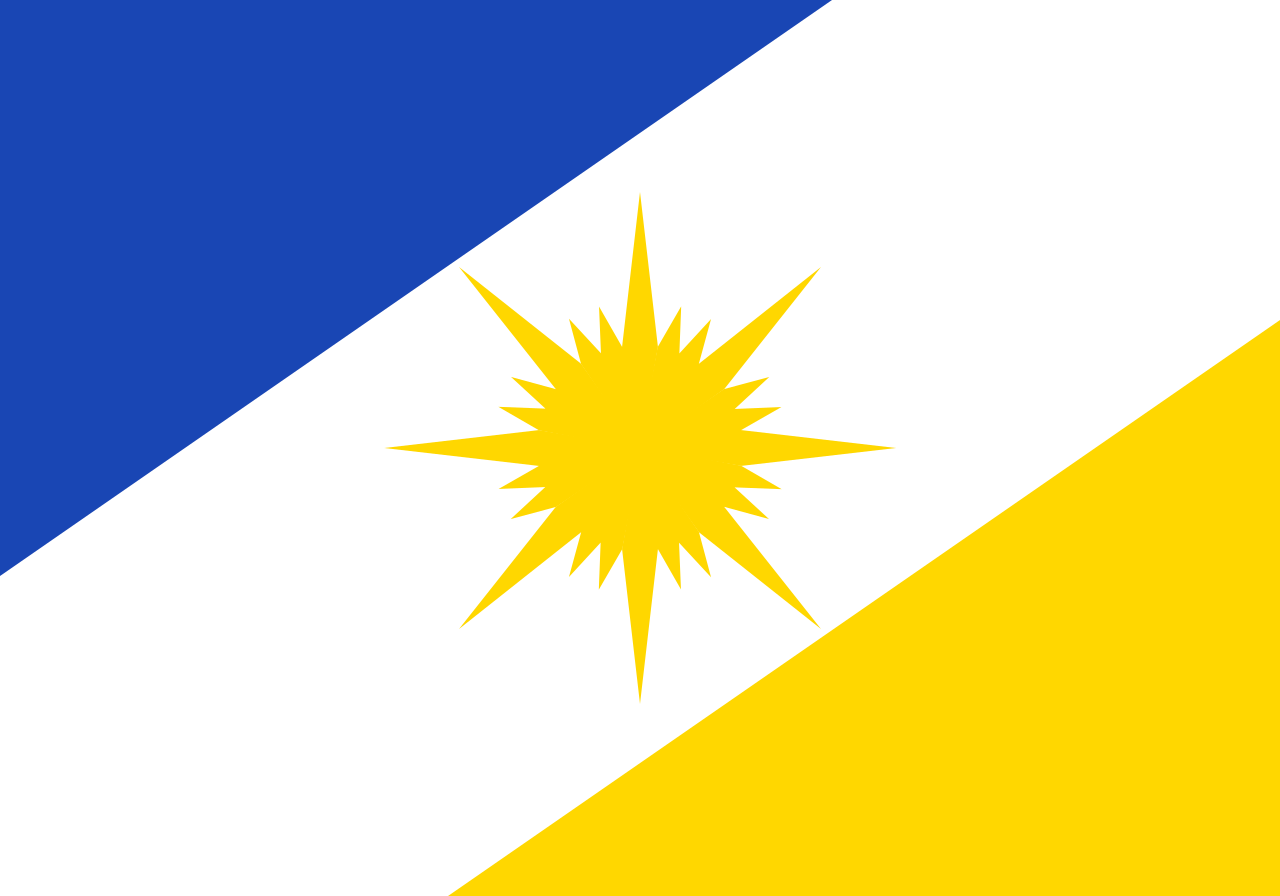
Tocantins
A blue wedge at the top hoist and a yellow one at the bottom fly leave a white diagonal, and a big golden sunburst blazes in the middle of it.
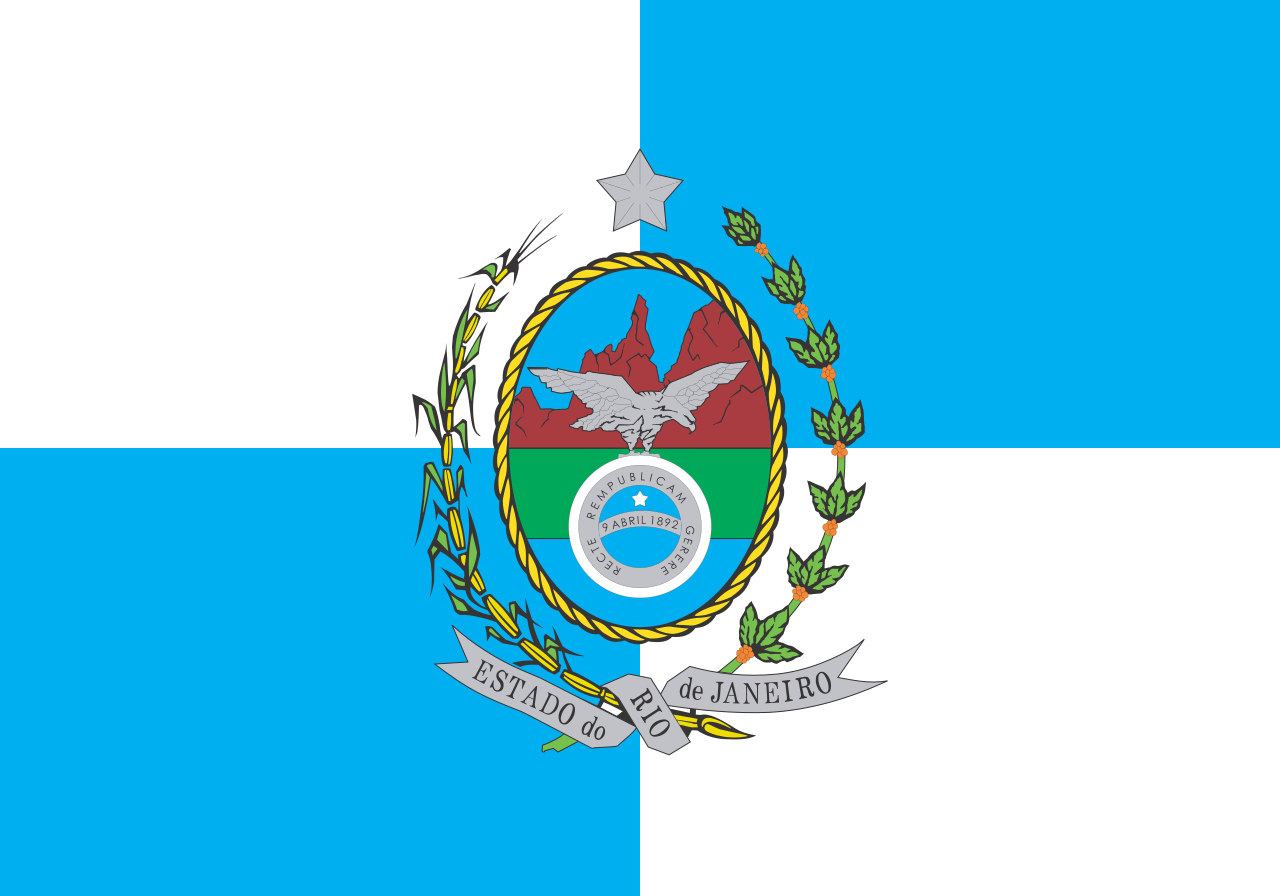
Rio de Janeiro
Quartered white and sky blue, with an oval badge where a silver eagle spreads its wings before red mountain peaks, framed by coffee and sugarcane.
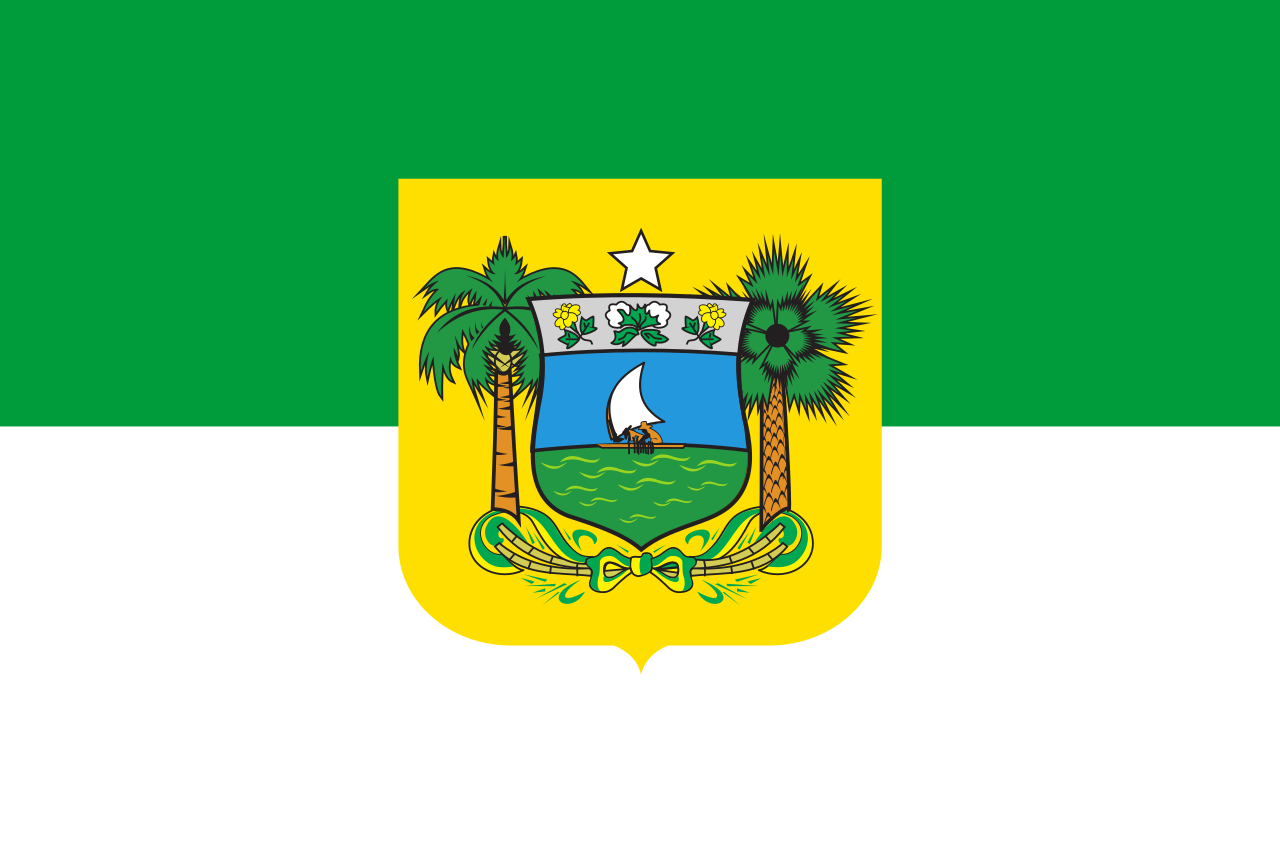
Rio Grande do Norte
Green over white, charged with a yellow shield: a sailing raft crosses green water between two palm trees, under a star and a row of cotton blossoms.
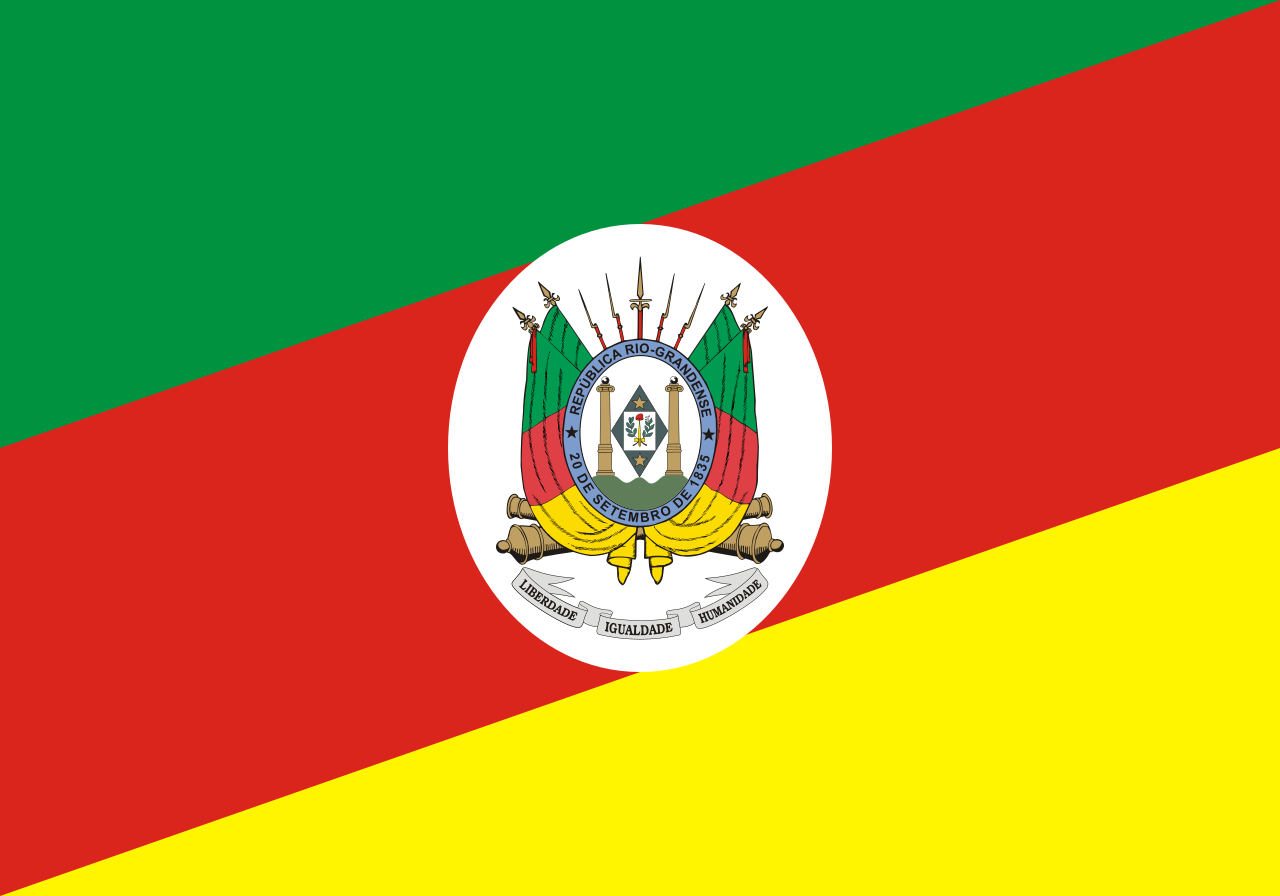
Rio Grande do Sul
Diagonal bands of green, red and yellow; in the white oval, cannons and lances flank two columns, ringed by "República Rio-Grandense, 20 de Setembro de 1835".
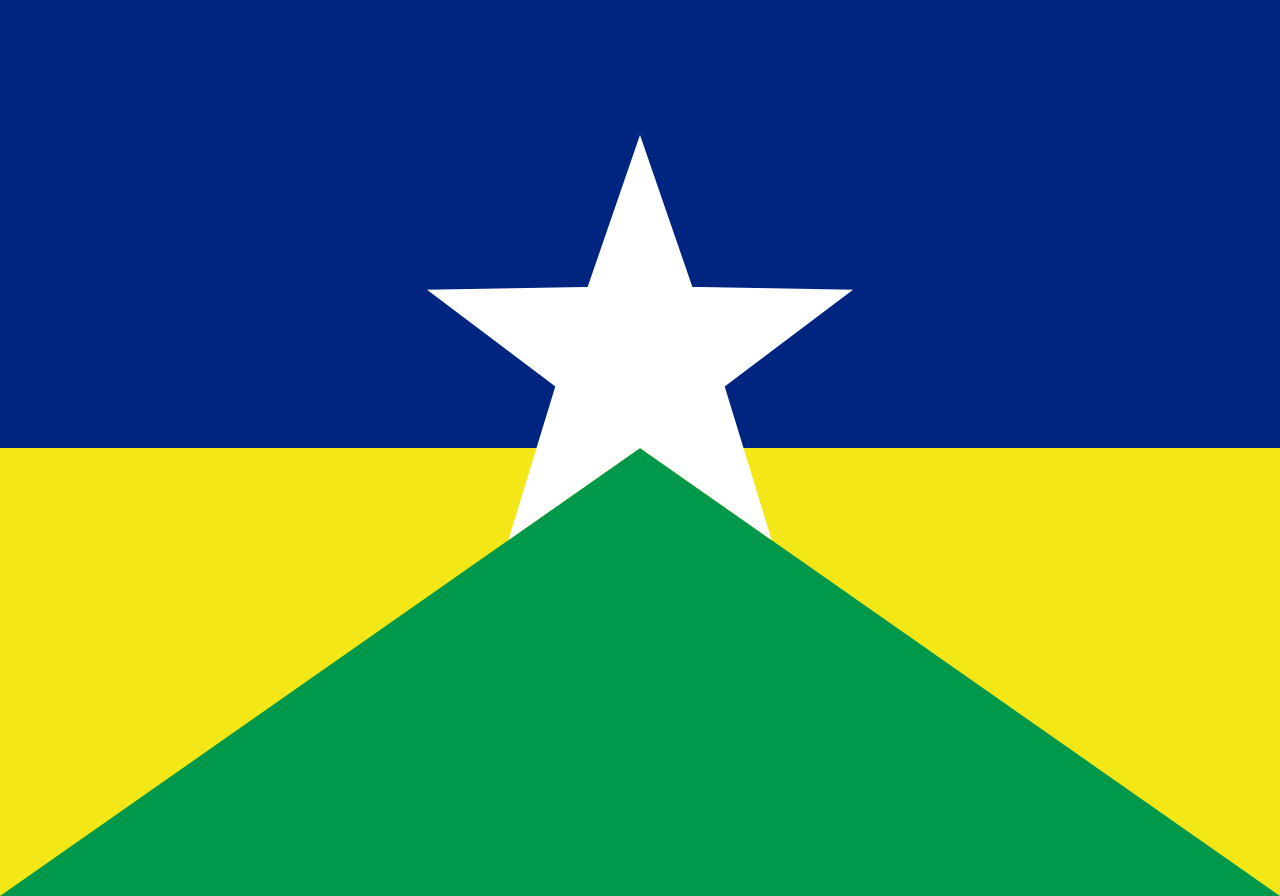
Rondônia
The upper half is deep blue, the lower half yellow, and a green triangle rises from the bottom edge toward a large white star set in the blue.
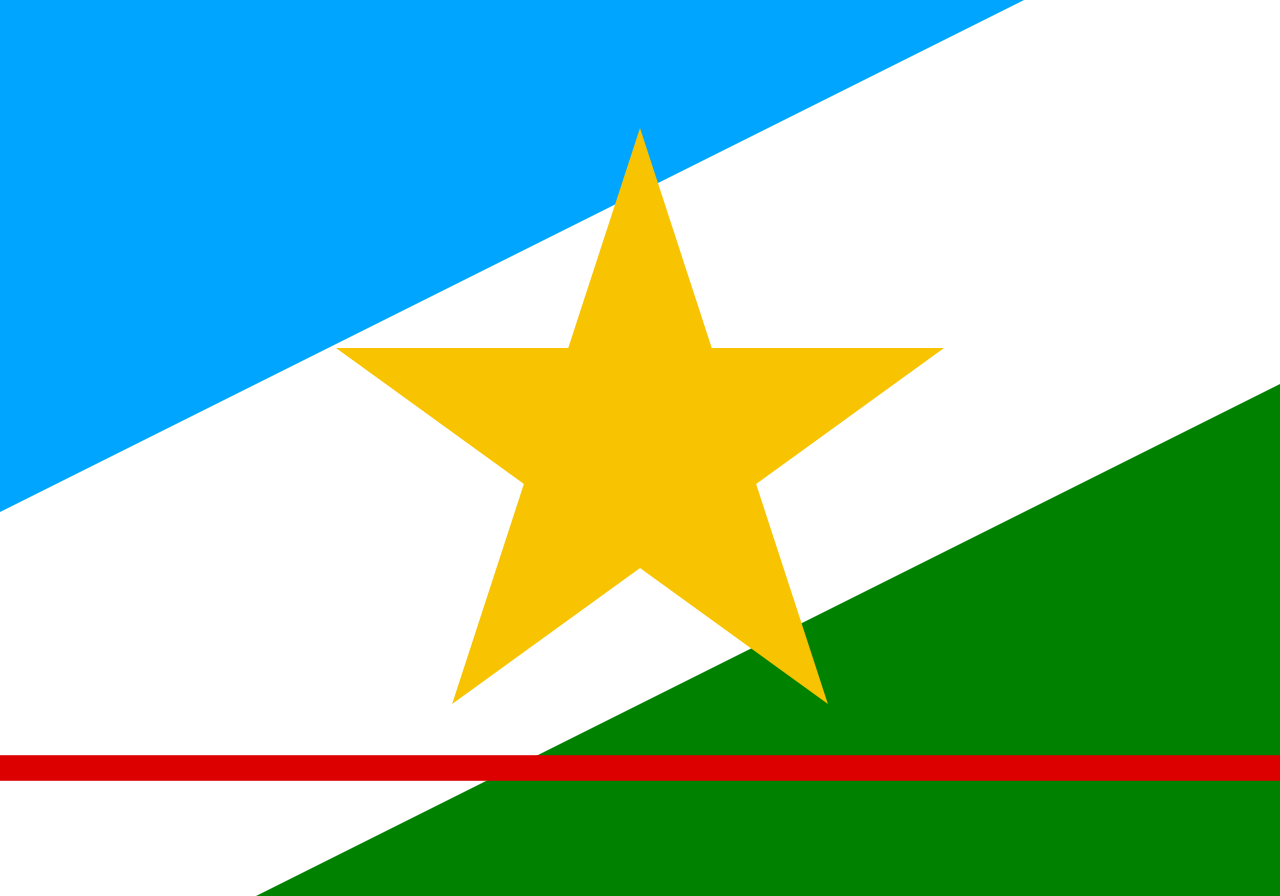
Roraima
White cut by a blue diagonal along the top and a green one along the bottom, with a thin red line low across the field and a broad golden star at the centre.
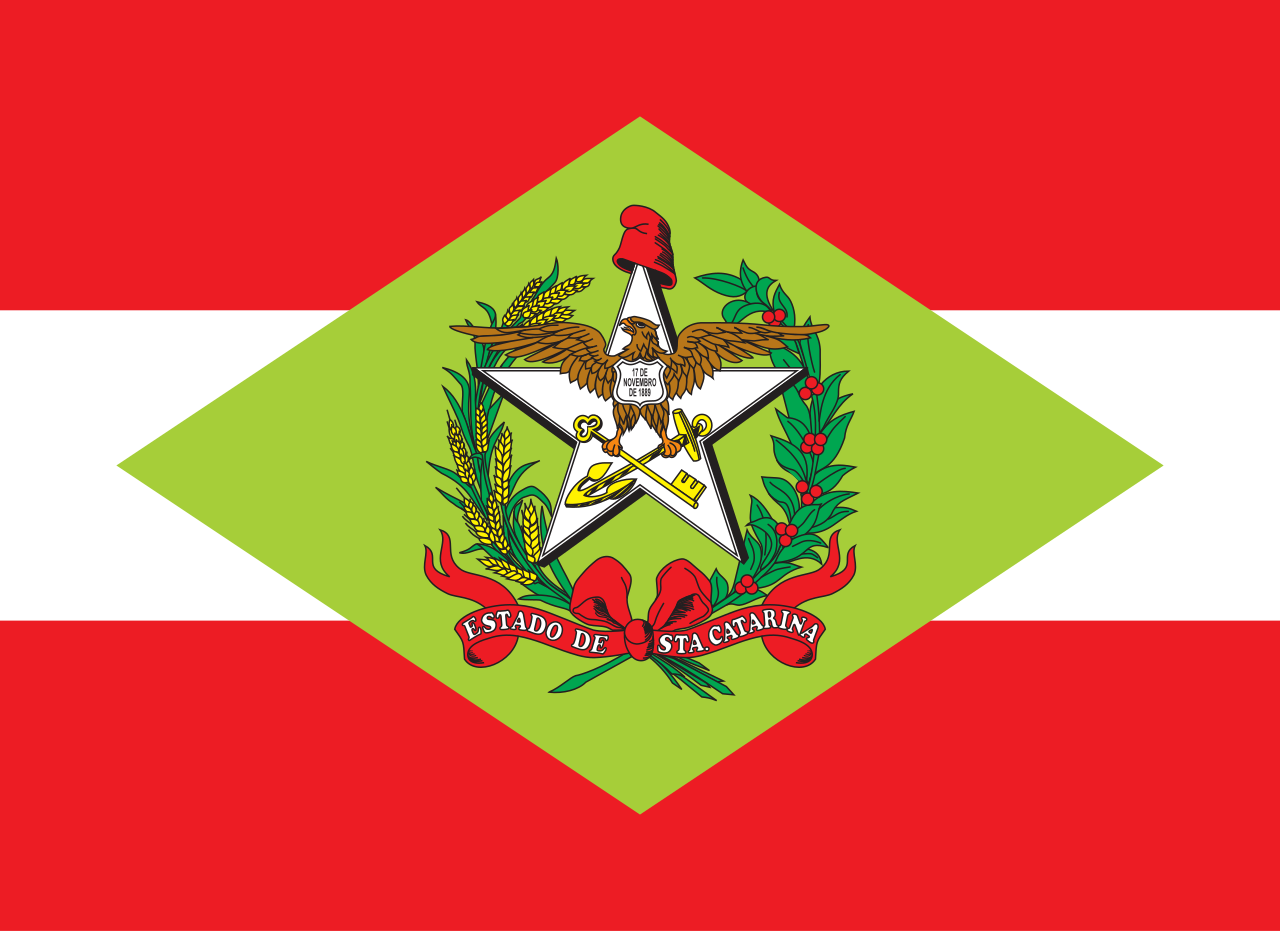
Santa Catarina
Red-white-red bands hold a lime-green diamond: an eagle grips a gold key and anchor on a white star, under a red cap, wreathed in wheat and red berries.
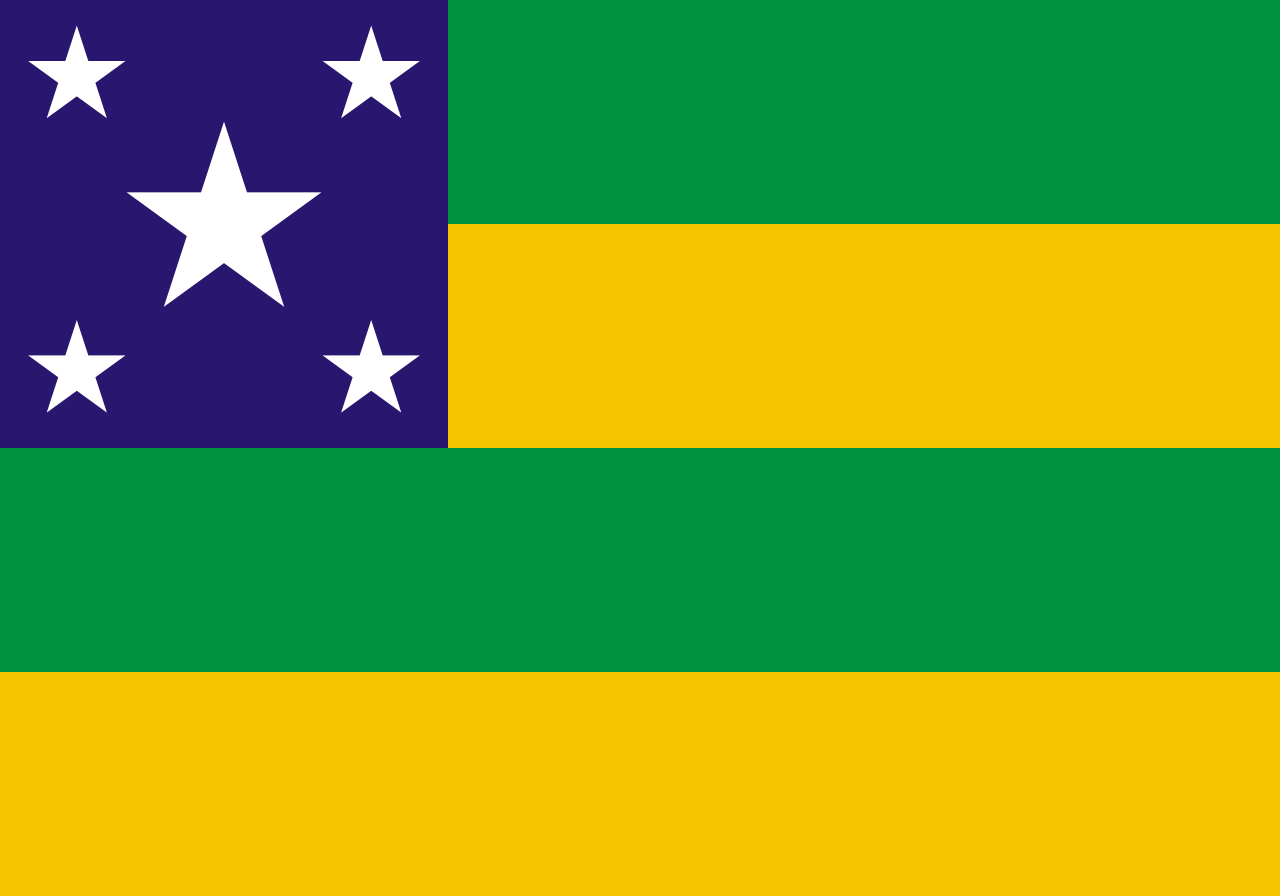
Sergipe
Four stripes alternate green and yellow, and a deep indigo canton fills the top corner with five white stars: one large in the middle, four smaller around it.
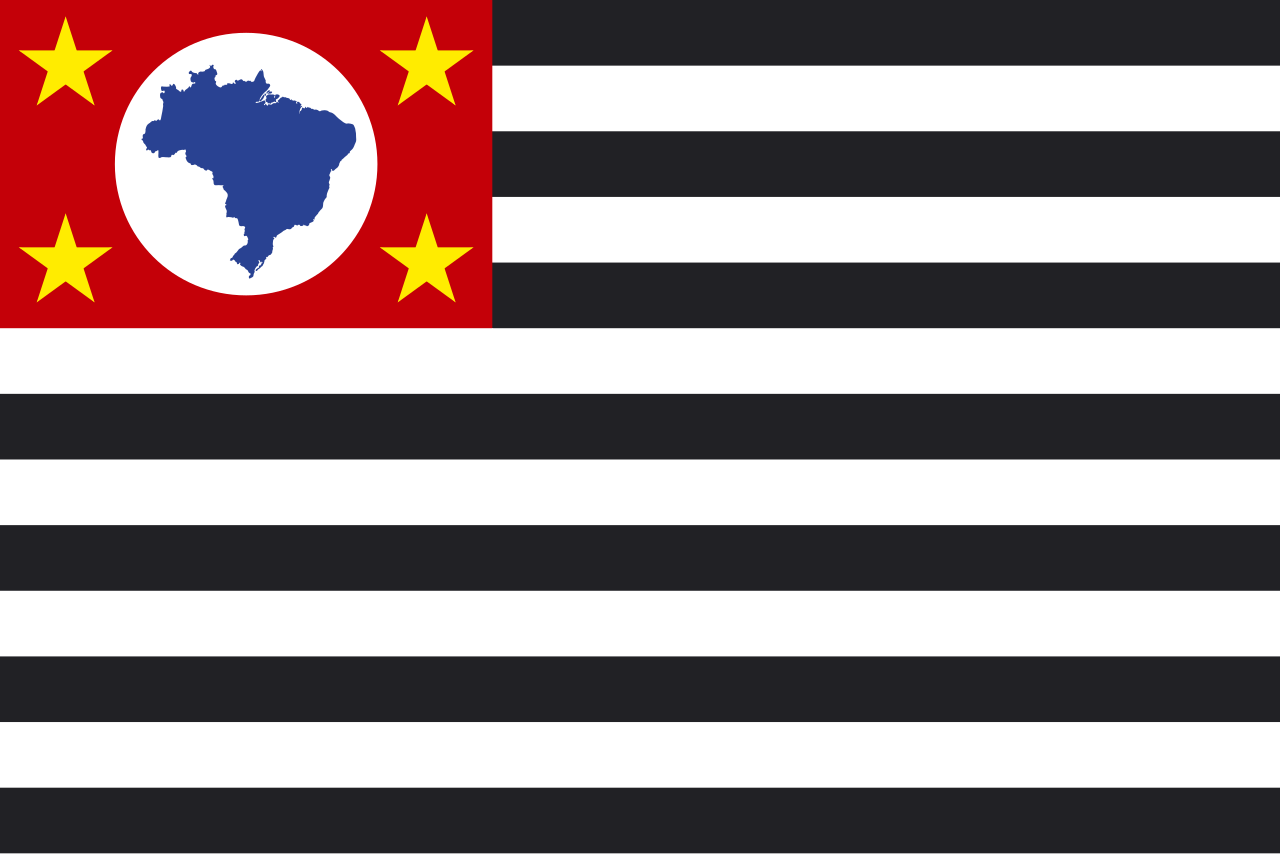
São Paulo
Thirteen black and white stripes, with a red canton where a blue map of Brazil sits on a white disc between four yellow stars.
Data Sources
- What the flag means: Lei nº 5.700, de 1º de setembro de 1971, Art. 3º
- Population: Population, total (SP.POP.TOTL), latest available value
- Area: World countries in JSON, CSV, XML and YAML
- Organizations: Membership of Principal UN Organs