Flag of Japan
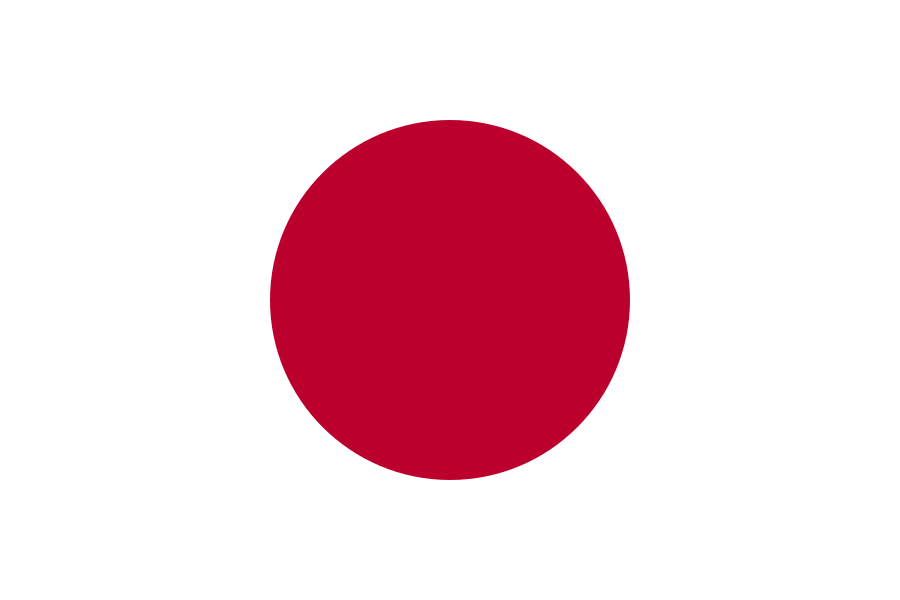
What the flag means
- White field — honesty and purity
- Red disc — the sun (the 'Land of the Rising Sun')
Design set by: 国旗及び国歌に関する法律(平成十一年法律第百二十七号)第一条・別記第一「日章旗の制式」 · Adopted 1999
Highlights
- 🗻 Mt. Fuji and four seasons
- 🍣 Sushi and ramen, loved worldwide
- 🤖 Precision robots and cars
- 🎌 Anime and manga powerhouse
- 🚄 Punctual bullet trains and order
Quick facts
- Region
- Asia · Eastern Asia
- Population
- 123,366,734 people (2025)
- Area
- 377,930 km²
- Capital
- Tokyo
- Languages
- Japanese
- Currency
- Japanese yen (JPY)
- Organizations
- United Nations, OECD
Similar flags
Suns & circles

Symbols in History (5)
Coats of arms and emblems whose historic seat lies within this country’s present-day territory.
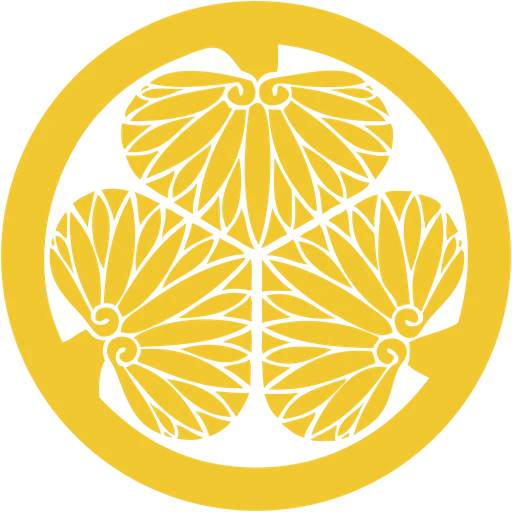
Mitsuba-aoi of the Tokugawa family
OriginThe mitsuba-aoi, three aoi leaves set inside a ring, is the chief kamon of the Tokugawa family.
DescriptionInside a thick gold ring, three aoi leaves are set, one above and two below, their stem ends curling inward to meet at the centre. Even the leaf veins are cut in with fine lines, and the whole design is drawn in gold alone.

Mitsudomoe mark of the Ryukyuan royal house
Sources do not confirm exactly who bore this design or in which version, so no description is given.
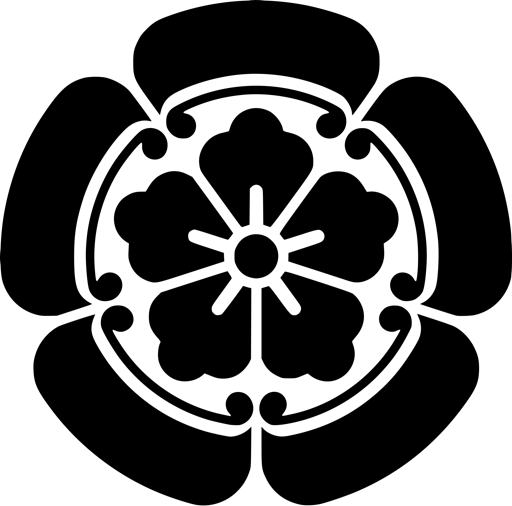
The Oda mokkō kamon of the Oda family
OriginThe five-lobed mokkō shape is the signature kamon linked with the Oda family.
DescriptionThe crest is drawn in black alone: five swelling lobes form an outline enclosing a round inner space. Inside it sits a flower with five petals, and thin white lines radiate outwards from the round centre.
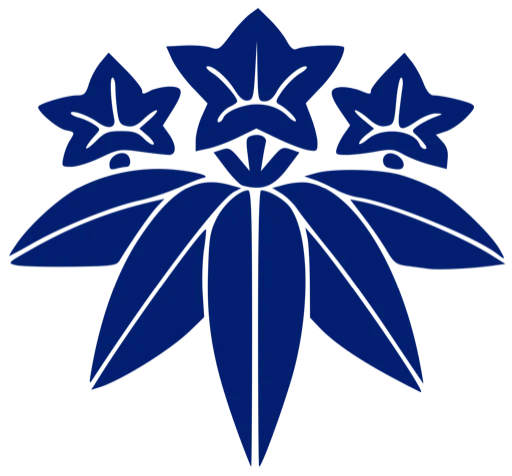
The sasa-rindo design and the Minamoto tradition
Sources do not confirm exactly who bore this design or in which version, so no description is given.
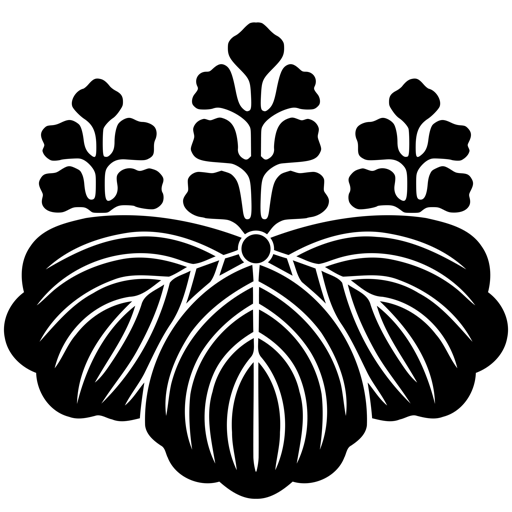
Toyotomi Hideyoshi and the go-shichi no kiri kamon
OriginThe go-shichi no kiri, with three paulownia leaves and blossoms in a 5-7-5 arrangement, is a device standing for imperial and governing authority, and Toyotomi Hideyoshi used it as well.
DescriptionThree paulownia leaves spread side by side, and above them rise three upright flower stalks: the central stalk carries seven buds and the stalks at either side five each. It is a single-colour black design with even the leaf veins cut in fine lines.


State & regional flags (47)
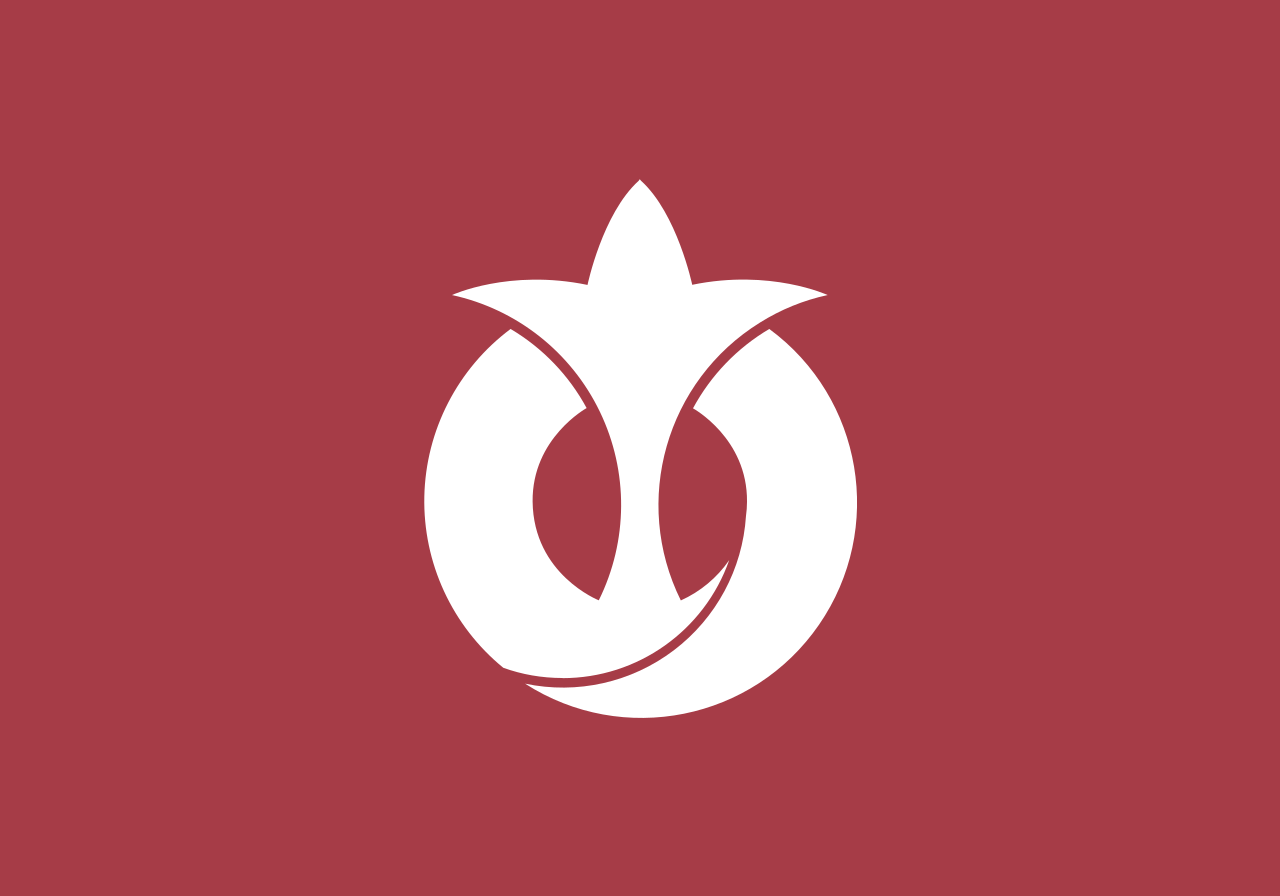
Aichi
On deep crimson, a white device: one pointed petal between two swept ones, above a wide open ring — the katakana spelling of Aichi, stylised.

Akita
Deep red, with one long white curve that sweeps in from the top-left and hooks back to the right; a small white disc sits under its tail.
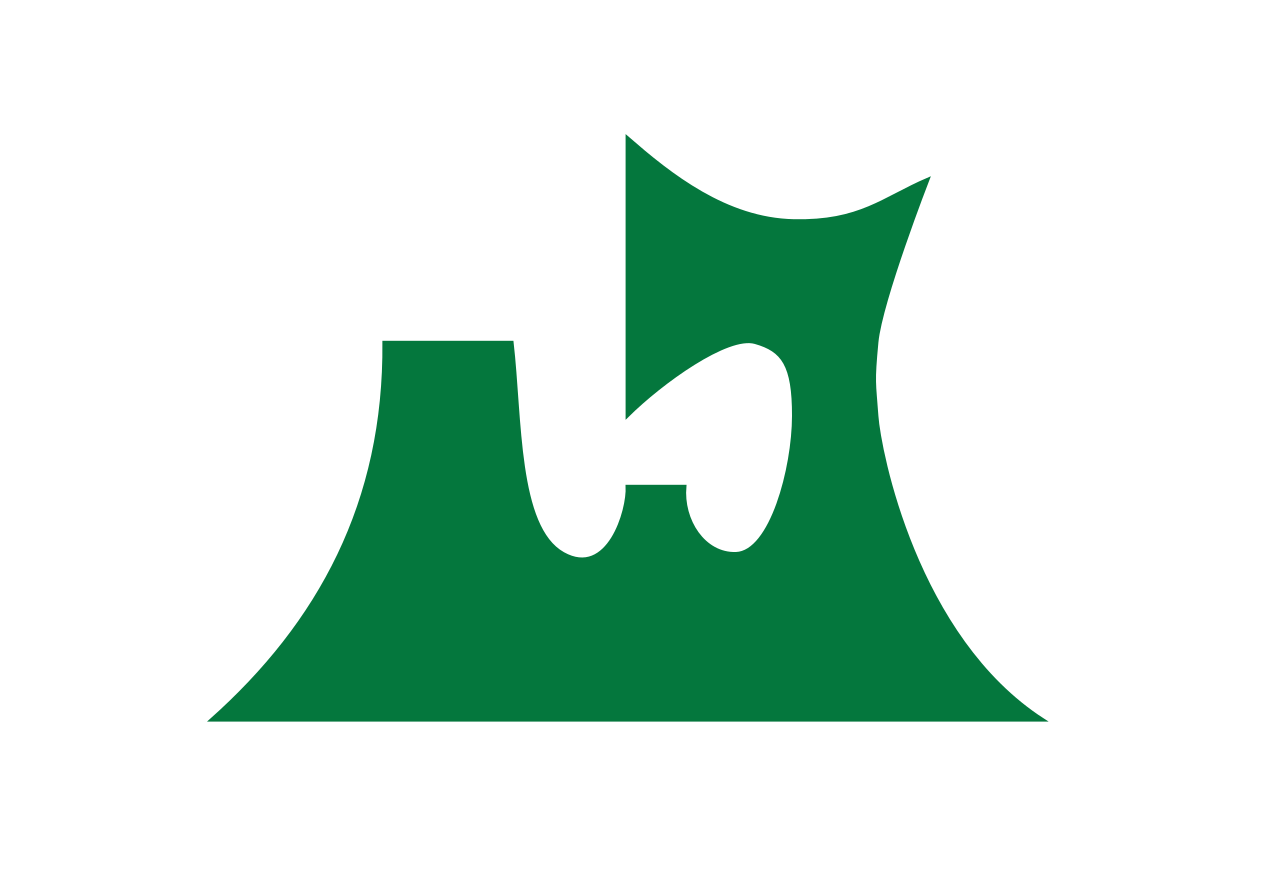
Aomori
The green silhouette on this white flag is Aomori's own outline — the bay biting into the centre, a peninsula rising on either side.
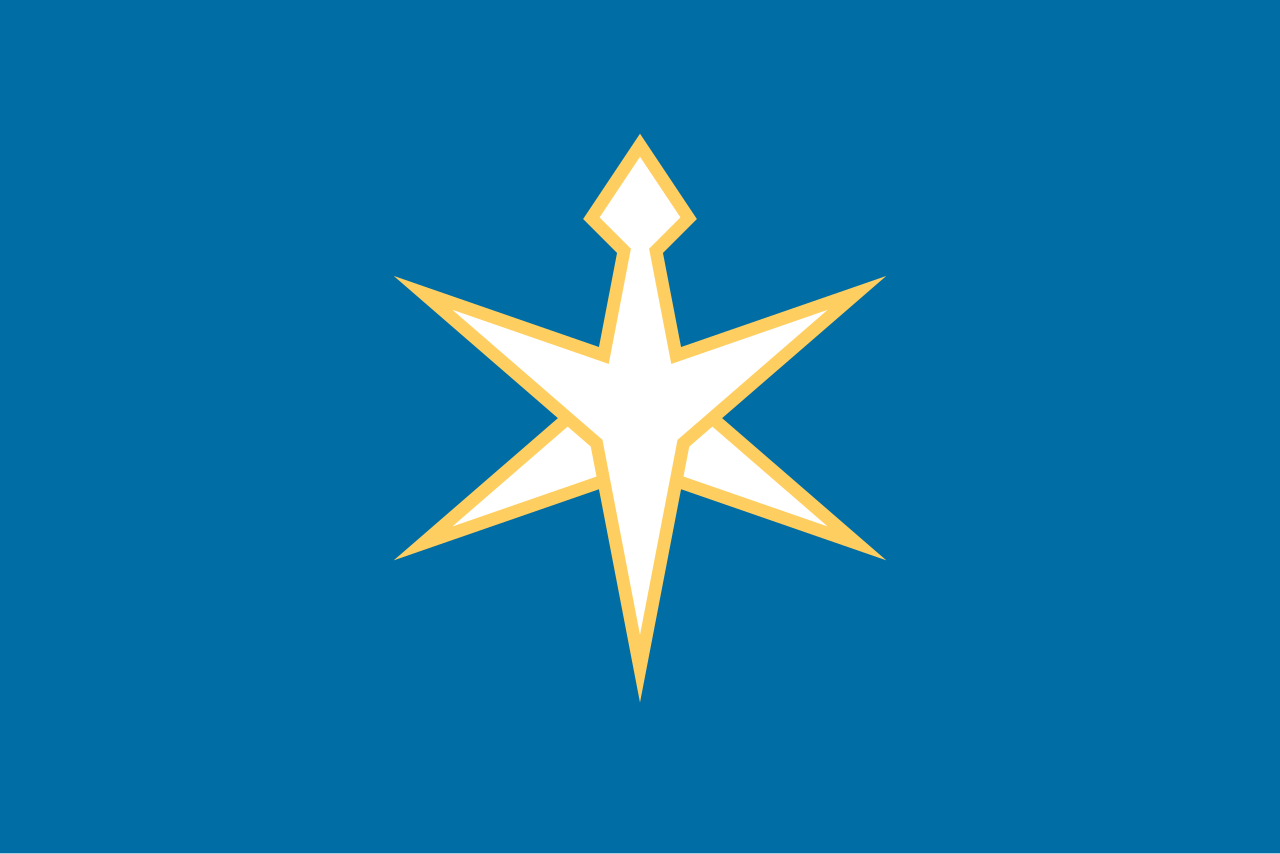
Chiba
A six-pointed star in white, edged in gold, floats on ocean blue; its top ray carries a small diamond. The form comes from the katakana in 'Chiba'.
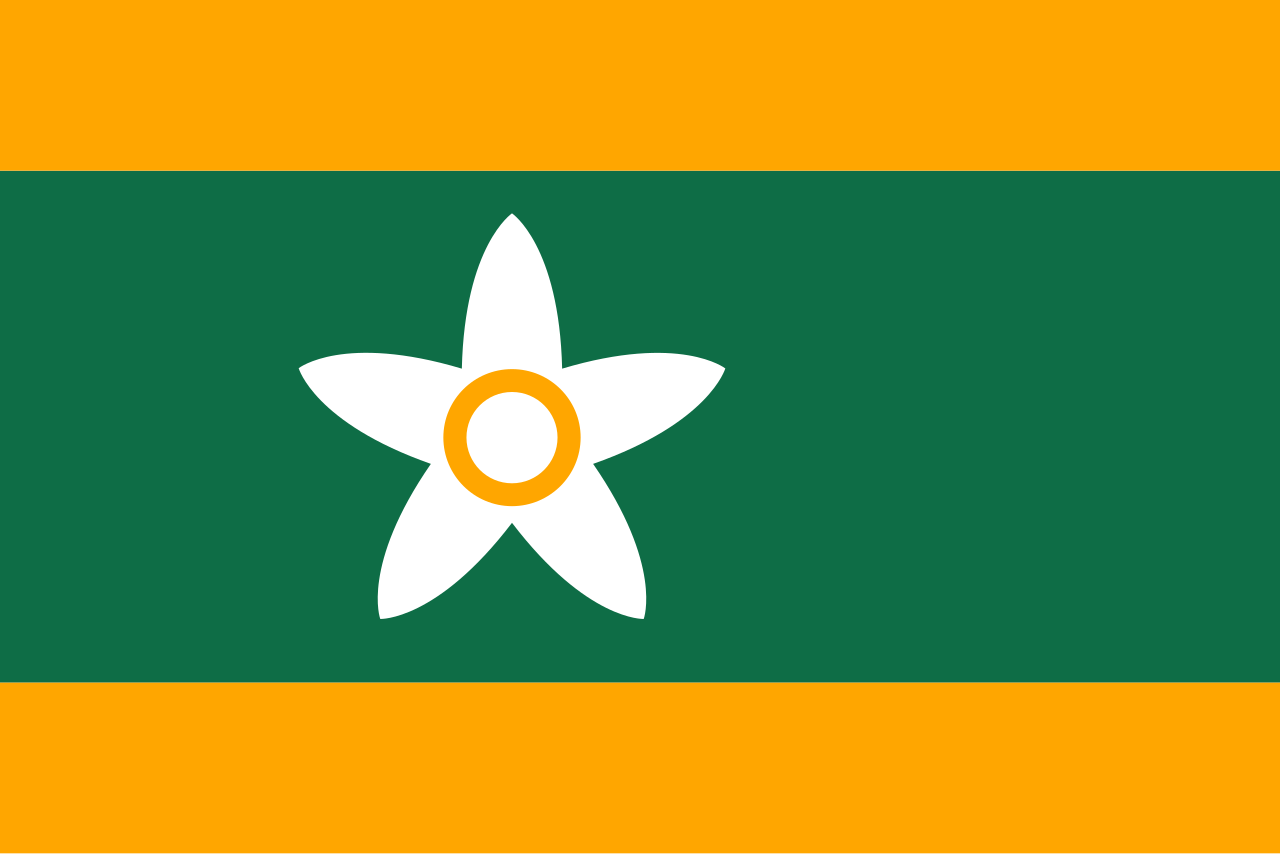
Ehime
Orange bands above and below, green through the middle, and at the centre a white five-petalled mikan blossom with an orange ring for its heart.
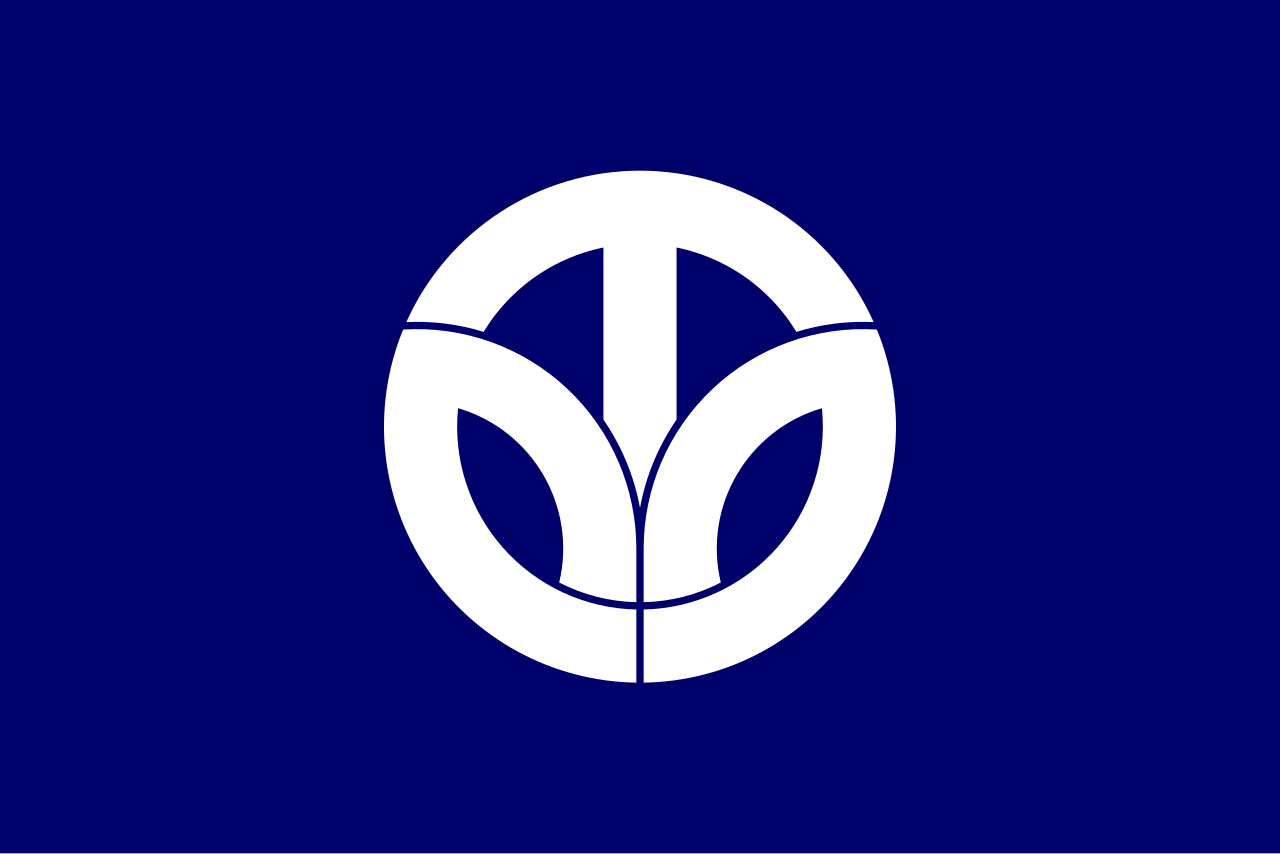
Fukui
Navy blue carries a white disc; cut out of it are two leaves curving up from a single stem, a stylised writing of the name Fukui.
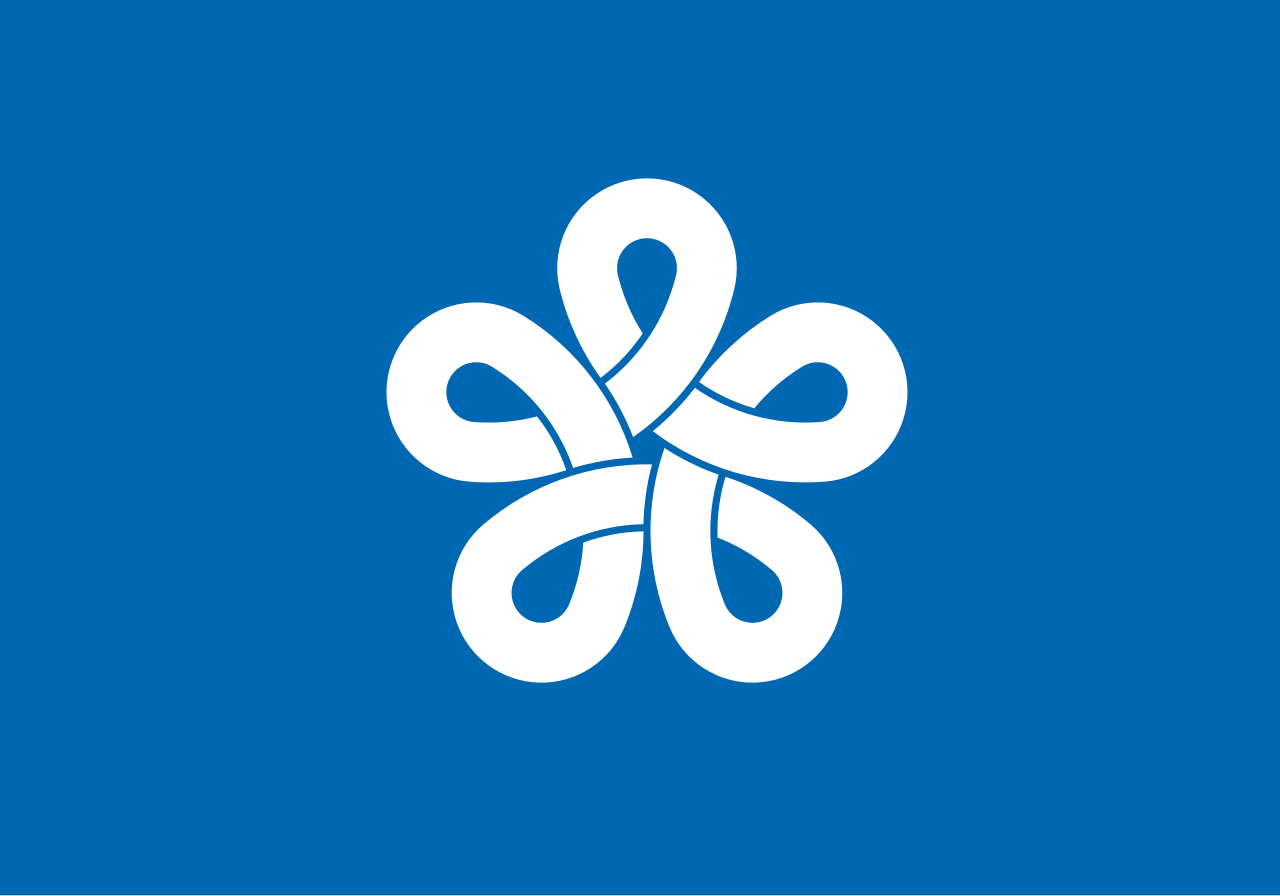
Fukuoka
Five looping white ribbons interlace into a plum blossom on a bright blue field; the loops set out the hiragana ふく of Fukuoka like petals, and the plum blossom is the flower of Fukuoka Prefecture.
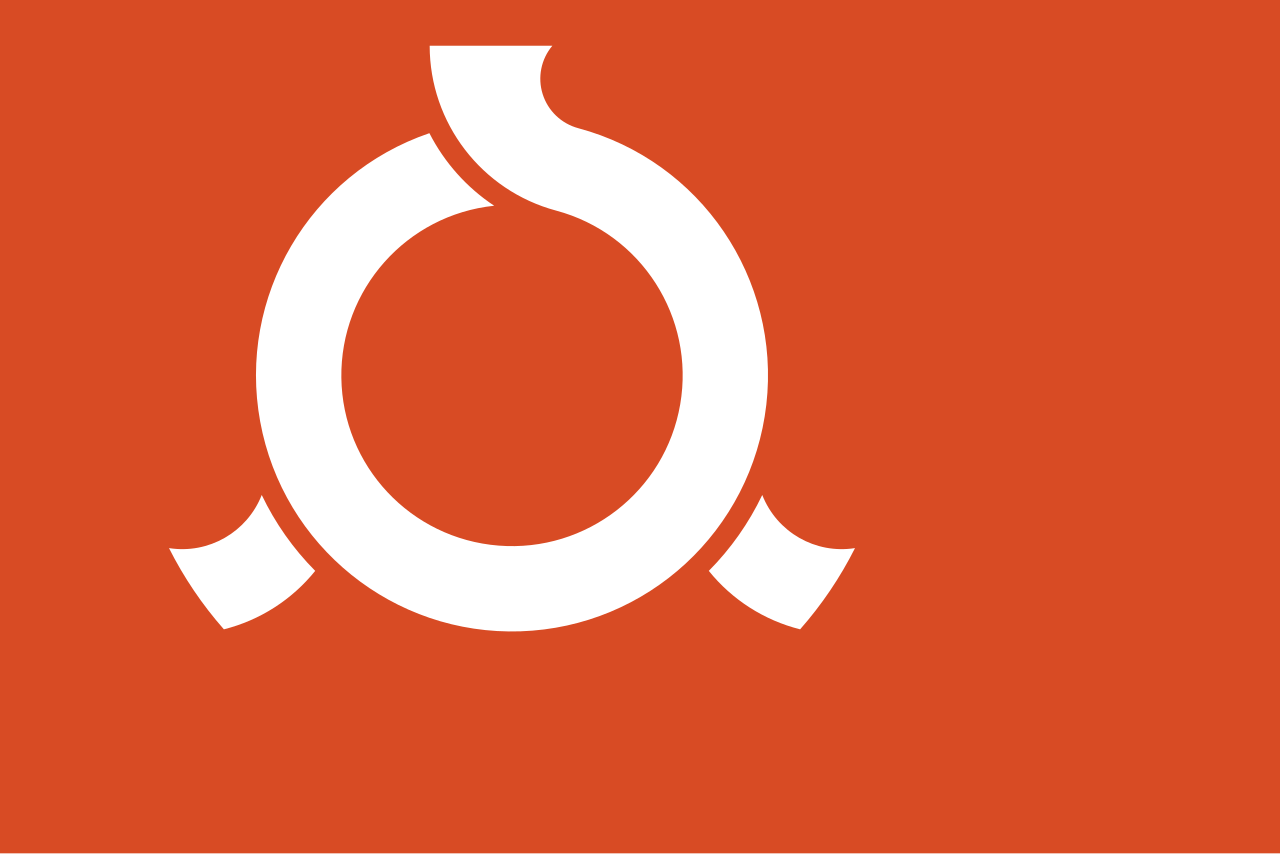
Fukushima
A fat white ring on orange-red, its tail curling up over the top and two short strokes flicking out below — the hiragana fu of Fukushima.
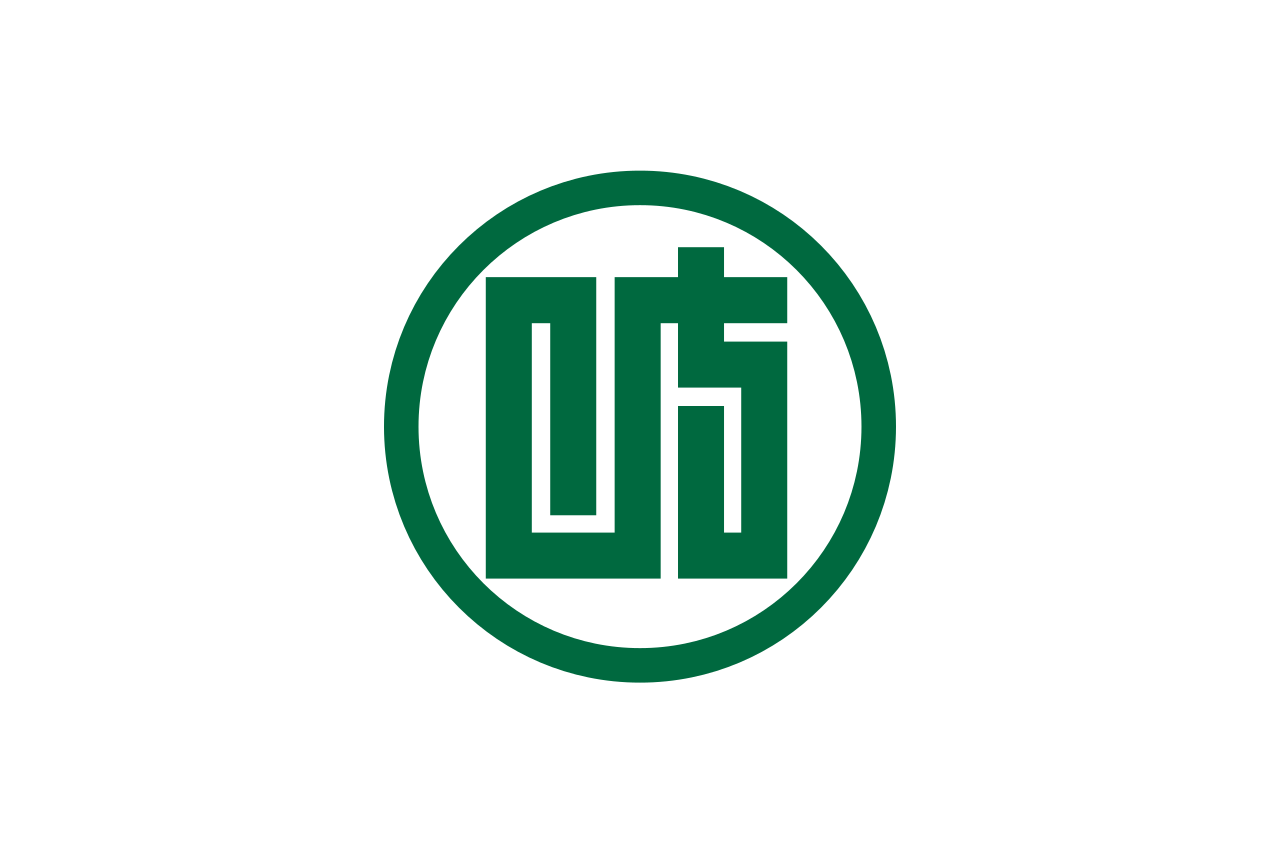
Gifu
White ground, green ring, and inside it the kanji for Gi redrawn in thick squared-off strokes so it reads as a solid block, not brushwork.
Gunma
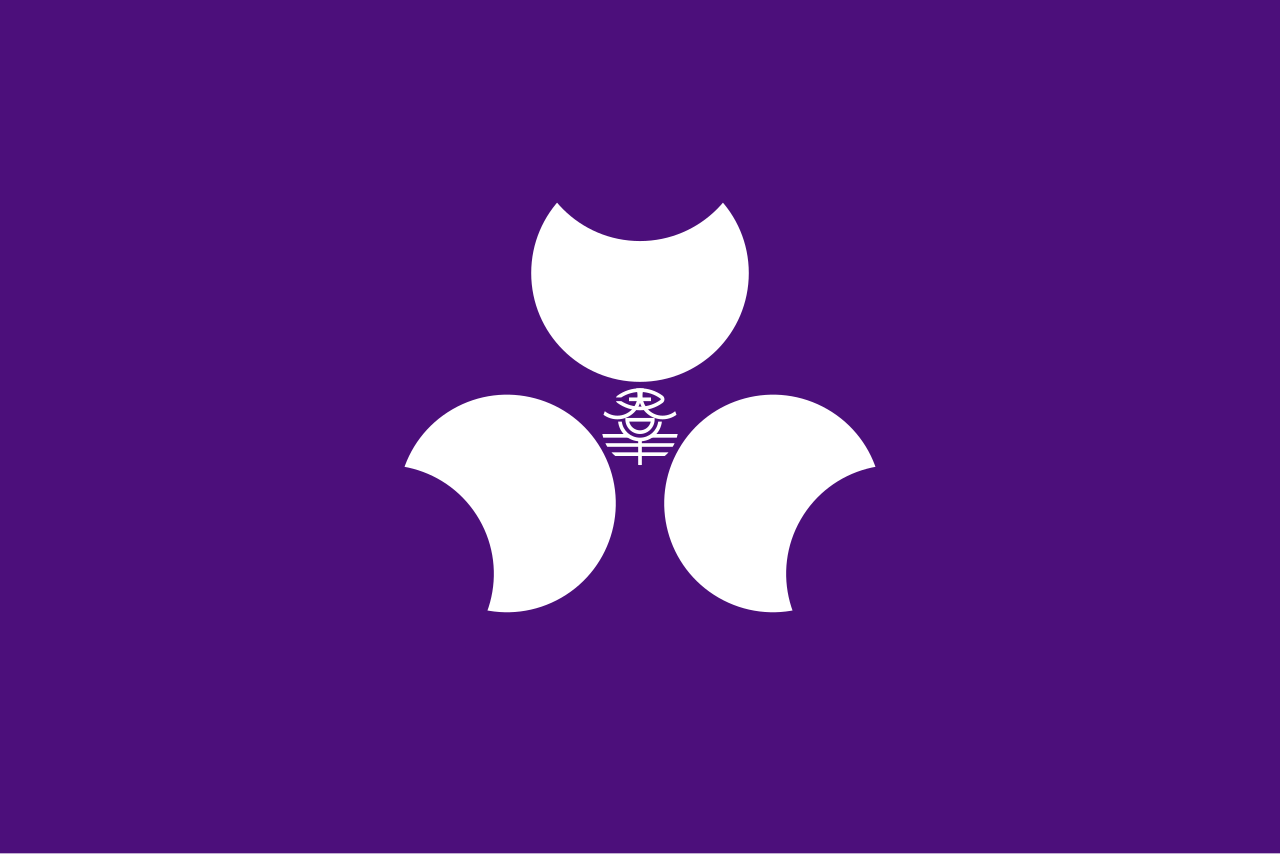
Deep violet, with three fat white crescents wheeling around a tiny glyph drawn at the centre in hairline strokes.
Hiroshima
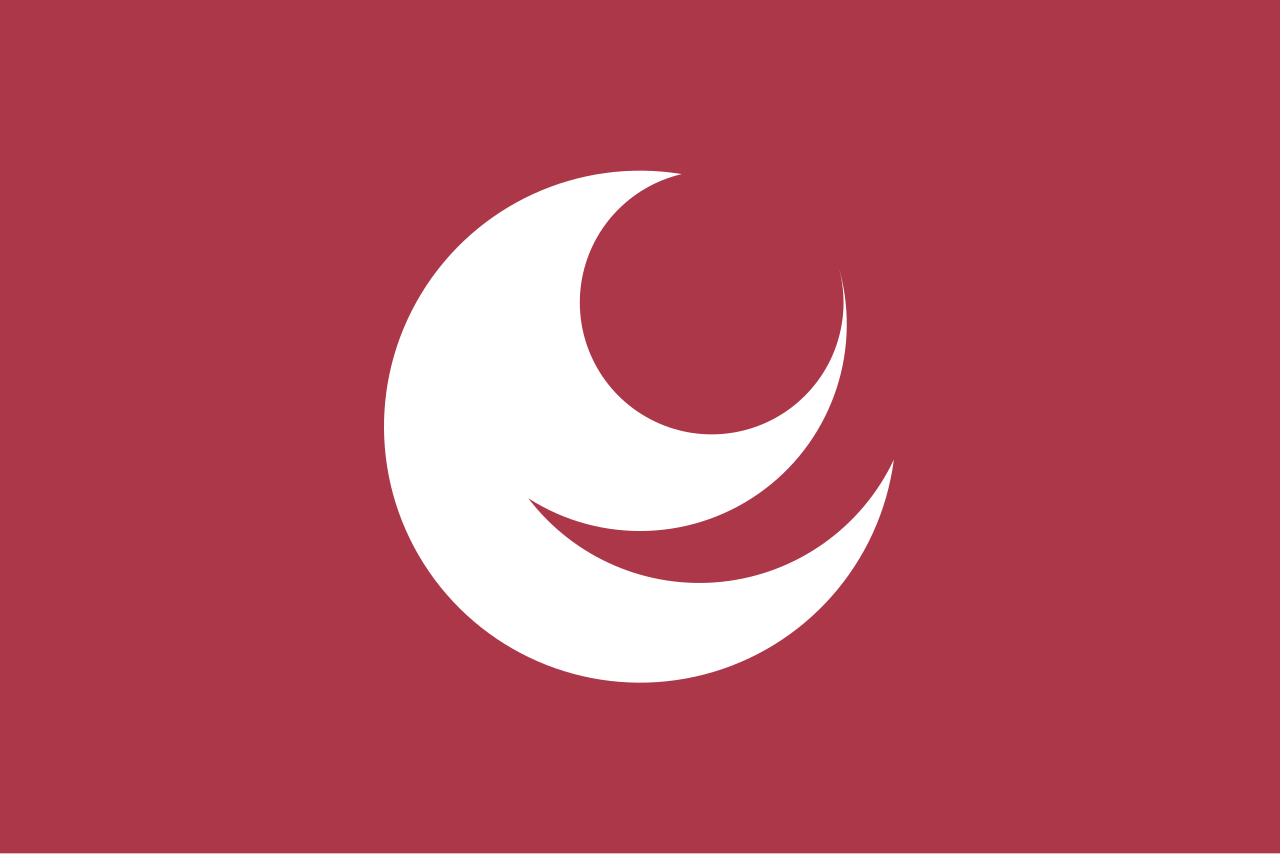
Wine-red field bearing one big white disc that curls in on itself, two crescent bites carving it into moons nested inside moons.
Hokkaido
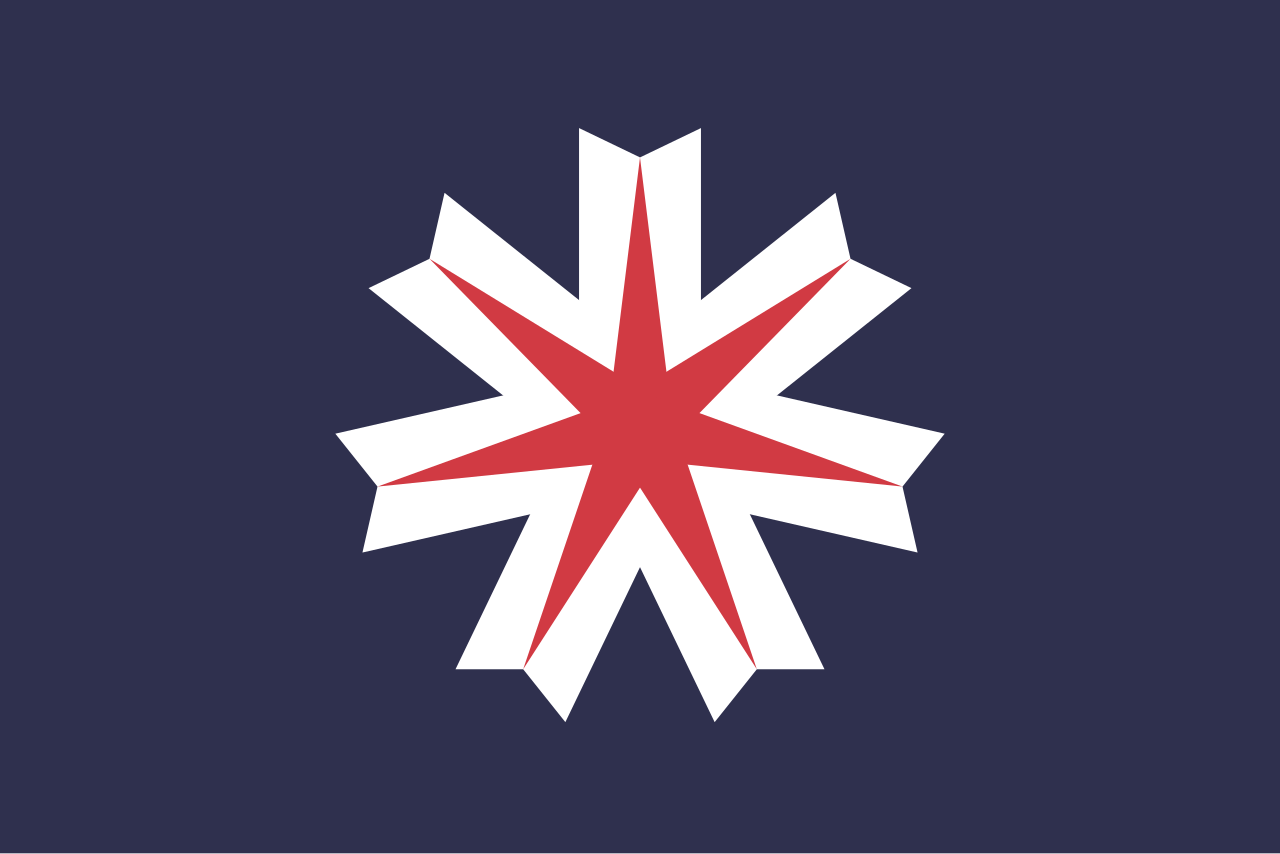
A red seven-pointed star, ringed by a spiky white starburst on near-black navy — the north-star badge carried since the pioneer era.
Hyōgo
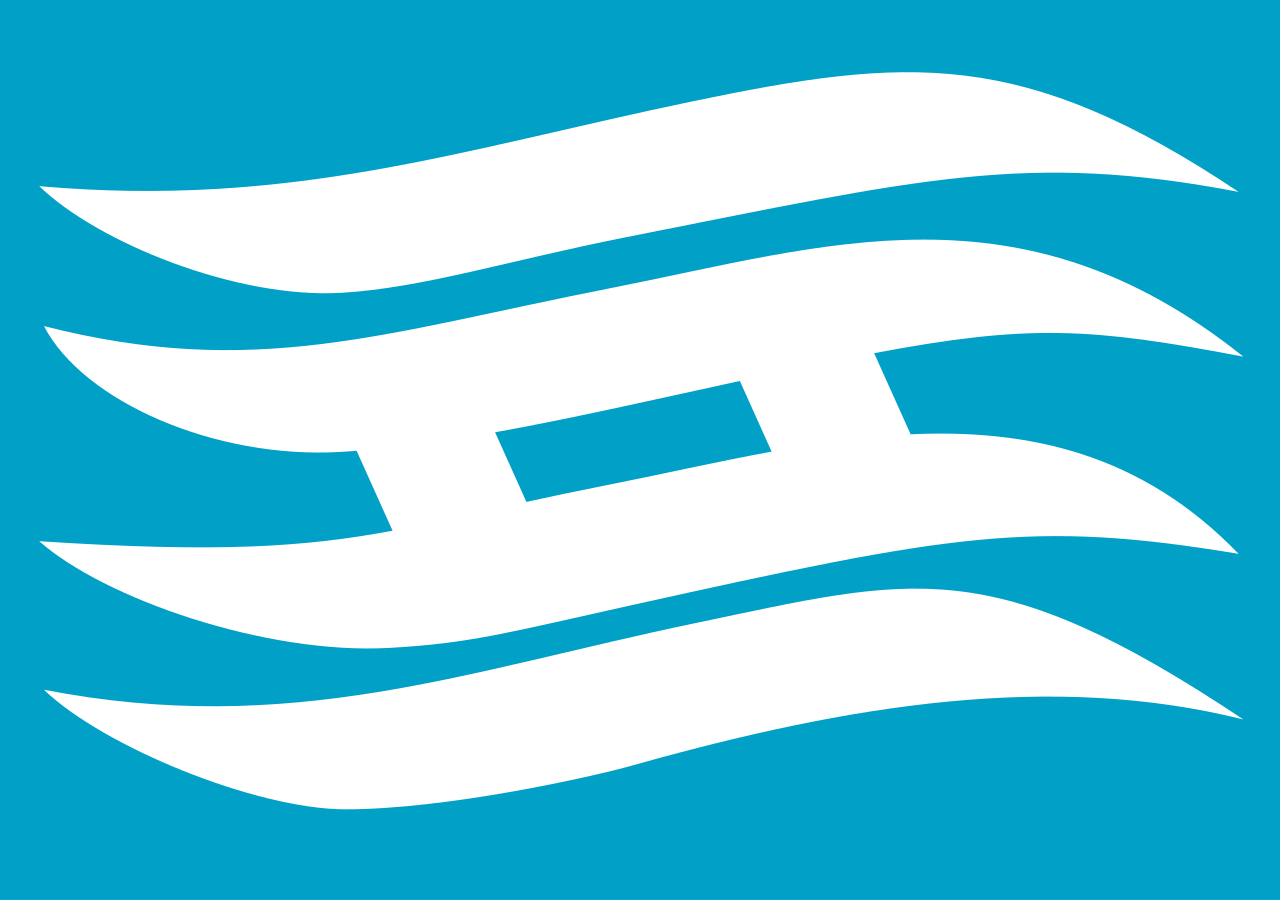
Four white ribbons ripple across turquoise and lock together in the middle, leaving one small blue rectangle showing through the knot.
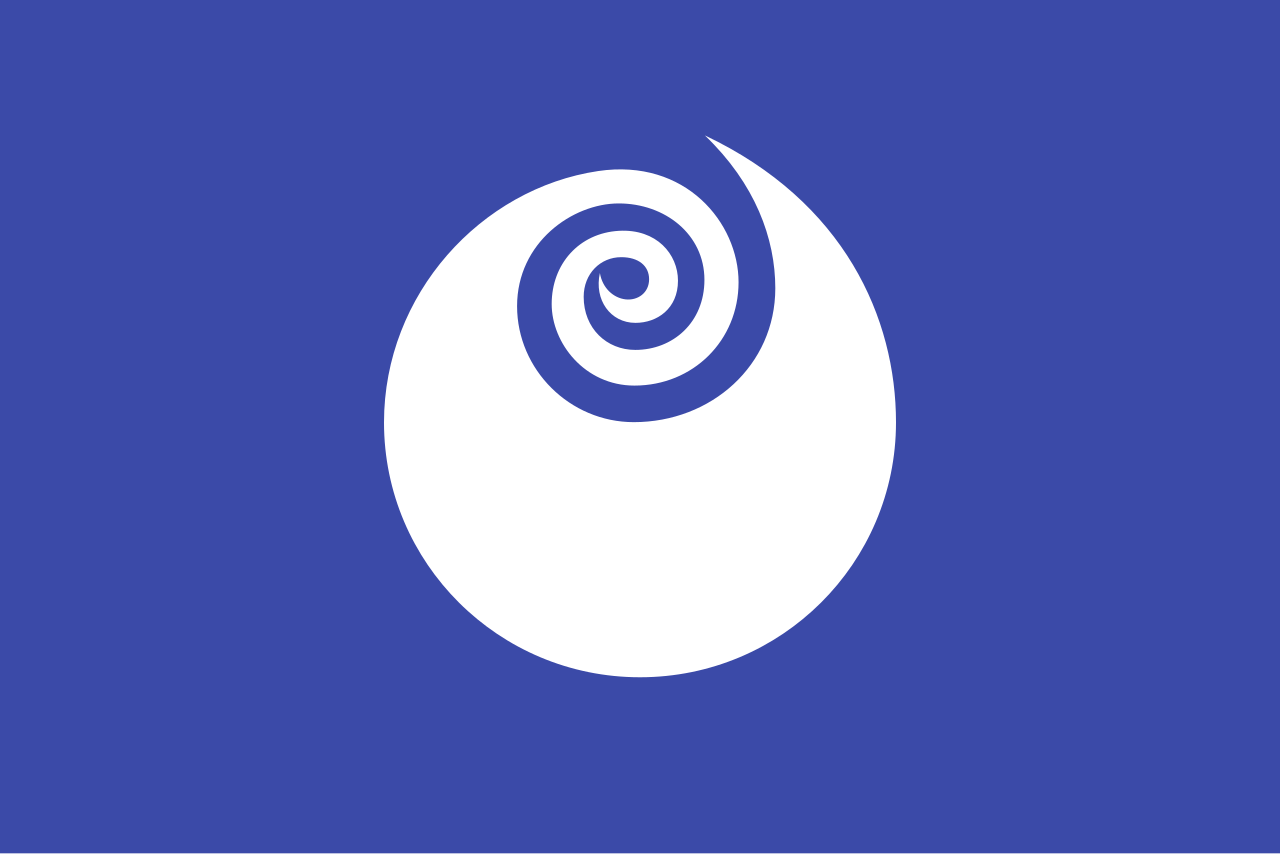
Ibaraki
On royal blue, a large white disc with a blue spiral coiled into its upper half and one thin white tail flicking off to the top right.

Ishikawa
Everything leans right here: on azure, a white hooked form stands beside three parallel slanted bars, like handwriting caught mid-stroke.
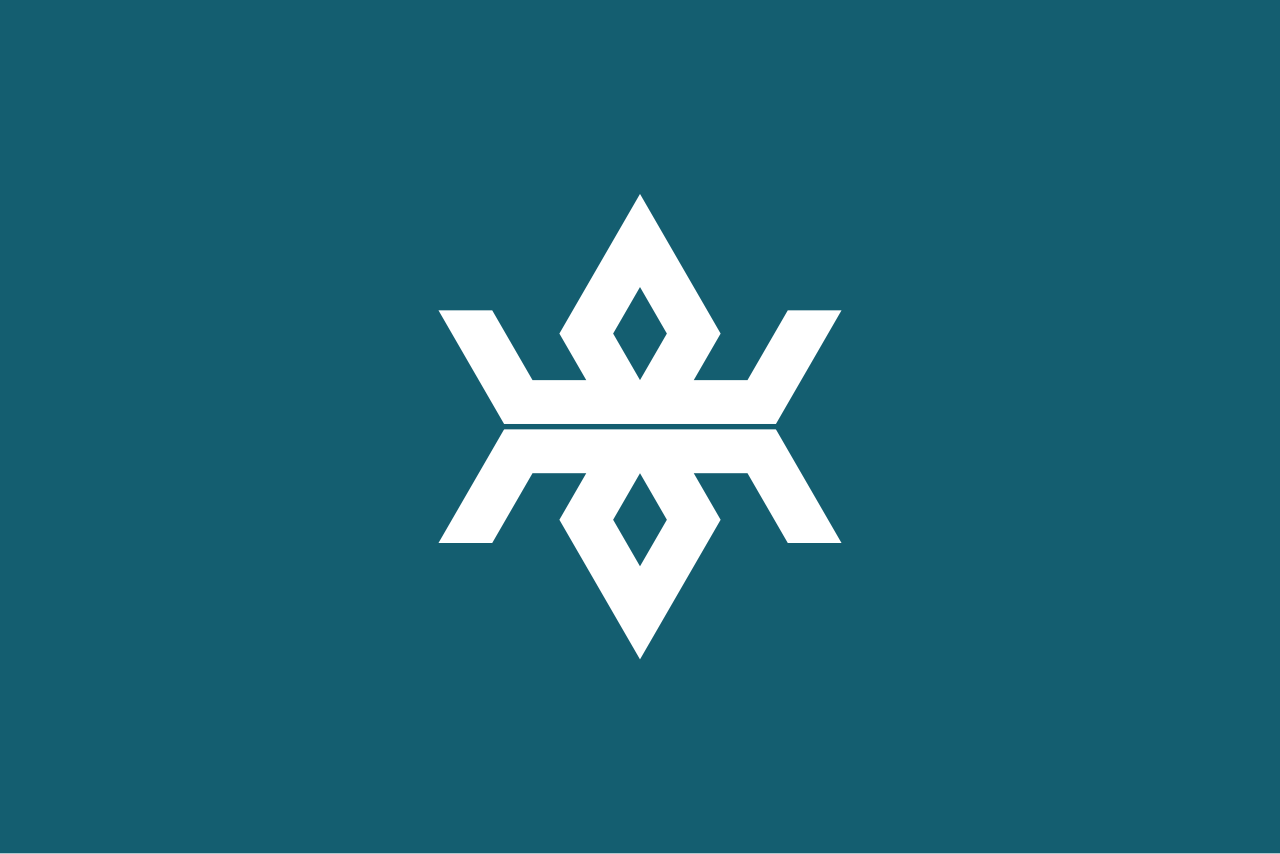
Iwate
Deep teal carries a white six-pointed figure like a snow crystal, split across the middle by a thin bar and pierced by two diamond holes.
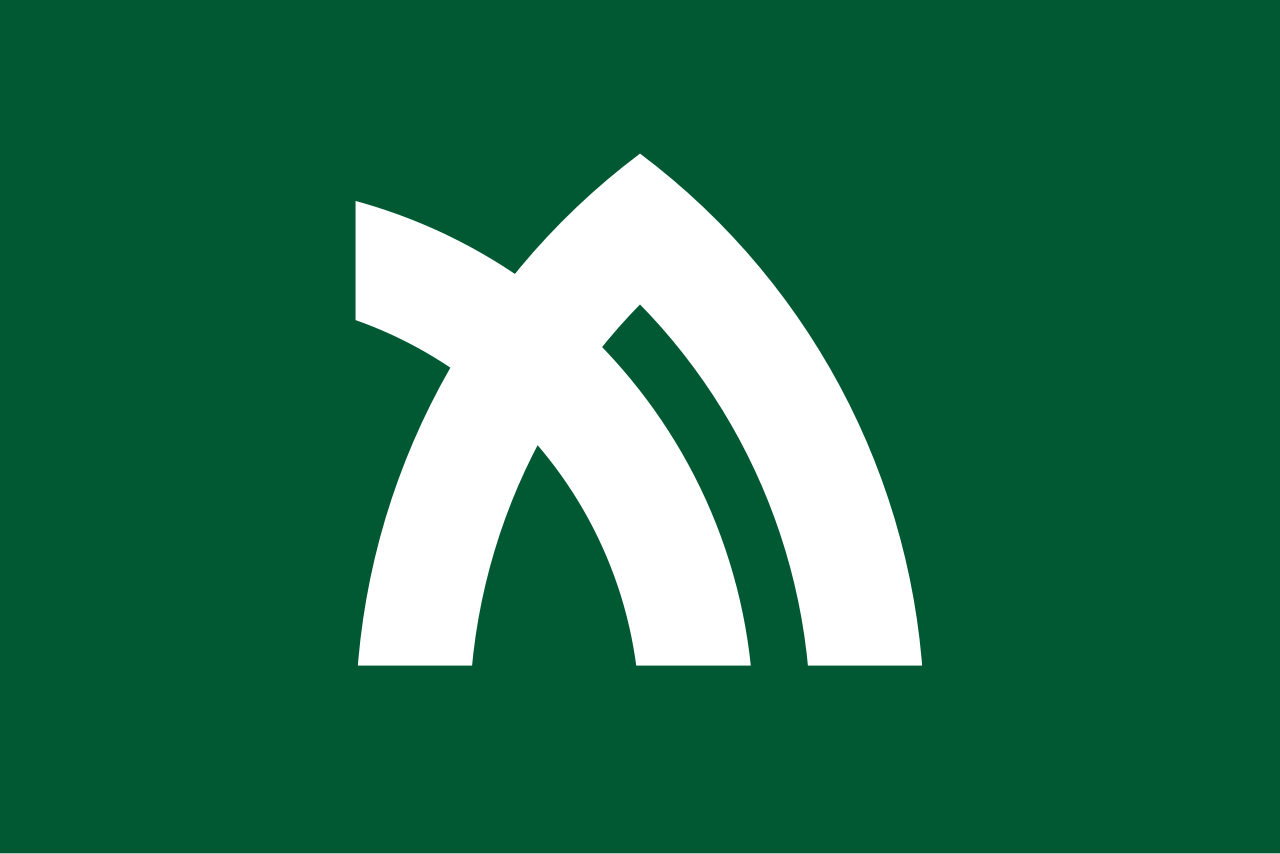
Kagawa
Dark green, marked by broad white strokes that sweep up to a peak like a tent, with a second arch curving down inside them.
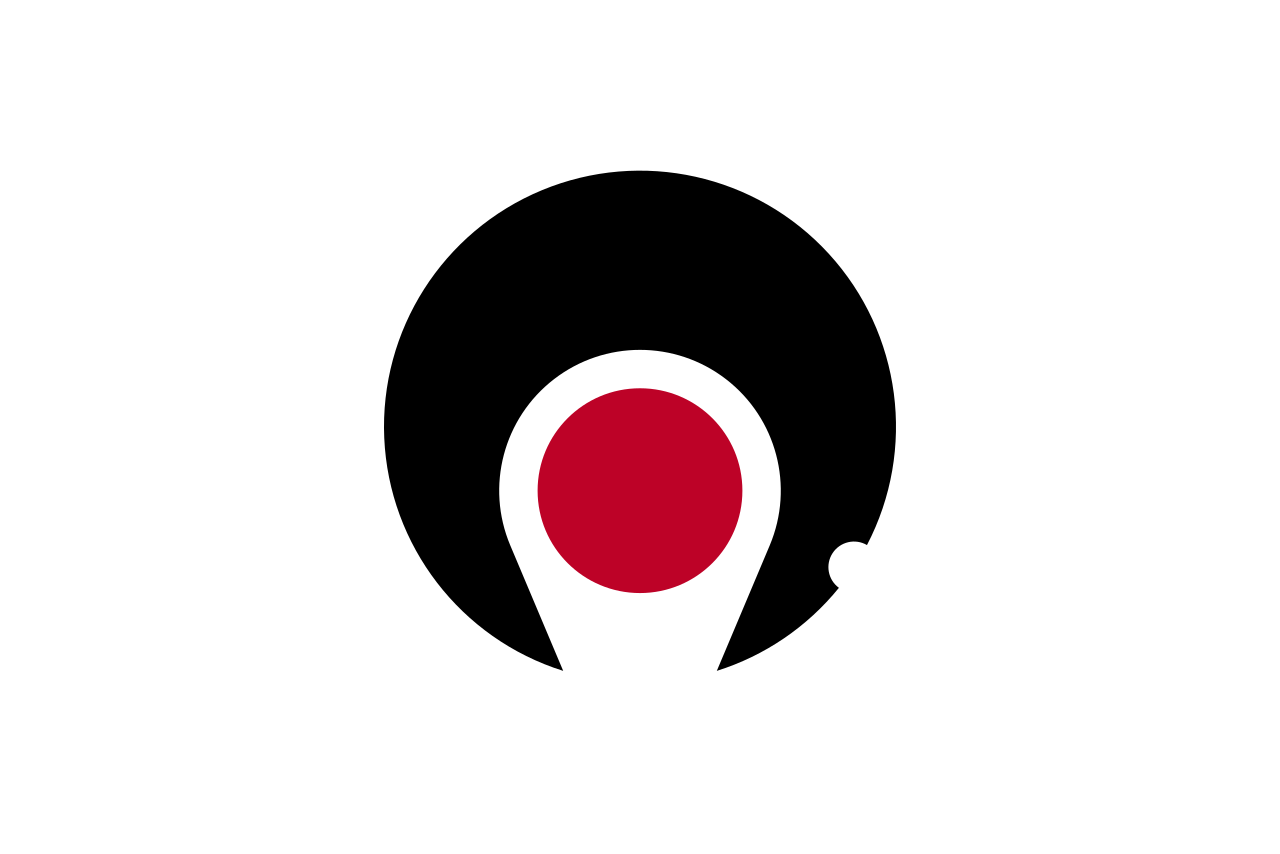
Kagoshima
White ground carrying a thick black ring with a small round bite taken out of its right edge; the ring wraps a white keyhole-shaped opening with a crimson disc sitting inside it.
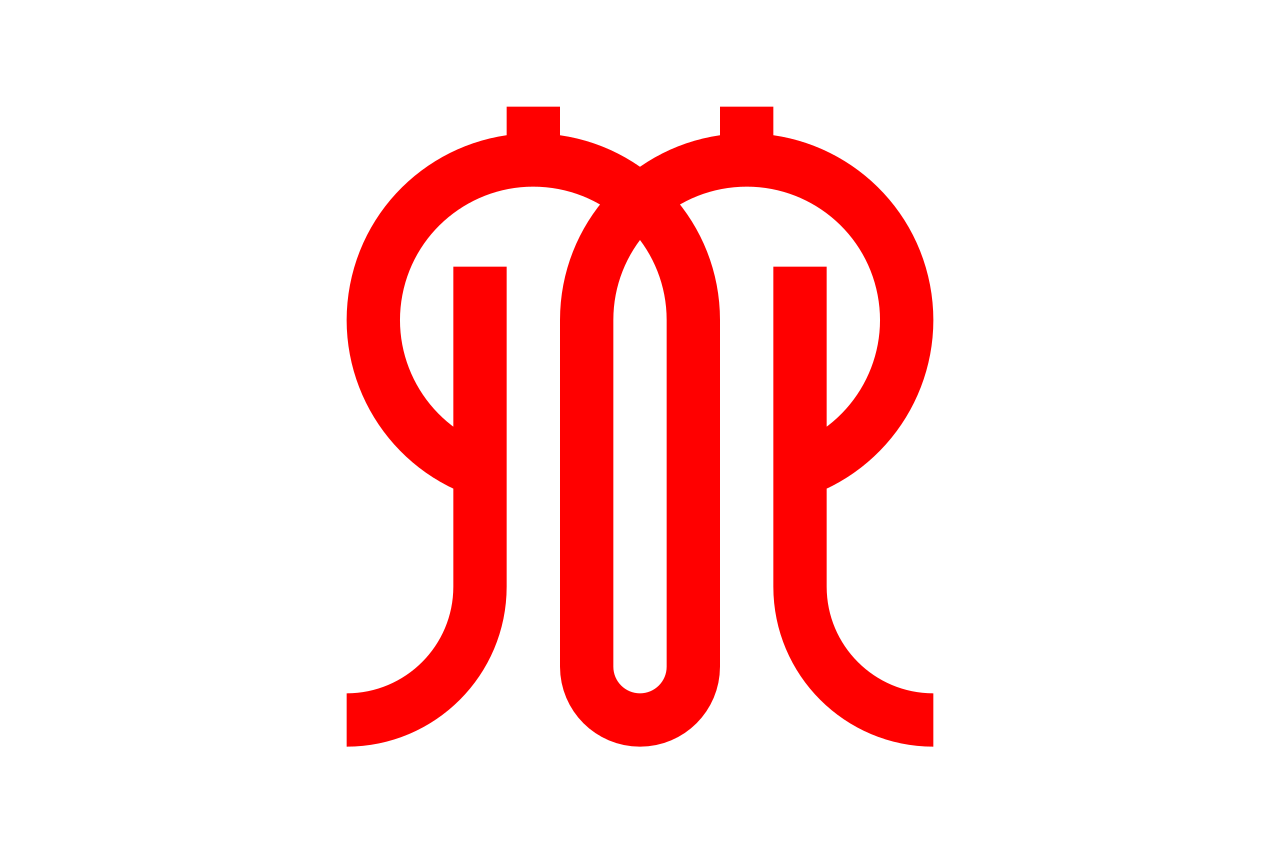
Kanagawa
A lone red device on white: two mirrored loops rising to small flag-like tabs, with a pointed spine dropping between them — a stylised kanji 神 from Kanagawa.
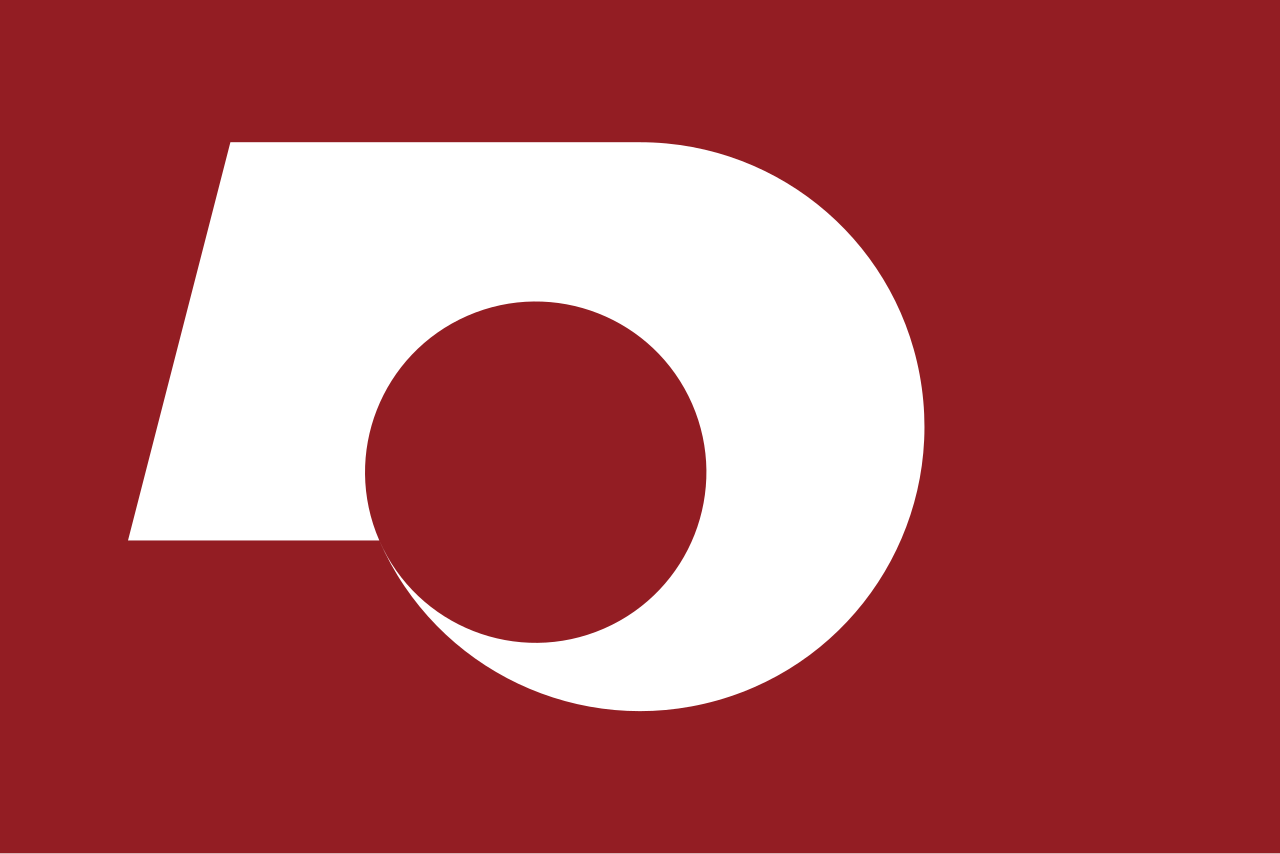
Kumamoto
A broad white figure sits on deep wine-red: a slanted band at the left widens into a thick circle, leaving a crimson disc floating at its centre.
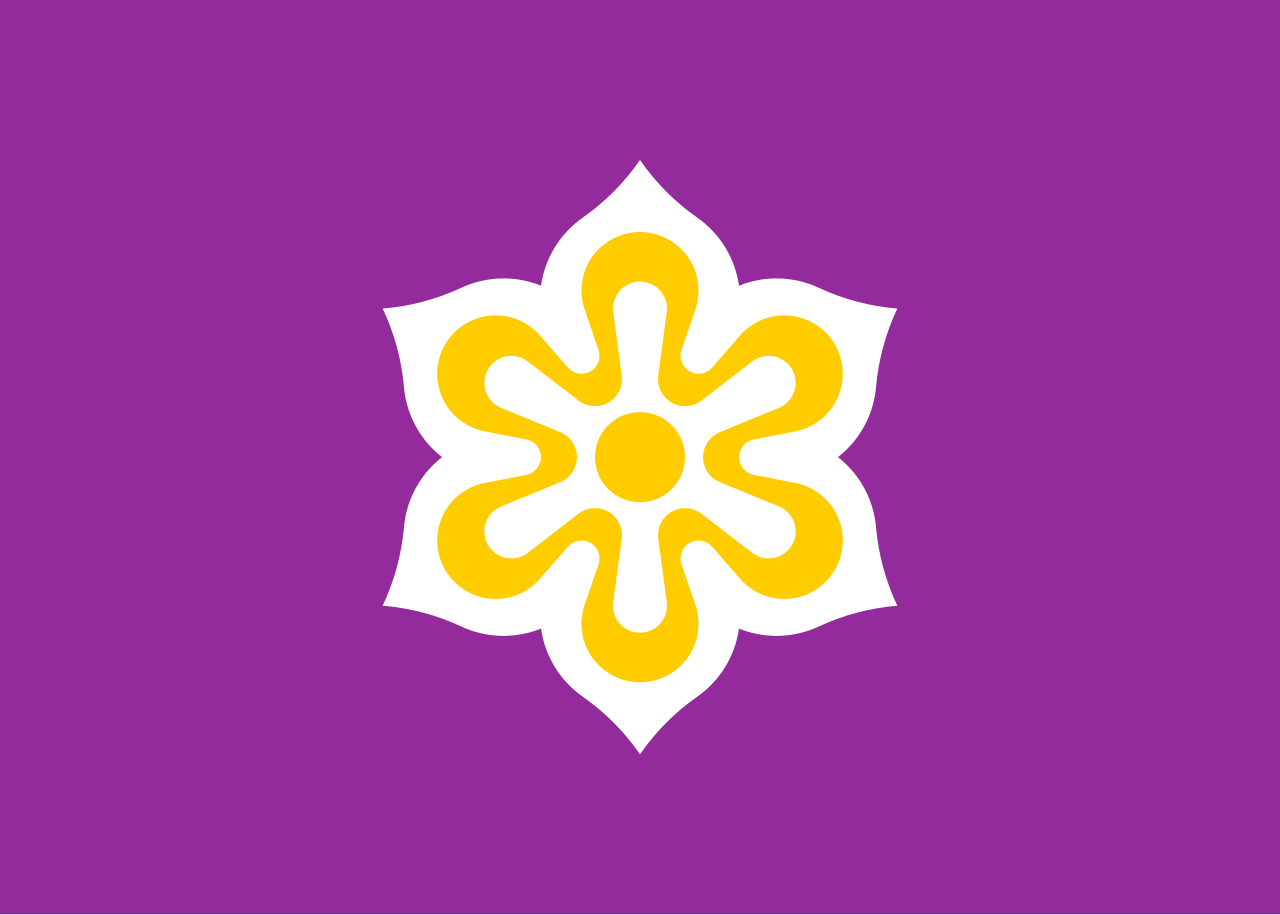
Kyoto
Royal purple sets off a six-petalled white blossom, inside which a yellow ribbon curls through six rounded lobes around a small yellow disc.
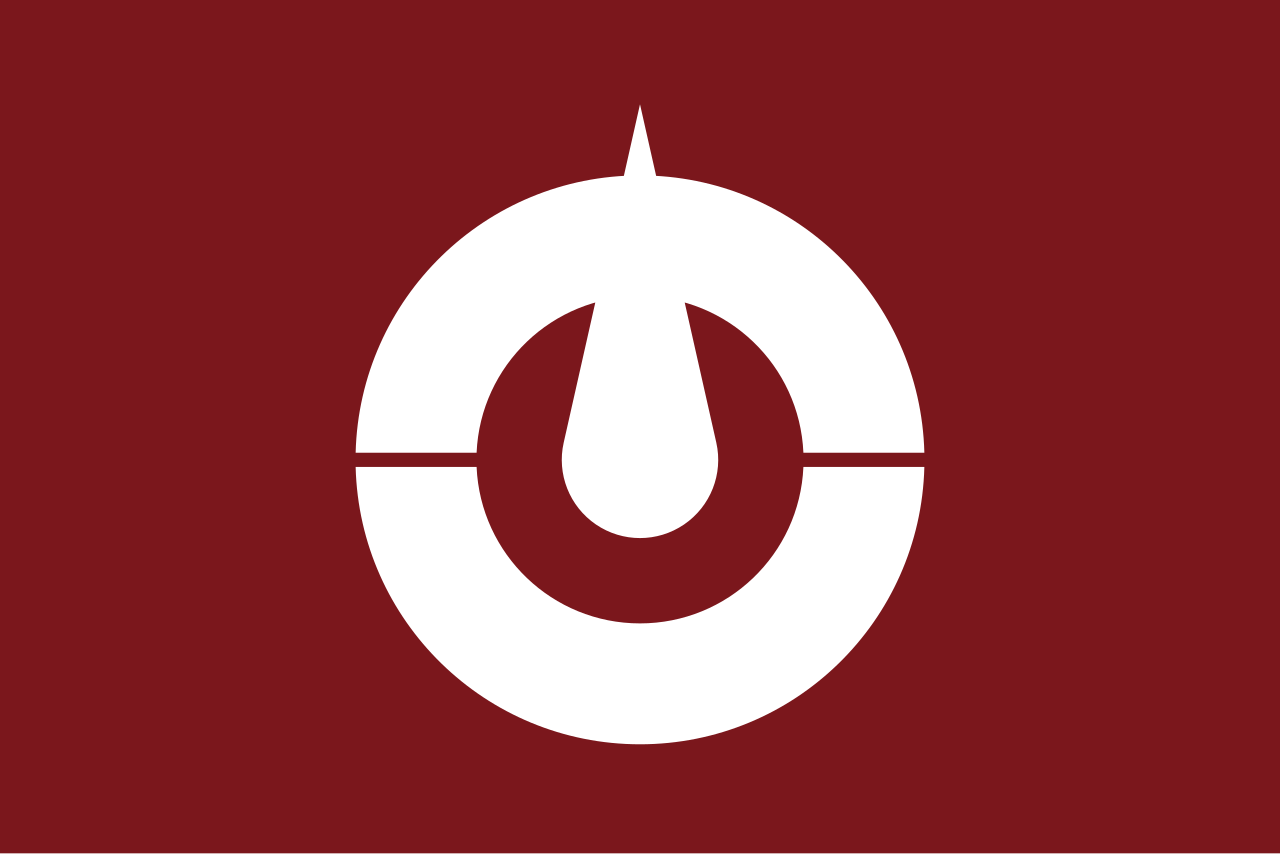
Kōchi
A thick white ring, nicked through at left and right and capped by a thin spike on top, holds a hanging white teardrop; the field behind is dark red.
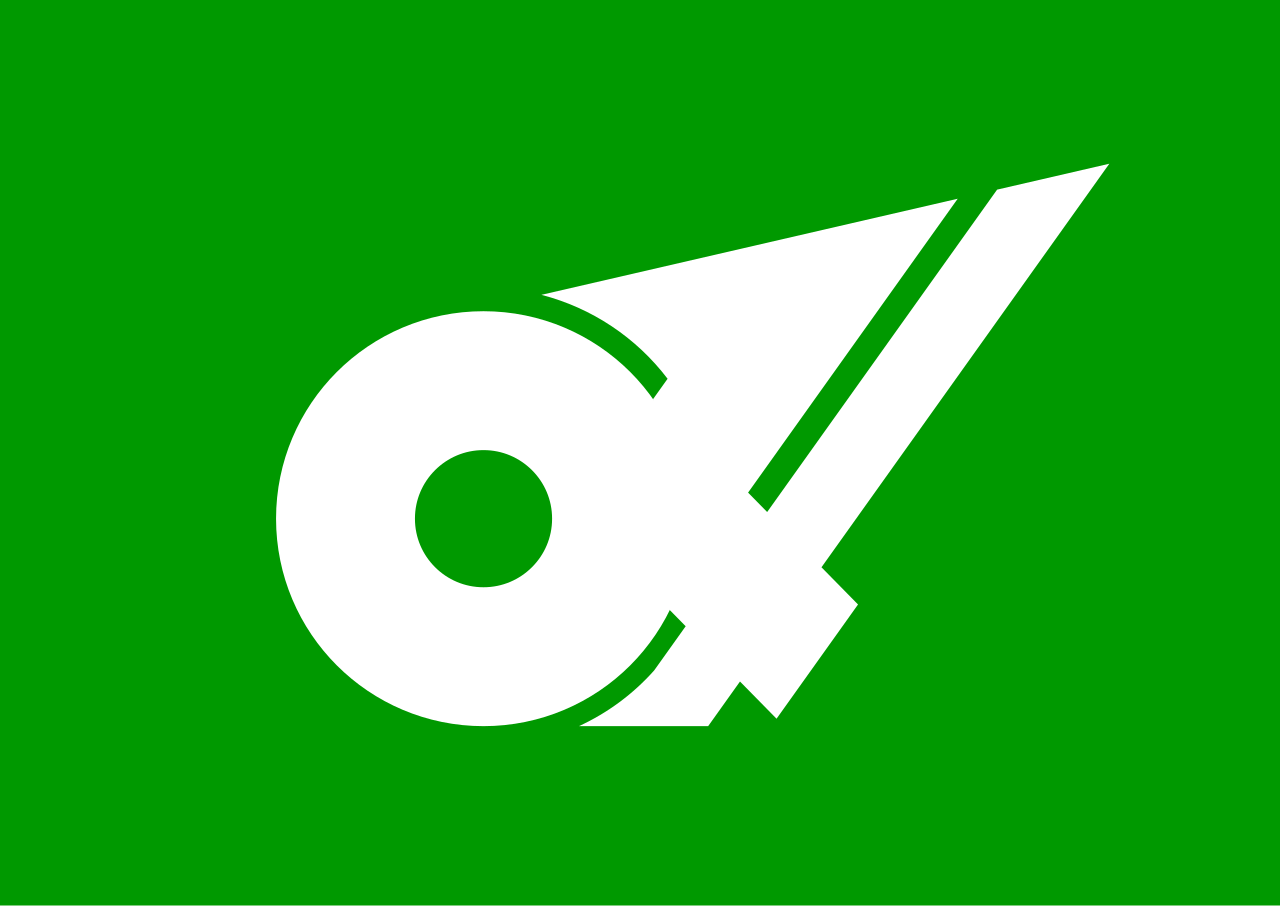
Mie
Grass green behind a white ring with a green centre, crossed by a long tapering stroke that sweeps off to the upper right — reading as the hiragana み.
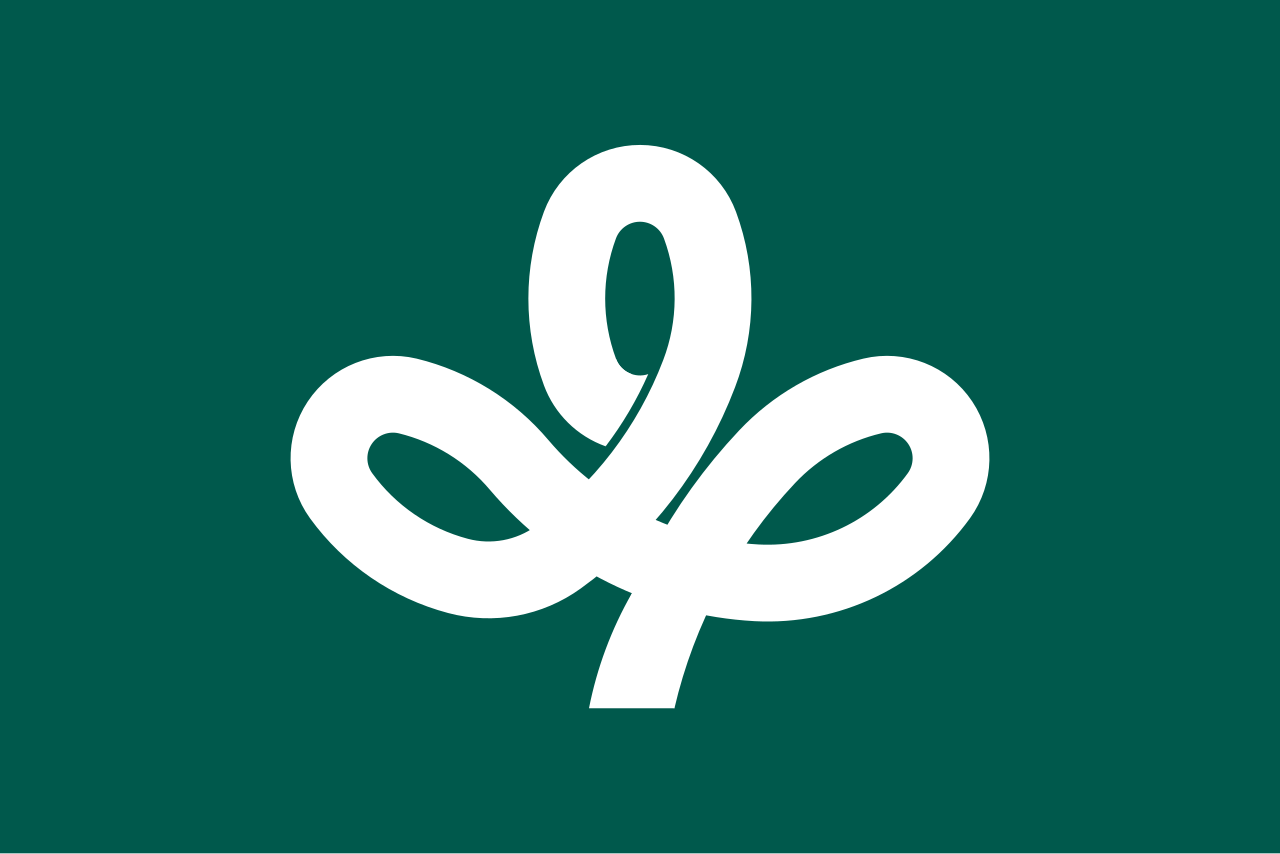
Miyagi
One white brush-like flourish loops across deep forest green: a tall loop at the top above two wide side loops, finishing in a short downward tail.
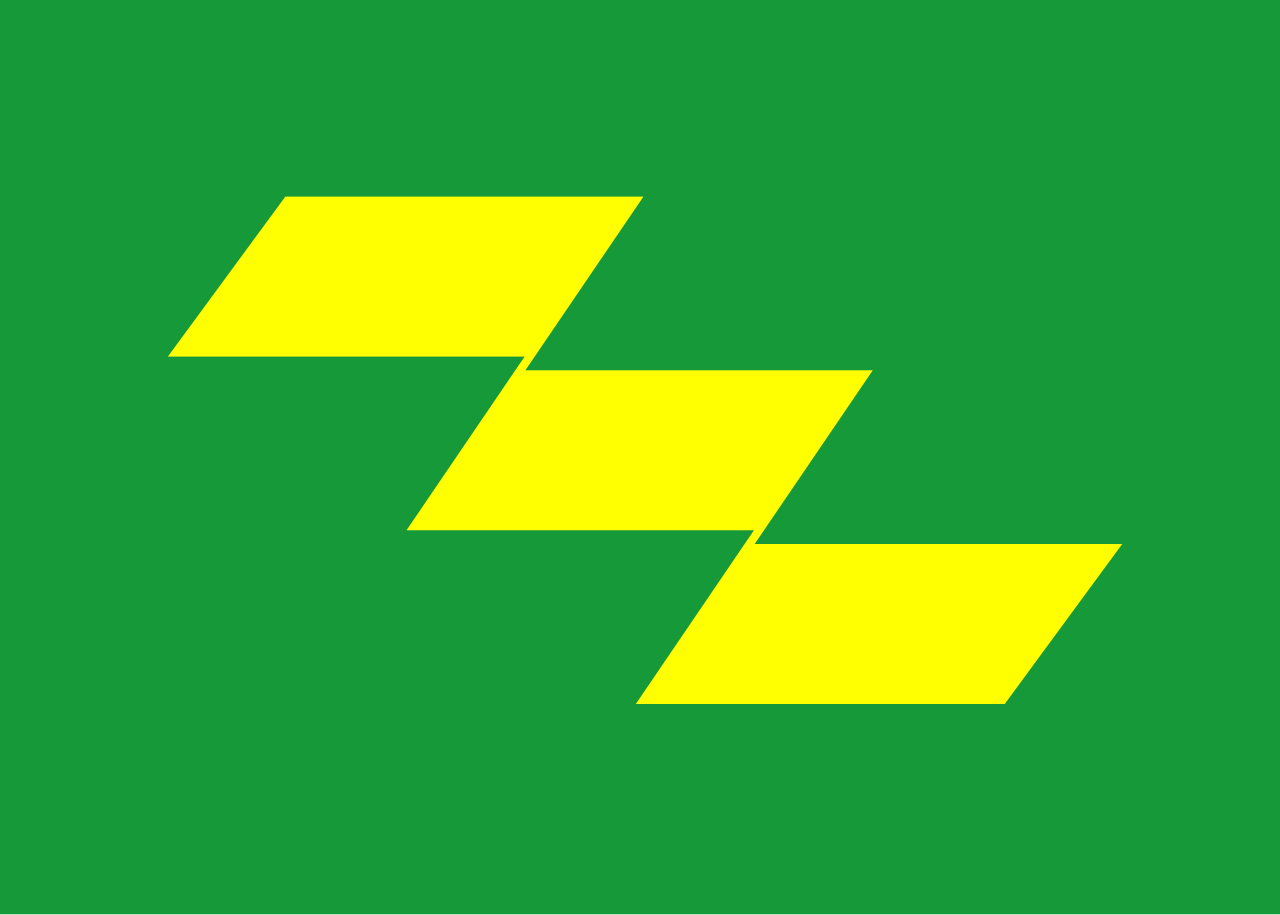
Miyazaki
Three yellow parallelograms step down a green field from the upper hoist to the lower fly, each tilted the same way and touching the next at a corner.
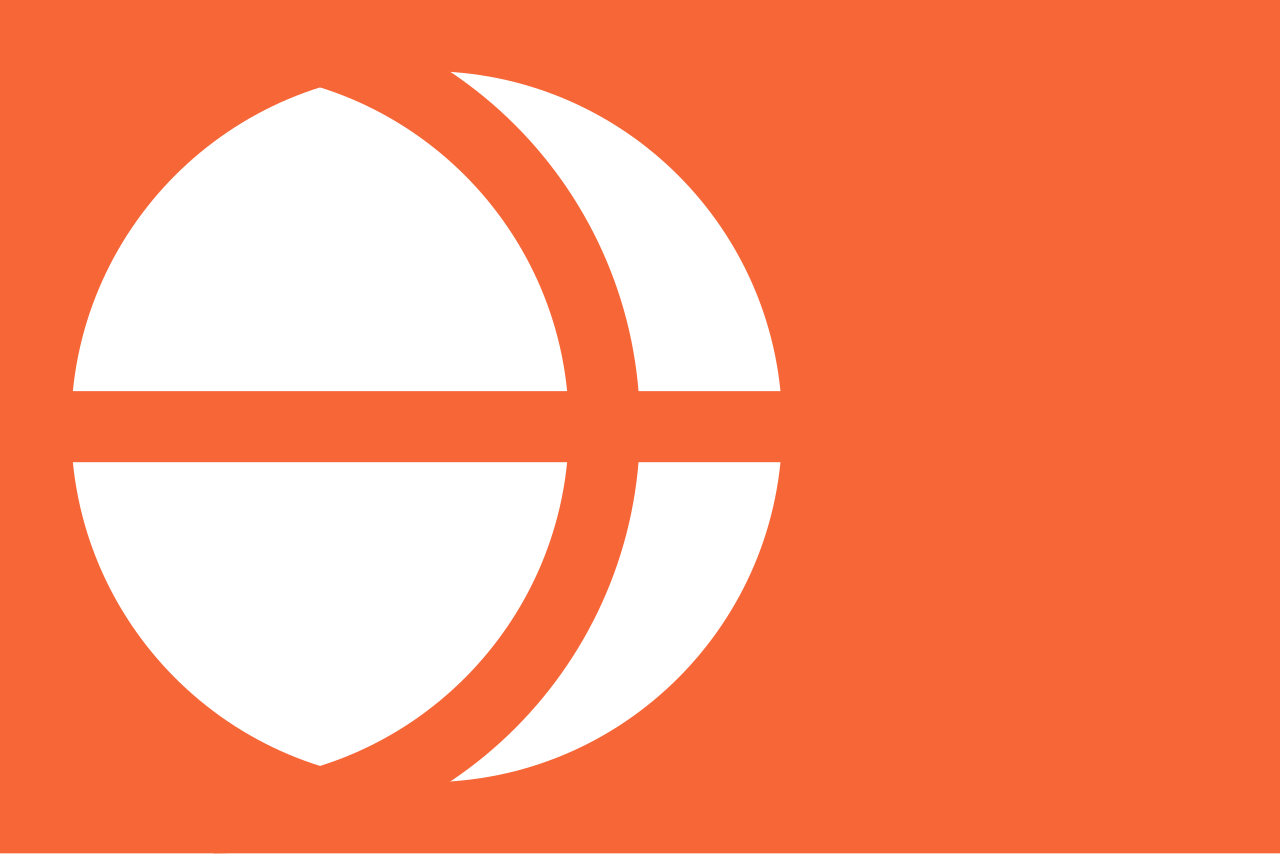
Nagano
Bright orange holds a white pointed oval, cut straight across the middle by an orange bar, with a slim white crescent curving along its right side.
Nagasaki
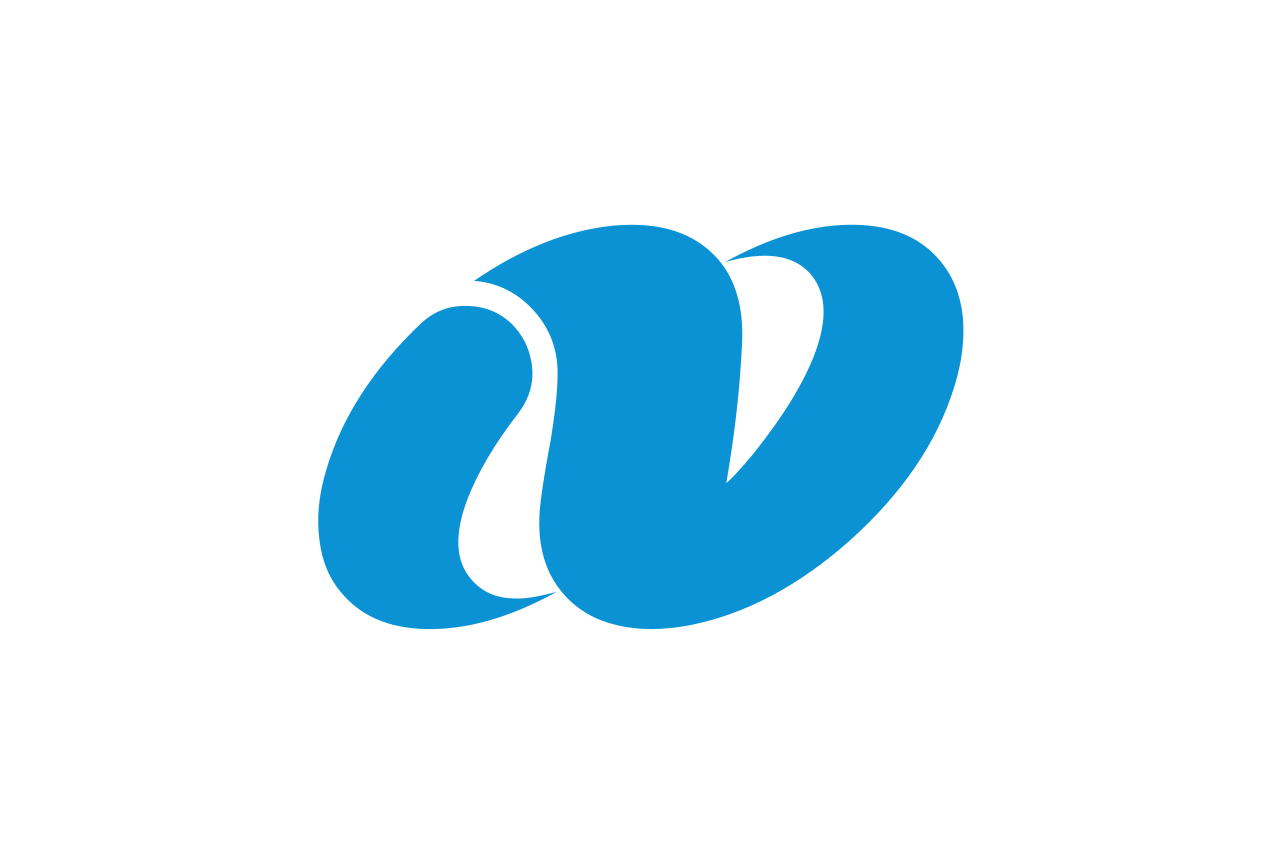
White field, one tilted blue mark: thick strokes that swell and taper as they loop and turn, forming a rounded letter N for Nagasaki.
Nara
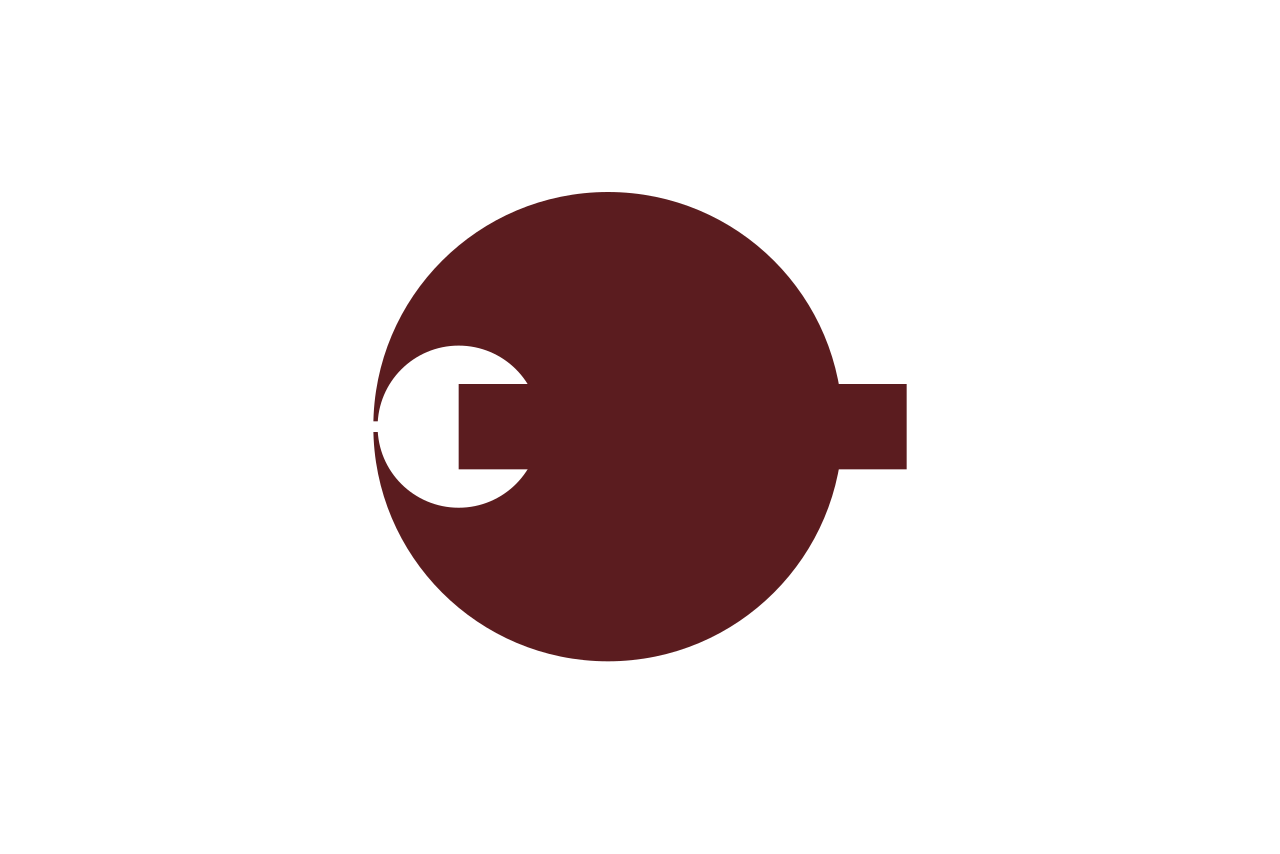
A deep maroon disc on white, bitten by a white crescent on its left and pushing out a small square tab at the right — the katakana ナ of Nara.
Niigata
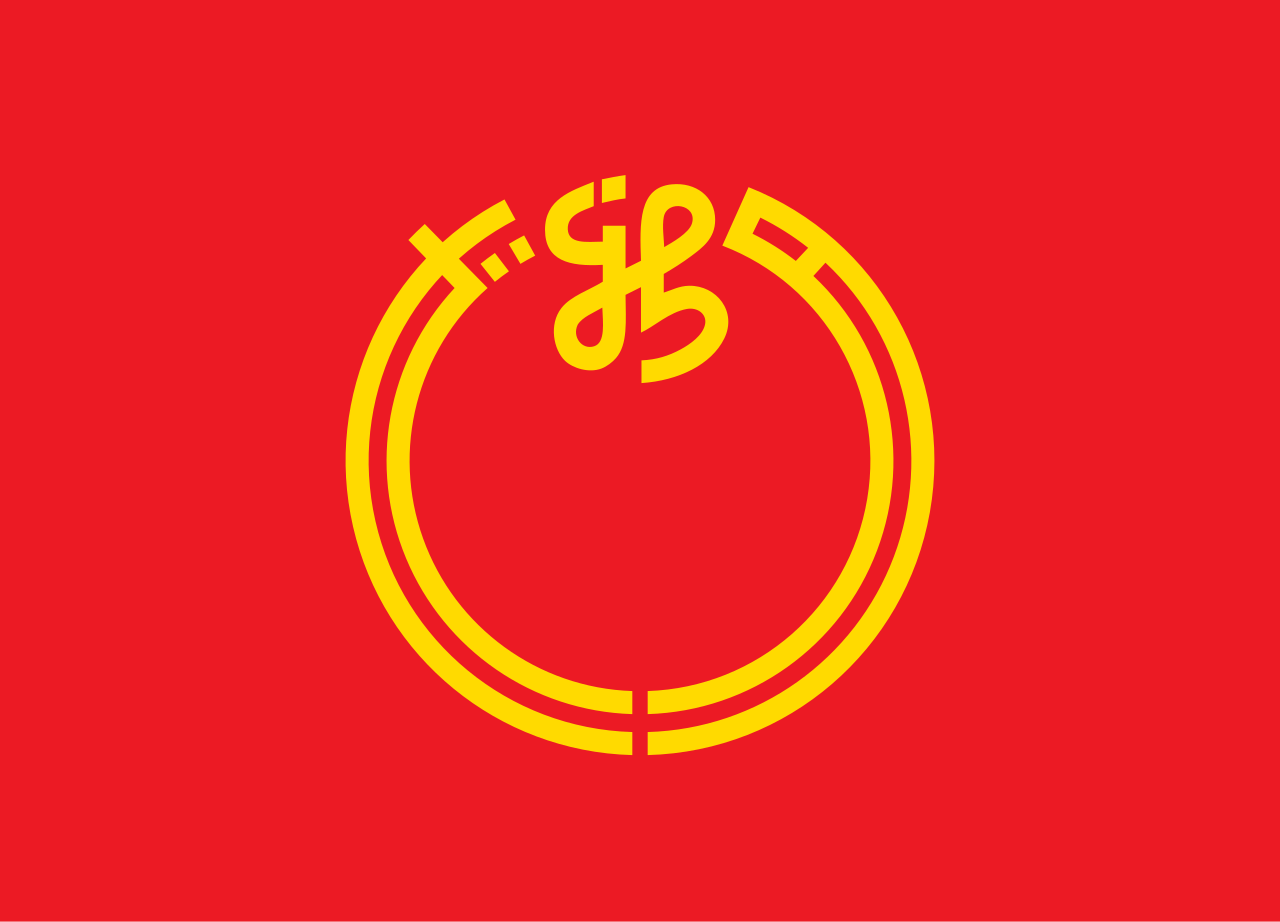
Bright red carries a golden device: two thin concentric rings, broken at the bottom, with a looping brush-drawn figure resting across the top.
Okayama
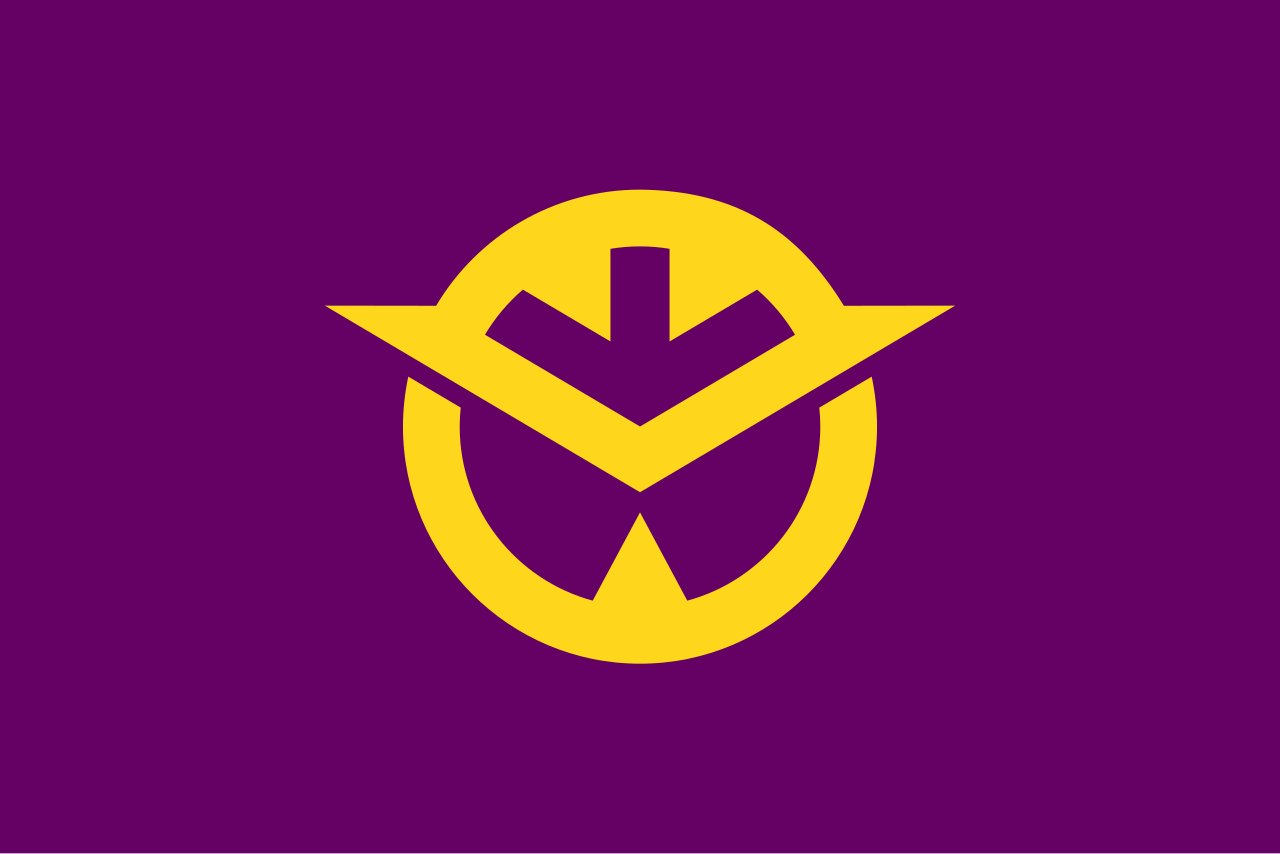
Royal purple sits behind a chunky yellow device: a wide V sweeps across a disc, a blunt arrow points down at its centre, and a notch splits the base.
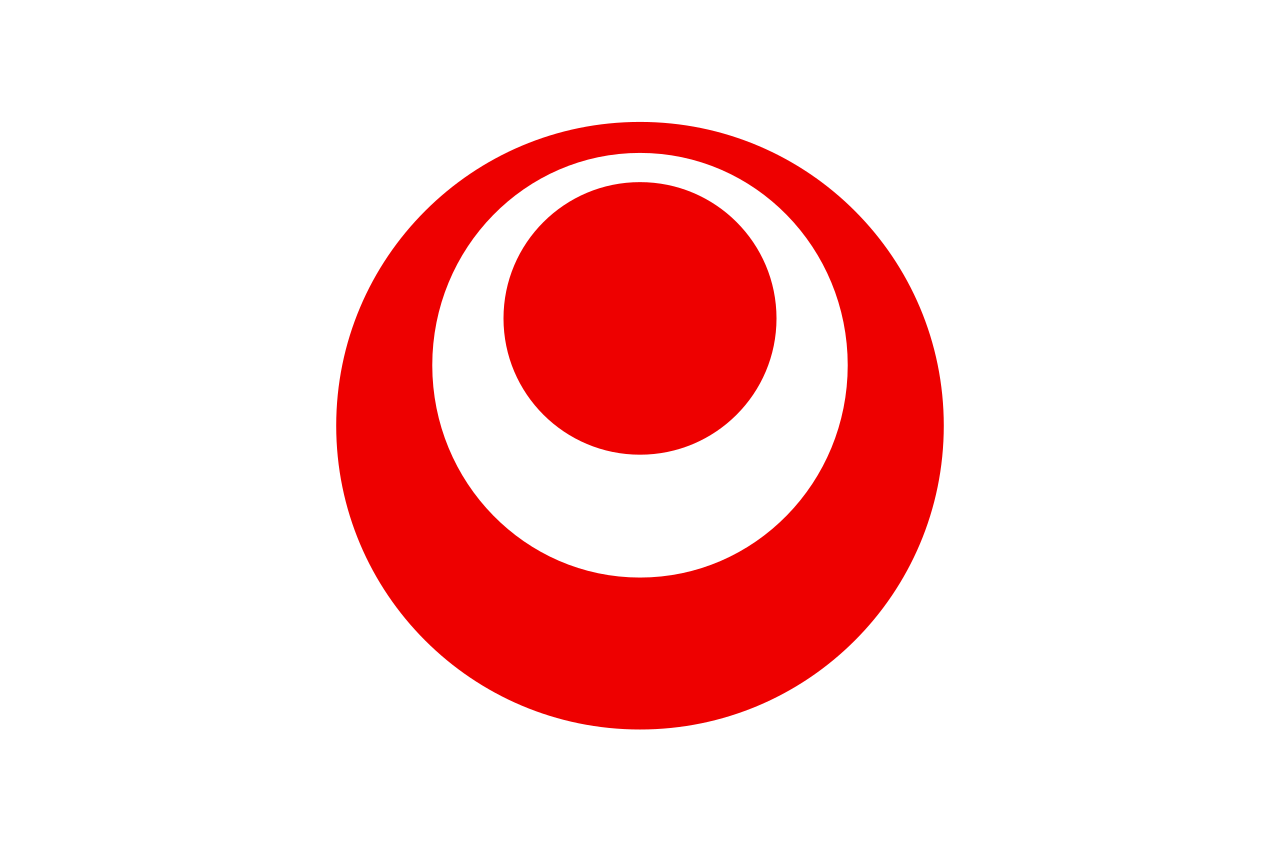
Okinawa
No lettering here, just circles: a thick red ring on white with a red dot floating inside it, forming the letter O of Okinawa.
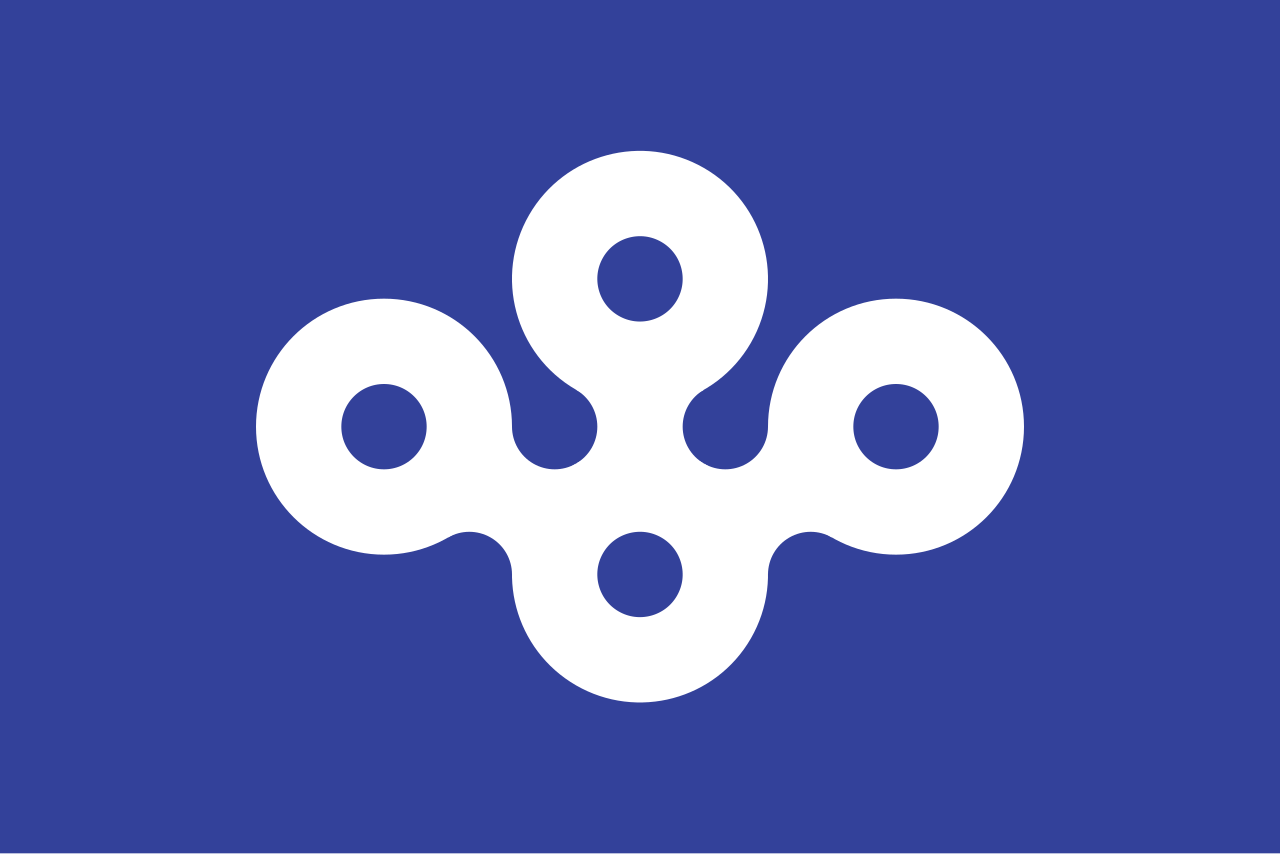
Osaka
Four white gourds meet neck to neck at the middle of an indigo field, each rounded body pierced by a single blue dot — the sennari-byotan gourd emblem.
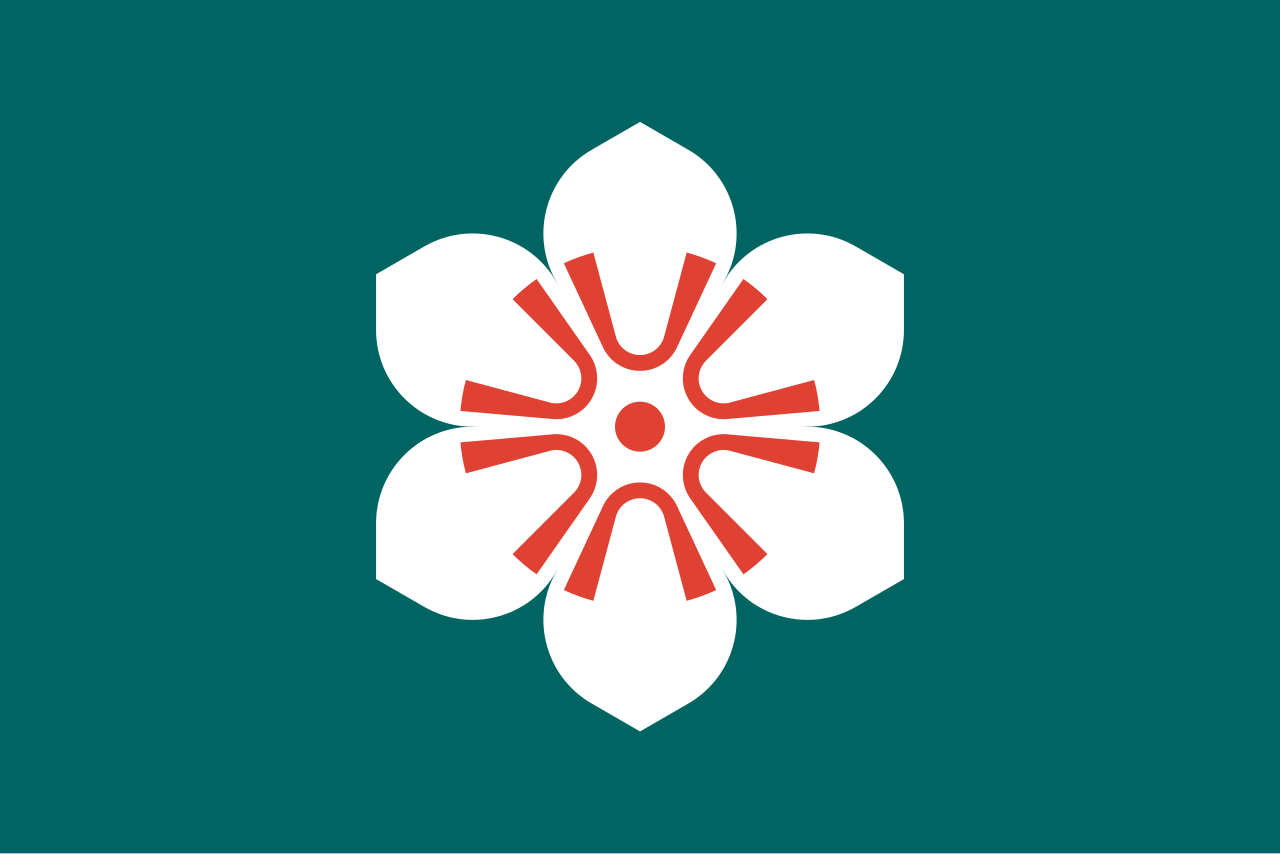
Saga
Deep teal sets off a white blossom of six petals; inside it red brush-strokes fan outward from a small red dot at the very centre.
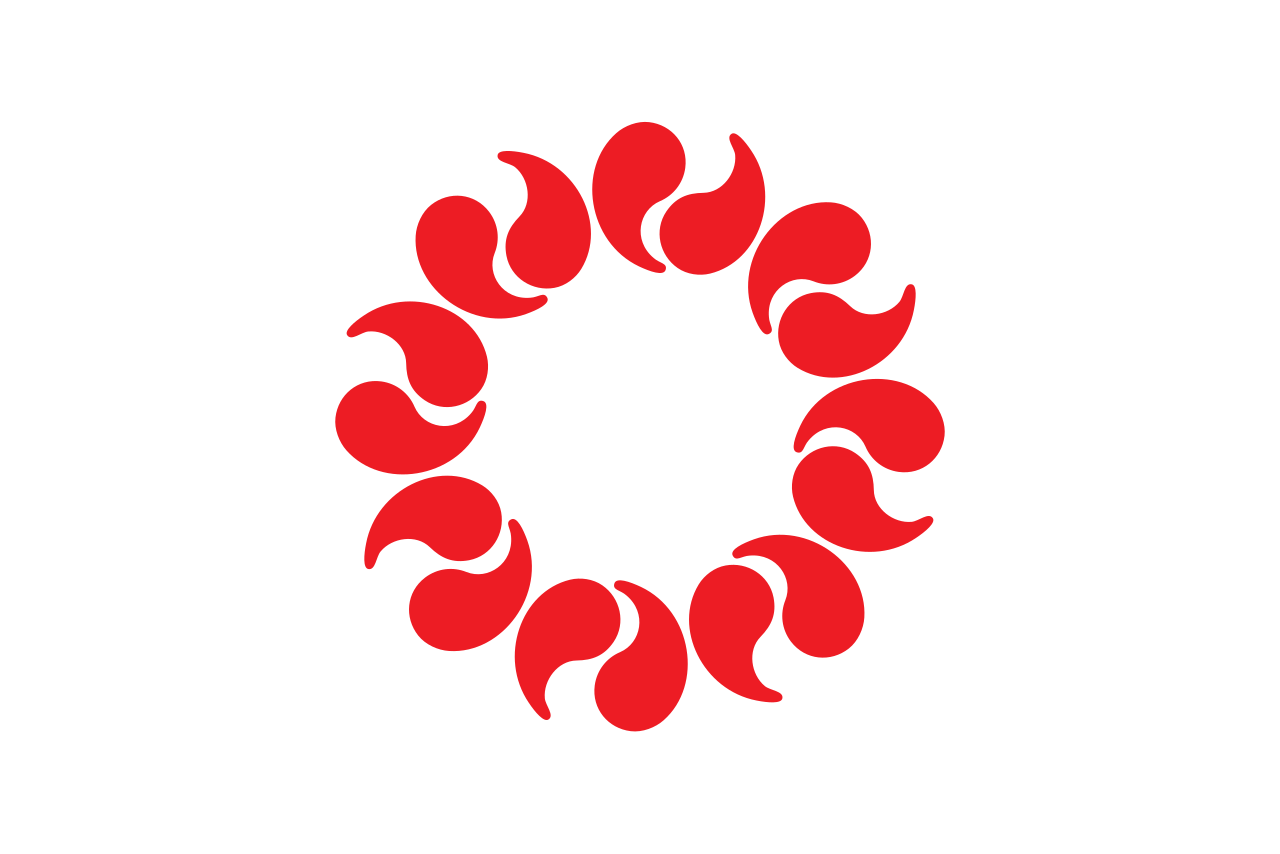
Saitama
A ring of red comma-shaped magatama beads turns like a wheel on a plain white field, each curl tucking into the tail of the next.
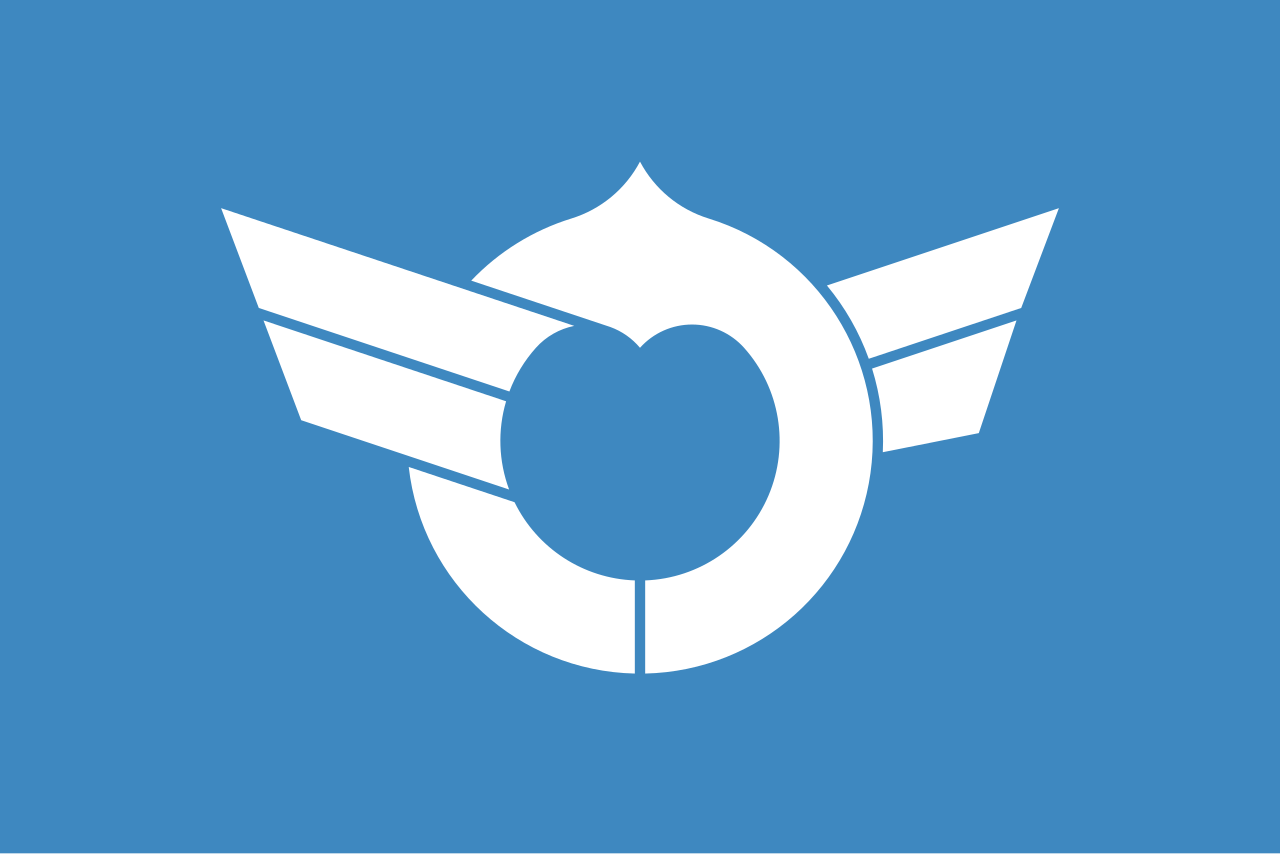
Shiga
On mid-blue, a white ring with a peaked crown and a slit at the base encloses a rounded blue centre, while flat white wings sweep out to both sides.
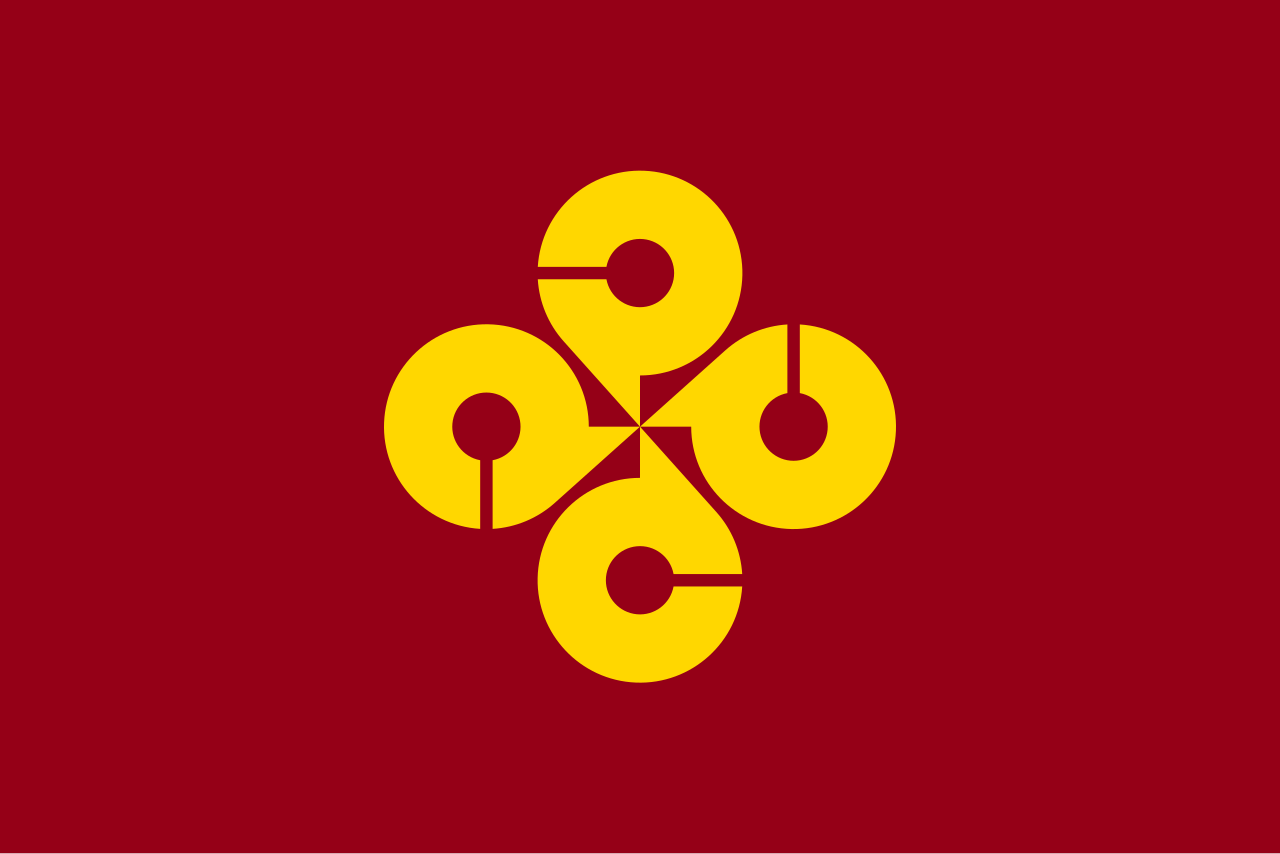
Shimane
Whirling on a crimson ground, four yellow discs each carry a red dot and a narrow slit, arranged as four katakana マ that play on the name Shimane.
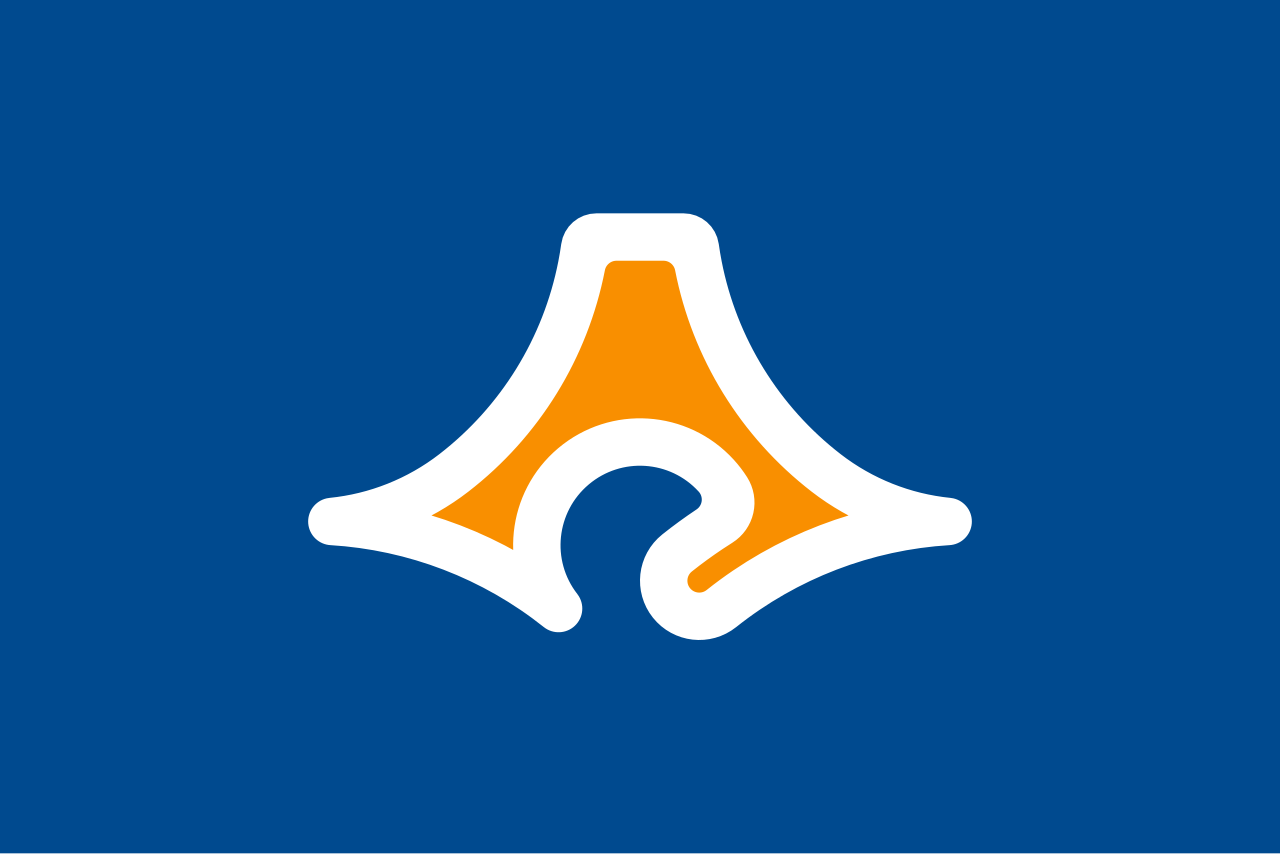
Shizuoka
Deep blue behind a broad-skirted peak drawn in white outline: the summit cap and the long sweeping foothills are white, orange fills the mountain body below the cap, and at the centre of the base the white curls inward into a spiral — Mount Fuji.
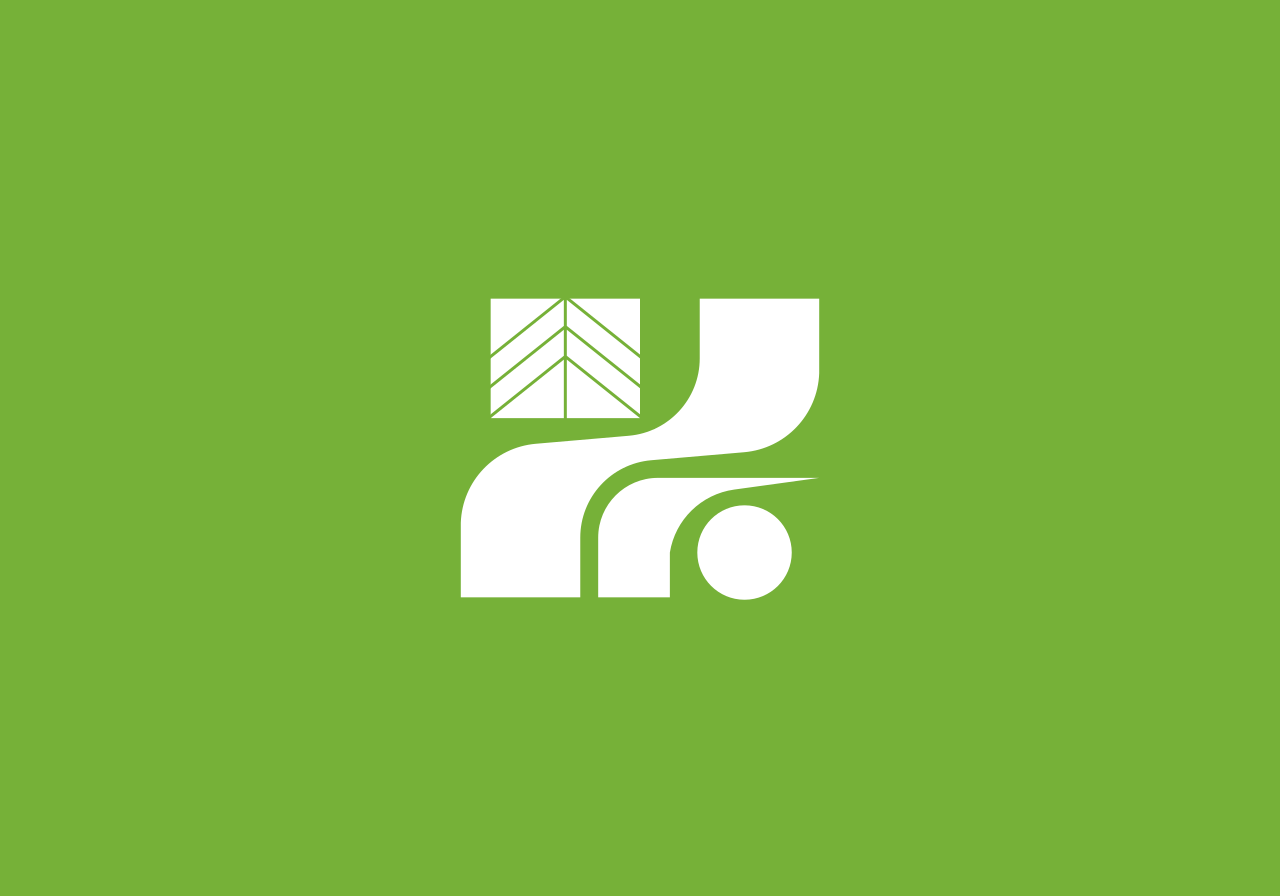
Tochigi
White on leaf green: a small square ruled with herringbone lines like the veins of a leaf, beside a broad curving band that flows away and ends in a solid dot.
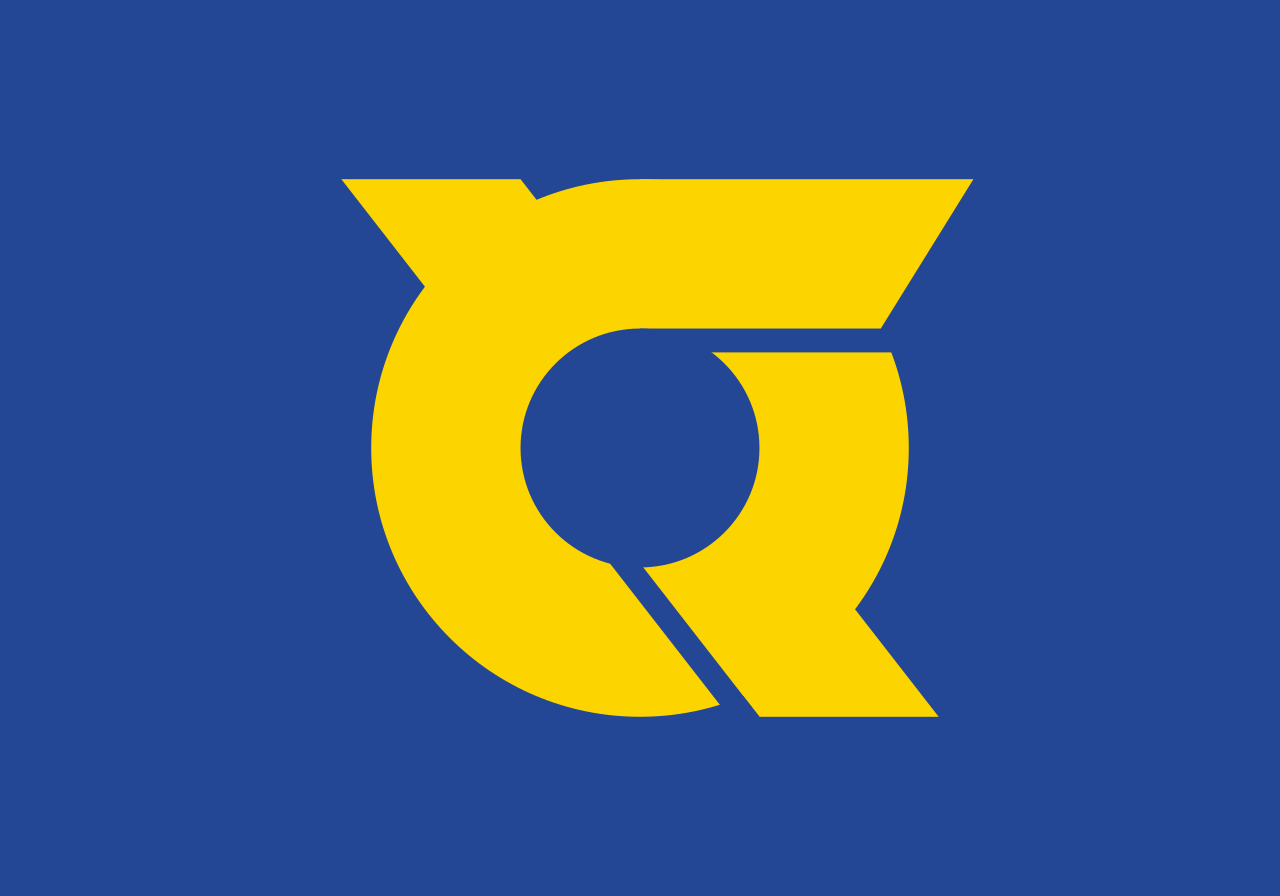
Tokushima
A fat gold ring on royal blue, punched through the middle by a blue disc, capped with a jagged bar of sharp points and cut by a thin diagonal at the lower right.
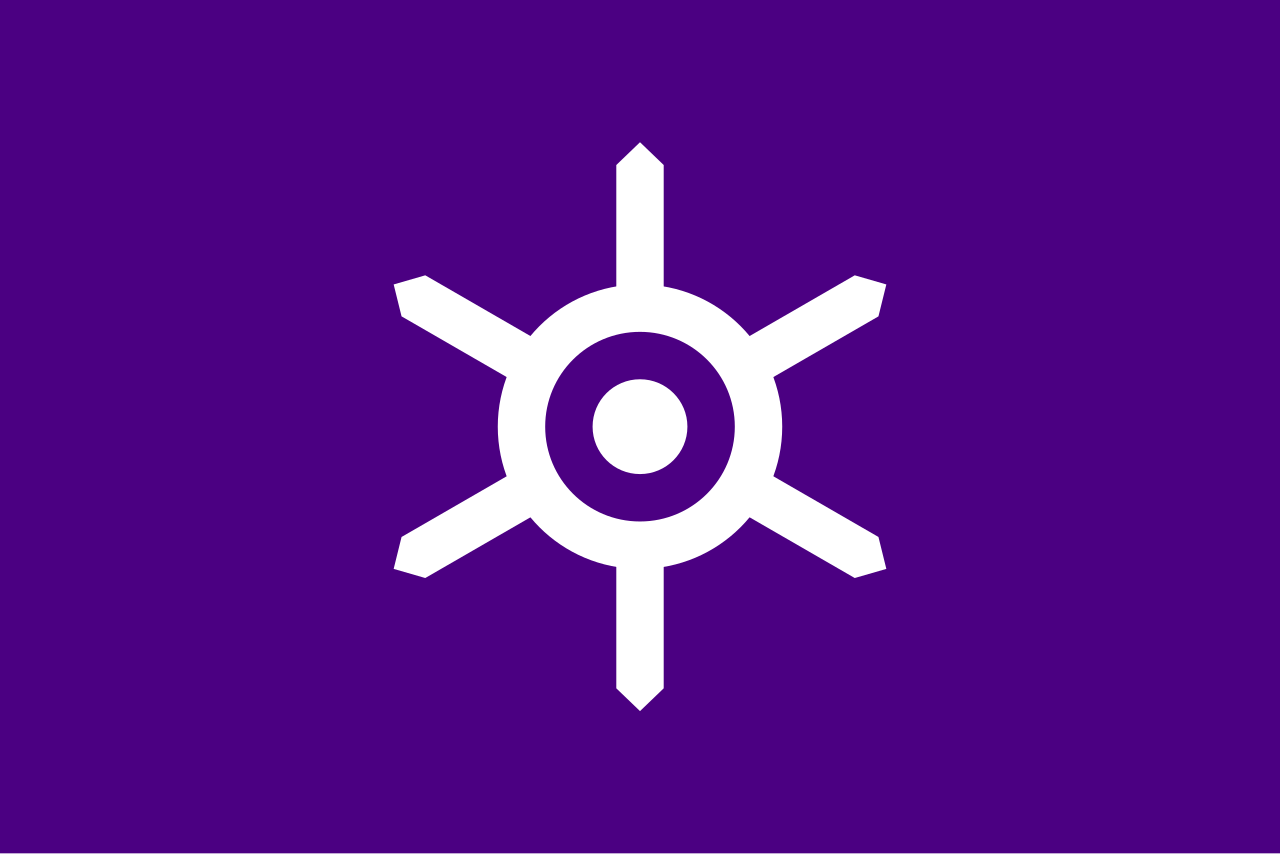
Tokyo
A white Tokyo Metropolitan emblem sits at the centre of a deep purple field. From a central ring a pointed stroke rises and falls and four diagonal strokes reach out, forming a six-rayed sun — a capital radiating outward from the centre of Japan.
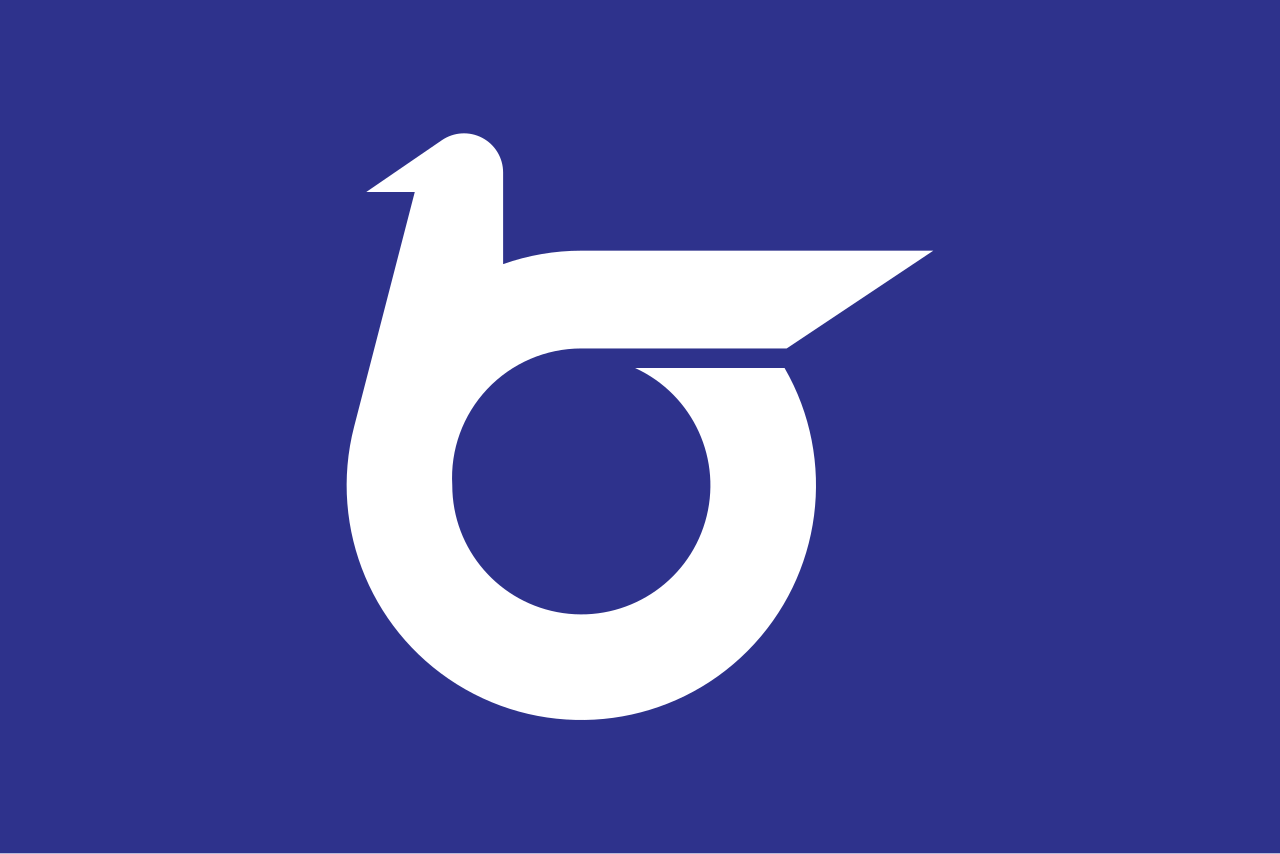
Tottori
Tottori's name carries the word for bird, and its white mark on indigo is the kana と drawn as one: pointed beak, one long sweeping wing, a round looping body.
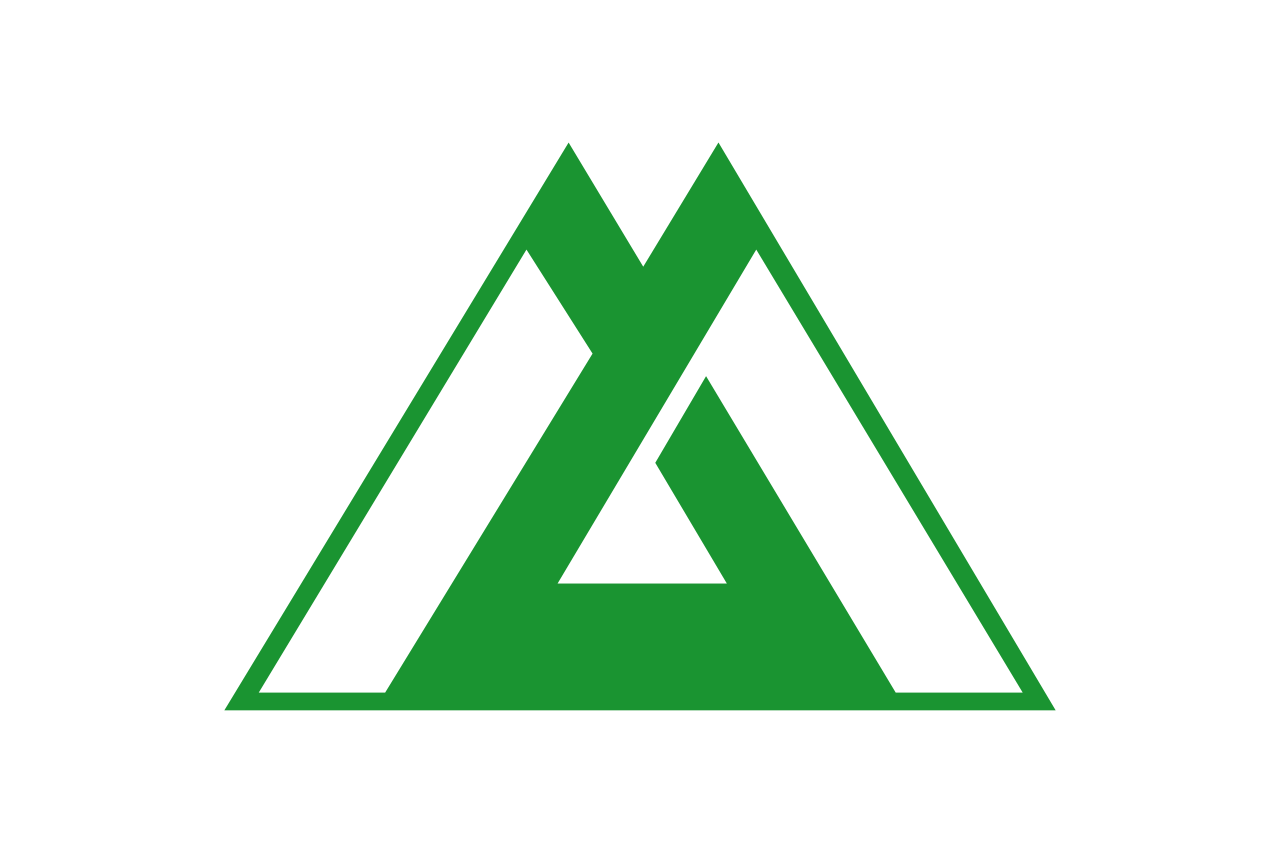
Toyama
No coloured field at all — on plain white stands a green triangle cut like a mountain, white gaps inside it carving out two further peaks.
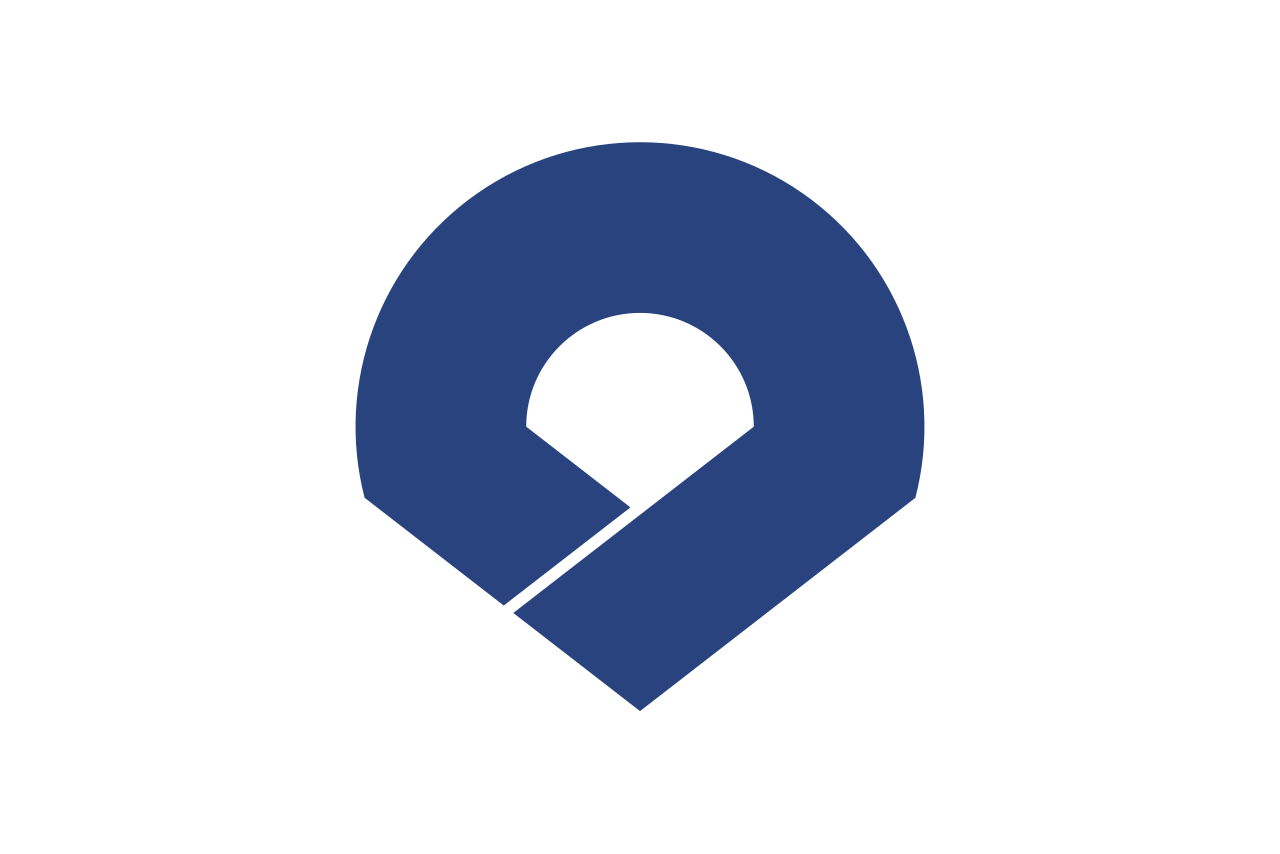
Wakayama
A single navy shape does all the work: a broad disc tapering to a point at the bottom, a white dome bitten out of its middle, a fine white slash across the lower left.
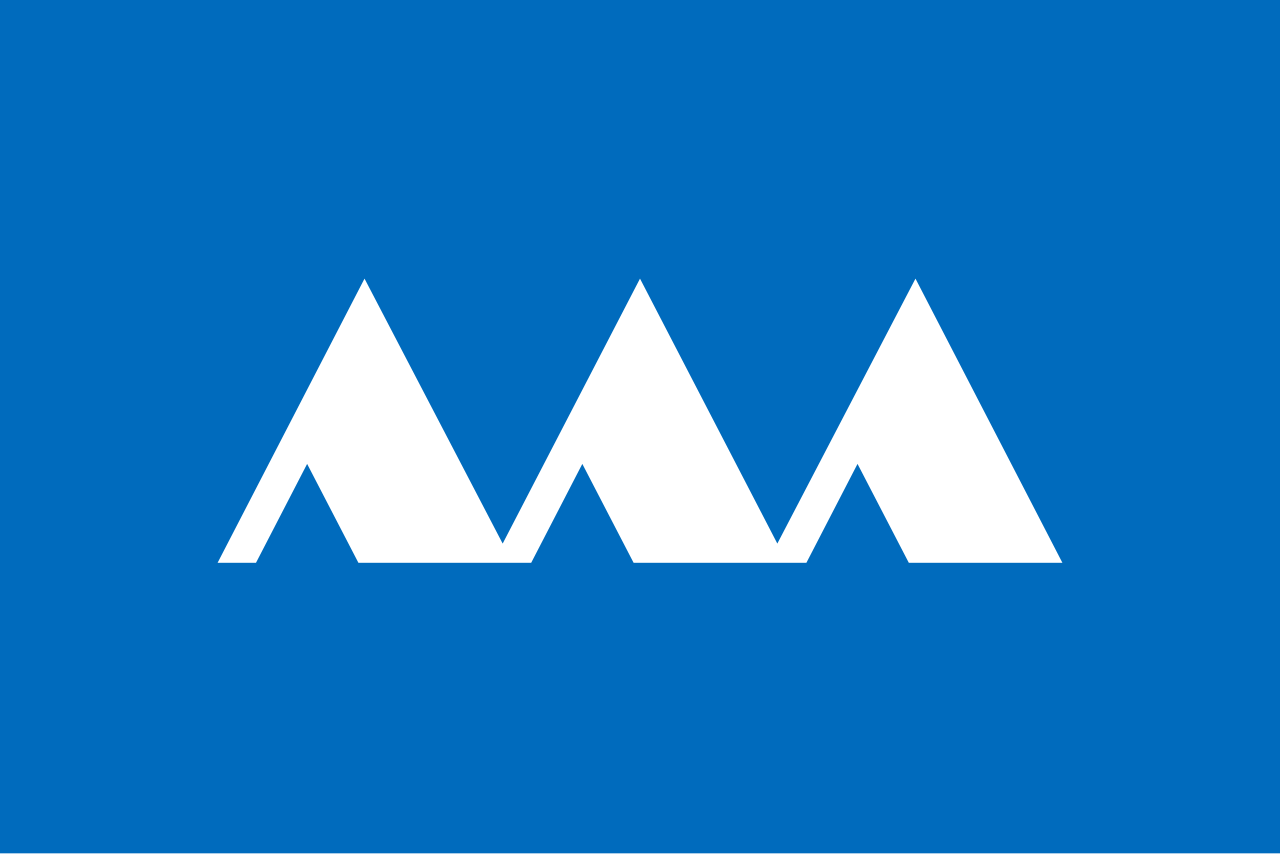
Yamagata
Three sharp white peaks stand in a row on blue; together they draw 山, the character for mountain that begins the prefecture's name.
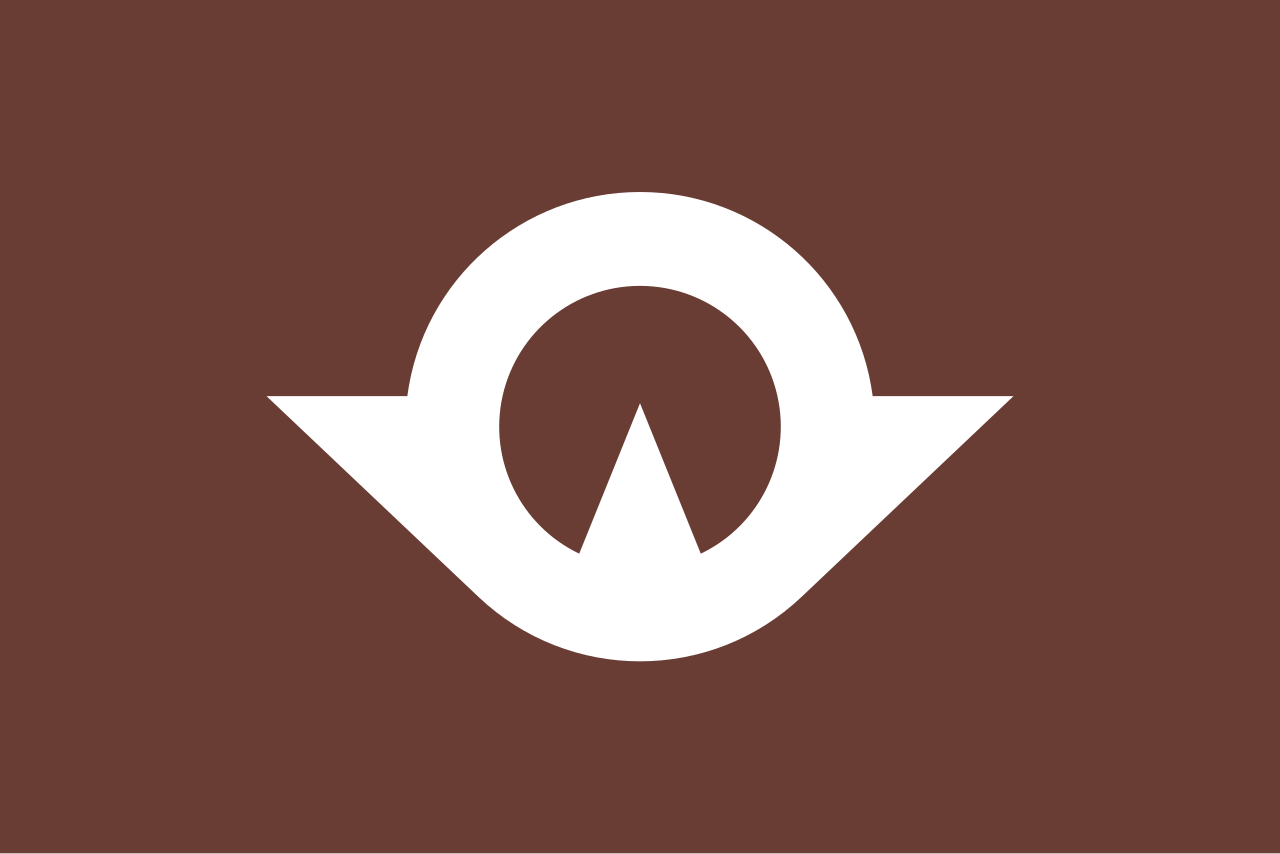
Yamaguchi
The field is a rare chocolate brown. A white ring with wing-like points holds a small white peak rising inside it, reading as the 山 and 口 of the prefecture's name.
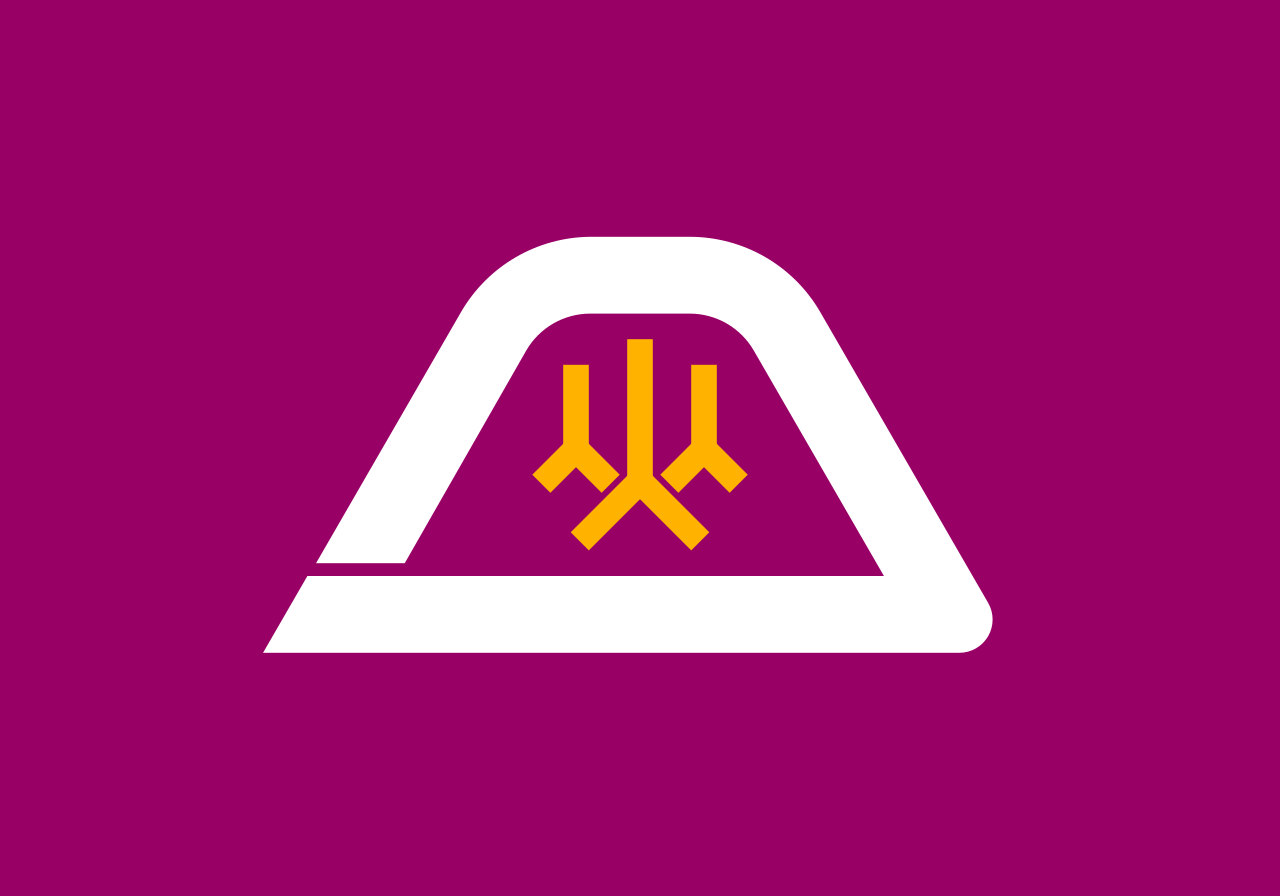
Yamanashi
Magenta, unusually, carries the thick white outline of a flat-topped mountain, and inside it sits a gold figure of three uprights forked and crossed by diagonal bars.
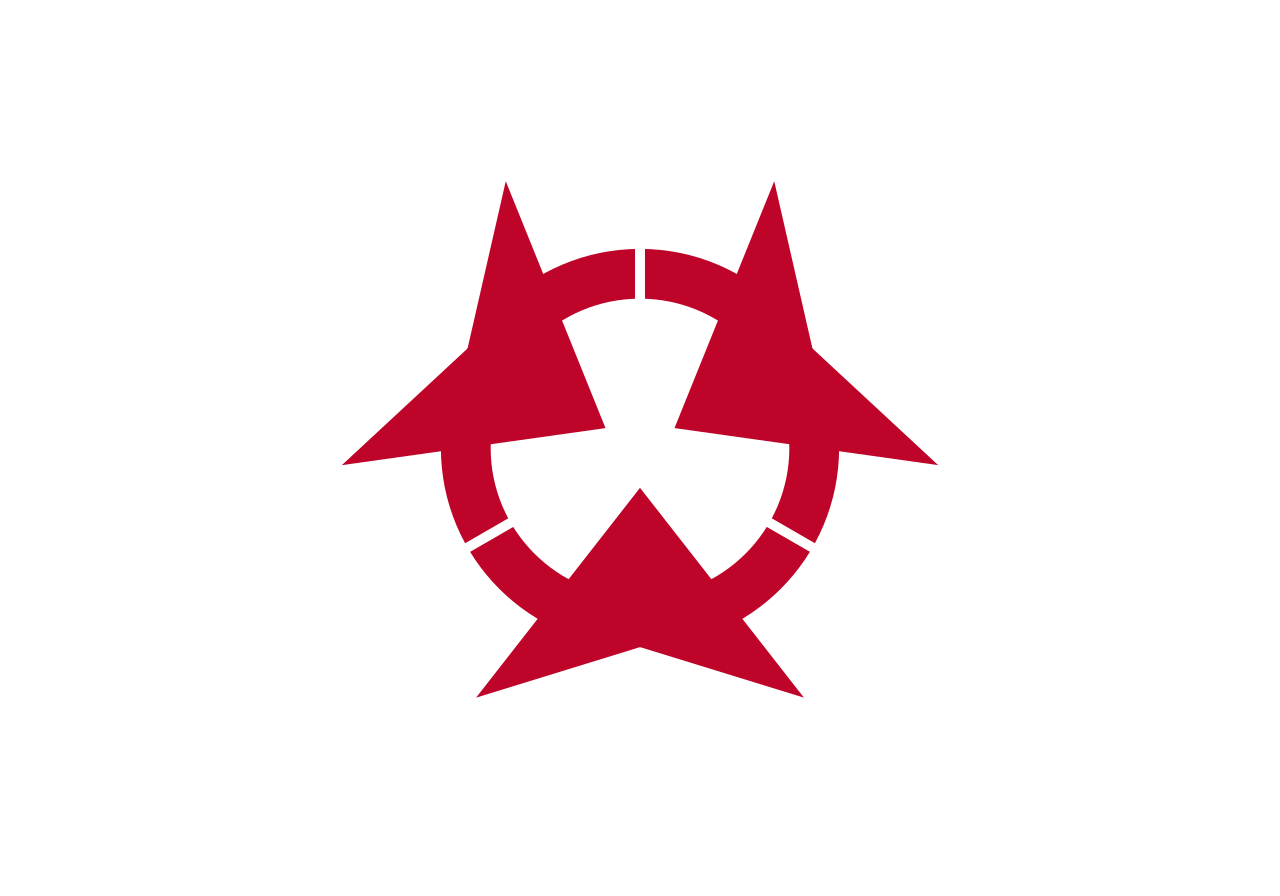
Ōita
On white, three crimson strokes of the character 大 from Ōita lock into a broken ring, their tips flaring outward like points of a star.
Data Sources
- What the flag means: 国旗及び国歌に関する法律(平成十一年法律第百二十七号)第一条・別記第一「日章旗の制式」
- Population: Population, total (SP.POP.TOTL), latest available value
- Area: World countries in JSON, CSV, XML and YAML
- Organizations: Membership of Principal UN Organs
- Organizations: Members and partners