Flag of Canada
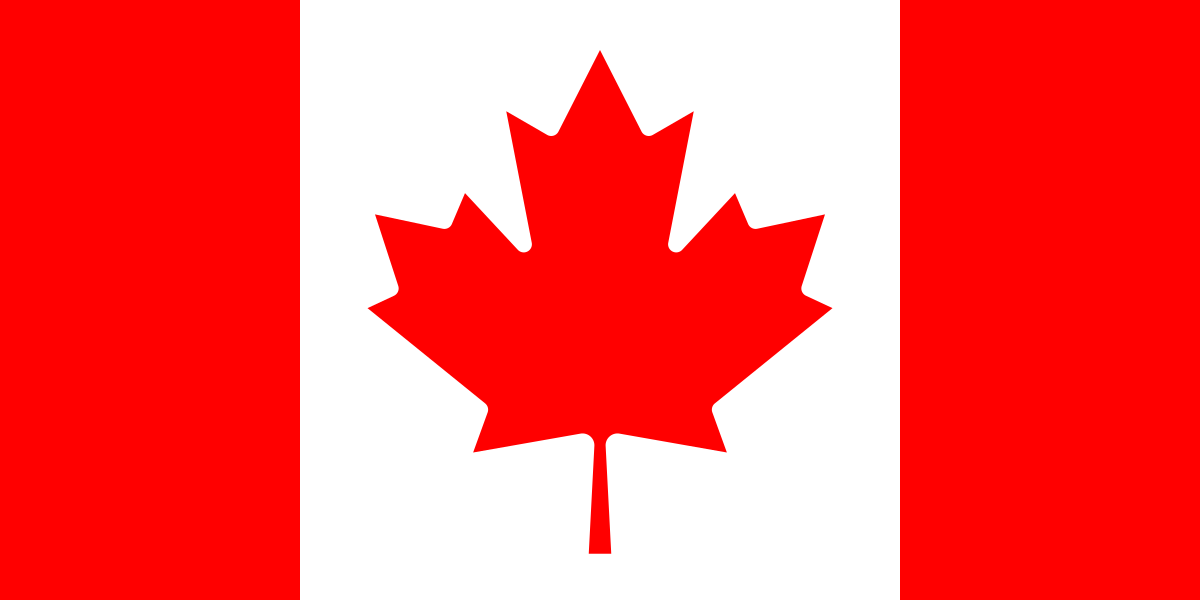
What the flag means
- Red maple leaf — Canada's nature and people
- Red and white — Canada's official colors
Design set by: Royal Proclamation of 28 January 1965 (proclaimed by Queen Elizabeth II; in force 15 February 1965) · Adopted 1965
Highlights
- 🍁 Maple leaves and vast wilderness
- 🏔️ The Rockies and Niagara Falls
- 🤝 Multicultural and welcoming
- 🏒 A passion for ice hockey
- 🌲 Clean nature, great living
Quick facts
- Region
- Americas · North America
- Population
- 41,651,653 people (2025)
- Area
- 9,984,670 km²
- Capital
- Ottawa
- Languages
- English, French
- Currency
- Canadian dollar (CAD)
- Organizations
- United Nations, NATO, OECD
Neighboring countries
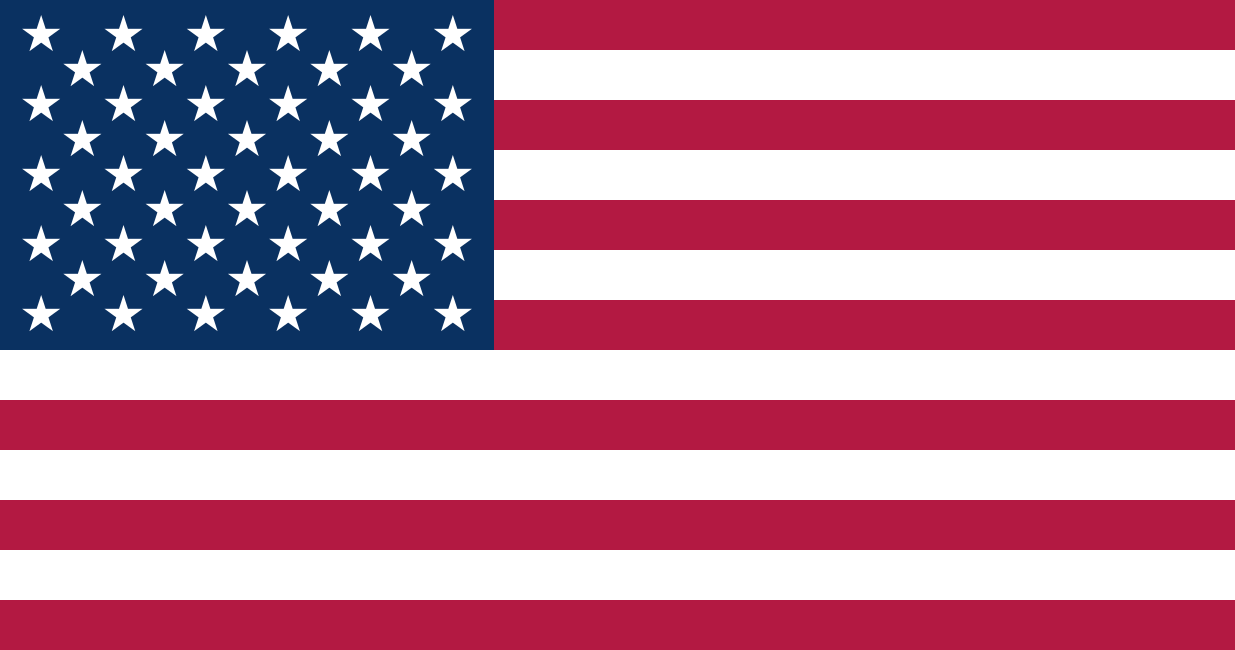
Land neighbors, approximated from simplified map outlines.
Symbols in History (1)
Coats of arms and emblems whose historic seat lies within this country’s present-day territory.
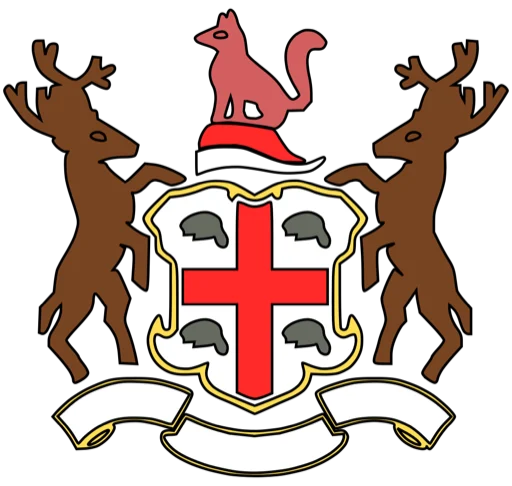
Arms of the Hudson's Bay Company
OriginThe Hudson's Bay Company was chartered in 1670 by Charles II of England and given a trading monopoly over every river system draining into Hudson Bay. That vast territory was called Rupert's Land after Prince Rupert, the company's first governor. The picture here is a modern redrawing of the arms the company carried on its seals and trading posts through the centuries of the fur trade.
DescriptionA red cross of St George runs the full height and width of a white shield edged in gold, whose border is cut into deep scalloped lobes. In each of the four fields a grey-green beaver crouches — all four turned the same way, each with a thick tail hanging down behind it — the animal whose pelt served as the currency of the trade. Above the shield a fox in pale red sits with its tail raised and curled, on a red band whose right end trails off into a long point; a second band beneath it is drawn in outline alone. Two brown stags with wide branching antlers rear on their hind legs and steady the shield from either side. The gold-edged ribbon below is left blank; that is where the motto “Pro Pelle Cutem” (a skin for a skin) is written.

State & regional flags (13)
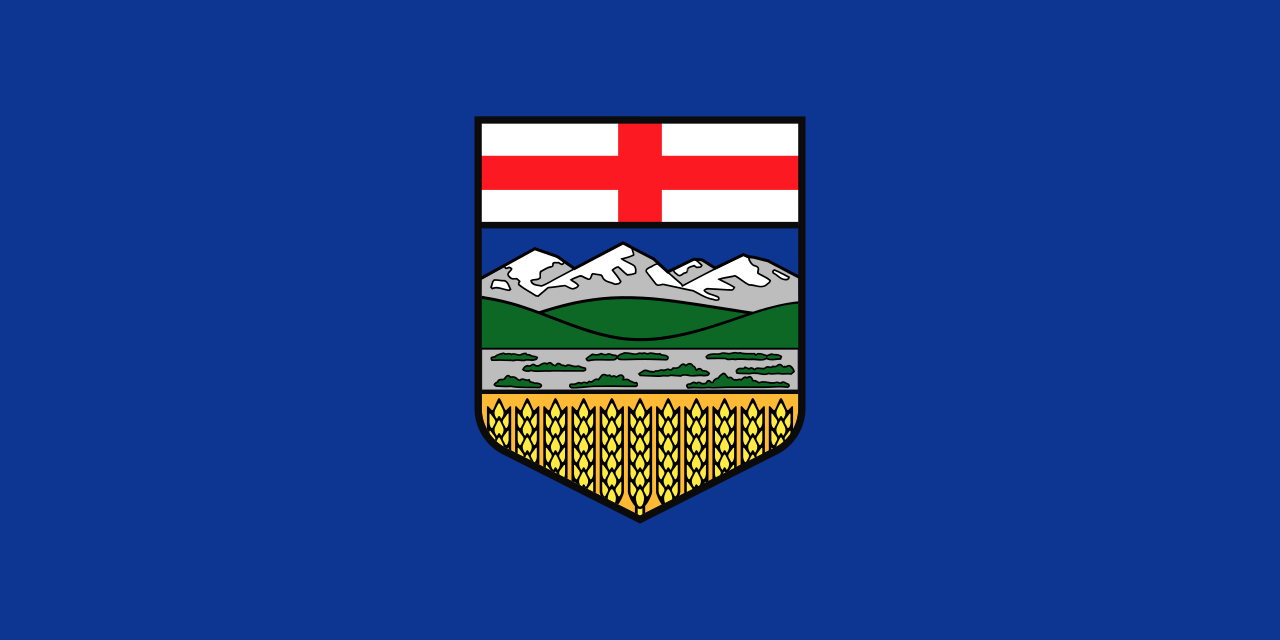
Alberta
On royal blue, a shield stacks a red cross on white over snow-capped peaks, green hills, open prairie and a row of golden wheat.
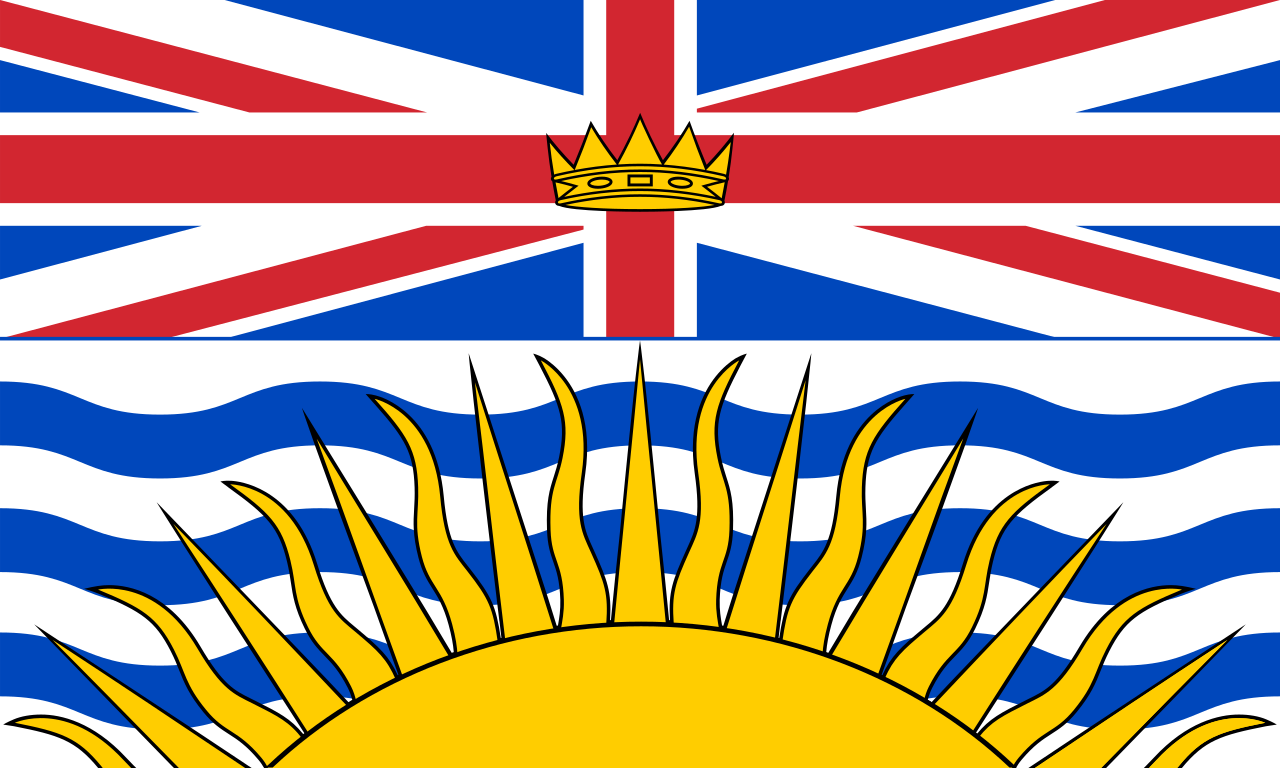
British Columbia
The upper half is a Union Jack with a gold crown at its centre; below it a gold sun stands half-set over the wavy blue and white stripes of the Pacific. The setting sun marks the province as Canada's westernmost.
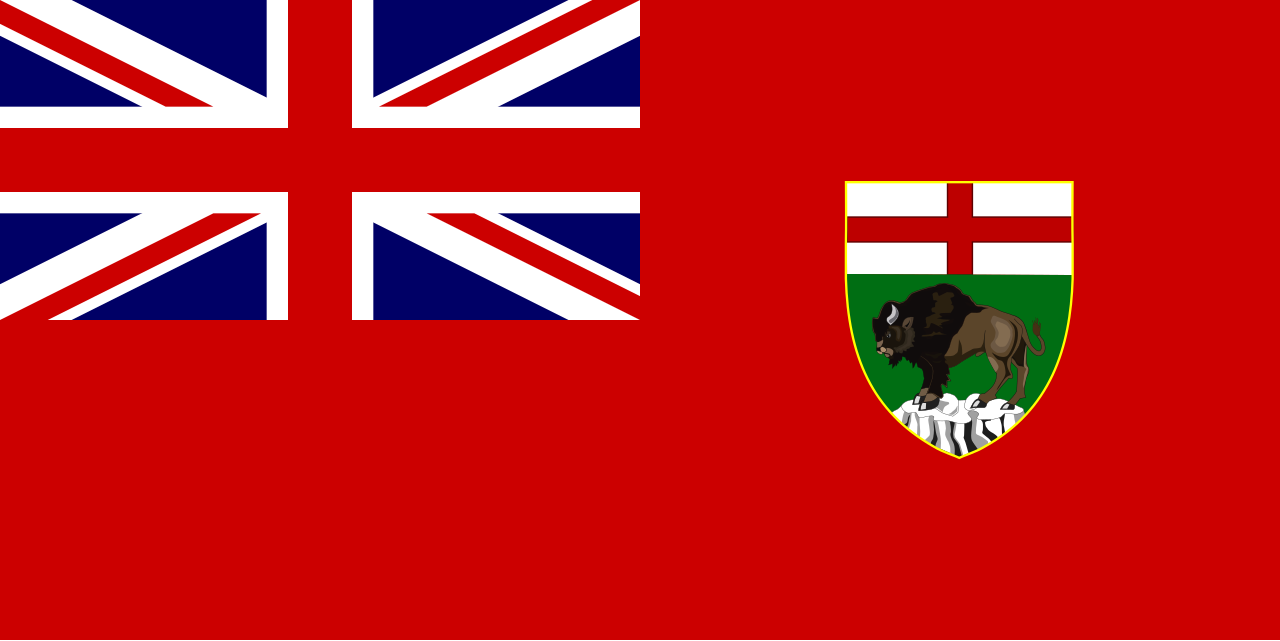
Manitoba
Red flag with the Union Jack in the upper corner and, out in the fly, a shield showing a red cross above a brown bison standing on a rock.
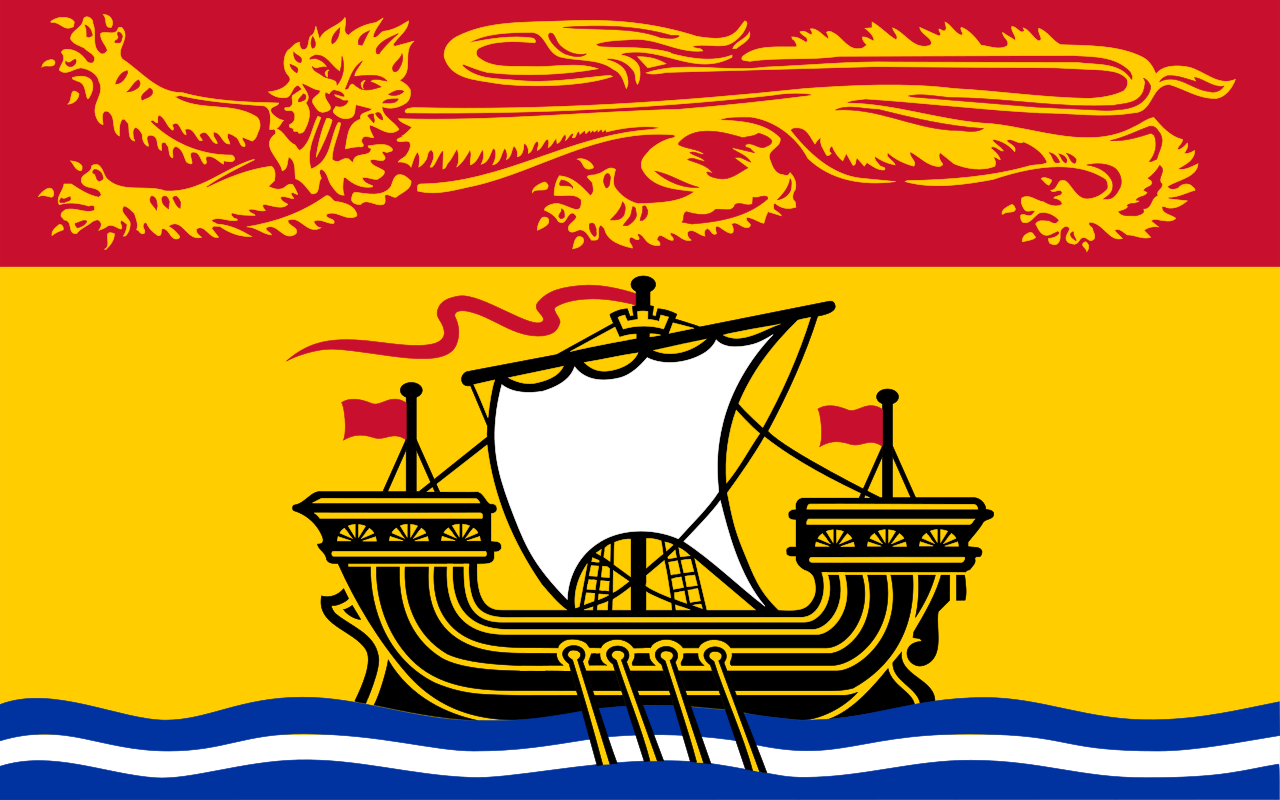
New Brunswick
A gold lion strides along the red band at the top, while the yellow field below carries an oared sailing ship riding blue and white waves.
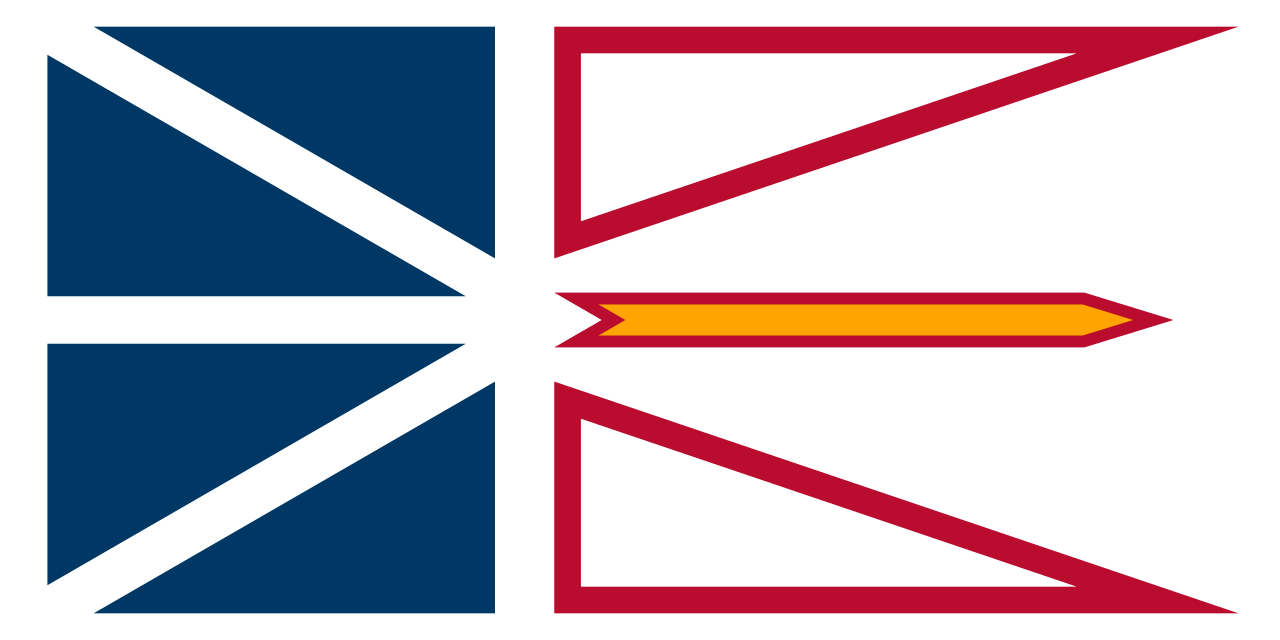
Newfoundland and Labrador
No badge at all here: the hoist is deep blue cut by white bands, and the white fly carries two red triangles with a gold arrow pointing outward.
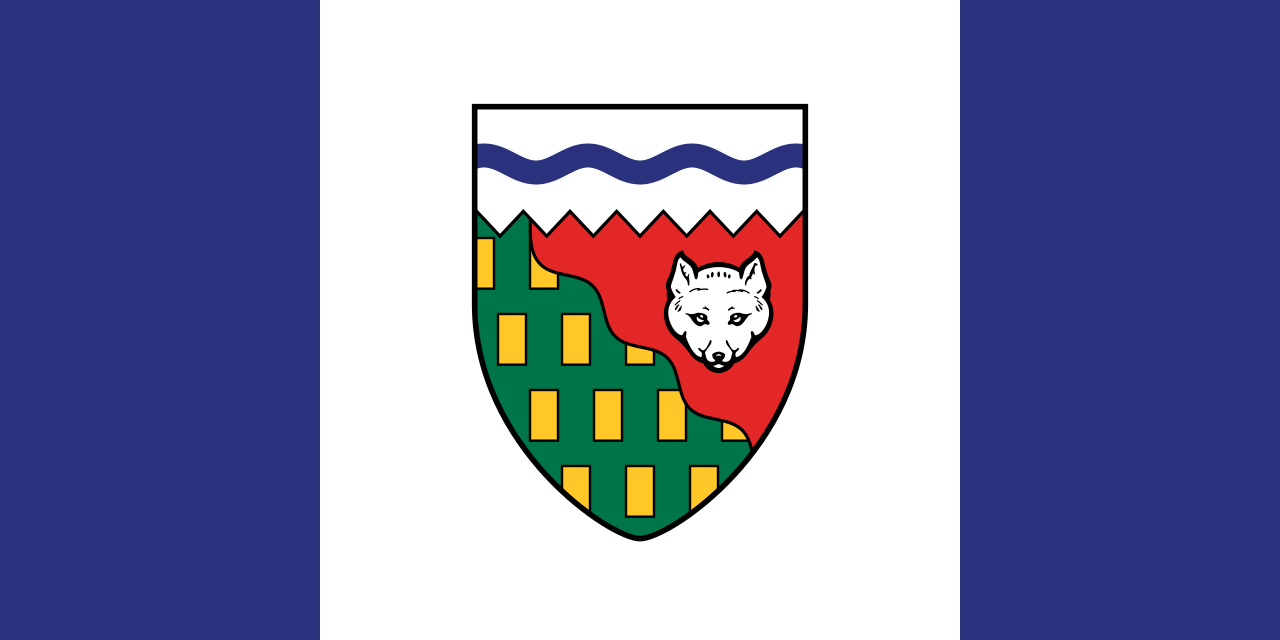
Northwest Territories
Blue bands flank a white centre holding a shield: a white fox head on red, gold bars on green for minerals, and a wavy blue line for the Northwest Passage.
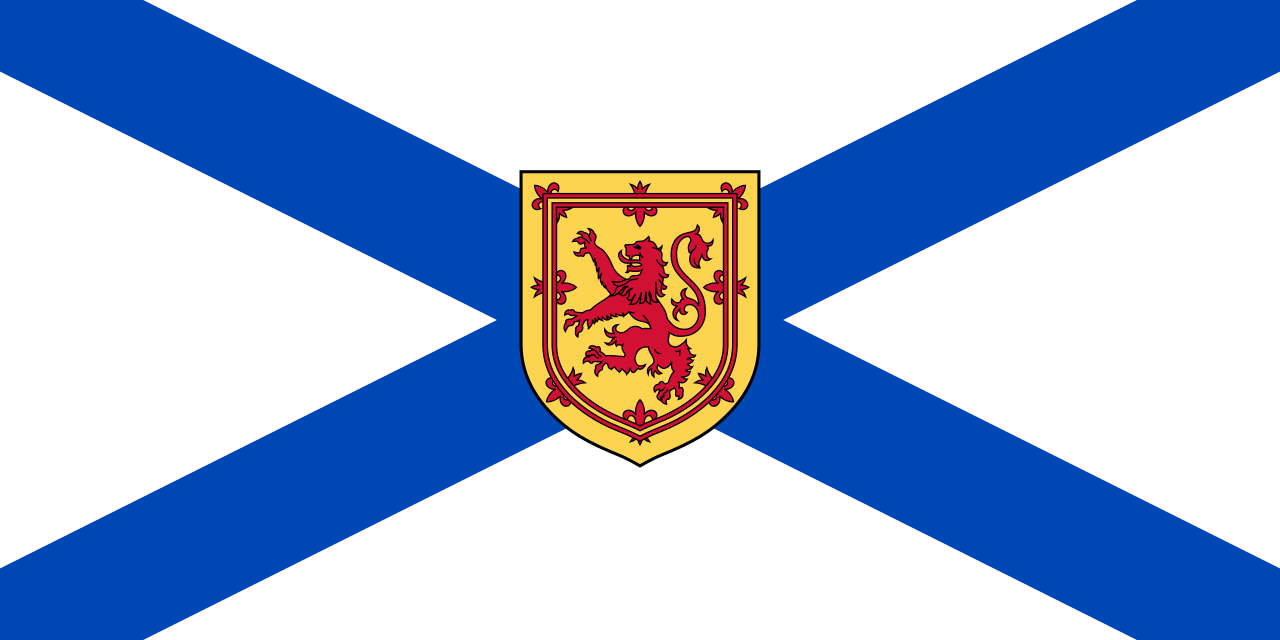
Nova Scotia
A blue saltire — a diagonal X — spans the white field, and a gold shield at its centre bears the red lion of Scotland within a flowered red border.
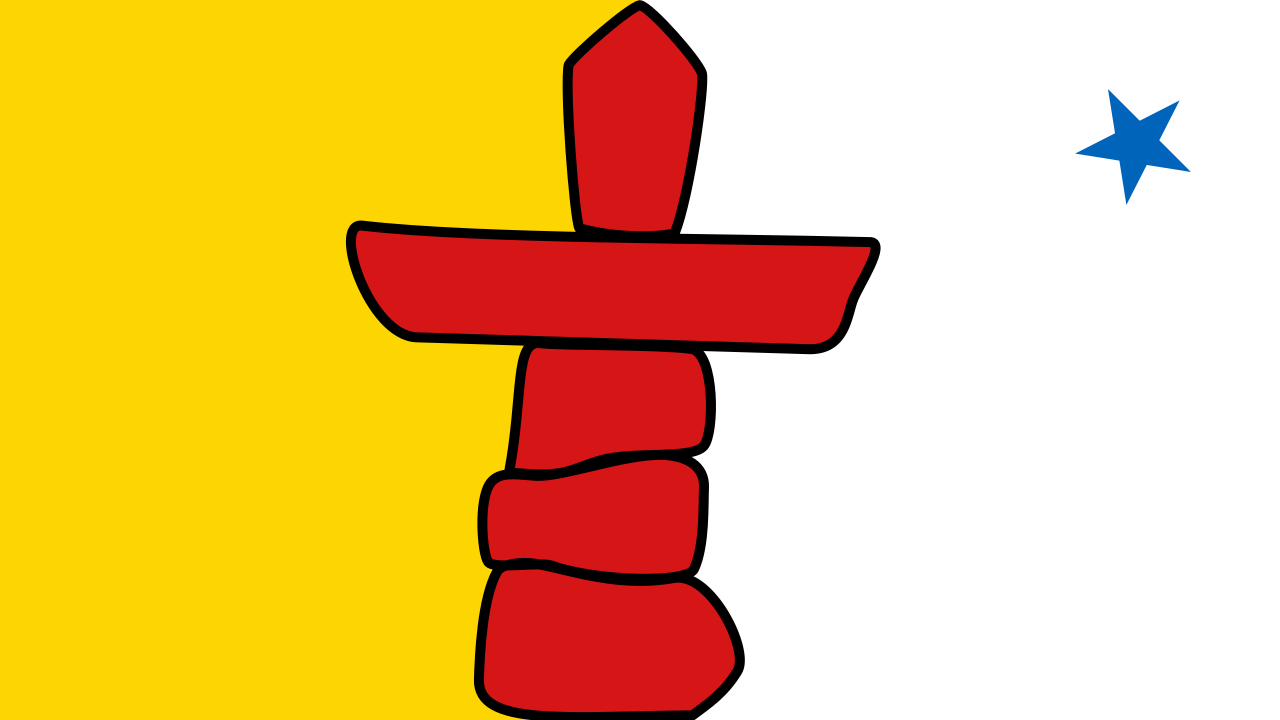
Nunavut
A red inuksuk — the stone figure Inuit build as a landmark — stands between a gold half and a white half, with a blue North Star in the upper fly.
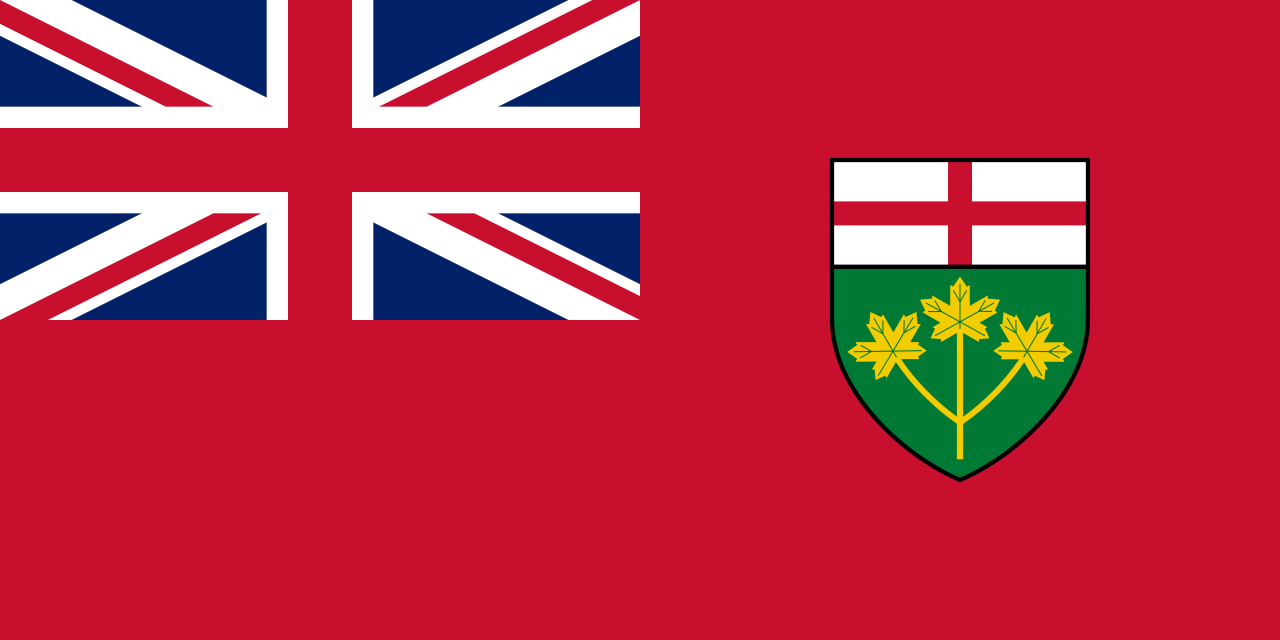
Ontario
Red Ensign of the province: the Union Jack in the upper corner, and at the fly a shield with St George's red cross above three gold maple leaves on one stem.
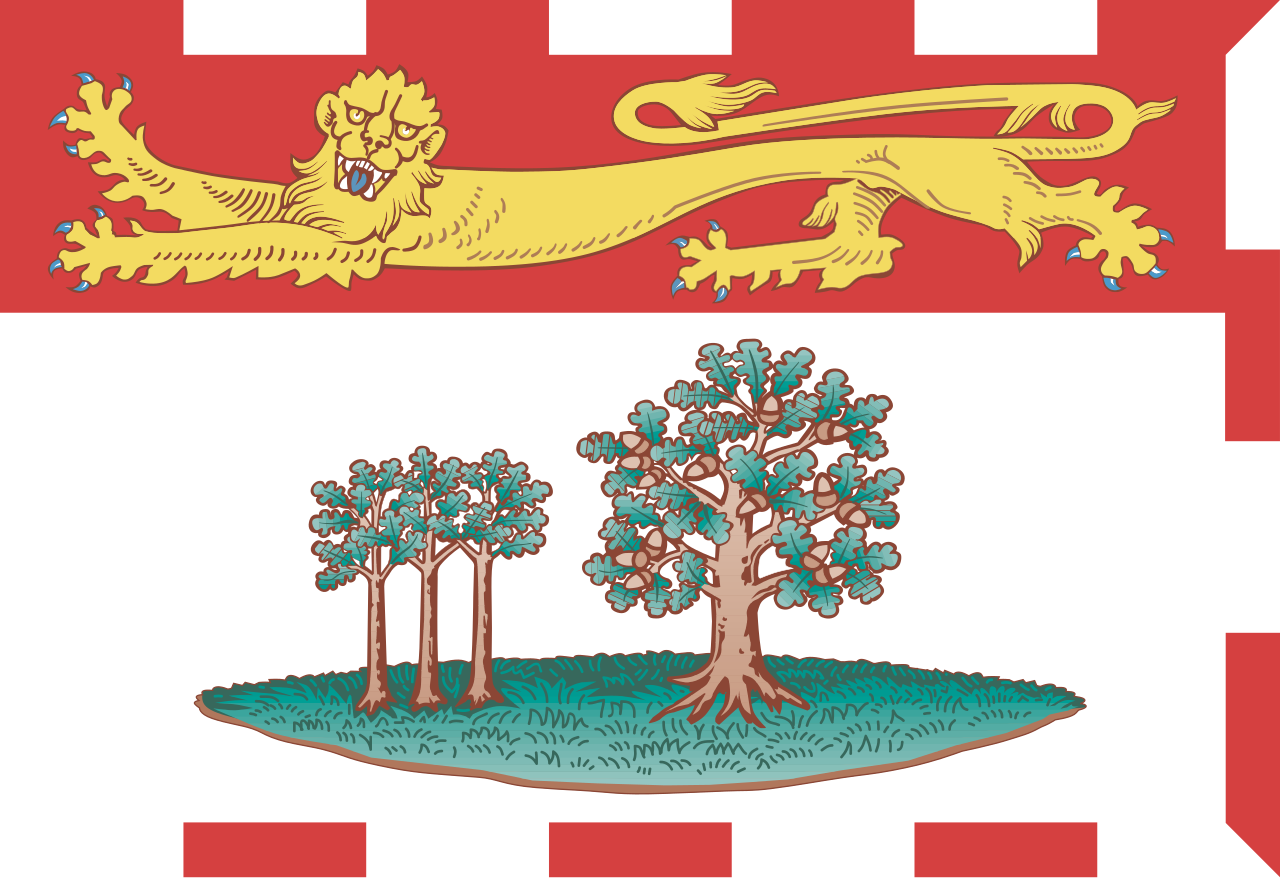
Prince Edward Island
A gold lion walks along the red top band; below, on white, one large oak for Britain and three saplings for the island's three counties grow on a green islet.
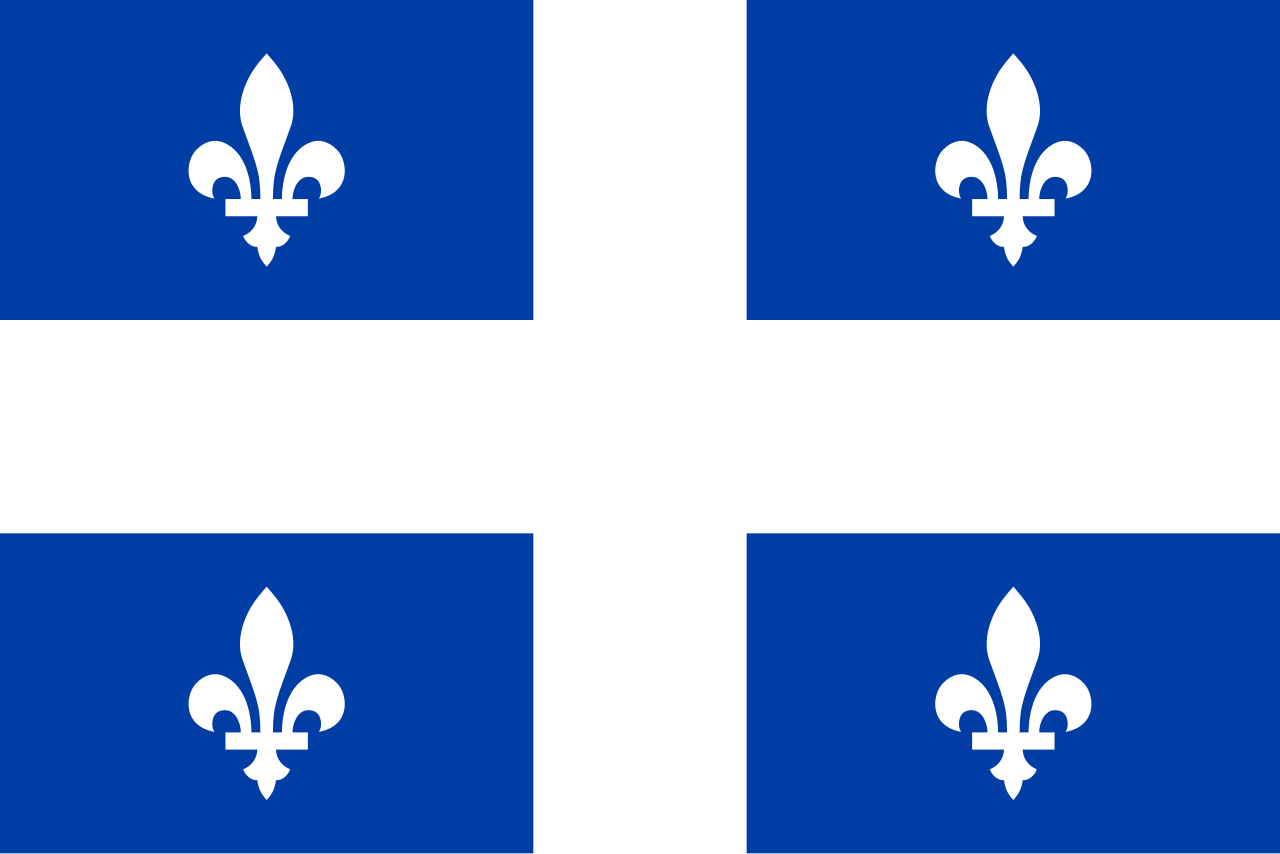
Quebec
A broad white cross divides a blue field into four, each quarter charged with a white fleur-de-lis. The cross stands for the Catholic faith, the lilies for French roots.
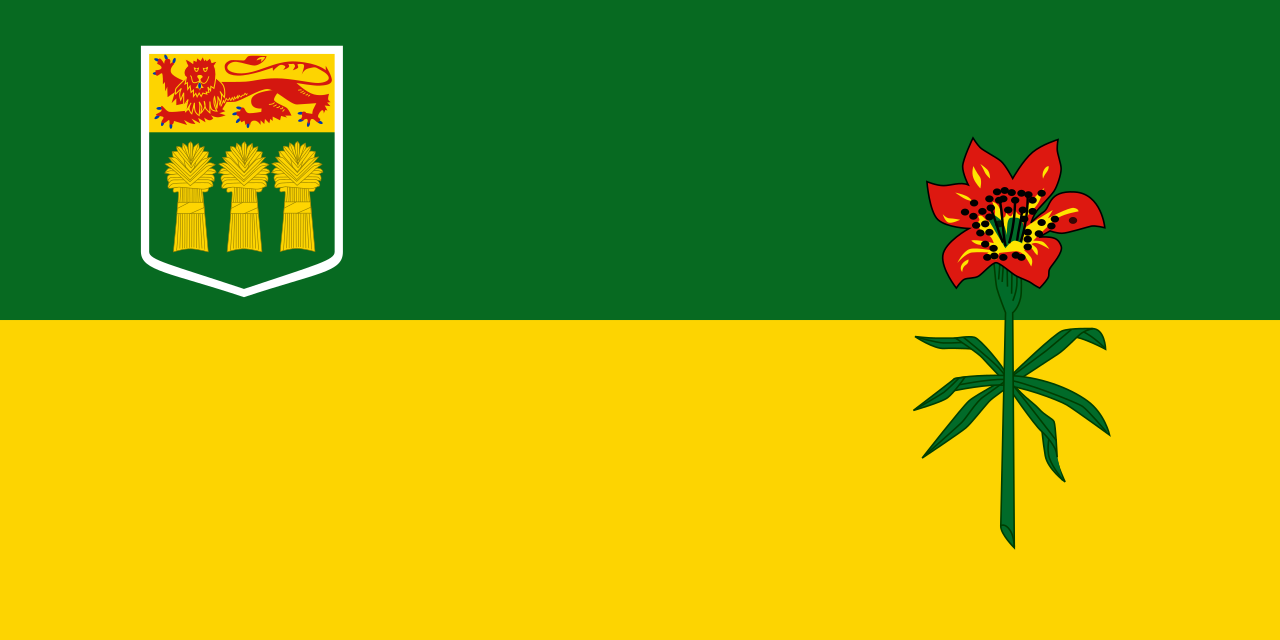
Saskatchewan
Green over gold for northern forests and southern grainfields, with a shield of three wheat sheaves under a red lion, and the western red lily at the fly.
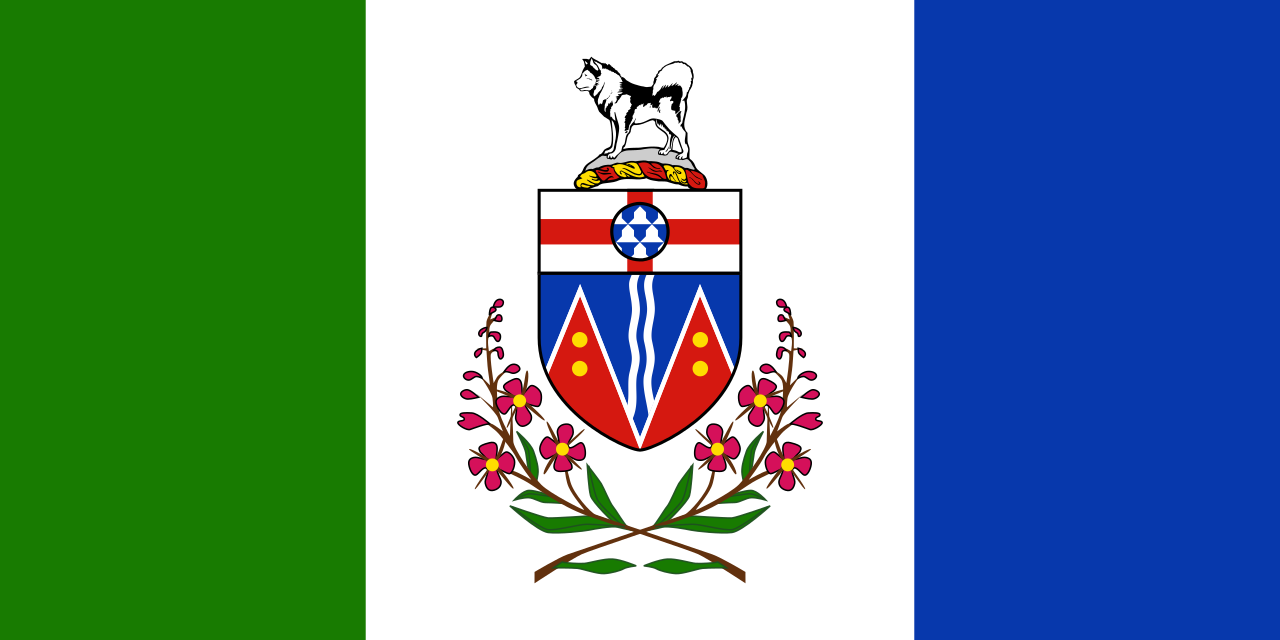
Yukon
A malamute sled dog stands above the shield on the white centre panel, between green and blue bands; pink fireweed, the territory's flower, wreathes the shield.
Data Sources
- What the flag means: Royal Proclamation of 28 January 1965 (proclaimed by Queen Elizabeth II; in force 15 February 1965)
- Population: Population, total (SP.POP.TOTL), latest available value
- Area: World countries in JSON, CSV, XML and YAML
- Organizations: Membership of Principal UN Organs
- Organizations: What is NATO? Member countries
- Organizations: Members and partners