Flag of American Samoa
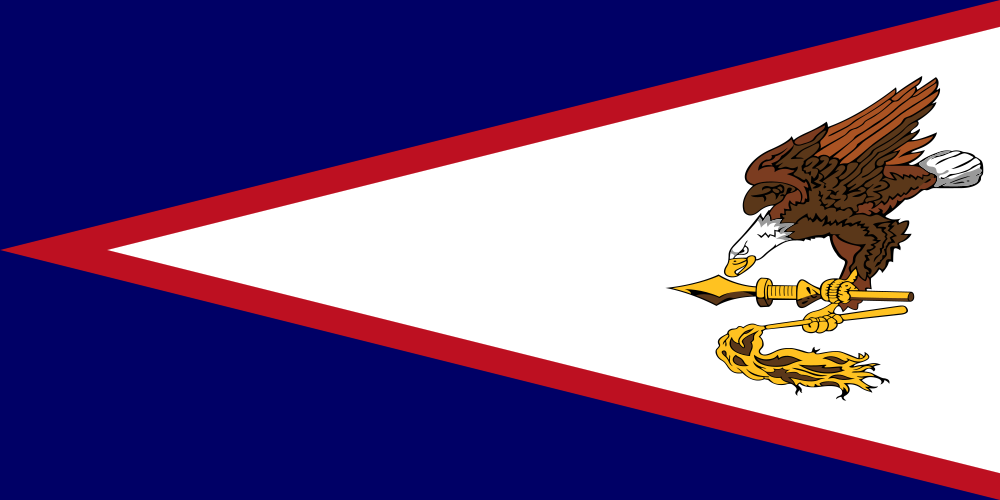
What the flag means
- Bald eagle — the bond with the United States
- Uatogi war club — the power to govern and to defend
- Fue fly whisk — the wisdom of the Samoan matai chiefs
No law defining the design was found. · Adopted 1960
Highlights
- 🏝️ Tropical South Pacific escape
- 🌴 Lush national park rainforest
- 🐠 Seas full of coral reefs
- 🥥 Traditional Polynesian culture
- 🌅 Calm Pago Pago Bay views
Quick facts
- Region
- Oceania · Polynesia
- Status
 Unincorporated U.S. Territory
- Population
- 46,029 people (2025)
- Area
- 199 km²
- Capital
- Pago Pago
- Languages
- Samoan, English
- Currency
- United States dollar (USD)
Symbols in History (1)
Coats of arms and emblems whose historic seat lies within this country’s present-day territory.
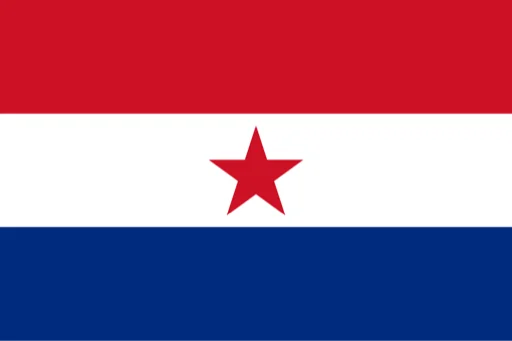
Flag of Manuʻa
OriginManuʻa is a small group of islands — Taʻū, Ofu and Olosega — ruled by the Tuʻi Manuʻa, counted among the oldest paramount titles in Polynesia. This tricolour is handed down as the flag of Manuʻa in the 1880s, the years when Samoan polities were taking up flags in the European manner. Manuʻa passed to the United States in 1904 and the title was not continued, so the flag fell out of use; the drawing shown here is a modern redrawing.
DescriptionThree horizontal bands of equal height fill the flag: red on top, white across the middle, deep blue below. Exactly at the centre of the white band stands a single red five-pointed star, one point upward, in the same red as the top stripe. The star stands about four fifths as tall as the white band, so a strip of white is left clear above and below it, and it sits precisely on the centre line, the only charge on an otherwise plain field.
