Betsy Ross, Francis Hopkinson and Robert Heft: Three Stars and Stripes Stories
Few flags have gathered as many stories as this one. Three are especially famous: that the seamstress Betsy Ross made the first one, that Francis Hopkinson really designed it, and that today's 50 stars began as a high-school project. Set beside the official record, the three carry very different weight.
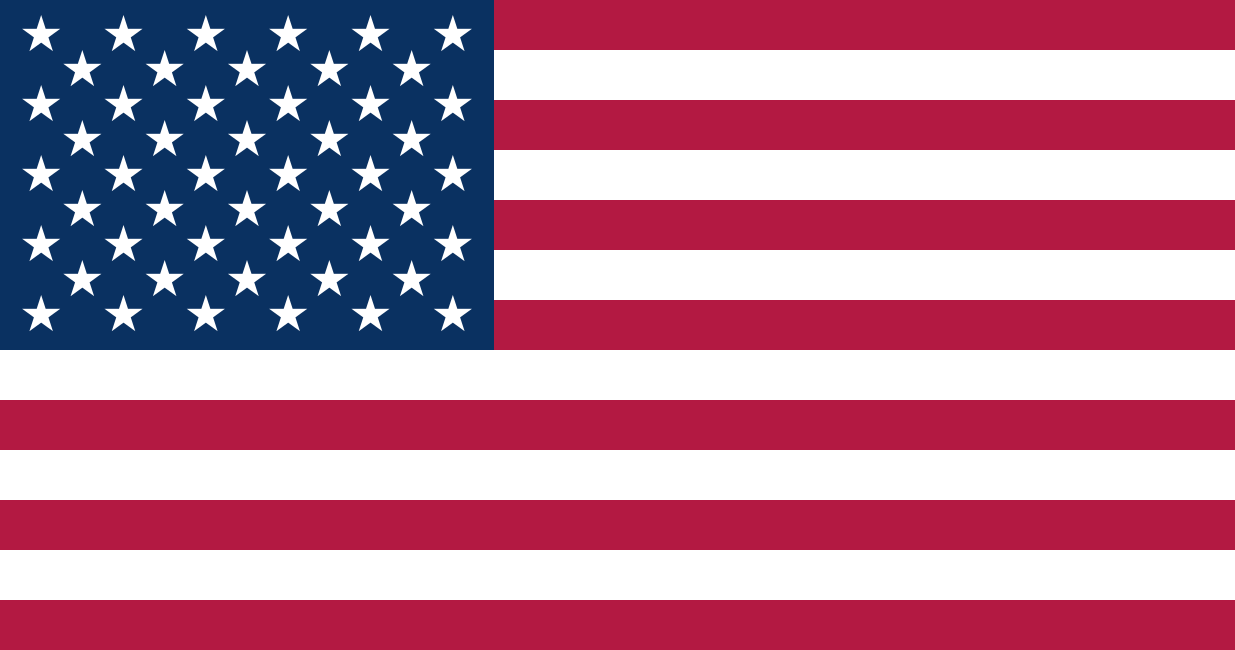
First, what the law set
The starting point is the Continental Congress resolution of 14 June 1777: thirteen stripes, alternate red and white, and thirteen white stars in a blue field.[1] It gave no layout for the stars, and it didn't say how many points they should have.[2]
The changes after that are easy to follow in the law.
| When | Basis | What it did |
|---|---|---|
| 1794 | Act of 13 January 1794 | 15 stripes, 15 stars[3] |
| 1818 | Act of 4 April 1818 | Back to 13 stripes, 20 stars[4] |
| 1912 | Executive Order 1637 | Hoist 1, fly 1.9[5] |
| 1959 | Executive Order 10834 | 50 stars, effective 4 July 1960[6] |
The 1818 Act set the rule still in use: thirteen stripes for good, and one new star for each new state, taking effect on the Fourth of July after admission.[4] That's why the 50-star flag first went up at 12:01 a.m. on 4 July 1960.[2]
Betsy Ross: no evidence
The tale of the Philadelphia seamstress sewing the first flag at George Washington's request is America's best-known flag legend. It first became public in 1870, in a paper her grandson William Canby gave to the Historical Society of Pennsylvania, nearly a century after the events it describes.[2]
Our Flag, published by the US Congress, says there is no proof she made the first Stars and Stripes, though it accepts that she made flags for the Pennsylvania State Navy in 1777.[2] The Library of Congress likewise finds no historical evidence that she designed it.[7] The Smithsonian describes her as one of a community of Philadelphia flagmakers.[8] So the legend has no evidence behind it, but she really was a flagmaker.
Francis Hopkinson: likely, not proven
Our Flag says strong evidence indicates that Francis Hopkinson, a signer of the Declaration of Independence, was responsible for the flag's stars.[2] He asked to be paid with a quarter cask of public wine and was turned down.[2]
Even so, that means strong evidence, not proof. His own claim to the design in a letter of 1780[9] makes this the best supported of the three stories, but the resolution itself doesn't name him.
Robert Heft: not in the records we read
The third story says Robert Heft, a high-school student in Lancaster, Ohio, arranged 50 stars for a class project in 1958 and that his design was adopted. A Library of Congress blog repeats it.[10]
The Eisenhower Presidential Library's records show a different process. The President asked four officials to recommend a design: the Secretaries of State, Defense and the Treasury and the Chairman of the Commission of Fine Arts. More than 3,000 people sent in ideas, and the four submitted a 49-star design on 30 December 1958 and a 50-star design on 17 August 1959.[11] Heft's name isn't in the library material we read, or in Our Flag. He may have made such a flag. But federal records we read don't confirm that his design was the one adopted.
What's left
None of the three is named in the resolution or statutes that set the flag. What is clear is the law: the 1818 rule of thirteen stripes and a star for each state has held for over 200 years.
Sources
- A funny thing happened on the way to the Revolutionary War
- Our Flag (H. Doc. 108-97)
- Act of January 13, 1794, 1 Stat. 341
- Act of April 4, 1818, 3 Stat. 415
- Executive Order 1637 (October 29, 1912)
- Executive Order 10834 (August 21, 1959)
- Remember the Ladies: Founding Mothers of the American Revolution
- The Star-Spangled Banner: FAQs
- Hopkinson and Betsy Ross Flags (Peter Ansoff)
- A Grand Old Flag
- Design of the 49- and 50-Star Flags
Read next
- We Counted the Pixels in 193 National Flags
We measured the flags of all 193 UN members pixel by pixel: the most common colors, the colors that cover the most area, and the flags with the most colors.
This page was drafted with AI (Claude). Its facts were checked against the sources listed below, and the site owner read it before publication. Found a mistake? Please write to us and include a source: Contact