There Are Two Sets of Pan-African Colors
African flags don't repeat one color scheme but two: green, gold and red, and red, black and green. They start in different places. They're often blurred into one, but the record is clearer when you take them apart.
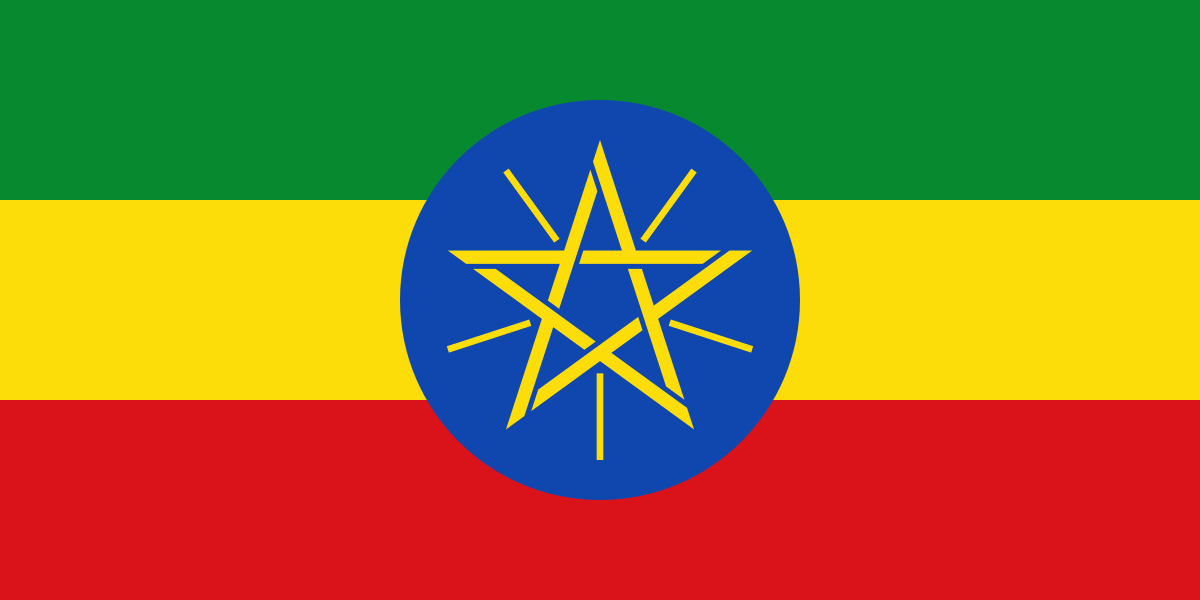
Green, gold and red: Ethiopia
Ethiopia's constitution sets green, yellow and red from the top.[1] Peer-reviewed work describes the imperial flag as emerging by the late 19th century and becoming a Pan-African anti-colonial symbol after resistance to Italian occupation.[2] The same work calls it essentially an invented tradition that reinforced the imperial elite. Old-looking symbols can have more recent beginnings than you'd think.
Red, black and green: Marcus Garvey
The second scheme came from outside Africa. In August 1920 the Universal Negro Improvement Association met in Harlem and adopted a declaration of rights,[3] and Article 39 made red, black and green the colors of the race.[4]
According to the flag researcher William Crampton, this flag can't be documented before an FBI report of 12 November 1918, which mentions a "new Ethiopian flag" hanging in Garvey's newspaper office.[5] So it's hard to say Garvey took his colors from the real Ethiopian flag, though he may have thought of them as Ethiopian.
The meanings shifted too. In August 1920 Garvey explained red as solidarity with the Reds of the world, green with the Irish and black with Black people. The familiar reading of blood, nature and skin came later.[5]
Ghana: a flag already public in 1956
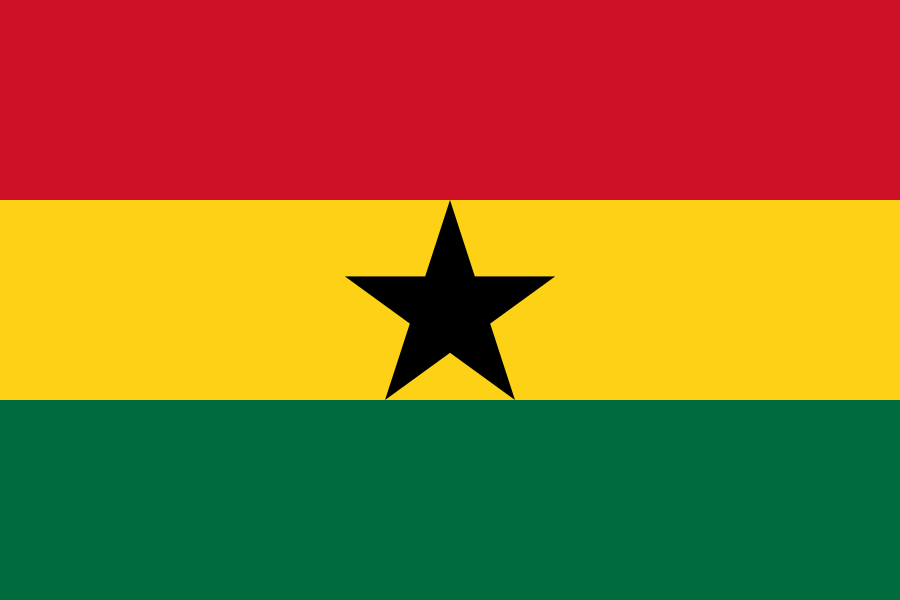
Ghana's flag looks like the place where the two streams meet: red, gold and green with a black star. As we'll see, though, the actual route isn't documented.
Theodosia Okoh is credited as its designer. The Ghanaian press honored her as such when she died in April 2015, aged 92.[6] When the government called for designs before independence she is said to have sent in four, one of which was chosen.[7] Kwame Nkrumah is often given the credit but didn't design it, and Okoh is said to have learned of her win only when she saw it raised at independence.[8] That story sits awkwardly with the 1956 announcement below.
The date needs a small correction. The flag is often said to have been designed in 1957, but Crampton records it as publicly announced on 10 October 1956.[5] 6 March 1957 is independence day. According to Crampton, the gold turned white in January 1964 and came back on 28 February 1966.[5] One Ghanaian paper puts the start at 1962.[9]
How the colors spread
Crampton's table has Cameroon (1957), Guinea (1958), Senegal (1960), Mali (1961) and others following.[5] That is one author's table, and some dates differ elsewhere. Constitutional texts show how the order varies.
| Country | Constitution says |
|---|---|
| Senegal | Vertical green, gold and red, with a green star[10] |
| Cameroon | Vertical green, red and yellow, with a gold star[11] |
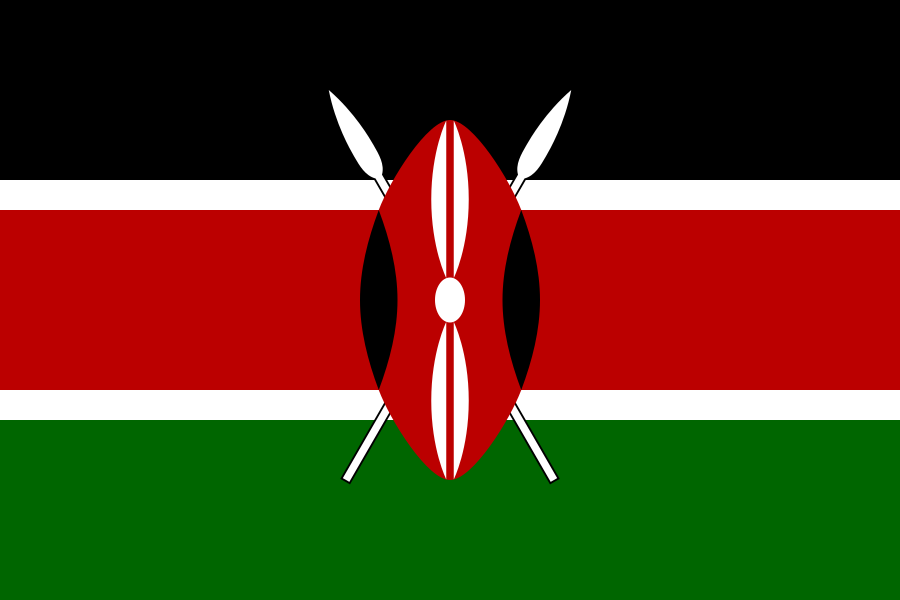
| Kenya | Black, red and green from the top[12] |
Red, black and green arrived by another route. Party flags such as those of Banda's party in Malawi and Kenyatta's KANU carried them, and those flags became national ones in modified form.[5]
What we still don't know
There is a story that the colors passed from Ethiopia through Jamaica's Rastafari movement to Nkrumah. Crampton himself calls that a hypothesis resting on circumstantial evidence that he couldn't document.[5] So we don't offer the tidy line that Ethiopia's colors went through Garvey to Ghana.
Sources
- Constitution of the Federal Democratic Republic of Ethiopia (1995), Article 3
- Flag Politics in Ethiopia and the Ethio-American Diaspora (Tefera and Castro)
- We are jimcrowed: Marcus Garvey and the 1920 Declaration of Rights of the Negro Peoples of the World
- Declaration of the Rights of the Negro Peoples of the World, 1920
- Marcus Garvey and the Rasta Colours (William G. Crampton)
- Theodosia Okoh is dead
- Theodosia Okoh goes home
- Red, green and gold: A pan-African history of flags and the remarkable woman who inspired it
- The Ghana flag
- Constitution of Senegal, Article 1
- Constitution of Cameroon, Article 1(5)
- Constitution of Kenya 2010, Second Schedule
Read next
- Telling Look-Alike Flags Apart
How to tell apart twelve groups of confusable flags, from Nordic crosses and Pan-Arab colors to vertical tricolors, one difference at a time.
- We Counted the Pixels in 193 National Flags
We measured the flags of all 193 UN members pixel by pixel: the most common colors, the colors that cover the most area, and the flags with the most colors.
This page was drafted with AI (Claude). Its facts were checked against the sources listed below, and the site owner read it before publication. Found a mistake? Please write to us and include a source: Contact